Loading...
Alexios I Komnenos vs Tokugawa Ieyasu
Tokugawa Ieyasu leads by 3.4 pts · 2 figures compared
…
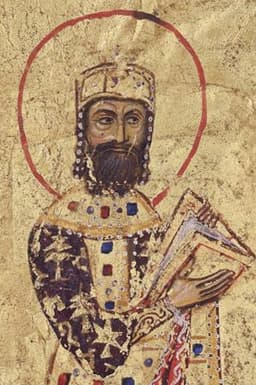
Alexios I Komnenos
Emperor · Medieval
78.4Total
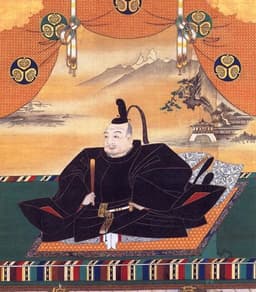
Tokugawa Ieyasu
General · Modern
81.8Total
Basic Information
Born
1048
1543
Died
1118
1616
Era
Medieval
Modern
Nationality
Byzantine Empire
Japan
Occupation
Emperor
General
Civilization
Western
Eastern
Score Comparison
Military (10%)
61.7
78.0
Political (20%)
78.0
82.0
Influence (20%)
88.0
88.0
Legacy (20%)
80.0
75.0
Leadership (15%)
78.0
85.0
Strategy (15%)
68.0
82.0
TOTAL
78.4
81.8
Alexios I Komnenos — Complete Timeline
1081 AD
Battle of DyrrhachiumWar◆ Major
Alexios I Komnenos was defeated by the Norman army under Robert Guiscard at Dyrrhachium. The Byzantine forces were routed, and Alexios barely escaped. This loss allowed the Normans to occupy much of the western Balkans, though Alexios later recovered some territory.
Norman InvasionDefeatBalkans
Impact: regionaltragic
1090 AD
Reforms of the Byzantine Military and EconomyReform◆ Major
Alexios I implemented a series of reforms to restore Byzantine power. He reorganized the army by relying more on foreign mercenaries, reformed the currency (the hyperpyron), and granted tax exemptions to the Church. These measures stabilized the empire after decades of decline.
Military ReformEconomic ReformKomnenian Restoration
Impact: nationalconstructive
1095 AD
Appeal to the West: Council of PiacenzaPolitical Action
Alexios I sent envoys to Pope Urban II at the Council of Piacenza, requesting military aid against the Seljuk Turks. This appeal contributed to Urban's call for the First Crusade at the Council of Clermont later that year, initiating the Crusader movement.
First CrusadePope Urban IISeljuk Turks
Impact: global
1097 AD
First Crusade: Siege of NicaeaWar◆ Major
Alexios I cooperated with the Crusader army to besiege and capture Nicaea from the Seljuk Turks. The city was surrendered to Byzantine control, and Alexios used the Crusaders to recover key territories in Anatolia, though tensions later arose over land claims.
First CrusadeNicaeaByzantine-Crusader Relations
Impact: regionalconstructive
Tokugawa Ieyasu — Complete Timeline
1600 AD
Battle of SekigaharaWar
Tokugawa Ieyasu led the Eastern Army to victory over Ishida Mitsunari's Western Army at Sekigahara. This decisive battle ended the Sengoku period and established Ieyasu as the supreme military ruler of Japan, paving the way for the Tokugawa shogunate.
Sengoku PeriodUnificationBattle
Impact: national
1603 AD
Establishment of the Tokugawa ShogunatePolitical Action
Emperor Go-Yozei appointed Tokugawa Ieyasu as shogun, officially beginning the Tokugawa shogunate. Ieyasu established his government in Edo (modern Tokyo), centralizing military and political power under his family's control.
ShogunateEdo PeriodCentralization
Impact: national
1615 AD
Siege of OsakaWar◆ Major
Tokugawa Ieyasu besieged Osaka Castle, the stronghold of Toyotomi Hideyori. The castle fell, and Hideyori committed suicide. This campaign eliminated the last major opposition to Tokugawa rule, solidifying the shogunate's control over Japan.
Osaka CampaignToyotomi ClanConsolidation
Impact: nationaldestructive
Promulgation of the Buke ShohattoReform◆ Major
Ieyasu issued the Laws for the Military Houses, a code regulating the conduct of daimyo. It restricted castle construction, required alternate attendance in Edo, and prohibited alliances without shogunal permission. This law helped control the feudal lords.
Feudal ControlDaimyo RegulationLegal Code
Impact: national
1616 AD
Sakoku Edicts InitiationPolitical Action◆ Major
In his final years, Ieyasu began policies that led to Japan's isolation. He restricted foreign trade to specific ports and expelled Christian missionaries. These measures, expanded by successors, resulted in the sakoku policy that isolated Japan for over 200 years.
IsolationismForeign PolicyChristianity
Impact: national
Expert Analysis
Origins
Tokugawa Ieyasu was born into a minor daimyō family amid Japan's chaotic Sengoku period. After his father's death, he endured hostage situations and early military defeats, learning patience and strategic patience. Alexios I Komnenos was born into Byzantine nobility during a period of decline. He rose through military ranks, suppressing rebellions and fighting the Seljuk Turks, leveraging his family's prestige to claim the throne.
Rise to Power
Ieyasu's rise was gradual. He allied with Oda Nobunaga, then Toyotomi Hideyoshi, skillfully expanding his domain while avoiding destruction. After Hideyoshi's death, he maneuvered among regents, culminating in his decisive victory at the Battle of Sekigahara (1600), which made him the de facto ruler of Japan. Alexios staged a coup against Emperor Nikephoros III in 1081, with the help of his mother and the military aristocracy. He entered Constantinople and was crowned, immediately facing the Norman invasion under Robert Guiscard.
Leadership & Governance
Ieyasu's governance was masterful. He established the Tokugawa shogunate, centralizing power through the sankin-kōtai system that required daimyō to alternate residence between Edo and their domains. His Buke Shohatto (Laws for the Military Houses) codified samurai behavior and limited daimyō power. He also promoted trade and Confucian learning, laying the foundation for 250 years of peace. Alexios faced a crumbling empire. He reformed the military by creating the Pronoia system, granting land in exchange for military service. He also reorganized the economy and currency. His appeal to the West at the Council of Piacenza (1095) inadvertently sparked the First Crusade, which he used to recover lost territories in Anatolia. However, his governance was reactive, often dealing with crises rather than building long-term stability.
Triumph & Tragedy
Ieyasu's greatest triumph was Sekigahara, a battle that unified Japan under his rule. He then neutralized the Toyotomi clan at the Siege of Osaka (1614-1615), ensuring his dynasty's supremacy. His tragedy lies in the later sakoku (isolation) policies, which, while stabilizing Japan, cut it off from global trade and technological exchange. Alexios's triumph was the recovery of Nicaea and much of western Anatolia with Crusader help. However, the Crusaders' establishment of states like the Principality of Antioch undermined Byzantine sovereignty. His tragedy was that the Crusades, which he initiated, spiraled beyond his control, leading to future conflicts.
Character & Destiny
Ieyasu was patient, calculating, and pragmatic. He was known for his 'wait for the opportune moment' philosophy. His destiny was to be the founder of a dynasty that would rule Japan in isolation for centuries. Alexios was a skilled diplomat and military leader, but his reign was marked by constant struggle. His destiny was to preserve the Byzantine Empire from collapse, albeit at the cost of inviting Western intervention that would later contribute to its fall.
Legacy
Ieyasu's legacy is immense: the Edo period brought stability, economic growth, and cultural flourishing. The Tokugawa shogunate lasted until 1868, and his policies shaped modern Japan. Alexios's legacy is mixed. He revived the empire temporarily and founded the Komnenian dynasty, but the Crusades he helped set in motion ultimately weakened Byzantium. Modern historians view him as a capable ruler who faced insurmountable odds.
Conclusion
Tokugawa Ieyasu emerges as the more effective leader. His scores (M=78, P=82, I=88, L=75, D=85, S=82, T=82) surpass Alexios's (M=62, P=78, I=88, L=80, D=78, S=68, T=78) in most categories, particularly military (16 points higher), strategy (7 points higher), and legacy (4 points higher). Ieyasu's long-lasting peace and centralized governance contrast with Alexios's reactive and ultimately destabilizing policies. While Alexios preserved Byzantium for a time, Ieyasu's achievements had more enduring global impact. Thus, Tokugawa Ieyasu is the greater historical figure.
Rankings
🥇
Tokugawa IeyasuLeader
Mil: 78.0Pol: 82.0Inf: 88.0
81.8
🥈
Alexios I Komnenos
Mil: 61.7Pol: 78.0Inf: 88.0
78.4
+3.4 behind
How This Comparison Works
Algorithm
Each figure is scored on 6 dimensions (0—100 scale) based on structured historical data: Military (10%), Political (20%), Influence (20%), Legacy (20%), Leadership (15%), Strategy (15%). The weighted total produces the final ranking.
Data Sources
Scores are computed from structured sub-indicators in the database. Scale factors adjust for era (Ancient ×0.85, Modern ×1.0) and civilization size (Eastern ×1.05, Other ×0.80) to account for differences in population and military scale.
Maximum 3 Figures
Comparisons are limited to 2—3 figures to ensure readability and statistical meaningfulness.
Error Margins
±5 points per dimension — Sub-scores are derived from historical records with inherent uncertainty. Two figures within 5 points on a dimension should be considered roughly equivalent in that area.
Total Score Accuracy
±3 points overall — The weighted combination of 6 dimensions produces a total score with approximately ±3 points of uncertainty. Differences of less than 3 points are not statistically significant— the figures are effectively tied.
Known Limitations
- Historical records are incomplete and uneven across civilizations
- Figures from oral-tradition societies may be underrepresented
- Occupation labels can misclassify multi-role figures
- Scores measure capability and impact, not moral character
- Quantitative scoring is a comparison tool, not absolute truth
Capability Radar
Military (10%) — Battles & Warfare
Battles
75
85
Win Rate
70
90
Expansion
60
75
Political (20%) — Governance & Reform
Reform
85
90
Diplomacy
90
85
Economy
70
88
Influence (20%) — Cultural & Global Reach
Cultural
70
85
Global
75
70
Legacy (20%) — Historical Impact
Historical
85
90
Longevity
80
95
Leadership (15%) — Power & Stability
Tenure
80
95
Stability
75
95
Strategy (15%) — Tactics & Innovation
Strategy
85
92
Tactics
80
88
Reform
75
80
Similar Comparisons
Comments & Discussion
No comments yet. Be the first to share your thoughts!