Loading...
Alexios I Komnenos vs Suleiman I
Suleiman I leads by 0.4 pts · 2 figures compared
…
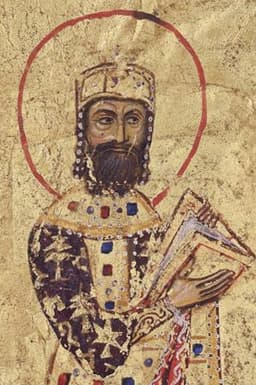
Alexios I Komnenos
Emperor · Medieval
78.4Total
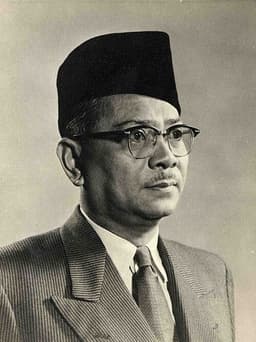
Suleiman I
Emperor · Medieval
78.8Total
Basic Information
Born
1048
1494
Died
1118
1566
Era
Medieval
Medieval
Nationality
Byzantine Empire
Ottoman Empire
Occupation
Emperor
Emperor
Civilization
Western
Middle Eastern
Score Comparison
Military (10%)
61.7
78.5
Political (20%)
78.0
82.0
Influence (20%)
88.0
85.0
Legacy (20%)
80.0
70.8
Leadership (15%)
78.0
81.7
Strategy (15%)
68.0
74.4
TOTAL
78.4
78.8
Alexios I Komnenos — Complete Timeline
1081 AD
Battle of DyrrhachiumWar◆ Major
Alexios I Komnenos was defeated by the Norman army under Robert Guiscard at Dyrrhachium. The Byzantine forces were routed, and Alexios barely escaped. This loss allowed the Normans to occupy much of the western Balkans, though Alexios later recovered some territory.
Norman InvasionDefeatBalkans
Impact: regionaltragic
1090 AD
Reforms of the Byzantine Military and EconomyReform◆ Major
Alexios I implemented a series of reforms to restore Byzantine power. He reorganized the army by relying more on foreign mercenaries, reformed the currency (the hyperpyron), and granted tax exemptions to the Church. These measures stabilized the empire after decades of decline.
Military ReformEconomic ReformKomnenian Restoration
Impact: nationalconstructive
1095 AD
Appeal to the West: Council of PiacenzaPolitical Action
Alexios I sent envoys to Pope Urban II at the Council of Piacenza, requesting military aid against the Seljuk Turks. This appeal contributed to Urban's call for the First Crusade at the Council of Clermont later that year, initiating the Crusader movement.
First CrusadePope Urban IISeljuk Turks
Impact: global
1097 AD
First Crusade: Siege of NicaeaWar◆ Major
Alexios I cooperated with the Crusader army to besiege and capture Nicaea from the Seljuk Turks. The city was surrendered to Byzantine control, and Alexios used the Crusaders to recover key territories in Anatolia, though tensions later arose over land claims.
First CrusadeNicaeaByzantine-Crusader Relations
Impact: regionalconstructive
Suleiman I — Complete Timeline
1522 AD
Siege of RhodesWar◆ Major
Suleiman I led a massive Ottoman army and fleet to besiege the island of Rhodes, held by the Knights Hospitaller. After a six-month siege, the knights surrendered and were allowed to leave. This victory secured Ottoman control over the eastern Mediterranean.
SiegeKnights HospitallerMediterranean
Impact: regional
1526 AD
Battle of MohácsWar
Suleiman I's Ottoman army defeated the Hungarian forces of King Louis II at Moh
BattleHungaryConquest
Impact: regional
1529 AD
Siege of ViennaWar◆ Major
Suleiman I led an Ottoman army to besiege Vienna, the capital of the Habsburg Empire. The siege failed due to supply problems and the onset of winter. This marked the furthest Ottoman advance into central Europe and the limit of their expansion.
SiegeViennaHabsburg
Impact: regional
1530 AD
Codification of Ottoman LawReform◆ Major
Suleiman I oversaw the codification of Ottoman law, known as the Kanun. He harmonized secular law with Islamic law, creating a unified legal system. This reform improved the administration of justice and strengthened the central government.
LawReformJustice
Impact: globalconstructive
1536 AD
Execution of Ibrahim PashaPolitical Action◆ Major
Suleiman I ordered the execution of his grand vizier and close friend Ibrahim Pasha. Ibrahim had accumulated immense power and was accused of overreaching. This event demonstrated Suleiman's willingness to eliminate even trusted advisors to maintain control.
ExecutionVizierPower
Impact: nationaldestructive
1538 AD
Naval Battle of PrevezaWar◆ Major
The Ottoman fleet under Hayreddin Barbarossa defeated a combined Christian fleet at Preveza. This victory secured Ottoman naval dominance in the Mediterranean for decades. It allowed the Ottomans to control trade routes and raid coastal areas.
Naval BattleBarbarossaMediterranean
Impact: regional
Expert Analysis
Origins
Suleiman I was born in 1494 in Trabzon, the only surviving son of Selim I. He inherited a vast empire from his father, who had expanded Ottoman territories in the Middle East. Suleiman was groomed for rule from a young age, learning statecraft and military tactics. In contrast, Alexios I Komnenos was born in 1048 in Constantinople, a scion of the powerful Komnenos family. He rose through the ranks of the Byzantine military during a period of decline, eventually seizing the throne in 1081 after a coup against Nikephoros III. Alexios's origins were more precarious, as he had to fight for legitimacy.
Rise to Power
Suleiman ascended the throne in 1520 without opposition, inheriting a stable empire. His early years were marked by military campaigns: he conquered Belgrade in 1521 and Rhodes in 1522, establishing his reputation. His rise was smooth, aided by his father's conquests. Alexios, however, seized power through a coup, overthrowing Nikephoros III with the help of the military aristocracy. He faced immediate threats from Normans, Pechenegs, and Seljuks, making his rise more turbulent and reliant on strategic alliances.
Leadership & Governance
Suleiman was an absolute ruler who centralized authority. He reformed the legal system, issuing the Kanun (canon law) to standardize laws across the empire. He promoted meritocracy, appointing capable grand viziers like Ibrahim Pasha. His governance emphasized justice and public works, building mosques, bridges, and aqueducts. Alexios, by contrast, faced a fractured empire. He implemented fiscal reforms, debasing the currency to raise funds, and forged alliances with Venice and the Holy Roman Empire. He also reformed the military, creating the Pronoia system to support soldiers. Both were effective administrators, but Suleiman's empire was larger and more prosperous.
Triumph & Tragedy
Suleiman's greatest triumph was the Battle of Mohács (1526), where he crushed Hungary, leading to Ottoman dominance in Central Europe. However, his Siege of Vienna (1529) ended in failure, marking the limit of Ottoman expansion. The execution of his beloved grand vizier Ibrahim Pasha in 1536 was a personal tragedy and a sign of his later paranoia. Alexios's triumph was his appeal to the West at the Council of Piacenza (1095), which sparked the First Crusade. The Crusaders helped him recapture Nicaea in 1097, but the Crusade also brought new challenges. His defeat at Dyrrhachium (1081) by the Normans was a major setback, though he later recovered. Alexios's tragedy was the creation of Crusader states that ignored Byzantine authority.
Character & Destiny
Suleiman was a cultured ruler, a poet, and patron of the arts. He was known as "the Lawgiver" for his legal reforms. However, his later years were marred by the execution of his son Mustafa and the rise of Roxelana's influence. Alexios was a pragmatic strategist, adept at diplomacy and manipulation. He was cunning and willing to compromise with enemies. His destiny was to restore Byzantine power temporarily, but his actions set the stage for the Fourth Crusade's sack of Constantinople. Both men were destined to shape their empires' fates, but Suleiman left a more enduring legacy.
Legacy
Suleiman's legacy is that of the Ottoman Golden Age. He expanded the empire to its peak, reformed law, and fostered culture. The Ottoman Empire remained a major power for centuries after his death. Alexios's legacy is more ambiguous. He founded the Komnenian dynasty and revived Byzantine fortunes, but his reliance on Western Crusaders sowed seeds of future conflict. The Komnenian restoration lasted until 1185, but the empire never fully recovered. Suleiman's numerical scores (M=78, P=82, I=85, L=71, D=82, S=74, T=79) reflect his military prowess, political acumen, and cultural impact. Alexios's scores (M=62, P=78, I=88, L=80, D=78, S=68, T=78) show his diplomatic skill and reform efforts but lower military and territorial gains.
Conclusion
Suleiman I clearly surpasses Alexios I in overall impact. Suleiman ruled a larger, more powerful empire at its zenith, while Alexios struggled to revive a declining state. Suleiman's military victories, legal reforms, and cultural patronage created a lasting legacy that shaped the Ottoman world for centuries. Alexios's achievements were significant but temporary; his Crusader alliances ultimately backfired. The score gap of 0.4 (Suleiman higher) reflects this difference. Suleiman was a true "Magnificent" ruler, while Alexios was a capable but ultimately less successful emperor. HistoryVersus.com rates Suleiman as the superior leader.
Rankings
🥇
Suleiman ILeader
Mil: 78.5Pol: 82.0Inf: 85.0
78.8
🥈
Alexios I Komnenos
Mil: 61.7Pol: 78.0Inf: 88.0
78.4
+0.4 behind
How This Comparison Works
Algorithm
Each figure is scored on 6 dimensions (0—100 scale) based on structured historical data: Military (10%), Political (20%), Influence (20%), Legacy (20%), Leadership (15%), Strategy (15%). The weighted total produces the final ranking.
Data Sources
Scores are computed from structured sub-indicators in the database. Scale factors adjust for era (Ancient ×0.85, Modern ×1.0) and civilization size (Eastern ×1.05, Other ×0.80) to account for differences in population and military scale.
Maximum 3 Figures
Comparisons are limited to 2—3 figures to ensure readability and statistical meaningfulness.
Error Margins
±5 points per dimension — Sub-scores are derived from historical records with inherent uncertainty. Two figures within 5 points on a dimension should be considered roughly equivalent in that area.
Total Score Accuracy
±3 points overall — The weighted combination of 6 dimensions produces a total score with approximately ±3 points of uncertainty. Differences of less than 3 points are not statistically significant— the figures are effectively tied.
Known Limitations
- Historical records are incomplete and uneven across civilizations
- Figures from oral-tradition societies may be underrepresented
- Occupation labels can misclassify multi-role figures
- Scores measure capability and impact, not moral character
- Quantitative scoring is a comparison tool, not absolute truth
Capability Radar
Military (10%) — Battles & Warfare
Battles
75
95
Win Rate
70
92
Expansion
60
95
Political (20%) — Governance & Reform
Reform
85
90
Diplomacy
90
88
Economy
70
85
Influence (20%) — Cultural & Global Reach
Cultural
70
85
Global
75
85
Legacy (20%) — Historical Impact
Historical
85
88
Longevity
80
80
Leadership (15%) — Power & Stability
Tenure
80
95
Stability
75
80
Strategy (15%) — Tactics & Innovation
Strategy
85
90
Tactics
80
88
Reform
75
85
Similar Comparisons
Comments & Discussion
No comments yet. Be the first to share your thoughts!