Loading...
Alexios I Komnenos vs Rurik
Alexios I Komnenos leads by 18.8 pts · 2 figures compared
…
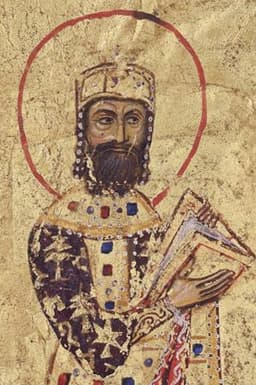
Alexios I Komnenos
Emperor · Medieval
78.4Total
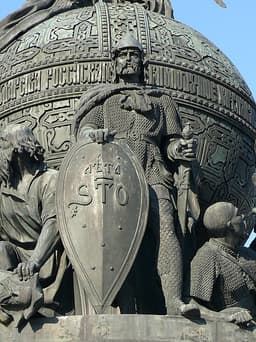
Rurik
Emperor · Medieval
59.6Total
Basic Information
Born
1048
830
Died
1118
879
Era
Medieval
Medieval
Nationality
Byzantine Empire
Kievan Rus
Occupation
Emperor
Emperor
Civilization
Western
Western
Score Comparison
Military (10%)
61.7
50.0
Political (20%)
78.0
35.1
Influence (20%)
88.0
82.0
Legacy (20%)
80.0
68.0
Leadership (15%)
78.0
55.3
Strategy (15%)
68.0
35.7
TOTAL
78.4
59.6
Alexios I Komnenos — Complete Timeline
1081 AD
Battle of DyrrhachiumWar◆ Major
Alexios I Komnenos was defeated by the Norman army under Robert Guiscard at Dyrrhachium. The Byzantine forces were routed, and Alexios barely escaped. This loss allowed the Normans to occupy much of the western Balkans, though Alexios later recovered some territory.
Norman InvasionDefeatBalkans
Impact: regionaltragic
1090 AD
Reforms of the Byzantine Military and EconomyReform◆ Major
Alexios I implemented a series of reforms to restore Byzantine power. He reorganized the army by relying more on foreign mercenaries, reformed the currency (the hyperpyron), and granted tax exemptions to the Church. These measures stabilized the empire after decades of decline.
Military ReformEconomic ReformKomnenian Restoration
Impact: nationalconstructive
1095 AD
Appeal to the West: Council of PiacenzaPolitical Action
Alexios I sent envoys to Pope Urban II at the Council of Piacenza, requesting military aid against the Seljuk Turks. This appeal contributed to Urban's call for the First Crusade at the Council of Clermont later that year, initiating the Crusader movement.
First CrusadePope Urban IISeljuk Turks
Impact: global
1097 AD
First Crusade: Siege of NicaeaWar◆ Major
Alexios I cooperated with the Crusader army to besiege and capture Nicaea from the Seljuk Turks. The city was surrendered to Byzantine control, and Alexios used the Crusaders to recover key territories in Anatolia, though tensions later arose over land claims.
First CrusadeNicaeaByzantine-Crusader Relations
Impact: regionalconstructive
Rurik — Complete Timeline
860 AD
Sent Askold and Dir to ConstantinopleWar
According to tradition, Rurik sent his lieutenants Askold and Dir to raid Constantinople. While the historicity is uncertain, this event is associated with the first Rus' attack on the Byzantine Empire, highlighting early Rus' expansion.
RaidByzantine EmpireExpansion
Impact: regional
862 AD
Founded the Rurik dynastyPolitical Action
According to the Primary Chronicle, Rurik, a Varangian chieftain, was invited by Slavic and Finnic tribes to rule over them. He established his capital at Novgorod, founding the Rurik dynasty that would rule Kievan Rus' and later the Tsardom of Russia until 1598.
FoundationVarangianKievan Rus'
Impact: global
864 AD
Consolidated control over NovgorodPolitical Action◆ Major
Rurik consolidated his rule over Novgorod and the surrounding territories, suppressing a rebellion led by Vadim the Bold. He established a centralized authority that became the basis for the early Russian state.
ConsolidationNovgorodRebellion
Impact: regional
Expert Analysis
Alexios I Komnenos vs Rurik
# The Varangian and the Emperor: Two Paths to Power in the Medieval World
In the year 1081, a Byzantine general named Alexios Komnenos watched his army scatter before the Norman lances at Dyrrhachium, the western gateway to his empire. Two centuries earlier, around 862, a Varangian chieftain named Rurik supposedly accepted an invitation from warring Slavic tribes to rule over them at Novgorod—a story so tidy it reads like legend. One man inherited a crumbling empire and fought to save it; the other, if he existed at all, founded a dynasty that would rule for seven centuries. Why did their paths diverge so dramatically? The answer lies not in their personal virtues but in the worlds that shaped them.
Origins
Alexios I Komnenos was born into the Byzantine military aristocracy, a class that had produced emperors before and would again. The Byzantine Empire of the late eleventh century was a civilization under siege—Normans in the west, Pechenegs in the north, and Seljuk Turks in the east. The Battle of Manzikert in 1071 had shattered the imperial army and opened Anatolia to Turkish settlement. Alexios grew up in a world where the empire’s survival was not guaranteed, where every noble family schemed for the throne, and where the old Roman administrative machinery groaned under impossible strain.
Rurik’s origins are far murkier. The Primary Chronicle, written centuries after his supposed lifetime, describes him as a Varangian—a Norse warrior-trader who operated along the river routes connecting Scandinavia to Byzantium and the Islamic world. The year 830 places him in the early Viking Age, when Norse adventurers were simultaneously raiding monasteries in Ireland, settling Iceland, and trading furs and slaves down the Volga. Rurik may have been a historical figure, or he may be a convenient ancestor invented by later rulers to legitimize their dynasty. What matters is that his world was one of fluid power, where a charismatic chieftain with a few hundred warriors could carve out a realm.
Rise to Power
Alexios came to the throne through a coup, but it was a coup born of desperation. In 1081, the Byzantine Empire was reeling from a decade of civil war and foreign invasion. The previous emperor, Nikephoros III Botaneiates, had lost control of the military. Alexios, then a general in his early thirties, led his troops into Constantinople, seized the palace, and was crowned emperor. His path was typical of Byzantine politics: ruthless, swift, and legitimized by the Church and the Senate. He did not create the empire’s crisis; he inherited it.
Rurik’s rise, if the chronicle is to be believed, was entirely different. The Slavic and Finnic tribes of the region had grown tired of fighting each other and, according to the legend, said: "Our land is great and abundant, but there is no order in it. Come to rule and reign over us." This invitation narrative—so convenient for later rulers—suggests a power vacuum that a foreign warlord could fill. Whether historical or mythical, the story reflects the reality of early medieval Eastern Europe: power was personal, tribal, and negotiable. Rurik did not conquer Novgorod; he was invited to govern it.
Leadership & Governance
Alexios governed with the full weight of Roman tradition behind him. In 1090, he implemented sweeping reforms of the Byzantine military and economy. He reorganized the army, relying increasingly on foreign mercenaries—Varangians, Normans, and Turks—because the native thematic troops had been decimated. He debased the currency to pay for these forces, a short-term solution with long-term consequences. His most famous act of statecraft came in 1095, when he sent envoys to Pope Urban II at the Council of Piacenza, requesting military aid against the Seljuk Turks. This appeal helped spark the First Crusade—a decision that would reshape the medieval world but also introduce new problems for Byzantium.
Rurik’s governance, by contrast, is almost invisible to history. The chronicles record that he consolidated control over Novgorod in 864, suppressing a rebellion led by a certain Vadim the Bold. He sent his lieutenants Askold and Dir to raid Constantinople in 860, though this may be a later invention. What matters is that Rurik established a dynasty, not a state. His successors—Oleg, Igor, and Sviatoslav—would expand and consolidate the realm, but Rurik himself seems to have been a first among equals, a war leader whose authority depended on personal loyalty and military success.
Triumph & Tragedy
Alexios’s greatest triumph was the First Crusade—specifically, the Siege of Nicaea in 1097. He cooperated with the Crusader armies to recapture the city from the Seljuks, a significant victory that restored Byzantine control over western Anatolia. But the triumph was bittersweet. The Crusaders, once they crossed into Syria, refused to return conquered lands to the empire. Worse, the Crusade created a legacy of mutual suspicion between Byzantium and the West that would culminate in the Fourth Crusade’s sack of Constantinople in 1204.
Rurik’s triumph, if it can be called that, was the founding of a dynasty. His tragedy is that we know almost nothing about him as a person. He is a cipher, a name in a chronicle, a convenient ancestor. The Rurikids would rule Kievan Rus and later the Tsardom of Russia until the Time of Troubles in the early seventeenth century, but the man who started it all remains a shadow.
Character & Destiny
Alexios was a survivor. He lost at Dyrrhachium in 1081, but he learned from the defeat, adapting his tactics and diplomacy. He was pragmatic, willing to ally with former enemies and to sacrifice long-term stability for short-term survival. His reign was a holding action, a desperate attempt to keep the empire alive until better times. The Komnenian restoration he began would be completed by his son John and his grandson Manuel, but Alexios himself never knew peace.
Rurik’s character, if he existed, is a blank. The legend suggests a man of ambition and competence, someone who could unite fractious tribes and establish order. But the legend also serves a purpose: it legitimizes the Rurikid dynasty by making their founder a chosen ruler, not a conqueror. In this sense, Rurik’s character is less important than the story told about him.
Legacy
Alexios I Komnenos is remembered as the founder of the Komnenian dynasty and the man who began the Crusades era. His legacy is complex: he saved the Byzantine Empire from collapse but set it on a path that would lead to its eventual destruction. He is a tragic figure, a competent ruler in an impossible situation.
Rurik’s legacy is far larger than the man himself. The Rurikid dynasty shaped the political development of Eastern Europe for centuries. Even if Rurik is a legend, the legend itself has historical power. He represents the origins of Russian statehood, a founding myth that has been used by rulers from Ivan the Terrible to Vladimir Putin.
Conclusion
Two men, two worlds. Alexios I Komnenos inherited an empire and fought to preserve it, using every tool of Byzantine statecraft—diplomacy, reform, and the Crusade—to buy time. Rurik, if he existed, founded a dynasty by being in the right place at the right time, a Varangian chieftain who became the ancestor of tsars. One is a historical figure we can know; the other is a legend we can only imagine. Their differences reflect the different worlds they inhabited: the bureaucratic, tradition-bound empire of Byzantium and the fluid, personal politics of early medieval Eastern Europe. Both left lasting legacies, but only one left a story we can truly tell.
Rankings
🥇
Alexios I KomnenosLeader
Mil: 61.7Pol: 78.0Inf: 88.0
78.4
🥈
Rurik
Mil: 50.0Pol: 35.1Inf: 82.0
59.6
+18.8 behind
How This Comparison Works
Algorithm
Each figure is scored on 6 dimensions (0—100 scale) based on structured historical data: Military (10%), Political (20%), Influence (20%), Legacy (20%), Leadership (15%), Strategy (15%). The weighted total produces the final ranking.
Data Sources
Scores are computed from structured sub-indicators in the database. Scale factors adjust for era (Ancient ×0.85, Modern ×1.0) and civilization size (Eastern ×1.05, Other ×0.80) to account for differences in population and military scale.
Maximum 3 Figures
Comparisons are limited to 2—3 figures to ensure readability and statistical meaningfulness.
Error Margins
±5 points per dimension — Sub-scores are derived from historical records with inherent uncertainty. Two figures within 5 points on a dimension should be considered roughly equivalent in that area.
Total Score Accuracy
±3 points overall — The weighted combination of 6 dimensions produces a total score with approximately ±3 points of uncertainty. Differences of less than 3 points are not statistically significant— the figures are effectively tied.
Known Limitations
- Historical records are incomplete and uneven across civilizations
- Figures from oral-tradition societies may be underrepresented
- Occupation labels can misclassify multi-role figures
- Scores measure capability and impact, not moral character
- Quantitative scoring is a comparison tool, not absolute truth
Capability Radar
Military (10%) — Battles & Warfare
Battles
75
15
Win Rate
70
20
Expansion
60
30
Political (20%) — Governance & Reform
Reform
85
30
Diplomacy
90
35
Economy
70
25
Influence (20%) — Cultural & Global Reach
Cultural
70
50
Global
75
60
Legacy (20%) — Historical Impact
Historical
85
70
Longevity
80
80
Leadership (15%) — Power & Stability
Tenure
80
40
Stability
75
30
Strategy (15%) — Tactics & Innovation
Strategy
85
20
Tactics
80
15
Reform
75
10
Similar Comparisons
Comments & Discussion
RurikTheMyth6/16/2026
Rurik is basically a historical placeholder—a Viking warlord whose entire existence hinges on the Primary Chronicle, a deeply biased text written 200 years after his supposed rule. Compare that to Alexios, whose military campaigns, political reforms, and family dramas are documented by his own daughter Anna Komnene. One is a shadow, the other is flesh and bone. You can’t compare a legend to a man.
VarangianTruth6/16/2026
Let’s get one thing straight: Rurik wasn’t a leader, he was a hired gun who got lucky. Alexios faced Norman cavalry at Dyrrhachium, Turkish archers, and endless court conspiracies. Rurik allegedly “accepted an invitation” from Slavs who were too weak to organize. The difference? Alexios saved an empire; Rurik’s legacy is a dynasty that got credit for what Boris and Gleb actually achieved later.
丝绸与雪原6/16/2026
说Alexios是运气好?他接手的是个烂摊子——国库空虚,突厥人的地盘都打到尼西亚了。Rurik那所谓的“邀请”根本是中世纪统治者编出来的合法性洗白。一个靠战功和血统拼到皇位,一个靠传说堆出祖宗。别拿哥特兰岛来的劫匪跟科穆宁家族比,不是一个量级。
历史打工人6/16/2026
你们都在夸Alexios,但别忘了Rurik的后代留里克王朝统治了俄罗斯七百年。Alexios再牛,科穆宁也就撑了一百年。谁的遗产更持久?而且Rurik的时代是793年林迪斯法恩后维京人最凶的时期,他能在那种乱世立足,本身就是本事。别老拿史料说事——我们连荷马是真是假都辩不清呢。
TheRealAlexios6/16/2026
Rurik is revisionist history—the Primary Chronicle was literally commissioned by the Kievan Rus to create a Norman origin myth. Alexios, on the other hand, fought actual battles we can trace: Dyrrhachium, the Pecheneg wars, the First Crusade. He reorganized the Byzantine military with the pronoia system. Rurik? A shadowy Viking who probably never even existed. Give me the man with a battle plan over a founding myth any day.