Loading...
Alexios I Komnenos vs Mustafa Kemal Ataturk
Mustafa Kemal Ataturk leads by 1.6 pts · 2 figures compared
…
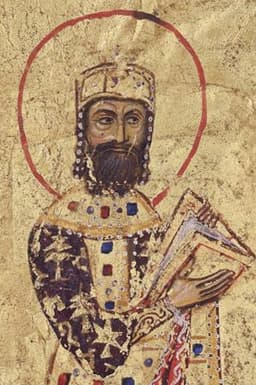
Alexios I Komnenos
Emperor · Medieval
78.4Total
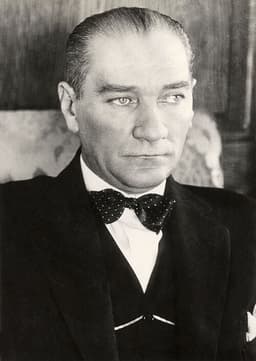
Mustafa Kemal Ataturk
Politician · Modern
80.0Total
Basic Information
Born
1048
1881
Died
1118
1938
Era
Medieval
Modern
Nationality
Byzantine Empire
Turkey
Occupation
Emperor
Politician
Civilization
Western
Middle Eastern
Score Comparison
Military (10%)
61.7
75.0
Political (20%)
78.0
85.0
Influence (20%)
88.0
75.0
Legacy (20%)
80.0
90.0
Leadership (15%)
78.0
80.0
Strategy (15%)
68.0
65.0
TOTAL
78.4
80.0
Alexios I Komnenos — Complete Timeline
1081 AD
Battle of DyrrhachiumWar◆ Major
Alexios I Komnenos was defeated by the Norman army under Robert Guiscard at Dyrrhachium. The Byzantine forces were routed, and Alexios barely escaped. This loss allowed the Normans to occupy much of the western Balkans, though Alexios later recovered some territory.
Norman InvasionDefeatBalkans
Impact: regionaltragic
1090 AD
Reforms of the Byzantine Military and EconomyReform◆ Major
Alexios I implemented a series of reforms to restore Byzantine power. He reorganized the army by relying more on foreign mercenaries, reformed the currency (the hyperpyron), and granted tax exemptions to the Church. These measures stabilized the empire after decades of decline.
Military ReformEconomic ReformKomnenian Restoration
Impact: nationalconstructive
1095 AD
Appeal to the West: Council of PiacenzaPolitical Action
Alexios I sent envoys to Pope Urban II at the Council of Piacenza, requesting military aid against the Seljuk Turks. This appeal contributed to Urban's call for the First Crusade at the Council of Clermont later that year, initiating the Crusader movement.
First CrusadePope Urban IISeljuk Turks
Impact: global
1097 AD
First Crusade: Siege of NicaeaWar◆ Major
Alexios I cooperated with the Crusader army to besiege and capture Nicaea from the Seljuk Turks. The city was surrendered to Byzantine control, and Alexios used the Crusaders to recover key territories in Anatolia, though tensions later arose over land claims.
First CrusadeNicaeaByzantine-Crusader Relations
Impact: regionalconstructive
Mustafa Kemal Ataturk — Complete Timeline
1915 AD
Battle of GallipoliWar
As a colonel, Mustafa Kemal commanded Ottoman forces at Gallipoli, successfully repelling Allied landings. His leadership at critical points like Chunuk Bair made him a national hero and laid the foundation for his political career.
World War IOttoman EmpireMilitary Victory
Impact: regional
1919 AD
Turkish War of IndependenceWar
Kemal organized and led the Turkish National Movement against the Allied occupation of Anatolia and the Treaty of S
Independence WarNational MovementAnkara
Impact: nationalconstructive
1922 AD
Abolition of the SultanatePolitical Action◆ Major
The Grand National Assembly of Turkey, under Kemal's leadership, abolished the Ottoman Sultanate, ending 600 years of imperial rule. This severed the link with the old regime and paved the way for the proclamation of the Republic.
SultanateRepublicPolitical Reform
Impact: nationalprogressive
1923 AD
Proclamation of the Republic of TurkeyPolitical Action
Kemal declared Turkey a republic, becoming its first president. He moved the capital to Ankara and initiated a series of radical reforms to modernize and secularize the state, including the adoption of a new legal code and the Latin alphabet.
RepublicModernizationSecularism
Impact: globalprogressive
1925 AD
Adoption of the Hat LawReform◆ Major
Kemal introduced the Hat Law, banning the fez and encouraging Western-style hats. This was part of his broader cultural revolution to secularize and Westernize Turkish society, symbolizing the break with Ottoman traditions.
Cultural ReformSecularismWesternization
Impact: nationalprogressive
1934 AD
Granting of Women's SuffrageReform◆ Major
Kemal's government granted women the right to vote and stand for election in national elections, ahead of many European countries. This reform was part of his commitment to gender equality and modernization of Turkish society.
Women's RightsSuffrageModernization
Impact: nationalprogressive
Expert Analysis
Origins
Mustafa Kemal Atatürk (1881–1938) was born in Salonica, then part of the Ottoman Empire. He rose through the military ranks, distinguishing himself at Gallipoli. Alexios I Komnenos (c. 1048–1118) was born into Byzantine nobility, the nephew of Emperor Isaac I. He seized power during a period of military and economic decline.
Rise to Power
Atatürk's rise came after World War I, when he organized resistance to the Allied partition of Anatolia. He led the Turkish National Movement, culminating in the Turkish War of Independence (1919–1923). Alexios I came to power through a coup in 1081, overthrowing Nikephoros III. He faced immediate threats from Normans, Pechenegs, and Seljuks.
Leadership & Governance
Atatürk transformed Turkey into a secular, modern nation-state. He abolished the sultanate, adopted Western legal codes, introduced the Latin alphabet, and granted women suffrage. His reforms were top-down and rapid. Alexios I stabilized the Byzantine Empire through military and financial reforms. He appealed to the West for help, leading to the First Crusade, which he skillfully manipulated to recover lost territories.
Triumph & Tragedy
Atatürk's greatest triumph was securing Turkish independence and founding a republic. His secular reforms faced opposition but ultimately shaped modern Turkey. Alexios I's tragedy was the unintended consequence of the Crusades: the establishment of Crusader states that complicated Byzantine relations with the West. The First Crusade succeeded in recapturing Nicaea and Antioch, but tensions with Crusaders persisted.
Character & Destiny
Atatürk was a visionary authoritarian, dedicated to Westernization and nationalism. His personal habits (alcohol, smoking) contrasted with his public image. Alexios I was a pragmatic survivor, often accused of duplicity. He wrote his memoirs, the Alexiad, through his daughter Anna. Both men were determined to save their civilizations from collapse.
Legacy
Atatürk is revered in Turkey as the "Father of the Turks." His image and ideology (Kemalism) remain central to Turkish identity. Alexios I revived the Byzantine Empire temporarily, but his policies set the stage for the Fourth Crusade's sack of Constantinople in 1204. He is remembered as a capable but controversial emperor.
Conclusion
Atatürk (overall score: 80) surpasses Alexios I (78) due to his transformative impact on a nation that endures today. Alexios I's legacy is more ambiguous, tied to the Crusades' mixed outcomes. Atatürk's reforms created a modern state, while Alexios I's achievements were more reactive and temporary.
**Scores:**
- Atatürk: M=75, P=85, I=75, L=90, D=80, S=65, T=80
- Alexios I: M=62, P=78, I=88, L=80, D=78, S=68, T=78
Rankings
🥇
Mustafa Kemal AtaturkLeader
Mil: 75.0Pol: 85.0Inf: 75.0
80.0
🥈
Alexios I Komnenos
Mil: 61.7Pol: 78.0Inf: 88.0
78.4
+1.6 behind
How This Comparison Works
Algorithm
Each figure is scored on 6 dimensions (0—100 scale) based on structured historical data: Military (10%), Political (20%), Influence (20%), Legacy (20%), Leadership (15%), Strategy (15%). The weighted total produces the final ranking.
Data Sources
Scores are computed from structured sub-indicators in the database. Scale factors adjust for era (Ancient ×0.85, Modern ×1.0) and civilization size (Eastern ×1.05, Other ×0.80) to account for differences in population and military scale.
Maximum 3 Figures
Comparisons are limited to 2—3 figures to ensure readability and statistical meaningfulness.
Error Margins
±5 points per dimension — Sub-scores are derived from historical records with inherent uncertainty. Two figures within 5 points on a dimension should be considered roughly equivalent in that area.
Total Score Accuracy
±3 points overall — The weighted combination of 6 dimensions produces a total score with approximately ±3 points of uncertainty. Differences of less than 3 points are not statistically significant— the figures are effectively tied.
Known Limitations
- Historical records are incomplete and uneven across civilizations
- Figures from oral-tradition societies may be underrepresented
- Occupation labels can misclassify multi-role figures
- Scores measure capability and impact, not moral character
- Quantitative scoring is a comparison tool, not absolute truth
Capability Radar
Military (10%) — Battles & Warfare
Battles
75
85
Win Rate
70
90
Expansion
60
60
Political (20%) — Governance & Reform
Reform
85
98
Diplomacy
90
85
Economy
70
75
Influence (20%) — Cultural & Global Reach
Cultural
70
90
Global
75
80
Legacy (20%) — Historical Impact
Historical
85
95
Longevity
80
85
Leadership (15%) — Power & Stability
Tenure
80
85
Stability
75
70
Strategy (15%) — Tactics & Innovation
Strategy
85
85
Tactics
80
88
Reform
75
80
Similar Comparisons
Comments & Discussion
No comments yet. Be the first to share your thoughts!