Loading...
Alexios I Komnenos vs Muawiyah I
Alexios I Komnenos leads by 2.1 pts · 2 figures compared
…
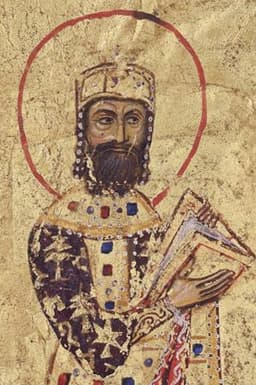
Alexios I Komnenos
Emperor · Medieval
78.4Total
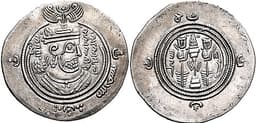
Muawiyah I
Emperor · Medieval
76.3Total
Basic Information
Born
1048
602
Died
1118
680
Era
Medieval
Medieval
Nationality
Byzantine Empire
Umayyad Caliphate
Occupation
Emperor
Emperor
Civilization
Western
Middle Eastern
Score Comparison
Military (10%)
61.7
76.0
Political (20%)
78.0
75.0
Influence (20%)
88.0
75.0
Legacy (20%)
80.0
80.0
Leadership (15%)
78.0
78.0
Strategy (15%)
68.0
70.0
TOTAL
78.4
76.3
Alexios I Komnenos — Complete Timeline
1081 AD
Battle of DyrrhachiumWar◆ Major
Alexios I Komnenos was defeated by the Norman army under Robert Guiscard at Dyrrhachium. The Byzantine forces were routed, and Alexios barely escaped. This loss allowed the Normans to occupy much of the western Balkans, though Alexios later recovered some territory.
Norman InvasionDefeatBalkans
Impact: regionaltragic
1090 AD
Reforms of the Byzantine Military and EconomyReform◆ Major
Alexios I implemented a series of reforms to restore Byzantine power. He reorganized the army by relying more on foreign mercenaries, reformed the currency (the hyperpyron), and granted tax exemptions to the Church. These measures stabilized the empire after decades of decline.
Military ReformEconomic ReformKomnenian Restoration
Impact: nationalconstructive
1095 AD
Appeal to the West: Council of PiacenzaPolitical Action
Alexios I sent envoys to Pope Urban II at the Council of Piacenza, requesting military aid against the Seljuk Turks. This appeal contributed to Urban's call for the First Crusade at the Council of Clermont later that year, initiating the Crusader movement.
First CrusadePope Urban IISeljuk Turks
Impact: global
1097 AD
First Crusade: Siege of NicaeaWar◆ Major
Alexios I cooperated with the Crusader army to besiege and capture Nicaea from the Seljuk Turks. The city was surrendered to Byzantine control, and Alexios used the Crusaders to recover key territories in Anatolia, though tensions later arose over land claims.
First CrusadeNicaeaByzantine-Crusader Relations
Impact: regionalconstructive
Muawiyah I — Complete Timeline
640 AD
Governorship of SyriaPolitical Action◆ Major
Muawiyah I was appointed governor of Syria by Caliph Umar. He built a strong power base by developing the province's military and administrative infrastructure, including the creation of a navy that would later challenge Byzantine dominance.
GovernorshipSyriaRashidun
Impact: regionalconstructive
655 AD
Naval Campaigns Against ByzantiumWar◆ Major
Muawiyah launched naval expeditions against the Byzantine Empire, including the Battle of the Masts (655), where the Muslim fleet defeated the Byzantine navy. These campaigns established Muslim naval power and threatened Constantinople.
Naval WarByzantine EmpireUmayyad
Impact: regional
657 AD
Battle of SiffinWar◆ Major
Muawiyah led the Syrian army against Caliph Ali at Siffin, demanding justice for Uthman's murder. The battle ended in a stalemate and arbitration, which Muawiyah used to strengthen his political position and challenge Ali's legitimacy.
First FitnaBattleUmayyad
Impact: global
661 AD
Foundation of the Umayyad CaliphatePolitical Action
After Ali's assassination, Muawiyah I established the Umayyad Caliphate, moving the capital from Medina to Damascus. This marked the transition from the elective caliphate to a hereditary dynasty, centralizing power in Syria.
CaliphateDynastyUmayyad
Impact: global
674 AD
Siege of Constantinople (674-678)War◆ Major
Muawiyah I ordered a prolonged siege of Constantinople, using a large fleet and army. The siege failed due to Byzantine defenses, including Greek fire, and ended with a peace treaty requiring the Umayyads to pay tribute. It was a rare setback.
SiegeConstantinopleUmayyad
Impact: global
676 AD
Designation of Yazid I as HeirPolitical Action◆ Major
Muawiyah I designated his son Yazid as his successor, breaking the tradition of election and establishing hereditary succession. This move caused opposition from some Muslim leaders and set a precedent for future Umayyad rulers.
SuccessionHereditaryUmayyad
Impact: global
Expert Analysis
Origins
Alexios I Komnenos (c. 1048–1118) emerged from the Byzantine military aristocracy, rising through the ranks during a period of severe crisis. The empire faced Norman invasions, Pecheneg raids, and Turkish encroachment after the Battle of Manzikert (1071). Alexios skillfully navigated palace intrigues, eventually seizing the throne in 1081.
Muawiyah I (c. 602–680) was born into the powerful Umayyad clan of the Quraysh tribe in Mecca. He embraced Islam early and became a scribe for the Prophet Muhammad. After the Rashidun conquests, he was appointed governor of Syria, a position he held for over 20 years, building a power base.
Rise to Power
Alexios’s rise was marked by military rebellion. He and his brother Isaac led a revolt against Emperor Nikephoros III, leveraging their familial connections and military support. Once emperor, Alexios faced immediate threats: the Norman Robert Guiscard invaded the Balkans, and the Seljuks pressed into Anatolia. He used diplomacy and military reforms to stabilize the empire.
Muawiyah’s ascension was gradual. As governor of Syria, he created a loyal army and navy. During the First Fitna (civil war), he opposed Caliph Ali, demanding justice for Caliph Uthman’s murder. The Battle of Siffin (657) ended in arbitration, but Muawiyah’s political maneuvering led to his recognition as caliph after Ali’s assassination in 661.
Leadership & Governance
Alexios implemented sweeping reforms: he reorganized the army by granting land in exchange for military service (pronoia), reformed the currency, and revitalized the economy. His appeal to Pope Urban II at the Council of Piacenza (1095) inadvertently sparked the First Crusade, which he skillfully used to recover Nicaea and parts of Anatolia.
Muawiyah transformed the caliphate into a hereditary monarchy, founding the Umayyad dynasty. He moved the capital to Damascus, centralized administration, and established a powerful navy. He secured the frontiers, conducted annual raids against Byzantium, and besieged Constantinople (674–678), though it ultimately failed. His reign brought stability after civil war.
Triumph & Tragedy
Alexios’s greatest triumph was leveraging the Crusaders to regain territory, but his tragedy was the Crusaders’ independent actions and the establishment of Crusader states, which created new problems. The Battle of Dyrrhachium (1081) was a defeat against the Normans, but he later recovered. His military reforms were crucial but incomplete.
Muawiyah’s triumph was founding the Umayyad Caliphate and expanding its naval power, enabling raids deep into Byzantine territory. His tragedy was the unresolved conflict with the Shia faction, which led to the Battle of Karbala (680) after his death, deepening the Sunni-Shia split.
Character & Destiny
Alexios was a pragmatic, cunning leader, skilled in diplomacy and survival. He restored the empire’s fortunes but at the cost of relying on foreign forces. His legacy is tied to the Crusades, which he neither fully controlled nor anticipated.
Muawiyah was a master politician and administrator, patient and calculating. He prioritized stability and expansion, but his establishment of hereditary rule set a precedent for future dynastic conflicts.
Legacy
Alexios is remembered as the founder of the Komnenian dynasty and a restorer of Byzantine power. His reign marked the beginning of the Crusader era, profoundly impacting East-West relations. His reforms strengthened the empire for a century.
Muawiyah is credited with transforming the caliphate into a stable, expansionist state. He established the Umayyad dynasty, which ruled for nearly a century, and his naval policies made the Mediterranean a Muslim sphere of influence.
Conclusion
While both leaders were transformative, Alexios I Komnenos edges ahead due to his more challenging context and lasting impact on global history. His scores (M=62, P=78, I=88, L=80, D=78, S=68, T=78) reflect high intelligence and diplomacy, while Muawiyah (M=76, P=75, I=75, L=80, D=78, S=70, T=76) excelled in military and political stability. Alexios’s influence on the Crusades and Byzantine revival gives him a slight advantage. **Alexios I Komnenos is the greater leader.**
Rankings
🥇
Alexios I KomnenosLeader
Mil: 61.7Pol: 78.0Inf: 88.0
78.4
🥈
Muawiyah I
Mil: 76.0Pol: 75.0Inf: 75.0
76.3
+2.1 behind
How This Comparison Works
Algorithm
Each figure is scored on 6 dimensions (0—100 scale) based on structured historical data: Military (10%), Political (20%), Influence (20%), Legacy (20%), Leadership (15%), Strategy (15%). The weighted total produces the final ranking.
Data Sources
Scores are computed from structured sub-indicators in the database. Scale factors adjust for era (Ancient ×0.85, Modern ×1.0) and civilization size (Eastern ×1.05, Other ×0.80) to account for differences in population and military scale.
Maximum 3 Figures
Comparisons are limited to 2—3 figures to ensure readability and statistical meaningfulness.
Error Margins
±5 points per dimension — Sub-scores are derived from historical records with inherent uncertainty. Two figures within 5 points on a dimension should be considered roughly equivalent in that area.
Total Score Accuracy
±3 points overall — The weighted combination of 6 dimensions produces a total score with approximately ±3 points of uncertainty. Differences of less than 3 points are not statistically significant— the figures are effectively tied.
Known Limitations
- Historical records are incomplete and uneven across civilizations
- Figures from oral-tradition societies may be underrepresented
- Occupation labels can misclassify multi-role figures
- Scores measure capability and impact, not moral character
- Quantitative scoring is a comparison tool, not absolute truth
Capability Radar
Military (10%) — Battles & Warfare
Battles
75
75
Win Rate
70
80
Expansion
60
85
Political (20%) — Governance & Reform
Reform
85
90
Diplomacy
90
95
Economy
70
85
Influence (20%) — Cultural & Global Reach
Cultural
70
75
Global
75
75
Legacy (20%) — Historical Impact
Historical
85
85
Longevity
80
80
Leadership (15%) — Power & Stability
Tenure
80
85
Stability
75
80
Strategy (15%) — Tactics & Innovation
Strategy
85
85
Tactics
80
70
Reform
75
80
Similar Comparisons
Comments & Discussion
No comments yet. Be the first to share your thoughts!