Loading...
Alexios I Komnenos vs Li Cunxu
Alexios I Komnenos leads by 11.9 pts · 2 figures compared
…
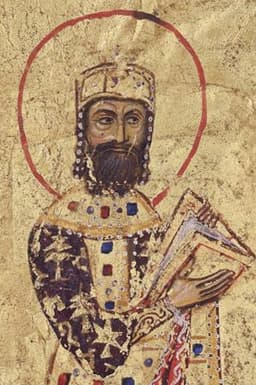
Alexios I Komnenos
Emperor · Medieval
78.4Total
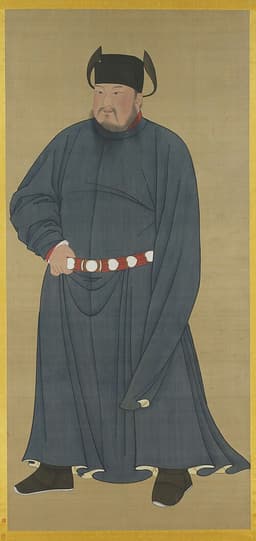
Li Cunxu
Emperor · Medieval
66.5Total
Basic Information
Born
1048
885
Died
1118
926
Era
Medieval
Medieval
Nationality
Byzantine Empire
China
Occupation
Emperor
Emperor
Civilization
Western
Eastern
Score Comparison
Military (10%)
61.7
76.0
Political (20%)
78.0
68.0
Influence (20%)
88.0
62.0
Legacy (20%)
80.0
58.0
Leadership (15%)
78.0
80.0
Strategy (15%)
68.0
67.2
TOTAL
78.4
66.5
Alexios I Komnenos — Complete Timeline
1081 AD
Battle of DyrrhachiumWar◆ Major
Alexios I Komnenos was defeated by the Norman army under Robert Guiscard at Dyrrhachium. The Byzantine forces were routed, and Alexios barely escaped. This loss allowed the Normans to occupy much of the western Balkans, though Alexios later recovered some territory.
Norman InvasionDefeatBalkans
Impact: regionaltragic
1090 AD
Reforms of the Byzantine Military and EconomyReform◆ Major
Alexios I implemented a series of reforms to restore Byzantine power. He reorganized the army by relying more on foreign mercenaries, reformed the currency (the hyperpyron), and granted tax exemptions to the Church. These measures stabilized the empire after decades of decline.
Military ReformEconomic ReformKomnenian Restoration
Impact: nationalconstructive
1095 AD
Appeal to the West: Council of PiacenzaPolitical Action
Alexios I sent envoys to Pope Urban II at the Council of Piacenza, requesting military aid against the Seljuk Turks. This appeal contributed to Urban's call for the First Crusade at the Council of Clermont later that year, initiating the Crusader movement.
First CrusadePope Urban IISeljuk Turks
Impact: global
1097 AD
First Crusade: Siege of NicaeaWar◆ Major
Alexios I cooperated with the Crusader army to besiege and capture Nicaea from the Seljuk Turks. The city was surrendered to Byzantine control, and Alexios used the Crusaders to recover key territories in Anatolia, though tensions later arose over land claims.
First CrusadeNicaeaByzantine-Crusader Relations
Impact: regionalconstructive
Li Cunxu — Complete Timeline
908 AD
Succeeded as Prince of JinPolitical Action◆ Major
Li Cunxu inherited the title Prince of Jin from his father Li Keyong. He continued the struggle against Later Liang, consolidating the Jin state as a major power in northern China.
JinSuccessionFive Dynasties
Impact: regional
910 AD
Battle of BaixiangWar◆ Major
Li Cunxu's Jin army defeated the Later Liang forces under Zhu Wen at Baixiang. This victory established Jin as the dominant military power in the north and marked a turning point in the war.
JinLater LiangBattle
Impact: regionalconstructive
923 AD
Conquered Later LiangWar
Li Cunxu led a successful campaign against Later Liang, capturing its capital Kaifeng and ending the dynasty. He then proclaimed himself emperor, founding the Later Tang dynasty.
Later TangConquestDynastic Change
Impact: nationalconstructive
Founded Later Tang DynastyPolitical Action
Li Cunxu declared himself emperor of the Later Tang dynasty, claiming legitimacy as the restorer of the Tang lineage. He established his capital at Luoyang and reunified much of northern China.
Later TangDynasty FoundingReunification
Impact: nationalconstructive
926 AD
Killed in mutiny at XingyuanWar◆ Major
Li Cunxu faced a mutiny by his own troops at Xingyuan during a campaign against the Khitans. He was killed in the fighting, leading to the collapse of Later Tang and the rise of Later Jin.
Later TangMutinyDeath
Impact: nationaltragic
Expert Analysis
Alexios I Komnenos vs Li Cunxu
# The Emperor and the Warlord: Alexios I Komnenos and Li Cunxu
In the autumn of 1095, a desperate Byzantine emperor stood before the assembled bishops and nobles of Western Christendom at the Council of Piacenza. Alexios I Komnenos had come to beg for help against the Seljuk Turks who had overrun Anatolia. Less than two centuries later, his appeal would trigger the Crusades, reshaping the medieval world. Half a world away, in 923, another emperor—Li Cunxu of the Later Tang dynasty—marched into Kaifeng at the head of a victorious army, having overthrown the Later Liang and reunified northern China under a restored imperial banner. Both men were warrior-emperors who saved their dynasties from collapse. Yet one founded a legacy that echoed across continents, while the other died in a mutiny just three years after his greatest triumph. What drove such different outcomes?
Origins
Alexios Komnenos was born in 1048 into a Byzantine aristocracy that had learned to survive amid chaos. The empire he inherited in 1081 was a shadow of its former glory: the Normans had taken southern Italy, the Seljuks had crushed the imperial army at Manzikert a decade earlier, and internal revolts were endemic. Alexios grew up in a world of court intrigue and military crisis, where a man had to be both a general and a politician to survive. His family had already produced an emperor—Isaac I Komnenos—and young Alexios learned early that power was something you seized, not something you waited for.
Li Cunxu was born in 885, the son of Li Keyong, a Shatuo Turkic chieftain who had been granted the title Prince of Jin by the faltering Tang dynasty. The Tang had collapsed into the Five Dynasties and Ten Kingdoms period, a brutal era of shifting alliances and constant warfare. Li Cunxu grew up in a military camp, surrounded by Turkic cavalrymen and Chinese advisors, learning to fight before he could read. His father’s dying words in 908 were a command: destroy the rival Later Liang dynasty that had usurped the Tang mandate. This was not a request—it was a blood oath.
Rise to Power
Alexios rose through a combination of military competence and political cunning. In 1081, at age 33, he led a rebellion against the unpopular Emperor Nikephoros III Botaneiates, marching on Constantinople with his brother Isaac. The city’s gates opened, and Alexios was crowned. But his throne was immediately tested: within months, the Norman warlord Robert Guiscard invaded the Balkans. At the Battle of Dyrrhachium in 1081, Alexios faced Guiscard’s disciplined Norman knights. The result was a rout. Alexios’s Varangian Guard—mostly Anglo-Saxon exiles—was slaughtered, and the emperor barely escaped with his life. It was a humiliating beginning, but Alexios learned from it. He would never again fight a pitched battle against a superior Western army.
Li Cunxu’s rise was more straightforward. He inherited his father’s title at age 23 and immediately went on the offensive. In 910, at the Battle of Baixiang, he crushed the Later Liang army under the usurper Zhu Wen, establishing Jin as the dominant power in northern China. For the next thirteen years, Li Cunxu waged a relentless campaign, combining Turkic cavalry tactics with Chinese siegecraft. His soldiers called him “the Living Thunder” for his ferocity in battle. By 923, he was ready. He marched on Kaifeng, the Later Liang capital, and when the city fell, he declared himself emperor of the restored Tang dynasty. He was 38 years old, and China was at his feet.
Leadership & Governance
Here the two emperors diverged sharply. Alexios governed with a steady hand, understanding that survival required compromise. After Dyrrhachium, he reformed the Byzantine military, relying increasingly on foreign mercenaries—Normans, Pechenegs, and Turks—rather than the unreliable native levies. He also overhauled the economy, debasing the currency to pay for his wars but stabilizing the treasury. His greatest political achievement came in 1090, when he reformed the system of *pronoia*—granting land revenues to soldiers in exchange for military service—creating a flexible, loyal army that could respond to threats across the empire.
When Alexios appealed to the West at the Council of Piacenza in 1095, he was thinking tactically: he needed a few thousand mercenaries to retake Anatolia. Instead, he got the First Crusade—a massive, chaotic army of knights and peasants that threatened to overwhelm Constantinople. Alexios handled this crisis with remarkable skill. He demanded that all Crusader leaders swear oaths of fealty to him, promising to return former Byzantine territories. At the Siege of Nicaea in 1097, he cooperated with the Crusaders to capture the city, then took control of it himself, keeping his word to the letter while outmaneuvering the Westerners. It was a masterclass in political survival.
Li Cunxu, by contrast, was a conqueror, not an administrator. Once he became emperor in 923, he seemed unsure what to do with his power. He trusted his generals too much and his civil officials too little. He spent lavishly on his court and his favorites, alienating the very soldiers who had won him his throne. He never reformed the tax system or established a stable bureaucracy. Most fatally, he failed to secure the loyalty of his Turkic cavalry, who saw him as increasingly Chinese and distant. The Later Tang dynasty he founded would last only thirteen years—barely longer than Li Cunxu’s own reign.
Triumph & Tragedy
Alexios’s greatest triumph was simply surviving. By the time of his death in 1118, at age 70, he had restored Byzantine power in the Balkans and Anatolia, founded the Komnenian dynasty that would rule for a century, and set in motion events—the Crusades—that would dominate the medieval world. His tragedy was that he never fully controlled the forces he had unleashed. The Crusaders he summoned would eventually turn on Byzantium, sacking Constantinople in 1204, a disaster that Alexios could not have foreseen but helped to create.
Li Cunxu’s triumph was swift and total. In 923, he was the master of northern China, hailed as the restorer of the Tang dynasty. His tragedy came just three years later, in 926. While campaigning against the Khitans in the north, his own troops mutinied at Xingyuan. The “Living Thunder” was killed by his own soldiers, abandoned by the men who had once worshipped him. His empire crumbled within months.
Character & Destiny
Alexios was cautious, calculating, and patient. He understood that empire was a long game. He could absorb defeats—like Dyrrhachium—and learn from them. He could humble himself before the Pope and the Crusaders, knowing that survival mattered more than pride. His personality was shaped by the Byzantine tradition of *oikonomia*—pragmatic flexibility in the face of necessity.
Li Cunxu was bold, charismatic, and reckless. He won his empire through sheer force of will, but he could not govern it. He trusted his instincts, and his instincts failed him. His personality was that of a tribal war leader, not an imperial administrator. In the cutthroat world of the Five Dynasties, such men rose fast and fell faster.
Legacy
Alexios I Komnenos left a lasting legacy. The Komnenian restoration gave Byzantium another century of life. The Crusades, for all their unintended consequences, reshaped the Mediterranean world. His reforms influenced Byzantine governance for generations. Today, he is remembered as a founder—the man who pulled the empire back from the brink.
Li Cunxu’s legacy is more ambiguous. He is honored as a brilliant general and the restorer of the Tang name, but his dynasty was brief, and his death in a mutiny became a cautionary tale. In Chinese history, he is a footnote in the chaotic Five Dynasties period—a bright flame that burned out too quickly.
Conclusion
The difference between Alexios and Li Cunxu was not talent—both were exceptional men. It was not luck—both faced overwhelming odds. The difference was temperament. Alexios understood that empire was a marathon, not a sprint. He could bend without breaking, compromise without surrendering, and plan for a future he would not live to see. Li Cunxu could only charge forward, and when the charge ended, so did he. In the end, the emperor who begged for help from the West outlasted the conqueror who took China by storm. History, it seems, favors those who know how to wait.
Rankings
🥇
Alexios I KomnenosLeader
Mil: 61.7Pol: 78.0Inf: 88.0
78.4
🥈
Li Cunxu
Mil: 76.0Pol: 68.0Inf: 62.0
66.5
+11.9 behind
How This Comparison Works
Algorithm
Each figure is scored on 6 dimensions (0—100 scale) based on structured historical data: Military (10%), Political (20%), Influence (20%), Legacy (20%), Leadership (15%), Strategy (15%). The weighted total produces the final ranking.
Data Sources
Scores are computed from structured sub-indicators in the database. Scale factors adjust for era (Ancient ×0.85, Modern ×1.0) and civilization size (Eastern ×1.05, Other ×0.80) to account for differences in population and military scale.
Maximum 3 Figures
Comparisons are limited to 2—3 figures to ensure readability and statistical meaningfulness.
Error Margins
±5 points per dimension — Sub-scores are derived from historical records with inherent uncertainty. Two figures within 5 points on a dimension should be considered roughly equivalent in that area.
Total Score Accuracy
±3 points overall — The weighted combination of 6 dimensions produces a total score with approximately ±3 points of uncertainty. Differences of less than 3 points are not statistically significant— the figures are effectively tied.
Known Limitations
- Historical records are incomplete and uneven across civilizations
- Figures from oral-tradition societies may be underrepresented
- Occupation labels can misclassify multi-role figures
- Scores measure capability and impact, not moral character
- Quantitative scoring is a comparison tool, not absolute truth
Capability Radar
Military (10%) — Battles & Warfare
Battles
75
85
Win Rate
70
80
Expansion
60
75
Political (20%) — Governance & Reform
Reform
85
50
Diplomacy
90
60
Economy
70
45
Influence (20%) — Cultural & Global Reach
Cultural
70
55
Global
75
45
Legacy (20%) — Historical Impact
Historical
85
65
Longevity
80
50
Leadership (15%) — Power & Stability
Tenure
80
55
Stability
75
40
Strategy (15%) — Tactics & Innovation
Strategy
85
78
Tactics
80
82
Reform
75
60
Similar Comparisons
Comments & Discussion
RedFlagWaver6/16/2026
"Let’s talk class war. Alexios crushed the Thracian peasants in 1087 to fund his wars—typical Byzantine nobility. Li Cunxu? He inherited a steppe war machine built by his father Li Keyong, then squandered it on opera troupes and eunuchs. Neither were heroes. One bribed Western knights to fight his dirty war; the other turned his court into a theatrical ruin. Give me the Tang rebel Huang Chao over both—at least he knew how to burn it all down."
Byzantinophile6/16/2026
"Alexios wasn’t playing 4D chess—he played a desperate political gamble that accidentally reshaped the West. The First Crusade was a chaotic Frankenstein of holy war and land grab. Meanwhile, Li Cunxu actually did win his empire by pure military grit. Alexios begged for mercenaries. Li beat the Liang in open battle at Yanzhou. I’ll take a warlord who dies in a mutiny over a begging emperor who birthed crusades he didn’t control."
数据考证家6/16/2026
"光看数字就离谱。阿莱克修斯在位37年,李存勖仅3年。但仔细算,李灭后梁时已掌兵近十年,联晋抗梁、沙陀铁骑横扫中原。阿莱克修斯呢?关键战役如德林堡,史料都模糊得像中彩票。别拿句‘拯救帝国’当光环,他收复的安纳托利亚不到1/5。李的速败反而显出他风险偏好极高,不是运气差。"
ClassicistNick6/16/2026
"You’re all missing the elephant in the throne room: Alexios revived Byzantine diplomacy by canonizing ‘oikonomia’—that pragmatic bend that saved the empire for another century. Li Cunxu? A drunk opera singer who forgot statecraft. Alexios wrote the Alexiad through Anna; his legacy endured. Li’s dynasty was erased by a stepbrother’s coup. Only one of them built an institution, the other just a campfire story."
历史迷小张6/16/2026
"别吵了,看历史走向:阿莱克修斯1173万平方公里领土缩到15万,靠十字军续命;李存勖从沙陀部落打到中原,灭后梁时握有35万疆域。阿莱克修斯死后曼努埃尔一世还能翻盘,李一倒,后唐立马崩。但李比阿更猛——他亲自冲锋陷阵,阿只会躲城墙后写求救信。死了还留一堆烂摊子给女儿哭诉。"