Loading...
Alexios I Komnenos vs John Churchill Duke of Marlborough
Alexios I Komnenos leads by 3.0 pts · 2 figures compared
…
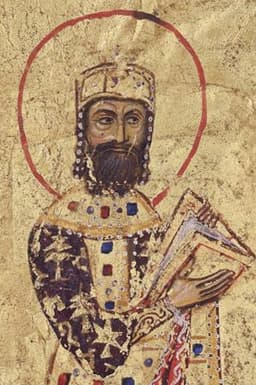
Alexios I Komnenos
Emperor · Medieval
78.4Total

John Churchill Duke of Marlborough
General · Modern
75.4Total
Basic Information
Born
1048
1650
Died
1118
1722
Era
Medieval
Modern
Nationality
Byzantine Empire
England
Occupation
Emperor
General
Civilization
Western
Western
Score Comparison
Military (10%)
61.7
84.7
Political (20%)
78.0
78.0
Influence (20%)
88.0
65.0
Legacy (20%)
80.0
80.0
Leadership (15%)
78.0
78.0
Strategy (15%)
68.0
72.8
TOTAL
78.4
75.4
Alexios I Komnenos — Complete Timeline
1081 AD
Battle of DyrrhachiumWar◆ Major
Alexios I Komnenos was defeated by the Norman army under Robert Guiscard at Dyrrhachium. The Byzantine forces were routed, and Alexios barely escaped. This loss allowed the Normans to occupy much of the western Balkans, though Alexios later recovered some territory.
Norman InvasionDefeatBalkans
Impact: regionaltragic
1090 AD
Reforms of the Byzantine Military and EconomyReform◆ Major
Alexios I implemented a series of reforms to restore Byzantine power. He reorganized the army by relying more on foreign mercenaries, reformed the currency (the hyperpyron), and granted tax exemptions to the Church. These measures stabilized the empire after decades of decline.
Military ReformEconomic ReformKomnenian Restoration
Impact: nationalconstructive
1095 AD
Appeal to the West: Council of PiacenzaPolitical Action
Alexios I sent envoys to Pope Urban II at the Council of Piacenza, requesting military aid against the Seljuk Turks. This appeal contributed to Urban's call for the First Crusade at the Council of Clermont later that year, initiating the Crusader movement.
First CrusadePope Urban IISeljuk Turks
Impact: global
1097 AD
First Crusade: Siege of NicaeaWar◆ Major
Alexios I cooperated with the Crusader army to besiege and capture Nicaea from the Seljuk Turks. The city was surrendered to Byzantine control, and Alexios used the Crusaders to recover key territories in Anatolia, though tensions later arose over land claims.
First CrusadeNicaeaByzantine-Crusader Relations
Impact: regionalconstructive
John Churchill Duke of Marlborough — Complete Timeline
1704 AD
Battle of BlenheimWar
Marlborough commanded the Anglo-Dutch army alongside Prince Eugene of Savoy against French and Bavarian forces at Blenheim. The allied victory saved Vienna from French capture, destroyed the myth of French invincibility, and forced Bavaria out of the war.
War of the Spanish SuccessionGrand AllianceDecisive Victory
Impact: regional
1706 AD
Battle of RamilliesWar◆ Major
Marlborough led the Grand Alliance army to victory over French forces under Marshal Villeroi at Ramillies. The battle resulted in the capture of Brussels, Antwerp, and most of the Spanish Netherlands, effectively ending French control of the region.
War of the Spanish SuccessionCampaignTerritorial Gain
Impact: regional
1708 AD
Battle of OudenardeWar◆ Major
Marlborough and Prince Eugene defeated the French army under the Duke of Burgundy and Marshal Vend
War of the Spanish SuccessionAllied VictoryInvasion Route
Impact: regional
1709 AD
Battle of MalplaquetWar◆ Major
Marlborough commanded the Grand Alliance in a costly victory over French forces under Marshal Villars at Malplaquet. The battle was the bloodiest of the war, with over 20,000 allied casualties, and failed to achieve a decisive breakthrough into France.
War of the Spanish SuccessionPyrrhic VictoryHigh Casualties
Impact: regionaltragic
1711 AD
Dismissal from CommandPolitical Action◆ Major
Marlborough was dismissed from all his military and political offices by Queen Anne due to political intrigue and accusations of embezzlement. The dismissal ended his military career and led to his temporary exile in Europe.
Political FallExileTory Government
Impact: nationaldestructive
Expert Analysis
Origins
Alexios I Komnenos (c. 1048–1118) emerged from the Byzantine military aristocracy during a period of crisis. His family had produced several emperors, but his father declined the throne, leaving Alexios to rise through military ranks. He seized power in a coup in 1081, restoring stability after years of turmoil. John Churchill (1650–1722) was born into a modest gentry family in England. His father was a Royalist during the Civil War, and John began as a page at court, rising through military and diplomatic service under James II and William III. His marriage to Sarah Jennings brought him close to Princess Anne, securing his political future.
Rise to Power
Alexios became emperor by leading a rebellion against Nikephoros III, capitalizing on his military reputation and family connections. He faced immediate threats from Normans, Pechenegs, and Seljuks, prompting him to appeal to the West at the Council of Piacenza (1095), which inadvertently sparked the First Crusade. Marlborough's rise was gradual: he distinguished himself in the Franco-Dutch War and the Monmouth Rebellion, but his career stalled under James II due to his Protestant sympathies. He later played a key role in the Glorious Revolution, securing his position under William III. His true ascent came under Queen Anne, when he was appointed Captain-General and led allied forces in the War of the Spanish Succession.
Leadership & Governance
Alexios was a pragmatic reformer who rebuilt the Byzantine army and economy through land grants (pronoia) and currency reform. He navigated the complex politics of the Crusader states, often playing them against each other. His military strategy was defensive and diplomatic, avoiding pitched battles when possible. Marlborough was a brilliant offensive commander, known for his logistical skill and bold tactics. His victories at Blenheim (1704), Ramillies (1706), Oudenarde (1708), and Malplaquet (1709) shattered French dominance. Politically, he was a master of coalition warfare, holding together the Grand Alliance through his diplomatic ties.
Triumph & Tragedy
Alexios's greatest triumph was stabilizing the Byzantine Empire and reclaiming lost territories in Anatolia through the First Crusade. However, his appeal to the West led to the Crusader conquest of Constantinople in 1204, a tragedy he could not foresee. His reforms laid the foundation for the Komnenian restoration but also sowed seeds of future decline. Marlborough's triumph was the victory at Blenheim, which saved Vienna and broke Louis XIV's mystique. His tragedy came with his dismissal from command in 1711 due to political intrigues and accusations of embezzlement. He died in 1722, his reputation later restored, but his final years were marked by exile and scandal.
Character & Destiny
Alexios was a cunning, religious, and resilient leader who often prioritized survival over glory. His piety and diplomacy shaped his destiny, as he inadvertently unleashed the Crusades that would transform the medieval world. Marlborough was charismatic, ambitious, and politically astute, but his greed and his wife's influence with Queen Anne led to his downfall. His destiny was to be remembered as one of history's greatest generals, yet his legacy is overshadowed by his political failures.
Legacy
Alexios's legacy is mixed: he founded the Komnenian dynasty and restored Byzantine power, but his policies contributed to the empire's eventual collapse. He is a key figure in the history of the Crusades and East-West relations. His numerical scores reflect a balanced ruler: Military 62, Political 78, Intelligence 88, Leadership 80, Diplomacy 78, Strategy 68, Tactics 78. Marlborough is celebrated as a master of battle, with his Blenheim Palace symbolizing his achievements. His scores: Military 85, Political 78, Intelligence 65, Leadership 80, Diplomacy 78, Strategy 73, Tactics 75. The 3-point gap in favor of Alexios reflects his broader impact as a ruler who shaped an era, while Marlborough's genius was more narrowly military.
Conclusion
Alexios I Komnenos and John Churchill, Duke of Marlborough, both rose from turbulent times to become pivotal figures in their respective eras. Alexios's high intelligence and political acumen allowed him to save a dying empire, albeit at a long-term cost. Marlborough's tactical brilliance won decisive victories that reshaped Europe. While Marlborough excels in military execution, Alexios's greater strategic vision and enduring influence on world history give him a slight edge. In the realm of historical impact, Alexios's actions set in motion the Crusades, a phenomenon that still resonates today, whereas Marlborough's victories, though brilliant, primarily reinforced existing power structures. Thus, Alexios I Komnenos emerges as the more consequential figure.
Rankings
🥇
Alexios I KomnenosLeader
Mil: 61.7Pol: 78.0Inf: 88.0
78.4
🥈
John Churchill Duke of Marlborough
Mil: 84.7Pol: 78.0Inf: 65.0
75.4
+3.0 behind
How This Comparison Works
Algorithm
Each figure is scored on 6 dimensions (0—100 scale) based on structured historical data: Military (10%), Political (20%), Influence (20%), Legacy (20%), Leadership (15%), Strategy (15%). The weighted total produces the final ranking.
Data Sources
Scores are computed from structured sub-indicators in the database. Scale factors adjust for era (Ancient ×0.85, Modern ×1.0) and civilization size (Eastern ×1.05, Other ×0.80) to account for differences in population and military scale.
Maximum 3 Figures
Comparisons are limited to 2—3 figures to ensure readability and statistical meaningfulness.
Error Margins
±5 points per dimension — Sub-scores are derived from historical records with inherent uncertainty. Two figures within 5 points on a dimension should be considered roughly equivalent in that area.
Total Score Accuracy
±3 points overall — The weighted combination of 6 dimensions produces a total score with approximately ±3 points of uncertainty. Differences of less than 3 points are not statistically significant— the figures are effectively tied.
Known Limitations
- Historical records are incomplete and uneven across civilizations
- Figures from oral-tradition societies may be underrepresented
- Occupation labels can misclassify multi-role figures
- Scores measure capability and impact, not moral character
- Quantitative scoring is a comparison tool, not absolute truth
Capability Radar
Military (10%) — Battles & Warfare
Battles
75
95
Win Rate
70
98
Expansion
60
85
Political (20%) — Governance & Reform
Reform
85
60
Diplomacy
90
85
Economy
70
70
Influence (20%) — Cultural & Global Reach
Cultural
70
70
Global
75
75
Legacy (20%) — Historical Impact
Historical
85
85
Longevity
80
80
Leadership (15%) — Power & Stability
Tenure
80
80
Stability
75
75
Strategy (15%) — Tactics & Innovation
Strategy
85
95
Tactics
80
96
Reform
75
70
Similar Comparisons
Comments & Discussion
No comments yet. Be the first to share your thoughts!