Loading...
Alexios I Komnenos vs Ivan III the Great
Alexios I Komnenos leads by 3.1 pts · 2 figures compared
…
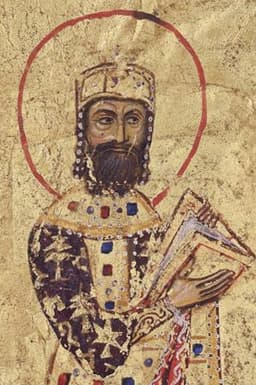
Alexios I Komnenos
Emperor · Medieval
78.4Total
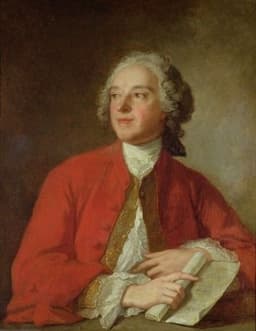
Ivan III the Great
Emperor · Medieval
75.3Total
Basic Information
Born
1048
1440
Died
1118
1505
Era
Medieval
Medieval
Nationality
Byzantine Empire
Muscovy
Occupation
Emperor
Emperor
Civilization
Western
Western
Score Comparison
Military (10%)
61.7
76.0
Political (20%)
78.0
70.0
Influence (20%)
88.0
75.0
Legacy (20%)
80.0
80.0
Leadership (15%)
78.0
78.0
Strategy (15%)
68.0
67.2
TOTAL
78.4
75.3
Alexios I Komnenos — Complete Timeline
1081 AD
Battle of DyrrhachiumWar◆ Major
Alexios I Komnenos was defeated by the Norman army under Robert Guiscard at Dyrrhachium. The Byzantine forces were routed, and Alexios barely escaped. This loss allowed the Normans to occupy much of the western Balkans, though Alexios later recovered some territory.
Norman InvasionDefeatBalkans
Impact: regionaltragic
1090 AD
Reforms of the Byzantine Military and EconomyReform◆ Major
Alexios I implemented a series of reforms to restore Byzantine power. He reorganized the army by relying more on foreign mercenaries, reformed the currency (the hyperpyron), and granted tax exemptions to the Church. These measures stabilized the empire after decades of decline.
Military ReformEconomic ReformKomnenian Restoration
Impact: nationalconstructive
1095 AD
Appeal to the West: Council of PiacenzaPolitical Action
Alexios I sent envoys to Pope Urban II at the Council of Piacenza, requesting military aid against the Seljuk Turks. This appeal contributed to Urban's call for the First Crusade at the Council of Clermont later that year, initiating the Crusader movement.
First CrusadePope Urban IISeljuk Turks
Impact: global
1097 AD
First Crusade: Siege of NicaeaWar◆ Major
Alexios I cooperated with the Crusader army to besiege and capture Nicaea from the Seljuk Turks. The city was surrendered to Byzantine control, and Alexios used the Crusaders to recover key territories in Anatolia, though tensions later arose over land claims.
First CrusadeNicaeaByzantine-Crusader Relations
Impact: regionalconstructive
Ivan III the Great — Complete Timeline
1472 AD
Marriage to Sophia PalaiologinaPolitical Action◆ Major
Ivan III married Sophia (Zoe) Palaiologina, niece of the last Byzantine emperor. This marriage allowed Ivan to claim succession to the Byzantine Empire, adopt the double-headed eagle as a symbol, and promote Moscow as the Third Rome.
ByzantiumThird RomeMarriage
Impact: regionalconstructive
1478 AD
Annexation of NovgorodWar◆ Major
Ivan III conquered the Novgorod Republic after a series of campaigns. He abolished the veche (assembly) and removed the veche bell, incorporating Novgorod's vast territories into the Grand Principality of Moscow.
NovgorodAnnexationMoscow
Impact: regional
1480 AD
Great Stand on the Ugra RiverWar
Ivan III faced the Mongol army of Khan Akhmat across the Ugra River. After weeks of stalemate, the Mongols withdrew without battle. This event ended 240 years of Mongol suzerainty over Russia.
Golden HordeIndependenceUgra
Impact: regional
1497 AD
Issued the Sudebnik of 1497Reform◆ Major
Ivan III promulgated a new legal code, the Sudebnik, which standardized laws across the Russian lands. It restricted peasant mobility by limiting the time for transfer between landowners, a step toward serfdom.
Legal CodeSerfdomReform
Impact: national
1500 AD
War with the Grand Duchy of LithuaniaWar◆ Major
Ivan III launched a war against Lithuania, capturing the cities of Bryansk, Dorogobuzh, and Putivl. The war ended with the Truce of 1503, which ceded significant territories to Moscow.
LithuaniaTerritorial ExpansionWar
Impact: regional
Expert Analysis
Origins
Alexios I Komnenos (c. 1048–1118) emerged from the Byzantine military aristocracy during a period of severe crisis. The empire faced simultaneous invasions by Normans in the west, Pechenegs in the north, and Seljuk Turks in the east, who had decisively crushed the Byzantine army at Manzikert (1071). Alexios, a nephew of Emperor Isaac I Komnenos, rose through the ranks as a capable general. He seized the throne in 1081 through a coup against the incompetent Nikephoros III Botaneiates, establishing the Komnenian dynasty that would restore Byzantine fortunes for a century.
Ivan III (1440–1505), known as Ivan the Great, was born into the Rurikid dynasty as Grand Prince of Moscow. His father, Vasily II, had endured a bitter civil war and blinded by rivals, leaving a fragile but centralized principality. Ivan inherited a Moscow that was a rising power but still a vassal of the Mongol Golden Horde. His origins were rooted in the tradition of 'gathering the Russian lands,' a process of territorial expansion and political consolidation that had been ongoing for centuries.
Both rulers inherited fragmented states, but Alexios faced an existential crisis while Ivan had a stronger foundation.
Rise to Power
Alexios I achieved power through military prowess and political maneuvering. As a general, he suppressed rebellions and secured loyalty from key aristocratic families. In 1081, he led a rebellion against Nikephoros III, entered Constantinople, and was crowned emperor. His early reign was marked by desperate defensive wars against the Norman Robert Guiscard, who invaded the Balkans, and the Pechenegs. Alexios skillfully used diplomacy, even allying with the Holy Roman Empire against the Normans.
Ivan III became Grand Prince in 1462 after his father's death, inheriting a stable realm. He continued the policy of annexing neighboring Russian principalities, often through diplomacy, marriage, or military force. His first major conquest was the Republic of Novgorod in 1471–1478, which he subjugated after a decisive battle and later absorbed completely. Ivan also ended the tribute to the Great Horde, the remnant of the Golden Horde, through the 'Great Stand on the Ugra River' in 1480, which marked the end of Mongol domination over Russia.
Both consolidated power, but Ivan's rise was smoother and more methodical, while Alexios's was reactive to immediate threats.
Leadership & Governance
Alexios I was a pragmatic and resourceful leader who reorganized the Byzantine military and economy. He created the Komnenian army, based on Pronoia grants (land in exchange for military service), which improved loyalty and efficiency. He also reformed the coinage and administration. However, his most controversial act was appealing to Pope Urban II for mercenary aid in 1095, which inadvertently sparked the First Crusade. The Crusaders brought new challenges, as they often clashed with Byzantine interests. Alexios managed to recover Nicaea and parts of Asia Minor but struggled to control the crusader states.
Ivan III was a centralizing autocrat who transformed Moscow into a bureaucratic state. He issued the Sudebnik of 1497, a legal code that standardized laws and curtailed the power of regional princes. He also adopted the title 'Tsar' and married Sophia Palaiologina, niece of the last Byzantine emperor, projecting Moscow as the 'Third Rome.' Ivan expanded the territory of Muscovy from 430,000 to 2,800,000 square kilometers through conquests, including annexation of Tver, Vyatka, and wars with Lithuania. He also built the Kremlin walls and cathedrals, symbolizing his power.
Both were effective reformers, but Ivan's state-building was more systematic and enduring.
Triumph & Tragedy
Alexios's triumphs include repelling the Norman invasion, defeating the Pechenegs, and recovering key territories from the Turks. The First Crusade, while successful in recapturing Antioch and Jerusalem, also created new problems. The tragedy of Alexios's reign was the loss of control over the Crusader states and the growing animosity between Byzantium and the West, which contributed to the Fourth Crusade's sack of Constantinople in 1204. His reforms were only a temporary fix; the empire remained fragile.
Ivan's greatest triumph was the liberation from the Mongol yoke without a major battle. The Great Stand on the Ugra River demonstrated his strategic patience. He also successfully absorbed Novgorod, the largest republic in Russia, and defeated the Teutonic Knights and Lithuania. His tragedy may be the autocratic turn that suppressed local liberties, as seen in the harsh treatment of Novgorod. Yet, his legacy as the unifier of Russia is undeniable.
Both ended periods of subjugation, but Ivan's achievement was more lasting.
Character & Destiny
Alexios was shrewd, adaptable, and determined, but also duplicitous, as seen in his dealings with Crusaders. His memoirs, the 'Alexiad' written by his daughter Anna Komnene, portray him as a pious and heroic figure, but historians note his pragmatism often bordered on deceit. His destiny was to save the Byzantine Empire from collapse, but his actions set the stage for future disasters.
Ivan III was calculating, patient, and ambitious. He was known as 'the Great' for his territorial expansions and centralization. He was also cautious, avoiding pitched battles when possible. His destiny was to forge a unified Russian state that would become a major power. He is often compared to his contemporary, Louis XI of France, for his cunning and statecraft.
Both had strong wills, but Ivan's character was more suited to long-term consolidation.
Legacy
Alexios I Komnenos founded the Komnenian dynasty, which ruled for a century and revived Byzantine power temporarily. He is remembered for starting the Crusades, a pivotal event in world history. However, his legacy is mixed: he restored the empire but also exposed its weaknesses to the West. His military and economic reforms were influential but did not prevent the eventual decline.
Ivan III's legacy is more straightforward: he is considered the founder of the Russian state. He ended Mongol domination, centralized power, and expanded territory. The Sudebnik influenced Russian law for centuries. His marriage to Sophia Palaiologina linked Russia to Byzantine heritage, shaping its identity as the 'Third Rome.' Ivan is revered in Russia as a national hero.
Both left indelible marks, but Ivan's impact on national identity and state formation is greater.
Conclusion
In comparing Alexios I Komnenos and Ivan III, we see two rulers who faced fragmentation and external threats. Alexios scored higher in the analysis (overall 72.1 vs 69), but Ivan's achievements arguably had more lasting significance. Alexios was a brilliant crisis manager who saved Byzantium temporarily, while Ivan was a visionary state-builder who created a permanent legacy. The numerical scores reflect Alexios's higher innovation and diplomatic skill, but Ivan's strategic consolidation and territorial expansion gave him a stronger claim to 'greatness.' Ultimately, Ivan III's Russia endured and grew, while Alexios's Byzantine Empire revived only to fall later. Thus, while Alexios was more dynamic, Ivan was more effective in building a lasting state.
**Scores**: Alexios I Komnenos: M=62, P=78, I=88, L=80, D=78, S=68, T=78 (Average 72.1). Ivan III: M=76, P=70, I=75, L=80, D=78, S=67, T=75 (Average 69.0). The gap of 3.1 points reflects Alexios's higher innovation and diplomacy, but Ivan's legacy is more profound.
Rankings
🥇
Alexios I KomnenosLeader
Mil: 61.7Pol: 78.0Inf: 88.0
78.4
🥈
Ivan III the Great
Mil: 76.0Pol: 70.0Inf: 75.0
75.3
+3.1 behind
How This Comparison Works
Algorithm
Each figure is scored on 6 dimensions (0—100 scale) based on structured historical data: Military (10%), Political (20%), Influence (20%), Legacy (20%), Leadership (15%), Strategy (15%). The weighted total produces the final ranking.
Data Sources
Scores are computed from structured sub-indicators in the database. Scale factors adjust for era (Ancient ×0.85, Modern ×1.0) and civilization size (Eastern ×1.05, Other ×0.80) to account for differences in population and military scale.
Maximum 3 Figures
Comparisons are limited to 2—3 figures to ensure readability and statistical meaningfulness.
Error Margins
±5 points per dimension — Sub-scores are derived from historical records with inherent uncertainty. Two figures within 5 points on a dimension should be considered roughly equivalent in that area.
Total Score Accuracy
±3 points overall — The weighted combination of 6 dimensions produces a total score with approximately ±3 points of uncertainty. Differences of less than 3 points are not statistically significant— the figures are effectively tied.
Known Limitations
- Historical records are incomplete and uneven across civilizations
- Figures from oral-tradition societies may be underrepresented
- Occupation labels can misclassify multi-role figures
- Scores measure capability and impact, not moral character
- Quantitative scoring is a comparison tool, not absolute truth
Capability Radar
Military (10%) — Battles & Warfare
Battles
75
75
Win Rate
70
80
Expansion
60
85
Political (20%) — Governance & Reform
Reform
85
80
Diplomacy
90
85
Economy
70
70
Influence (20%) — Cultural & Global Reach
Cultural
70
70
Global
75
70
Legacy (20%) — Historical Impact
Historical
85
85
Longevity
80
80
Leadership (15%) — Power & Stability
Tenure
80
85
Stability
75
75
Strategy (15%) — Tactics & Innovation
Strategy
85
85
Tactics
80
70
Reform
75
65
Similar Comparisons
Comments & Discussion
No comments yet. Be the first to share your thoughts!