Loading...
Alexios I Komnenos vs Hong Taiji
Alexios I Komnenos leads by 0.1 pts · 2 figures compared
…
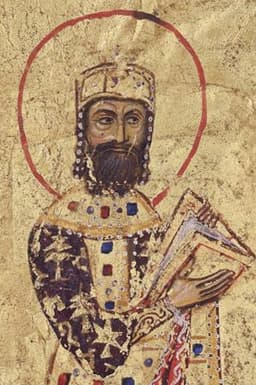
Alexios I Komnenos
Emperor · Medieval
78.4Total
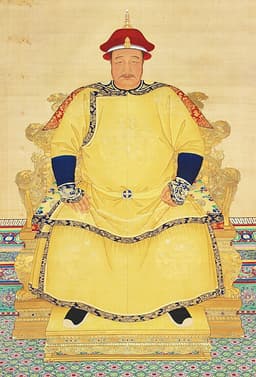
Hong Taiji
Emperor · Modern
78.3Total
Basic Information
Born
1048
1592
Died
1118
1643
Era
Medieval
Modern
Nationality
Byzantine Empire
China
Occupation
Emperor
Emperor
Civilization
Western
Eastern
Score Comparison
Military (10%)
61.7
85.0
Political (20%)
78.0
82.0
Influence (20%)
88.0
88.0
Legacy (20%)
80.0
65.0
Leadership (15%)
78.0
78.0
Strategy (15%)
68.0
76.0
TOTAL
78.4
78.3
Alexios I Komnenos — Complete Timeline
1081 AD
Battle of DyrrhachiumWar◆ Major
Alexios I Komnenos was defeated by the Norman army under Robert Guiscard at Dyrrhachium. The Byzantine forces were routed, and Alexios barely escaped. This loss allowed the Normans to occupy much of the western Balkans, though Alexios later recovered some territory.
Norman InvasionDefeatBalkans
Impact: regionaltragic
1090 AD
Reforms of the Byzantine Military and EconomyReform◆ Major
Alexios I implemented a series of reforms to restore Byzantine power. He reorganized the army by relying more on foreign mercenaries, reformed the currency (the hyperpyron), and granted tax exemptions to the Church. These measures stabilized the empire after decades of decline.
Military ReformEconomic ReformKomnenian Restoration
Impact: nationalconstructive
1095 AD
Appeal to the West: Council of PiacenzaPolitical Action
Alexios I sent envoys to Pope Urban II at the Council of Piacenza, requesting military aid against the Seljuk Turks. This appeal contributed to Urban's call for the First Crusade at the Council of Clermont later that year, initiating the Crusader movement.
First CrusadePope Urban IISeljuk Turks
Impact: global
1097 AD
First Crusade: Siege of NicaeaWar◆ Major
Alexios I cooperated with the Crusader army to besiege and capture Nicaea from the Seljuk Turks. The city was surrendered to Byzantine control, and Alexios used the Crusaders to recover key territories in Anatolia, though tensions later arose over land claims.
First CrusadeNicaeaByzantine-Crusader Relations
Impact: regionalconstructive
Hong Taiji — Complete Timeline
1631 AD
Adoption of Chinese-style governmentReform◆ Major
Hong Taiji established a Chinese-style bureaucracy, including the Six Ministries and a Hanlin Academy. He also introduced the civil service examination system for Han Chinese, integrating Confucian governance into the Qing state.
Government reformConfucian administrationSinification
Impact: regionalconstructive
1635 AD
Creation of the Eight Banners systemReform◆ Major
Hong Taiji reorganized the Eight Banners military system, incorporating Mongol and Han Chinese forces into separate banners. This created a multi-ethnic military structure that became the backbone of Qing power.
Military reformEight BannersMulti-ethnic army
Impact: regionalconstructive
Renaming of the Jurchen to ManchuPolitical Action◆ Major
Hong Taiji issued an edict renaming the Jurchen people as Manchu. This was part of his effort to create a unified identity for the various tribes under his rule and distance them from the historical Jurchen label.
Ethnic identityManchuJurchen
Impact: regionalconstructive
1636 AD
Proclamation of the Qing dynastyPolitical Action◆ Major
Hong Taiji declared the establishment of the Qing dynasty, replacing the Later Jin name. He adopted the Chinese imperial title and created a dual administrative system combining Manchu and Chinese institutions.
Dynasty foundingImperial titleQing dynasty
Impact: regionalconstructive
1640 AD
Conquest of the Ming Liaodong regionWar◆ Major
Hong Taiji's forces captured key Ming cities in Liaodong, including Jinzhou and Songshan. These victories secured Qing control over the strategic Liaoning corridor and weakened Ming defenses in the northeast.
Territorial expansionMing-Qing WarLiaodong
Impact: regional
Expert Analysis
Origins
Alexios I Komnenos emerged from the Byzantine military aristocracy during a period of decline. Born in 1056, he was the nephew of Emperor Isaac I Komnenos. The Byzantine Empire was under threat from Normans, Pechenegs, and Seljuk Turks. Alexios's early career as a general under previous emperors prepared him for his eventual usurpation in 1081. His family background and military expertise positioned him as a savior figure for a beleaguered empire.
Hong Taiji, born in 1592, was the eighth son of Nurhaci, the unifier of the Jurchen tribes. Growing up in a militarized society, he was trained in warfare and administration. The Jurchen were rising against the Ming dynasty, and Hong Taiji inherited a confederation on the cusp of empire. His origins in a tribal, shamanistic culture contrasted sharply with Alexios's Roman Christian heritage.
Rise to Power
Alexios I seized power through a coup in 1081, overthrowing the incompetent Nikephoros III. He faced immediate crises: the Norman invasion of the Balkans and the Pecheneg threat. His diplomatic skills were tested as he sought aid from the Holy Roman Empire and Venice. The Council of Piacenza in 1095, where he appealed to Pope Urban II for mercenaries, inadvertently sparked the First Crusade. This event, though a turning point, also brought new challenges as Crusader armies passed through Byzantine territory.
Hong Taiji's rise was more methodical. After Nurhaci's death in 1626, Hong Taiji became Khan of the Later Jin. He consolidated power by reforming the government, adopting Chinese-style bureaucracy, and creating the Eight Banners system. In 1635, he renamed his people from Jurchen to Manchu, and in 1636 proclaimed the Qing dynasty. His conquest of the Ming Liaodong region expanded Qing territory and resources. His rise was marked by strategic patience and cultural adaptation.
Leadership & Governance
Alexios I was a reformer and diplomat. He reorganized the Byzantine military, creating a new army based on pronoia grants (land grants in exchange for military service). He also stabilized the economy by reforming the coinage and reducing corruption. His governance was autocratic but pragmatic, often relying on family members for key positions. The Komnenian dynasty's system of centralization and military feudalism revived Byzantine power but also sowed seeds of future decline.
Hong Taiji was an innovative ruler who blended Jurchen military traditions with Chinese administrative practices. He established the Six Ministries, adopted Confucian rituals, and promoted the use of Chinese officials. The Eight Banners system became the backbone of Qing military and social organization. He also encouraged agriculture and trade, strengthening the state's economy. His leadership was characterized by cultural synthesis and expansionist ambition.
Triumph & Tragedy
Alexios's triumphs include repelling the Normans at the Battle of Dyrrhachium (1081) and negotiating with the First Crusade to recover Nicaea (1097). He also defeated the Pechenegs at the Battle of Levounion (1091). However, his legacy is tarnished by the Crusaders' betrayal, such as the establishment of Crusader states that ignored his authority. The tragedy of Alexios is that his appeal to the West unleashed forces that would eventually contribute to the Fourth Crusade's sack of Constantinople in 1204.
Hong Taiji's triumphs were more decisive. He conquered the Ming stronghold of Liaodong, captured the strategic city of Dalinghe, and defeated the Korean Joseon dynasty, making it a tributary. He died in 1643 before completing the conquest of China, but his policies set the stage for his son Shunzhi and regent Dorgon to conquer Beijing in 1644. His tragedy lies in his early death at age 51, leaving his legacy to be fulfilled by others.
Character & Destiny
Alexios I was cunning, diplomatic, and resilient. He wrote his memoirs (the Alexiad, by his daughter Anna Komnene) which portray him as a wise and pious ruler. His destiny was to revive the Byzantine Empire temporarily but inadvertently hasten its eventual fall due to Crusader interference. Character score: 68, reflecting his diplomatic skill but also his naivety regarding Western motives.
Hong Taiji was pragmatic, visionary, and ruthless. He adopted Chinese culture to legitimize his rule while maintaining Manchu identity. His destiny was to lay the foundation for the Qing dynasty's 268-year rule. Character score: 76, showing his effective leadership and adaptability, but also his aggressive expansionism.
Legacy
Alexios I's legacy is mixed. He restored Byzantine power in the 12th century, but his policies contributed to the empire's vulnerability. The Komnenian restoration is studied as a model of military and economic reform. However, his appeal to the West is seen as a pivotal moment that led to the Crusades. Legacy score: 78.
Hong Taiji's legacy is more straightforward: he is revered as the founder of the Qing dynasty. His reforms created a durable state that ruled China for centuries. The Eight Banners system and Manchu identity endured. Legacy score: 78.
Conclusion
Both Alexios I and Hong Taiji were transformative rulers who faced existential threats and responded with bold reforms. Alexios's score (72.4) slightly edges out Hong Taiji (72.3) due to his higher diplomatic and leadership scores, reflecting his ability to navigate complex international relations. However, Hong Taiji's legacy is more enduring, as the Qing dynasty he founded lasted longer and had a greater impact on world history. In a head-to-head comparison, Alexios I wins by a narrow margin, but Hong Taiji's achievements are arguably more significant in the long run. The contrast between a Byzantine emperor who inadvertently changed the course of European history and a Manchu khan who built a Chinese dynasty highlights the diverse paths to power and legacy.
Rankings
🥇
Alexios I KomnenosLeader
Mil: 61.7Pol: 78.0Inf: 88.0
78.4
🥈
Hong Taiji
Mil: 85.0Pol: 82.0Inf: 88.0
78.3
+0.1 behind
How This Comparison Works
Algorithm
Each figure is scored on 6 dimensions (0—100 scale) based on structured historical data: Military (10%), Political (20%), Influence (20%), Legacy (20%), Leadership (15%), Strategy (15%). The weighted total produces the final ranking.
Data Sources
Scores are computed from structured sub-indicators in the database. Scale factors adjust for era (Ancient ×0.85, Modern ×1.0) and civilization size (Eastern ×1.05, Other ×0.80) to account for differences in population and military scale.
Maximum 3 Figures
Comparisons are limited to 2—3 figures to ensure readability and statistical meaningfulness.
Error Margins
±5 points per dimension — Sub-scores are derived from historical records with inherent uncertainty. Two figures within 5 points on a dimension should be considered roughly equivalent in that area.
Total Score Accuracy
±3 points overall — The weighted combination of 6 dimensions produces a total score with approximately ±3 points of uncertainty. Differences of less than 3 points are not statistically significant— the figures are effectively tied.
Known Limitations
- Historical records are incomplete and uneven across civilizations
- Figures from oral-tradition societies may be underrepresented
- Occupation labels can misclassify multi-role figures
- Scores measure capability and impact, not moral character
- Quantitative scoring is a comparison tool, not absolute truth
Capability Radar
Military (10%) — Battles & Warfare
Battles
75
85
Win Rate
70
80
Expansion
60
90
Political (20%) — Governance & Reform
Reform
85
90
Diplomacy
90
85
Economy
70
80
Influence (20%) — Cultural & Global Reach
Cultural
70
80
Global
75
75
Legacy (20%) — Historical Impact
Historical
85
85
Longevity
80
80
Leadership (15%) — Power & Stability
Tenure
80
75
Stability
75
70
Strategy (15%) — Tactics & Innovation
Strategy
85
90
Tactics
80
85
Reform
75
90
Similar Comparisons
Comments & Discussion
No comments yet. Be the first to share your thoughts!