Loading...
Alexios I Komnenos vs Henry II of Champagne
Alexios I Komnenos leads by 40.4 pts · 2 figures compared
…
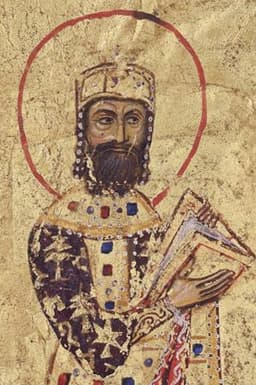
Alexios I Komnenos
Emperor · Medieval
78.4Total
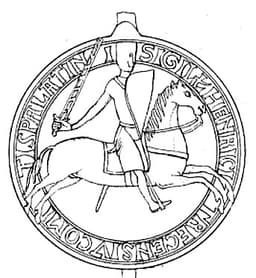
Henry II of Champagne
Emperor · Medieval
38.0Total
Basic Information
Born
1048
1166
Died
1118
1197
Era
Medieval
Medieval
Nationality
Byzantine Empire
Kingdom of Jerusalem
Occupation
Emperor
Emperor
Civilization
Western
Western
Score Comparison
Military (10%)
61.7
10.2
Political (20%)
78.0
33.6
Influence (20%)
88.0
49.4
Legacy (20%)
80.0
37.5
Leadership (15%)
78.0
41.5
Strategy (15%)
68.0
39.6
TOTAL
78.4
38.0
Alexios I Komnenos — Complete Timeline
1081 AD
Battle of DyrrhachiumWar◆ Major
Alexios I Komnenos was defeated by the Norman army under Robert Guiscard at Dyrrhachium. The Byzantine forces were routed, and Alexios barely escaped. This loss allowed the Normans to occupy much of the western Balkans, though Alexios later recovered some territory.
Norman InvasionDefeatBalkans
Impact: regionaltragic
1090 AD
Reforms of the Byzantine Military and EconomyReform◆ Major
Alexios I implemented a series of reforms to restore Byzantine power. He reorganized the army by relying more on foreign mercenaries, reformed the currency (the hyperpyron), and granted tax exemptions to the Church. These measures stabilized the empire after decades of decline.
Military ReformEconomic ReformKomnenian Restoration
Impact: nationalconstructive
1095 AD
Appeal to the West: Council of PiacenzaPolitical Action
Alexios I sent envoys to Pope Urban II at the Council of Piacenza, requesting military aid against the Seljuk Turks. This appeal contributed to Urban's call for the First Crusade at the Council of Clermont later that year, initiating the Crusader movement.
First CrusadePope Urban IISeljuk Turks
Impact: global
1097 AD
First Crusade: Siege of NicaeaWar◆ Major
Alexios I cooperated with the Crusader army to besiege and capture Nicaea from the Seljuk Turks. The city was surrendered to Byzantine control, and Alexios used the Crusaders to recover key territories in Anatolia, though tensions later arose over land claims.
First CrusadeNicaeaByzantine-Crusader Relations
Impact: regionalconstructive
Henry II of Champagne — Complete Timeline
1192 AD
Marriage to Isabella of JerusalemPolitical Action◆ Major
Henry II married Isabella I of Jerusalem, becoming king-consort of the Kingdom of Jerusalem. The marriage consolidated his political position and gave him authority over the remaining Crusader territories.
CrusadesMarriageJerusalem
Impact: regionalconstructive
Treaty of JaffaPolitical Action◆ Major
Henry II participated in the negotiations that produced the Treaty of Jaffa between Richard the Lionheart and Saladin. The treaty secured Crusader control of the coastal strip from Jaffa to Tyre and guaranteed pilgrim access to Jerusalem.
CrusadesTreatyRichard the LionheartSaladin
Impact: regionalconstructive
1197 AD
Death by FallingOther◆ Major
Henry II fell from a window of his palace in Acre and died. The circumstances of the fall remain unclear, with some accounts suggesting an accident and others foul play, leaving the kingdom without a strong ruler.
CrusadesDeathAccident
Impact: regionaltragic
Expert Analysis
Alexios I Komnenos vs Henry II of Champagne
# The Emperor and the Fallen King
History has a peculiar way of pairing figures who, though separated by circumstance, illuminate each other through contrast. Imagine two men, both crowned rulers in the medieval world, both entangled in the great collision between Christendom and Islam. One spends decades clawing his empire back from the brink of annihilation, forging alliances with enemies and strangers alike. The other inherits a kingdom through marriage, negotiates a fragile peace, and then, in a moment of absurd tragedy, plummets from a window to his death. Alexios I Komnenos and Henry II of Champagne: one built a dynasty, the other became a footnote. What drove such divergent outcomes?
Origins
Alexios I Komnenos was born in 1048 into a Byzantine aristocracy that had learned to survive through cunning and resilience. The Byzantine Empire of his youth was a crumbling colossus—its Anatolian heartland lost to the Seljuk Turks after the catastrophic defeat at Manzikert in 1071, its treasury empty, its armies demoralized. Alexios grew up in a world of constant crisis, where the empire’s survival depended on generals who could also be politicians. His family, the Komnenoi, had produced emperors before, but the throne was a prize won by swords, not birthright.
Henry II of Champagne, born in 1166, came from the opposite end of the medieval world. He was a French count, a nobleman of the prosperous Champagne region, where tournaments and courtly love defined the culture. His path to greatness was not forged in desperate war but in the intricate dance of Crusader politics. When he married Isabella I of Jerusalem in 1192, he became king-consort of a kingdom that was already a relic—a Christian outpost sustained by dwindling faith and European reinforcements. Henry inherited a crown, but he did not earn it.
Rise to Power
Alexios rose through the military ranks, proving himself in campaigns against the Normans and the Turks. In 1081, at the age of 33, he staged a coup and seized the throne. But his first year as emperor nearly ended in disaster. At the Battle of Dyrrhachium, the Norman warlord Robert Guiscard routed his army. Alexios fled the field, his reputation shattered. Yet he did not despair. He understood that survival in Byzantium meant patience, bribery, and the willingness to fight another day. He spent the next decade rebuilding, using diplomacy to turn enemies against each other while reforming his shattered military.
Henry’s rise was gentler. He arrived in the Holy Land as a Crusader, a nobleman with connections to the powerful houses of Europe. When Queen Isabella’s husband, Conrad of Montferrat, was assassinated in 1192, Henry was the convenient choice—a man who could unite factions and bring French support. He married Isabella within days, becoming king-consort. There was no battlefield triumph, no desperate struggle. He simply stepped into a vacancy.
Leadership & Governance
Alexios was a reformer of staggering pragmatism. Facing a bankrupt treasury and a broken army, he issued a series of reforms in 1090 that fundamentally altered Byzantine governance. He debased the currency to pay soldiers, granted land to nobles in exchange for military service (the *pronoia* system), and relied increasingly on foreign mercenaries—including the fierce Varangian Guard. These measures were controversial, but they worked. By the mid-1090s, the empire had stabilized. Alexios also proved a master of diplomacy. His appeal to Pope Urban II at the Council of Piacenza in 1095, requesting aid against the Turks, inadvertently sparked the First Crusade. When the Crusader armies arrived in 1097, Alexios skillfully directed them to retake Nicaea, securing the city for Byzantium without a bloody assault. He was not a warrior emperor; he was a chess player.
Henry’s governance was less transformative. His key achievement was the Treaty of Jaffa in 1192, negotiated between Richard the Lionheart and Saladin. Henry participated in the talks, which secured a three-year truce and guaranteed Christian access to Jerusalem. It was a diplomatic success, but it was not his treaty—he was a facilitator, not the architect. His leadership score of 37.1 reflects a man who managed rather than commanded. He kept the Kingdom of Jerusalem alive, but he did not strengthen it.
Triumph & Tragedy
Alexios’s greatest triumph was the First Crusade’s capture of Nicaea in 1097. By cooperating with the Crusaders, he regained a key city without risking his own army. It was a masterstroke of leveraging foreign power for Byzantine gain. But his tragedy was that the Crusaders soon turned on him, viewing him as a duplicitous Greek. The crusader states he helped create became rivals, not allies. He died in 1118, having restored the empire’s fortunes, but knowing that the forces he unleashed would eventually consume it.
Henry’s triumph was the Treaty of Jaffa—a moment of peace in a land of war. But his tragedy was absurd and swift. In 1197, while in his palace in Acre, he leaned out a window—some say to watch a parade, others to address a crowd—and fell to his death. The circumstances remain unclear, but the result was final. A king who had done little to earn his crown left it in the most inglorious way possible.
Character & Destiny
Alexios was a survivor. His political score of 80.0 and leadership of 79.6 reflect a man who understood that power was not about glory but about endurance. He lied, bribed, and compromised when necessary. He was not loved, but he was respected. His destiny was to rebuild, not to conquer.
Henry, by contrast, was a placeholder. His scores—military 43.3, political 44.4, leadership 37.1—reveal a man who never truly shaped events. He was a count who became a king, but he never outgrew the limits of his origin. His destiny was to be forgotten, remembered only for a bizarre death.
Legacy
Alexios founded the Komnenian dynasty, which ruled Byzantium for a century. His reforms stabilized the empire, and his appeal to the West changed the course of medieval history. His legacy score of 75.0 reflects a man who, though flawed, left an indelible mark. He is remembered as the emperor who saved Byzantium—and who unwittingly opened the door to the Crusades.
Henry’s legacy is thin. His influence score of 65.6 is inflated by his marriage and the treaty, but his overall total of 46.6 places him among history’s minor figures. He is remembered, if at all, as the king who fell from a window—a tragicomic end to a reign that never quite began.
Conclusion
What separates a builder from a caretaker? Alexios I Komnenos faced ruin and chose to fight, to scheme, to endure. Henry II of Champagne faced peace and chose to manage, to wait, to fall. One shaped his era; the other was shaped by it. In the end, history rewards those who grasp the moment with both hands—and punishes those who merely hold on.
Rankings
🥇
Alexios I KomnenosLeader
Mil: 61.7Pol: 78.0Inf: 88.0
78.4
🥈
Henry II of Champagne
Mil: 10.2Pol: 33.6Inf: 49.4
38.0
+40.4 behind
How This Comparison Works
Algorithm
Each figure is scored on 6 dimensions (0—100 scale) based on structured historical data: Military (10%), Political (20%), Influence (20%), Legacy (20%), Leadership (15%), Strategy (15%). The weighted total produces the final ranking.
Data Sources
Scores are computed from structured sub-indicators in the database. Scale factors adjust for era (Ancient ×0.85, Modern ×1.0) and civilization size (Eastern ×1.05, Other ×0.80) to account for differences in population and military scale.
Maximum 3 Figures
Comparisons are limited to 2—3 figures to ensure readability and statistical meaningfulness.
Error Margins
±5 points per dimension — Sub-scores are derived from historical records with inherent uncertainty. Two figures within 5 points on a dimension should be considered roughly equivalent in that area.
Total Score Accuracy
±3 points overall — The weighted combination of 6 dimensions produces a total score with approximately ±3 points of uncertainty. Differences of less than 3 points are not statistically significant— the figures are effectively tied.
Known Limitations
- Historical records are incomplete and uneven across civilizations
- Figures from oral-tradition societies may be underrepresented
- Occupation labels can misclassify multi-role figures
- Scores measure capability and impact, not moral character
- Quantitative scoring is a comparison tool, not absolute truth
Capability Radar
Military (10%) — Battles & Warfare
Battles
75
10
Win Rate
70
10
Expansion
60
5
Political (20%) — Governance & Reform
Reform
85
20
Diplomacy
90
40
Economy
70
25
Influence (20%) — Cultural & Global Reach
Cultural
70
15
Global
75
10
Legacy (20%) — Historical Impact
Historical
85
15
Longevity
80
10
Leadership (15%) — Power & Stability
Tenure
80
30
Stability
75
20
Strategy (15%) — Tactics & Innovation
Strategy
85
10
Tactics
80
10
Reform
75
5
Similar Comparisons
Comments & Discussion
No comments yet. Be the first to share your thoughts!