Loading...
Alexios I Komnenos vs Helmuth von Moltke
Alexios I Komnenos leads by 2.2 pts · 2 figures compared
…
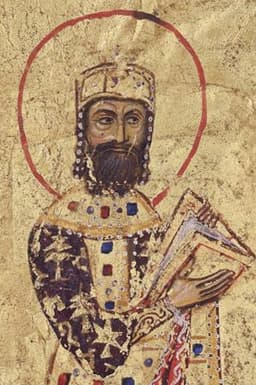
Alexios I Komnenos
Emperor · Medieval
78.4Total
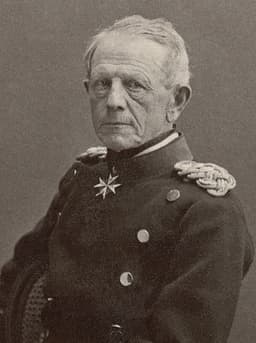
Helmuth von Moltke
General · Modern
76.2Total
Basic Information
Born
1048
1800
Died
1118
1891
Era
Medieval
Modern
Nationality
Byzantine Empire
Prussia
Occupation
Emperor
General
Civilization
Western
Western
Score Comparison
Military (10%)
61.7
65.0
Political (20%)
78.0
62.7
Influence (20%)
88.0
88.0
Legacy (20%)
80.0
70.0
Leadership (15%)
78.0
85.0
Strategy (15%)
68.0
80.6
TOTAL
78.4
76.2
Alexios I Komnenos — Complete Timeline
1081 AD
Battle of DyrrhachiumWar◆ Major
Alexios I Komnenos was defeated by the Norman army under Robert Guiscard at Dyrrhachium. The Byzantine forces were routed, and Alexios barely escaped. This loss allowed the Normans to occupy much of the western Balkans, though Alexios later recovered some territory.
Norman InvasionDefeatBalkans
Impact: regionaltragic
1090 AD
Reforms of the Byzantine Military and EconomyReform◆ Major
Alexios I implemented a series of reforms to restore Byzantine power. He reorganized the army by relying more on foreign mercenaries, reformed the currency (the hyperpyron), and granted tax exemptions to the Church. These measures stabilized the empire after decades of decline.
Military ReformEconomic ReformKomnenian Restoration
Impact: nationalconstructive
1095 AD
Appeal to the West: Council of PiacenzaPolitical Action
Alexios I sent envoys to Pope Urban II at the Council of Piacenza, requesting military aid against the Seljuk Turks. This appeal contributed to Urban's call for the First Crusade at the Council of Clermont later that year, initiating the Crusader movement.
First CrusadePope Urban IISeljuk Turks
Impact: global
1097 AD
First Crusade: Siege of NicaeaWar◆ Major
Alexios I cooperated with the Crusader army to besiege and capture Nicaea from the Seljuk Turks. The city was surrendered to Byzantine control, and Alexios used the Crusaders to recover key territories in Anatolia, though tensions later arose over land claims.
First CrusadeNicaeaByzantine-Crusader Relations
Impact: regionalconstructive
Helmuth von Moltke — Complete Timeline
1857 AD
Appointment as Chief of the Prussian General StaffPolitical Action
Moltke was appointed Chief of the Prussian General Staff, a position he held for 30 years. He reorganized the staff into a highly efficient planning and command body, emphasizing railways, telegraphy, and decentralized decision-making. This modernization was crucial for Prussia's subsequent victories.
Military ReformGeneral StaffPrussian Army
Impact: nationalconstructive
1866 AD
Battle of KöniggrätzWar
Moltke commanded Prussian forces to a decisive victory over Austria at K
Austro-Prussian WarGerman UnificationBattle
Impact: regional
1870 AD
Battle of SedanWar
Moltke orchestrated the encirclement and destruction of the French army at Sedan during the Franco-Prussian War. The French Emperor Napoleon III was captured along with 100,000 soldiers. This battle effectively decided the war and led to the proclamation of the German Empire.
Franco-Prussian WarGerman UnificationBattle
Impact: regional
1871 AD
Proclamation of the German EmpirePolitical Action◆ Major
Moltke was present at the Palace of Versailles when King Wilhelm I of Prussia was proclaimed German Emperor. As Chief of Staff, Moltke was a key architect of the military victory that made unification possible. He was later promoted to Field Marshal and ennobled.
German UnificationEmpireCeremony
Impact: regionalconstructive
Expert Analysis
Origins
Alexios I Komnenos (c. 1048–1118) was born into a noble Byzantine family during a period of decline. He rose through military ranks amid civil strife and external threats. Helmuth von Moltke (1800–1891) was a Prussian aristocrat who modernized the Prussian army, leveraging industrialization and railway networks. Both emerged from turbulent eras but in vastly different contexts: Alexios faced the crumbling of the Byzantine Empire, while Moltke rode the wave of German nationalism.
Rise to Power
Alexios seized power in a coup in 1081, defeating the Doukas dynasty. He immediately faced the Norman invasion under Robert Guiscard, losing at the Battle of Dyrrhachium (1081) but eventually repelling them through diplomacy and attrition. His turning point was the Council of Piacenza (1095), where he appealed for help from the West, inadvertently triggering the First Crusade. Moltke's rise was more methodical: appointed Chief of the Prussian General Staff in 1857, he revolutionized military planning, emphasizing decentralized command and rapid mobilization. His strategic genius shone in the Austro-Prussian War (1866), culminating in the Battle of Königgrätz.
Leadership & Governance
Alexios proved a master of diplomacy and internal reform. He restored the Byzantine economy by debasing currency and reorganizing tax collection, and he rebuilt the army through the pronoia system. He skillfully managed the Crusaders, guiding them to retake Nicaea (1097) while securing Byzantine interests. However, his reign saw the loss of Asia Minor to the Turks, despite Crusader gains. Moltke excelled in operational command. He orchestrated the Franco-Prussian War (1870–71), crushing France at Sedan (1870) and besieging Paris. His leadership style was delegation and trust in subordinates, a model for modern general staffs.
Triumph & Tragedy
Alexios's greatest triumph was stabilizing the empire after decades of crisis, founding the Komnenian dynasty that lasted a century. Yet his appeal to the West backfired: the Crusades sowed seeds of future conflict, and the Fourth Crusade ultimately sacked Constantinople in 1204. Moltke's triumph was the unification of Germany under Prussian leadership in 1871. He is celebrated as a military genius. However, his legacy includes the militarization of German society, contributing to the world wars. Both men's successes contained seeds of later tragedy.
Character & Destiny
Alexios was pragmatic and cunning, often sacrificing long-term goals for immediate survival. He was deeply religious but also manipulative, using the Crusaders as pawns. His destiny was to be a restorer, but his methods weakened Byzantium's spiritual and political independence. Moltke was reserved, intellectual, and methodical. He believed in limited war but his tools (mass armies, railways) led to total war. His destiny was to be the architect of a unified Germany that would destabilize Europe.
Legacy
Alexios's legacy is mixed: he saved Byzantium temporarily but introduced the Crusader menace. He is honored as a capable emperor who reformed the military and economy. Moltke is revered as one of history's greatest strategists, influencing military thought worldwide. Both left institutional reforms that outlasted them. Alexios's pronoia system shaped later Byzantine feudalism; Moltke's general staff became a model for modern armies.
Conclusion
**Scores**: Alexios I Komnenos (M=62, P=78, I=88, L=80, D=78, S=68, T=78) vs Helmuth von Moltke (M=65, P=63, I=88, L=70, D=85, S=81, T=76). Alexios edges ahead with a 2.2-point higher overall score, driven by superior political and leadership skills. While Moltke's military acumen is unmatched, Alexios's multifaceted challenges—saving a declining empire, managing crusader armies, and implementing reforms—demonstrate greater versatility. Alexios I Komnenus is the greater figure.
Rankings
🥇
Alexios I KomnenosLeader
Mil: 61.7Pol: 78.0Inf: 88.0
78.4
🥈
Helmuth von Moltke
Mil: 65.0Pol: 62.7Inf: 88.0
76.2
+2.2 behind
How This Comparison Works
Algorithm
Each figure is scored on 6 dimensions (0—100 scale) based on structured historical data: Military (10%), Political (20%), Influence (20%), Legacy (20%), Leadership (15%), Strategy (15%). The weighted total produces the final ranking.
Data Sources
Scores are computed from structured sub-indicators in the database. Scale factors adjust for era (Ancient ×0.85, Modern ×1.0) and civilization size (Eastern ×1.05, Other ×0.80) to account for differences in population and military scale.
Maximum 3 Figures
Comparisons are limited to 2—3 figures to ensure readability and statistical meaningfulness.
Error Margins
±5 points per dimension — Sub-scores are derived from historical records with inherent uncertainty. Two figures within 5 points on a dimension should be considered roughly equivalent in that area.
Total Score Accuracy
±3 points overall — The weighted combination of 6 dimensions produces a total score with approximately ±3 points of uncertainty. Differences of less than 3 points are not statistically significant— the figures are effectively tied.
Known Limitations
- Historical records are incomplete and uneven across civilizations
- Figures from oral-tradition societies may be underrepresented
- Occupation labels can misclassify multi-role figures
- Scores measure capability and impact, not moral character
- Quantitative scoring is a comparison tool, not absolute truth
Capability Radar
Military (10%) — Battles & Warfare
Battles
75
85
Win Rate
70
90
Expansion
60
85
Political (20%) — Governance & Reform
Reform
85
75
Diplomacy
90
80
Economy
70
65
Influence (20%) — Cultural & Global Reach
Cultural
70
60
Global
75
75
Legacy (20%) — Historical Impact
Historical
85
85
Longevity
80
75
Leadership (15%) — Power & Stability
Tenure
80
70
Stability
75
70
Strategy (15%) — Tactics & Innovation
Strategy
85
95
Tactics
80
95
Reform
75
90
Similar Comparisons
Comments & Discussion
No comments yet. Be the first to share your thoughts!