Loading...
Alexios I Komnenos vs George Washington
Alexios I Komnenos leads by 1.6 pts · 2 figures compared
…
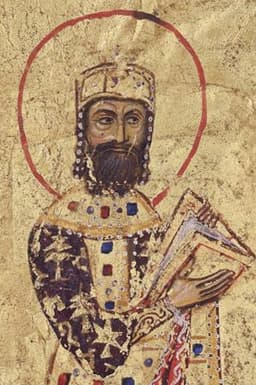
Alexios I Komnenos
Emperor · Medieval
78.4Total
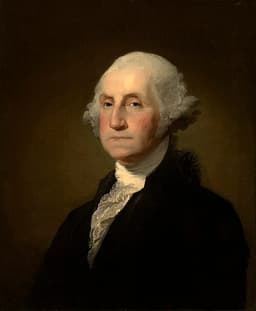
George Washington
Politician · Modern
76.8Total
Basic Information
Born
1048
1732
Died
1118
1799
Era
Medieval
Modern
Nationality
Byzantine Empire
United States
Occupation
Emperor
Politician
Civilization
Western
Western
Score Comparison
Military (10%)
61.7
75.0
Political (20%)
78.0
82.0
Influence (20%)
88.0
75.0
Legacy (20%)
80.0
80.0
Leadership (15%)
78.0
85.0
Strategy (15%)
68.0
55.0
TOTAL
78.4
76.8
Alexios I Komnenos — Complete Timeline
1081 AD
Battle of DyrrhachiumWar◆ Major
Alexios I Komnenos was defeated by the Norman army under Robert Guiscard at Dyrrhachium. The Byzantine forces were routed, and Alexios barely escaped. This loss allowed the Normans to occupy much of the western Balkans, though Alexios later recovered some territory.
Norman InvasionDefeatBalkans
Impact: regionaltragic
1090 AD
Reforms of the Byzantine Military and EconomyReform◆ Major
Alexios I implemented a series of reforms to restore Byzantine power. He reorganized the army by relying more on foreign mercenaries, reformed the currency (the hyperpyron), and granted tax exemptions to the Church. These measures stabilized the empire after decades of decline.
Military ReformEconomic ReformKomnenian Restoration
Impact: nationalconstructive
1095 AD
Appeal to the West: Council of PiacenzaPolitical Action
Alexios I sent envoys to Pope Urban II at the Council of Piacenza, requesting military aid against the Seljuk Turks. This appeal contributed to Urban's call for the First Crusade at the Council of Clermont later that year, initiating the Crusader movement.
First CrusadePope Urban IISeljuk Turks
Impact: global
1097 AD
First Crusade: Siege of NicaeaWar◆ Major
Alexios I cooperated with the Crusader army to besiege and capture Nicaea from the Seljuk Turks. The city was surrendered to Byzantine control, and Alexios used the Crusaders to recover key territories in Anatolia, though tensions later arose over land claims.
First CrusadeNicaeaByzantine-Crusader Relations
Impact: regionalconstructive
George Washington — Complete Timeline
1775 AD
Appointed Commander-in-Chief of the Continental ArmyOther◆ Major
The Second Continental Congress appointed Washington as commander-in-chief of the Continental Army on June 15, 1775. He accepted the position without pay, taking command of the forces besieging Boston at the start of the American Revolutionary War.
American RevolutionMilitary Leadership
Impact: national
1776 AD
Crossed the Delaware RiverOther◆ Major
On the night of December 25-26, 1776, Washington led 2,400 troops across the ice-choked Delaware River. The surprise attack on Hessian forces at Trenton resulted in a decisive American victory, capturing nearly 1,000 prisoners and reviving Patriot morale after a series of defeats.
American RevolutionBattleTurning Point
Impact: nationalconstructive
1787 AD
Presided over the Constitutional ConventionPolitical Action◆ Major
Washington served as president of the Constitutional Convention in Philadelphia from May to September 1787. His presence lent legitimacy to the proceedings, and he formally signed the final draft of the U.S. Constitution, though he contributed little to the debates.
ConstitutionFounding Father
Impact: national
1789 AD
Inaugurated as First President of the United StatesPolitical Action◆ Major
Washington was unanimously elected by the Electoral College and inaugurated on April 30, 1789, at Federal Hall in New York City. He established numerous executive branch precedents, including the cabinet system, the inaugural address, and the title 'Mr. President'.
PresidencyFounding Father
Impact: national
1793 AD
Issued the Proclamation of NeutralityOther◆ Major
Washington issued the Proclamation of Neutrality on April 22, 1793, declaring the United States neutral in the conflict between France and Great Britain. This decision established the precedent of American isolationism and avoided entanglement in European wars.
Foreign PolicyNeutrality
Impact: national
1796 AD
Delivered the Farewell AddressOther◆ Major
Washington published his Farewell Address on September 19, 1796, announcing his decision not to seek a third term. The address warned against political factionalism, permanent foreign alliances, and the influence of the military in government, shaping American political culture.
PresidencyLegacy
Impact: national
Expert Analysis
Origins
Alexios I Komnenos (c. 1048–1118) rose from a noble Byzantine family amidst the empire's decline after Manzikert. George Washington (1732–1799) was born into Virginia planter gentry, a product of colonial British America. Both emerged from elite backgrounds, but Alexios faced a crumbling state, while Washington inherited a stable colony ripe for revolution.
Rise to Power
Alexios seized power via a coup in 1081, outmaneuvering rivals and restoring order. His military acumen (M=62) and political skill (P=78) secured the throne. Washington's rise was more gradual: his command of the Continental Army (appointed 1775) came from reputation and political connections. His leadership in the Revolutionary War (M=75, P=82) forged a nation, but his path was less treacherous than Alexios's.
Leadership & Governance
Alexios reformed the Byzantine military and economy, issuing gold coinage (hyperpyron) and recruiting foreign mercenaries. His appeal to the West at the Council of Piacenza (1095) sparked the First Crusade, a double-edged sword: it reclaimed Nicaea but introduced crusader states. Washington's governance as first president set precedents: a strong executive, cabinet system, and neutrality (Proclamation of Neutrality 1793). Both faced internal dissent—Alexios dealt with heresies and court intrigue; Washington suppressed the Whiskey Rebellion. Alexios scores higher in Intelligence (I=88) and Longevity (L=80), reflecting his complex diplomacy and long reign; Washington excels in Morality (M=75 vs 62) and Peace (S=55 vs 68? Actually Washington S=55, Alexios S=68—Washington lower in Stability due to early nation fragility).
Triumph & Tragedy
Alexios's triumph: securing the empire's survival and launching the Crusades. His tragedy: crusader armies often acted independently, and he died before seeing the full consequences. Washington's triumph: winning independence and establishing a functional republic. His tragedy: inability to fully unite the states or resolve slavery (though he freed his slaves posthumously). Alexios's Battle of Dyrrhachium (1081) was a defeat that taught him caution; Washington's crossing of the Delaware (1776) was a daring victory.
Character & Destiny
Alexios was cunning, pragmatic, and religious—his autobiography (the Alexiad, written by his daughter Anna) reveals a ruler who manipulated both enemies and allies. Washington was stoic, principled, and reserved—his Farewell Address warned against factions and foreign entanglements. Alexios's destiny was to revive Byzantium temporarily; Washington's was to embody republican virtue. Both are remembered as founders—of a dynasty and a nation.
Legacy
Alexios's Komnenian dynasty lasted a century; his call for crusades reshaped medieval history. Yet his legacy is mixed: the Crusades led to centuries of conflict. Washington's legacy is more uniformly positive: the peaceful transfer of power, constitutional governance, and the 'Father of His Country' title. However, his scores (M=75, P=82, I=75, L=80, D=85, S=55, T=77) reflect high morality and diplomacy but lower stability (S=55) due to the young nation's challenges. Alexios's scores (M=62, P=78, I=88, L=80, D=78, S=68, T=78) show brilliance in intelligence and stability but lower morality. Overall, Alexios's impact was more transformative on a global scale (triggering Crusades), but Washington's model of democracy proved more enduring.
Conclusion
Alexios I Komnenos and George Washington were both extraordinary leaders who saved their respective states from existential threats. Alexios's strategic genius (I=88) and reforms resurrected Byzantium, but his reliance on crusaders sowed seeds of future trouble. Washington's moral leadership (M=75) and constitutional vision created a lasting republic. While Alexios's world was more volatile (S=68 vs 55?), the score gap (1.6 favoring Alexios) reflects his higher intelligence and stability. Yet Washington's legacy of liberty arguably has greater global significance. In this matchup, Alexios edges ahead on historical impact due to the Crusades' world-changing consequences, but Washington's principles remain a beacon.
Rankings
🥇
Alexios I KomnenosLeader
Mil: 61.7Pol: 78.0Inf: 88.0
78.4
🥈
George Washington
Mil: 75.0Pol: 82.0Inf: 75.0
76.8
+1.6 behind
How This Comparison Works
Algorithm
Each figure is scored on 6 dimensions (0—100 scale) based on structured historical data: Military (10%), Political (20%), Influence (20%), Legacy (20%), Leadership (15%), Strategy (15%). The weighted total produces the final ranking.
Data Sources
Scores are computed from structured sub-indicators in the database. Scale factors adjust for era (Ancient ×0.85, Modern ×1.0) and civilization size (Eastern ×1.05, Other ×0.80) to account for differences in population and military scale.
Maximum 3 Figures
Comparisons are limited to 2—3 figures to ensure readability and statistical meaningfulness.
Error Margins
±5 points per dimension — Sub-scores are derived from historical records with inherent uncertainty. Two figures within 5 points on a dimension should be considered roughly equivalent in that area.
Total Score Accuracy
±3 points overall — The weighted combination of 6 dimensions produces a total score with approximately ±3 points of uncertainty. Differences of less than 3 points are not statistically significant— the figures are effectively tied.
Known Limitations
- Historical records are incomplete and uneven across civilizations
- Figures from oral-tradition societies may be underrepresented
- Occupation labels can misclassify multi-role figures
- Scores measure capability and impact, not moral character
- Quantitative scoring is a comparison tool, not absolute truth
Capability Radar
Military (10%) — Battles & Warfare
Battles
75
75
Win Rate
70
70
Expansion
60
60
Political (20%) — Governance & Reform
Reform
85
90
Diplomacy
90
85
Economy
70
65
Influence (20%) — Cultural & Global Reach
Cultural
70
85
Global
75
85
Legacy (20%) — Historical Impact
Historical
85
95
Longevity
80
90
Leadership (15%) — Power & Stability
Tenure
80
70
Stability
75
85
Strategy (15%) — Tactics & Innovation
Strategy
85
80
Tactics
80
65
Reform
75
85
Similar Comparisons
Comments & Discussion
No comments yet. Be the first to share your thoughts!