Loading...
Alexios I Komnenos vs Francis I of France
Alexios I Komnenos leads by 15.4 pts · 2 figures compared
…
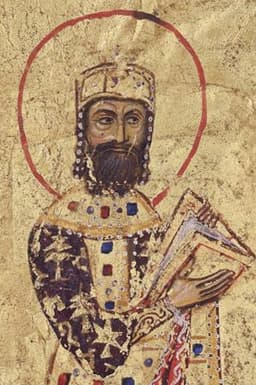
Alexios I Komnenos
Emperor · Medieval
78.4Total
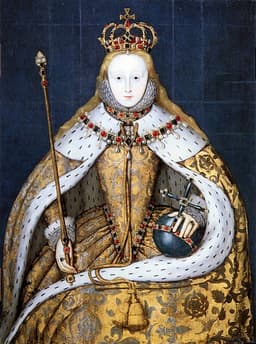
Francis I of France
Emperor · Medieval
63.0Total
Basic Information
Born
1048
1494
Died
1118
1547
Era
Medieval
Medieval
Nationality
Byzantine Empire
France
Occupation
Emperor
Emperor
Civilization
Western
Western
Score Comparison
Military (10%)
61.7
52.5
Political (20%)
78.0
60.0
Influence (20%)
88.0
72.0
Legacy (20%)
80.0
58.0
Leadership (15%)
78.0
72.0
Strategy (15%)
68.0
55.0
TOTAL
78.4
63.0
Alexios I Komnenos — Complete Timeline
1081 AD
Battle of DyrrhachiumWar◆ Major
Alexios I Komnenos was defeated by the Norman army under Robert Guiscard at Dyrrhachium. The Byzantine forces were routed, and Alexios barely escaped. This loss allowed the Normans to occupy much of the western Balkans, though Alexios later recovered some territory.
Norman InvasionDefeatBalkans
Impact: regionaltragic
1090 AD
Reforms of the Byzantine Military and EconomyReform◆ Major
Alexios I implemented a series of reforms to restore Byzantine power. He reorganized the army by relying more on foreign mercenaries, reformed the currency (the hyperpyron), and granted tax exemptions to the Church. These measures stabilized the empire after decades of decline.
Military ReformEconomic ReformKomnenian Restoration
Impact: nationalconstructive
1095 AD
Appeal to the West: Council of PiacenzaPolitical Action
Alexios I sent envoys to Pope Urban II at the Council of Piacenza, requesting military aid against the Seljuk Turks. This appeal contributed to Urban's call for the First Crusade at the Council of Clermont later that year, initiating the Crusader movement.
First CrusadePope Urban IISeljuk Turks
Impact: global
1097 AD
First Crusade: Siege of NicaeaWar◆ Major
Alexios I cooperated with the Crusader army to besiege and capture Nicaea from the Seljuk Turks. The city was surrendered to Byzantine control, and Alexios used the Crusaders to recover key territories in Anatolia, though tensions later arose over land claims.
First CrusadeNicaeaByzantine-Crusader Relations
Impact: regionalconstructive
Francis I of France — Complete Timeline
1515 AD
Battle of MarignanoWar◆ Major
Francis I led a French army to victory against the Swiss at Marignano, securing control of the Duchy of Milan. This battle established Francis I as a major military leader and marked the beginning of his Italian campaigns.
Italian WarsBattleCapetian
Impact: regional
1516 AD
Patronage of Leonardo da VinciCultural◆ Major
Francis I invited Leonardo da Vinci to France, providing him with the Ch
RenaissancePatronageCapetian
Impact: globalconstructive
Concordat of BolognaPolitical Action◆ Major
Francis I signed the Concordat of Bologna with Pope Leo X, which gave the French king the right to appoint bishops and abbots. This agreement strengthened royal control over the French Church and reduced papal influence in France.
Church-State RelationsTreatyCapetian
Impact: nationalconstructive
1525 AD
Capture at the Battle of PaviaWar
Francis I was defeated and captured by Imperial forces at the Battle of Pavia. He was imprisoned in Spain and forced to sign the Treaty of Madrid, renouncing French claims in Italy. This was a major setback for French ambitions.
Italian WarsDefeatCapetian
Impact: globaltragic
Expert Analysis
Origins
**Alexios I Komnenos** was born in 1048 into a prominent Byzantine aristocratic family. His father, John Komnenos, served as a military commander under Emperor Isaac I. Alexios received a thorough education in military tactics and administration, serving as a general under Emperors Michael VII and Nikephoros III. His early career was marked by successful campaigns against the Seljuk Turks and the rebellious Norman mercenaries.
**Francis I of France** was born in 1494 in Cognac, the son of Charles, Count of Angoulême, and Louise of Savoy. He became heir to the throne after the death of his cousin Louis XII. Francis was educated in Renaissance humanism, studying Latin, history, and chivalric ideals. His mother instilled in him a love for Italian art and culture, which later influenced his patronage.
Rise to Power
**Alexios I** rose through military success. In 1081, during a rebellion against Emperor Nikephoros III, Alexios was proclaimed emperor by his troops. He entered Constantinople and was crowned on April 4, 1081. His reign began amid crises: Norman invasion from the west, Pecheneg raids from the north, and Seljuk occupation of Anatolia.
**Francis I** became king in 1515 upon the death of Louis XII. He immediately launched a campaign to reclaim the Duchy of Milan. At the Battle of Marignano (1515), he defeated the Swiss mercenaries, securing Milan and establishing his reputation as a military leader. He also secured the Concordat of Bologna (1516) with Pope Leo X, granting the French crown control over ecclesiastical appointments.
Leadership & Governance
**Alexios I** implemented comprehensive reforms. He restructured the Byzantine military by relying more on foreign mercenaries (e.g., Varangians, Franks) and creating a new thematic system. He reformed the currency, stabilizing the economy after decades of inflation. His political acumen (score 78.0) was evident in his diplomatic maneuvering with the Crusaders, ensuring oaths of fealty and the return of former Byzantine territories. However, his reliance on the Crusaders also sowed seeds of distrust.
**Francis I** centralized French administration. He expanded the royal council, appointed loyal nobles to key posts, and used the Concordat to strengthen royal authority over the church. He promoted the French language by making it the official language of law (Ordinance of Villers-Cotterêts, 1539). His patronage of the arts (score 72.0 influence) brought Leonardo da Vinci to France, but his governance was hampered by constant wars with the Habsburgs, draining the treasury.
Triumph & Tragedy
**Alexios I**‘s greatest success was stabilizing the Byzantine Empire. He recovered Nicaea (1097) with Crusader help, repelled Norman invasions, and defeated the Pechenegs (1091). His reforms restored imperial authority and economic stability. His greatest failure was the long-term consequence of the Crusades: the establishment of Crusader states that often acted independently, and the Latin presence in the Levant that eventually weakened Byzantium. He also failed to fully recover Anatolia from the Turks.
**Francis I**‘s triumph was the Battle of Marignano, which made him a respected monarch in Europe. His patronage of Leonardo and the Renaissance arts left a cultural legacy. His tragedy was the Battle of Pavia (1525), where he was captured and forced to sign the Treaty of Madrid, renouncing claims in Italy. He later broke the treaty, leading to more wars. His foreign policy ultimately failed to contain Habsburg power, and his military score (52.5) reflects his mixed record.
Character & Destiny
**Alexios I** was pragmatic and diplomatic. He skillfully used the Crusaders to his advantage but was cautious and sometimes deceitful. His writings in the *Alexiad* (by his daughter Anna Komnena) show a ruler focused on survival and restoration. His character shaped his destiny: he saved the empire but at the cost of long-term Latin enmity.
**Francis I** was ambitious and chivalric, embodying the Renaissance ideal of the warrior-king. He was impulsive, especially in his Italian campaigns, leading to his capture. His love for art and culture made him a patron, but his vanity and rivalry with Charles V led to repeated defeats. His leadership score (72.0) reflects his ability to inspire, but his strategic score (55.0) shows poor decision-making.
Legacy
**Alexios I** founded the Komnenian dynasty, which ruled for over a century. His reforms gave Byzantium a respite and influenced later Byzantine military organization. The First Crusade, which he inadvertently sparked, reshaped medieval history. His overall score of 78.4 reflects his profound impact on the medieval world.
**Francis I** is remembered as the French Renaissance king who brought the Italian Renaissance to France. The Château de Chambord and the Louvre’s art collection owe much to him. However, his military failures and costly wars weakened France. His total score of 63.0 places him as a significant but less impactful ruler.
Conclusion
Alexios I Komnenos had a greater historical impact than Francis I. Alexios’s military (61.7 vs 52.5), political (78.0 vs 60.0), and legacy scores (80.0 vs 58.0) are all higher. He not only saved the Byzantine Empire but also set in motion the Crusades, which altered the course of European and Middle Eastern history. Francis I, while culturally influential, failed in his strategic objectives and left France in a weaker position. Alexios I’s reforms and diplomacy had longer-lasting consequences, making him the more significant figure.
Rankings
🥇
Alexios I KomnenosLeader
Mil: 61.7Pol: 78.0Inf: 88.0
78.4
🥈
Francis I of France
Mil: 52.5Pol: 60.0Inf: 72.0
63.0
+15.4 behind
How This Comparison Works
Algorithm
Each figure is scored on 6 dimensions (0—100 scale) based on structured historical data: Military (10%), Political (20%), Influence (20%), Legacy (20%), Leadership (15%), Strategy (15%). The weighted total produces the final ranking.
Data Sources
Scores are computed from structured sub-indicators in the database. Scale factors adjust for era (Ancient ×0.85, Modern ×1.0) and civilization size (Eastern ×1.05, Other ×0.80) to account for differences in population and military scale.
Maximum 3 Figures
Comparisons are limited to 2—3 figures to ensure readability and statistical meaningfulness.
Error Margins
±5 points per dimension — Sub-scores are derived from historical records with inherent uncertainty. Two figures within 5 points on a dimension should be considered roughly equivalent in that area.
Total Score Accuracy
±3 points overall — The weighted combination of 6 dimensions produces a total score with approximately ±3 points of uncertainty. Differences of less than 3 points are not statistically significant— the figures are effectively tied.
Known Limitations
- Historical records are incomplete and uneven across civilizations
- Figures from oral-tradition societies may be underrepresented
- Occupation labels can misclassify multi-role figures
- Scores measure capability and impact, not moral character
- Quantitative scoring is a comparison tool, not absolute truth
Capability Radar
Military (10%) — Battles & Warfare
Battles
75
65
Win Rate
70
45
Expansion
60
55
Political (20%) — Governance & Reform
Reform
85
65
Diplomacy
90
60
Economy
70
55
Influence (20%) — Cultural & Global Reach
Cultural
70
75
Global
75
60
Legacy (20%) — Historical Impact
Historical
85
70
Longevity
80
65
Leadership (15%) — Power & Stability
Tenure
80
70
Stability
75
40
Strategy (15%) — Tactics & Innovation
Strategy
85
55
Tactics
80
60
Reform
75
50
Similar Comparisons
Comments & Discussion
No comments yet. Be the first to share your thoughts!