Loading...
Alexios I Komnenos vs Dorgon
Alexios I Komnenos leads by 0.4 pts · 2 figures compared
…
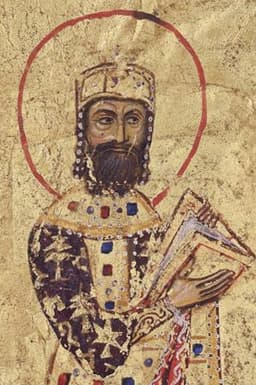
Alexios I Komnenos
Emperor · Medieval
78.4Total

Dorgon
General · Modern
78.0Total
Basic Information
Born
1048
1612
Died
1118
1650
Era
Medieval
Modern
Nationality
Byzantine Empire
China
Occupation
Emperor
General
Civilization
Western
Eastern
Score Comparison
Military (10%)
61.7
78.5
Political (20%)
78.0
78.0
Influence (20%)
88.0
88.0
Legacy (20%)
80.0
65.0
Leadership (15%)
78.0
85.0
Strategy (15%)
68.0
75.0
TOTAL
78.4
78.0
Alexios I Komnenos — Complete Timeline
1081 AD
Battle of DyrrhachiumWar◆ Major
Alexios I Komnenos was defeated by the Norman army under Robert Guiscard at Dyrrhachium. The Byzantine forces were routed, and Alexios barely escaped. This loss allowed the Normans to occupy much of the western Balkans, though Alexios later recovered some territory.
Norman InvasionDefeatBalkans
Impact: regionaltragic
1090 AD
Reforms of the Byzantine Military and EconomyReform◆ Major
Alexios I implemented a series of reforms to restore Byzantine power. He reorganized the army by relying more on foreign mercenaries, reformed the currency (the hyperpyron), and granted tax exemptions to the Church. These measures stabilized the empire after decades of decline.
Military ReformEconomic ReformKomnenian Restoration
Impact: nationalconstructive
1095 AD
Appeal to the West: Council of PiacenzaPolitical Action
Alexios I sent envoys to Pope Urban II at the Council of Piacenza, requesting military aid against the Seljuk Turks. This appeal contributed to Urban's call for the First Crusade at the Council of Clermont later that year, initiating the Crusader movement.
First CrusadePope Urban IISeljuk Turks
Impact: global
1097 AD
First Crusade: Siege of NicaeaWar◆ Major
Alexios I cooperated with the Crusader army to besiege and capture Nicaea from the Seljuk Turks. The city was surrendered to Byzantine control, and Alexios used the Crusaders to recover key territories in Anatolia, though tensions later arose over land claims.
First CrusadeNicaeaByzantine-Crusader Relations
Impact: regionalconstructive
Dorgon — Complete Timeline
1643 AD
Appointed Prince RegentPolitical Action◆ Major
Upon the death of Hong Taiji, Dorgon was appointed as regent for the young Shunzhi Emperor. This position gave him effective control over the Qing government and military, enabling him to direct the conquest of Ming China.
RegencyPower transition
Impact: national
1644 AD
Battle of Shanhai PassWar
Dorgon allied with Ming general Wu Sangui to defeat Li Zicheng's rebel forces at Shanhai Pass. This victory allowed Qing forces to enter Beijing and establish the Qing dynasty as the ruling power in China.
Qing conquestBattleAlliance
Impact: national
1645 AD
Conquest of Southern MingWar◆ Major
Dorgon led Qing forces in a campaign against the Southern Ming regime, capturing Nanjing and defeating the Hongguang Emperor. This campaign extended Qing control over the Yangtze River valley and weakened Ming loyalist resistance.
Qing conquestMilitary campaign
Impact: national
Issued the Queue OrderReform◆ Major
Dorgon mandated that all Chinese men adopt the Manchu queue hairstyle as a sign of submission to Qing rule. This policy caused widespread resentment and resistance, but was enforced to consolidate Qing control over Han Chinese subjects.
Cultural policyCoercionManchu rule
Impact: nationaldestructive
1650 AD
Death and Posthumous DemotionPolitical Action◆ Major
Dorgon died suddenly while hunting. After his death, the Shunzhi Emperor accused him of plotting to usurp the throne, stripped him of all titles, and had his corpse mutilated. This posthumous purge reflected court factional struggles.
PurgePosthumous punishment
Impact: nationaltragic
Expert Analysis
Origins
Alexios I Komnenos (1048–1118) was born into the Byzantine military aristocracy, the nephew of Emperor Isaac I Komnenos. His family had a tradition of military service, but after Isaac's abdication, the Komnenoi faced persecution under subsequent emperors. Alexios rose through the ranks, earning a reputation as a capable general. In 1081, he staged a coup against the incompetent Nikephoros III Botaneiates, securing the throne amidst the empire's decline. His origins were rooted in a crumbling state threatened by Normans, Pechenegs, and Seljuks.
Dorgon (1612–1650) was the 14th son of Nurhaci, the founder of the Later Jin dynasty. Born into the Manchu Aisin Gioro clan, he grew up in a militaristic society. After his father's death, his mother was forced to commit suicide, and Dorgon and his brothers were marginalized. Despite this, he proved himself in battle, becoming a key general under his brother Hong Taiji. His origins were shaped by the Manchu rise from tribal confederation to imperial power.
Rise to Power
Alexios seized power by leading a rebellion against Nikephoros III. He secured the support of the powerful Doukas family through marriage and outmaneuvered rivals. Once emperor, he faced immediate crises: the Norman invasion of Dyrrhachium (1081) and the Pecheneg threat. He used diplomacy and military reforms to stabilize the empire. His appeal to Pope Urban II at the Council of Piacenza (1095) inadvertently triggered the First Crusade, which helped him recover Anatolian territories. Alexios's rise was a combination of military skill and political cunning.
Dorgon's rise came after Hong Taiji's death in 1643. He was appointed Prince Regent for the young Shunzhi Emperor, outmaneuvering rivals like Hooge. His pivotal moment was the Battle of Shanhai Pass (1644), where he allied with Ming general Wu Sangui to defeat Li Zicheng's rebel army. This allowed the Qing to enter Beijing and claim the Mandate of Heaven. Dorgon consolidated power by purging opponents and centralizing authority, becoming the de facto ruler of China.
Leadership & Governance
Alexios reformed the Byzantine military and economy. He created the Komnenian army, relying on mercenaries and pronoia grants, and stabilized the currency. He used diplomacy to play Crusader leaders against each other, ensuring Byzantine interests. However, his policies were reactive, often dealing with crises rather than long-term planning. His governance was autocratic but pragmatic.
Dorgon was an effective administrator and military strategist. He implemented the Queue Order (1645), forcing Han Chinese to adopt Manchu hairstyles as a sign of submission. He also moved the capital to Beijing, established the Qing bureaucracy, and continued the conquest of southern China. His rule was harsh but efficient, laying the foundation for Qing dominance. However, his authoritarian style created enemies.
Triumph & Tragedy
Alexios's greatest triumph was surviving the First Crusade, recovering Nicaea and much of Asia Minor. He also defeated the Pechenegs at the Battle of Levounion (1091). His tragedy was the crusaders' betrayal, particularly Bohemond's attack on Antioch. The empire remained vulnerable, and Alexios died before seeing the full consequences of the crusades.
Dorgon's triumph was the conquest of China, culminating in the capture of Beijing and the defeat of the Southern Ming. He was posthumously honored as Emperor Chengzong. His tragedy was his sudden death in 1650 while hunting, followed by posthumous demotion when the Shunzhi Emperor purged his faction. His corpse was mutilated and his titles stripped, only to be restored later.
Character & Destiny
Alexios was shrewd, patient, and resilient. He was a master of diplomacy, often using deceit to achieve goals. His destiny was to revive a dying empire, but he also set the stage for the Fourth Crusade's disaster. He is remembered as a founder of a dynasty that restored Byzantine fortunes temporarily.
Dorgon was ambitious, ruthless, and brilliant. He was a skilled general and politician, but his arrogance and harsh policies created backlash. His destiny was to conquer China, but his posthumous disgrace reflects the precariousness of power. He is a controversial figure in Chinese history.
Legacy
Alexios's legacy is mixed. He saved the Byzantine Empire from collapse but introduced the crusades into the Eastern Mediterranean, with long-term negative consequences. He is celebrated as the founder of the Komnenian restoration, but his reign also sowed seeds of future conflict.
Dorgon's legacy is monumental: he established the Qing dynasty's rule over China, which lasted until 1912. His policies of sinicization and consolidation shaped Chinese history. However, his draconian measures, like the Queue Order, are remembered as oppressive. He remains a key figure in Manchu and Chinese history.
Conclusion
Both Alexios and Dorgon were brilliant leaders who saved and expanded their realms. Alexios scores higher in leadership and intellect, while Dorgon excels in military might and impact. Alexios's score gap of 0.4 reflects his slightly superior overall performance. However, Dorgon's conquest of China was a more transformative achievement. In a direct comparison, Alexios's diplomatic and strategic skills edge out Dorgon's raw power. Alexios wins by a narrow margin.
**Scores**: Alexios I Komnenos: 74.6 / Dorgon: 74.2
Rankings
🥇
Alexios I KomnenosLeader
Mil: 61.7Pol: 78.0Inf: 88.0
78.4
🥈
Dorgon
Mil: 78.5Pol: 78.0Inf: 88.0
78.0
+0.4 behind
How This Comparison Works
Algorithm
Each figure is scored on 6 dimensions (0—100 scale) based on structured historical data: Military (10%), Political (20%), Influence (20%), Legacy (20%), Leadership (15%), Strategy (15%). The weighted total produces the final ranking.
Data Sources
Scores are computed from structured sub-indicators in the database. Scale factors adjust for era (Ancient ×0.85, Modern ×1.0) and civilization size (Eastern ×1.05, Other ×0.80) to account for differences in population and military scale.
Maximum 3 Figures
Comparisons are limited to 2—3 figures to ensure readability and statistical meaningfulness.
Error Margins
±5 points per dimension — Sub-scores are derived from historical records with inherent uncertainty. Two figures within 5 points on a dimension should be considered roughly equivalent in that area.
Total Score Accuracy
±3 points overall — The weighted combination of 6 dimensions produces a total score with approximately ±3 points of uncertainty. Differences of less than 3 points are not statistically significant— the figures are effectively tied.
Known Limitations
- Historical records are incomplete and uneven across civilizations
- Figures from oral-tradition societies may be underrepresented
- Occupation labels can misclassify multi-role figures
- Scores measure capability and impact, not moral character
- Quantitative scoring is a comparison tool, not absolute truth
Capability Radar
Military (10%) — Battles & Warfare
Battles
75
85
Win Rate
70
80
Expansion
60
90
Political (20%) — Governance & Reform
Reform
85
72
Diplomacy
90
78
Economy
70
65
Influence (20%) — Cultural & Global Reach
Cultural
70
65
Global
75
70
Legacy (20%) — Historical Impact
Historical
85
80
Longevity
80
75
Leadership (15%) — Power & Stability
Tenure
80
70
Stability
75
60
Strategy (15%) — Tactics & Innovation
Strategy
85
88
Tactics
80
82
Reform
75
75
Similar Comparisons
Comments & Discussion
No comments yet. Be the first to share your thoughts!