Loading...
Alexios I Komnenos vs Dinh Tien Hoang
Alexios I Komnenos leads by 18.0 pts · 2 figures compared
…
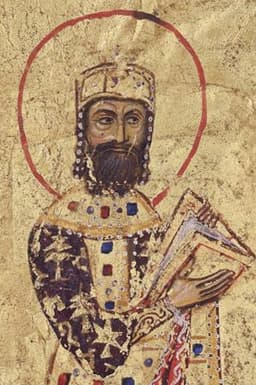
Alexios I Komnenos
Emperor · Medieval
78.4Total
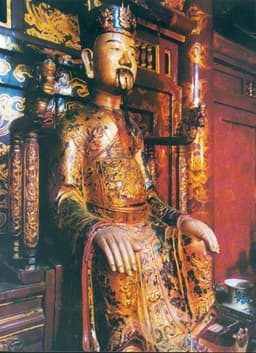
Dinh Tien Hoang
Emperor · Medieval
60.4Total
Basic Information
Born
1048
924
Died
1118
979
Era
Medieval
Medieval
Nationality
Byzantine Empire
Vietnam
Occupation
Emperor
Emperor
Civilization
Western
Eastern
Score Comparison
Military (10%)
61.7
60.0
Political (20%)
78.0
72.0
Influence (20%)
88.0
65.0
Legacy (20%)
80.0
40.0
Leadership (15%)
78.0
77.2
Strategy (15%)
68.0
58.0
TOTAL
78.4
60.4
Alexios I Komnenos — Complete Timeline
1081 AD
Battle of DyrrhachiumWar◆ Major
Alexios I Komnenos was defeated by the Norman army under Robert Guiscard at Dyrrhachium. The Byzantine forces were routed, and Alexios barely escaped. This loss allowed the Normans to occupy much of the western Balkans, though Alexios later recovered some territory.
Norman InvasionDefeatBalkans
Impact: regionaltragic
1090 AD
Reforms of the Byzantine Military and EconomyReform◆ Major
Alexios I implemented a series of reforms to restore Byzantine power. He reorganized the army by relying more on foreign mercenaries, reformed the currency (the hyperpyron), and granted tax exemptions to the Church. These measures stabilized the empire after decades of decline.
Military ReformEconomic ReformKomnenian Restoration
Impact: nationalconstructive
1095 AD
Appeal to the West: Council of PiacenzaPolitical Action
Alexios I sent envoys to Pope Urban II at the Council of Piacenza, requesting military aid against the Seljuk Turks. This appeal contributed to Urban's call for the First Crusade at the Council of Clermont later that year, initiating the Crusader movement.
First CrusadePope Urban IISeljuk Turks
Impact: global
1097 AD
First Crusade: Siege of NicaeaWar◆ Major
Alexios I cooperated with the Crusader army to besiege and capture Nicaea from the Seljuk Turks. The city was surrendered to Byzantine control, and Alexios used the Crusaders to recover key territories in Anatolia, though tensions later arose over land claims.
First CrusadeNicaeaByzantine-Crusader Relations
Impact: regionalconstructive
Dinh Tien Hoang — Complete Timeline
968 AD
Defeat of the Twelve WarlordsWar
Dinh Bo Linh, later known as Dinh Tien Hoang, unified Vietnam by defeating the Twelve Warlords who had divided the country after the collapse of Chinese rule. He established the Dinh dynasty and became the first emperor of an independent Vietnam.
UnificationDinh DynastyVietnamese Independence
Impact: nationalconstructive
Establishment of the Dinh DynastyPolitical Action◆ Major
Dinh Tien Hoang founded the Dinh dynasty and declared himself Emperor. He moved the capital to Hoa Lu and implemented administrative reforms to consolidate power. This marked the beginning of a new era of Vietnamese independence after centuries of Chinese domination.
Dynasty FoundingCapital MoveAdministrative Reform
Impact: nationalconstructive
979 AD
Assassination of Dinh Tien HoangPolitical Action◆ Major
Dinh Tien Hoang and his crown prince were assassinated by a court official while sleeping. The murder plunged the Dinh dynasty into chaos, leading to a succession crisis and eventual takeover by Le Hoan. The assassination ended the short-lived Dinh dynasty.
AssassinationSuccession CrisisEnd of Dinh Dynasty
Impact: nationaltragic
Expert Analysis
Dinh Tien Hoang vs Alexios I Komnenos
# The Emperor and the Unifier: Two Paths to Power in a Fractured World
In the spring of 1097, a weary Byzantine emperor stood on the walls of Nicaea, watching as Crusader armies from the West laid siege to a city that had been lost to the Seljuk Turks for nearly two decades. Alexios I Komnenos had gambled everything on an appeal to distant Latin princes, and now, against all odds, his plan was working. Half a world away, in the limestone caves of Hoa Lu, Dinh Bo Linh had once surveyed a very different kind of chaos—a land torn apart by a dozen rival warlords, each claiming a piece of a country that had only recently shaken off a millennium of Chinese rule. One man would found a dynasty that restored an empire; the other would become the father of a nation. Both would die in violence, but their legacies could not have diverged more sharply.
Origins
Alexios was born into the purple of Byzantine aristocracy, a nephew of Emperor Isaac I Komnenos, but his childhood coincided with the empire's most desperate hour. The Battle of Manzikert in 1071 had shattered Byzantine Anatolia, and the empire was bleeding territory to Normans, Pechenegs, and Seljuks alike. He grew up in a court riven by intrigue, where military competence was the only currency that mattered. Dinh Bo Linh, by contrast, emerged from the villages of what is now northern Vietnam, a son of a local lord in the region of Hoa Lu. His world was not an empire in decline but a nascent nation struggling to be born. For nearly a thousand years, Vietnam had been under Chinese domination, and only in the tenth century had it begun to assert its independence through a series of fragile native dynasties. Where Alexios inherited a broken machine, Dinh had to build one from nothing.
Rise to Power
Alexios came to the throne in 1081 through a military coup, deposing the incompetent Nikephoros III Botaneiates. He was thirty-three years old, a general who had proven himself in the field, but his first test was catastrophic. At the Battle of Dyrrhachium, he faced the Norman warlord Robert Guiscard, and his army was routed. The Byzantine forces fled in disorder, and Alexios barely escaped with his life. It was a humbling start, but he learned from it. Over the next decade, he rebuilt his army not by relying on the old provincial levies but by forging alliances with foreign mercenaries and local magnates, creating a new system that would become the backbone of Komnenian military power.
Dinh Bo Linh's path was more direct but no less treacherous. In 968, after years of campaigning, he defeated the Twelve Warlords who had divided Vietnam since the collapse of the earlier Ngo dynasty. His victory was total, and he proclaimed himself Emperor Dinh Tien Hoang, establishing the Dinh dynasty with its capital at Hoa Lu. Unlike Alexios, who had to navigate a complex web of existing institutions and powerful families, Dinh was a conqueror writing on a blank slate. He moved quickly to consolidate his rule, building a fortified capital in the rugged limestone mountains of Ninh Binh and implementing administrative reforms that would set the template for Vietnamese governance for centuries.
Leadership & Governance
Alexios ruled through pragmatism and patience. His military strategy was defensive and opportunistic; he knew the Byzantine army could no longer fight pitched battles against superior forces, so he relied on diplomacy, bribery, and careful timing. The appeal to Pope Urban II at the Council of Piacenza in 1095 was a masterstroke of political genius—by framing his request for help as a call to liberate Christian holy lands, he unleashed the First Crusade, which recaptured Nicaea in 1097 and rolled back Seljuk power in Anatolia. Yet he never fully trusted the Crusaders, and his relationship with them was one of mutual suspicion. He was a survivor, not a visionary.
Dinh Tien Hoang ruled through will and authority. His unification of Vietnam was not merely military but symbolic: by declaring himself emperor, he asserted that Vietnam was no longer a tributary of any Chinese dynasty. He established a centralized court, minted coinage, and codified laws, all while maintaining the fierce independence that would define Vietnamese identity. His leadership score of 84.2 reflects a man who commanded absolute loyalty, but his assassination in 979—murdered in his sleep along with his crown prince by a court official—reveals the fragility of a system built on one man's authority. The Dinh dynasty collapsed within months of his death.
Triumph & Tragedy
Alexios's greatest triumph was the restoration of Byzantine power in Anatolia. By the time of his death in 1118, he had stabilized the empire's frontiers, reformed its economy, and secured a dynasty that would rule for another century. His tragedy was that he never fully trusted the forces he had unleashed. The Crusades would spiral beyond his control, and the Fourth Crusade would eventually sack Constantinople itself in 1204, an outcome his policies inadvertently enabled.
Dinh Tien Hoang's triumph was the creation of an independent Vietnam. He gave his people a name, a capital, and a sense of destiny. His tragedy was that he could not secure the succession. His assassination plunged the Dinh dynasty into chaos, and within a decade, a new dynasty—the Early Le—would rise from the ashes. Vietnam survived, but its first emperor did not.
Character & Destiny
Alexios was cautious, calculating, and deeply suspicious. He trusted no one fully, not even his own family, and this wariness allowed him to navigate the treacherous currents of Byzantine politics for nearly forty years. But it also made him lonely. He died exhausted, surrounded by courtiers he knew would turn on his son the moment he was gone. Dinh Tien Hoang was bold, decisive, and perhaps reckless. He built a kingdom through sheer force of will, but he failed to build the institutions that would outlast him. His character was suited to conquest, not consolidation.
Legacy
Alexios I Komnenos is remembered as the founder of the Komnenian restoration, the man who saved Byzantium from collapse. His reforms shaped the empire's military and economic structures for generations, and his appeal to the West changed the course of world history. Yet his legacy is ambiguous: he saved the empire but set it on a collision course with the very forces he had summoned.
Dinh Tien Hoang is revered as the first emperor of an independent Vietnam, a national founder who broke the chains of Chinese domination. His name is etched into the collective memory of a people who have fought for their independence for centuries. But his dynasty died with him, and his vision of a unified Vietnam had to be realized by others.
Conclusion
Two emperors, two worlds. Alexios inherited an empire and tried to hold it together; Dinh created a nation from nothing. One ruled through patience and diplomacy, the other through force and will. Both succeeded beyond measure, and both failed in ways they could not foresee. Their stories remind us that leadership is never a formula—it is a response to the specific pressures of time and place. The Byzantine emperor who called the Crusades and the Vietnamese emperor who unified his country both shaped history not because they were perfect, but because they understood the chaos of their age and dared to act. In the end, that is all any ruler can do.
Rankings
🥇
Alexios I KomnenosLeader
Mil: 61.7Pol: 78.0Inf: 88.0
78.4
🥈
Dinh Tien Hoang
Mil: 60.0Pol: 72.0Inf: 65.0
60.4
+18.0 behind
How This Comparison Works
Algorithm
Each figure is scored on 6 dimensions (0—100 scale) based on structured historical data: Military (10%), Political (20%), Influence (20%), Legacy (20%), Leadership (15%), Strategy (15%). The weighted total produces the final ranking.
Data Sources
Scores are computed from structured sub-indicators in the database. Scale factors adjust for era (Ancient ×0.85, Modern ×1.0) and civilization size (Eastern ×1.05, Other ×0.80) to account for differences in population and military scale.
Maximum 3 Figures
Comparisons are limited to 2—3 figures to ensure readability and statistical meaningfulness.
Error Margins
±5 points per dimension — Sub-scores are derived from historical records with inherent uncertainty. Two figures within 5 points on a dimension should be considered roughly equivalent in that area.
Total Score Accuracy
±3 points overall — The weighted combination of 6 dimensions produces a total score with approximately ±3 points of uncertainty. Differences of less than 3 points are not statistically significant— the figures are effectively tied.
Known Limitations
- Historical records are incomplete and uneven across civilizations
- Figures from oral-tradition societies may be underrepresented
- Occupation labels can misclassify multi-role figures
- Scores measure capability and impact, not moral character
- Quantitative scoring is a comparison tool, not absolute truth
Capability Radar
Military (10%) — Battles & Warfare
Battles
75
70
Win Rate
70
75
Expansion
60
65
Political (20%) — Governance & Reform
Reform
85
70
Diplomacy
90
65
Economy
70
60
Influence (20%) — Cultural & Global Reach
Cultural
70
65
Global
75
55
Legacy (20%) — Historical Impact
Historical
85
75
Longevity
80
70
Leadership (15%) — Power & Stability
Tenure
80
60
Stability
75
55
Strategy (15%) — Tactics & Innovation
Strategy
85
70
Tactics
80
65
Reform
75
60
Similar Comparisons
Comments & Discussion
No comments yet. Be the first to share your thoughts!