Loading...
Alexios I Komnenos vs Constantine the Great
Alexios I Komnenos leads by 2.9 pts · 2 figures compared
…
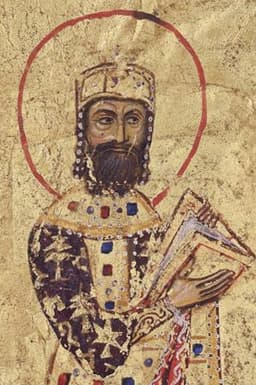
Alexios I Komnenos
Emperor · Medieval
78.4Total
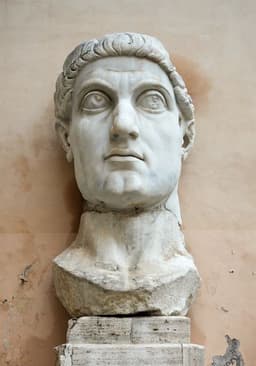
Constantine the Great
Emperor · Ancient
75.5Total
Basic Information
Born
1048
272
Died
1118
337
Era
Medieval
Ancient
Nationality
Byzantine Empire
Roman Empire
Occupation
Emperor
Emperor
Civilization
Western
Western
Score Comparison
Military (10%)
61.7
78.0
Political (20%)
78.0
82.0
Influence (20%)
88.0
75.0
Legacy (20%)
80.0
70.0
Leadership (15%)
78.0
80.0
Strategy (15%)
68.0
72.0
TOTAL
78.4
75.5
Alexios I Komnenos — Complete Timeline
1081 AD
Battle of DyrrhachiumWar◆ Major
Alexios I Komnenos was defeated by the Norman army under Robert Guiscard at Dyrrhachium. The Byzantine forces were routed, and Alexios barely escaped. This loss allowed the Normans to occupy much of the western Balkans, though Alexios later recovered some territory.
Norman InvasionDefeatBalkans
Impact: regionaltragic
1090 AD
Reforms of the Byzantine Military and EconomyReform◆ Major
Alexios I implemented a series of reforms to restore Byzantine power. He reorganized the army by relying more on foreign mercenaries, reformed the currency (the hyperpyron), and granted tax exemptions to the Church. These measures stabilized the empire after decades of decline.
Military ReformEconomic ReformKomnenian Restoration
Impact: nationalconstructive
1095 AD
Appeal to the West: Council of PiacenzaPolitical Action
Alexios I sent envoys to Pope Urban II at the Council of Piacenza, requesting military aid against the Seljuk Turks. This appeal contributed to Urban's call for the First Crusade at the Council of Clermont later that year, initiating the Crusader movement.
First CrusadePope Urban IISeljuk Turks
Impact: global
1097 AD
First Crusade: Siege of NicaeaWar◆ Major
Alexios I cooperated with the Crusader army to besiege and capture Nicaea from the Seljuk Turks. The city was surrendered to Byzantine control, and Alexios used the Crusaders to recover key territories in Anatolia, though tensions later arose over land claims.
First CrusadeNicaeaByzantine-Crusader Relations
Impact: regionalconstructive
Constantine the Great — Complete Timeline
312 AD
Battle of the Milvian BridgeWar◆ Major
Constantine defeated his rival Maxentius at the Milvian Bridge near Rome. According to tradition, Constantine saw a vision of a cross in the sky with the words 'In this sign, conquer.' The victory made Constantine the sole ruler of the Western Roman Empire and led to his conversion to Christianity.
Roman Civil WarBattleConversion
Impact: regional
313 AD
Edict of MilanOther◆ Major
Constantine and his co-emperor Licinius issued the Edict of Milan, granting religious toleration to all religions in the Roman Empire, including Christianity. The edict ended the persecution of Christians, restored confiscated church property, and established Christianity as a legally recognized religion.
Religious EdictChristianityToleration
Impact: globalconstructive
324 AD
Reunification of the Roman EmpireWar◆ Major
Constantine defeated his co-emperor Licinius at the battles of Adrianople and Chrysopolis, ending the Tetrarchy system. He became the sole ruler of the entire Roman Empire, reuniting the Western and Eastern halves under his control. This reunification was the last time the Roman Empire was united under a single ruler.
Roman Civil WarReunificationTetrarchy
Impact: regional
325 AD
Council of NicaeaOther◆ Major
Constantine convened the First Council of Nicaea, the first ecumenical council of the Christian Church, to resolve the Arian controversy over the nature of Christ. The council produced the Nicene Creed, affirming the divinity of Christ and establishing a unified Christian doctrine. Constantine presided over the council.
Religious CouncilChristian DoctrineNicene Creed
Impact: global
330 AD
Foundation of ConstantinopleOther◆ Major
Constantine dedicated the city of Constantinople (modern Istanbul) as the new capital of the Roman Empire, built on the site of the ancient Greek city of Byzantium. The city was strategically located on the Bosporus strait, controlling trade routes between Europe and Asia. It became the capital of the Eastern Roman Empire for over a thousand years.
City FoundationCapitalByzantine Empire
Impact: globalconstructive
Expert Analysis
Origins
**Constantine the Great** was born in Naissus (modern Niš, Serbia) in 272 AD, the son of Flavius Constantius, a Roman army officer who later became Western Roman Emperor, and Helena, a woman of humble origins. His rise was rooted in the tetrarchy system established by Diocletian, and he was raised in the court of Diocletian, gaining military and administrative experience. Constantine's early life was marked by political intrigue and military campaigns, culminating in his proclamation as emperor by his troops upon his father's death in 306 AD.
**Alexios I Komnenos** was born in 1048 AD into the Komnenos family, a prominent military aristocracy in the Byzantine Empire. His father, John Komnenos, was a high-ranking official, and his mother, Anna Dalassene, was a shrewd political operator. Alexios grew up during a period of severe internal strife and external threats, including the Seljuk Turks and Norman invasions. He served as a general under several emperors before seizing power in a coup in 1081 AD, overthrowing the incompetent Nikephoros III Botaneiates.
Rise to Power
Constantine's rise was marked by a series of civil wars. After his father's death, he was acclaimed Augustus by his troops in Britain. He defeated Maxentius at the **Battle of the Milvian Bridge** in 312 AD, a victory he attributed to the Christian God, leading to his conversion. Subsequently, he defeated Licinius in 324 AD, reunifying the Roman Empire under his sole rule. His political acumen and military prowess allowed him to navigate the complex tetrarchic system and emerge as the sole ruler.
Alexios I came to power through a military coup in 1081, backed by the Komnenian family and allies. He faced immediate crises: the Normans under Robert Guiscard invaded the Balkans, and the Seljuk Turks threatened Anatolia. His early reign was defined by the **Battle of Dyrrhachium** (1081) against the Normans, which he lost, but he managed to recover through diplomacy and military reforms. He also dealt with internal rebellions and the threat of the Pechenegs. Most significantly, he appealed to the West for military aid against the Turks, leading to the **Council of Piacenza** (1095) and the First Crusade.
Leadership & Governance
Constantine's governance transformed the Roman Empire. He legalized Christianity with the **Edict of Milan** (313 AD), ending persecution and paving the way for Christianity to become the dominant religion. He convened the **First Council of Nicaea** (325 AD) to resolve theological disputes, establishing the Nicene Creed. He founded **Constantinople** (330 AD) as a new eastern capital, which became the center of the Byzantine Empire for over a millennium. His administrative reforms included reorganizing the army and creating a new gold coin, the solidus, which stabilized the economy.
Alexios I is known for his internal reforms and military reorganization. He reformed the Byzantine military by creating the Komnenian army, which relied heavily on foreign mercenaries and the pronoia system (land grants in exchange for military service). He also restored the economy through reforms in taxation and currency. His appeal to the West for help against the Turks inadvertently initiated the Crusades, which had profound consequences for Byzantium. He managed to recover much of Anatolia during the First Crusade, though relations with the Crusaders were often tense.
Triumph & Tragedy
Constantine's triumphs include reunifying the Roman Empire, legalizing Christianity, and founding Constantinople. His victory at Milvian Bridge and subsequent Edict of Milan are landmark events. However, his reign also saw tragedies: he executed his eldest son Crispus and his wife Fausta in 326 AD, likely due to political or personal reasons. The Donatist controversy and Arian heresy also caused internal church strife.
Alexios I's triumphs include stabilizing the Byzantine Empire after years of decline, reclaiming Nicaea and much of western Anatolia through the First Crusade, and establishing the Komnenian dynasty. His tragedy lies in the unintended consequences of the Crusades: the Crusaders' sack of Constantinople in 1204, though after his death, was partly rooted in the precedent of Western intervention he invited. His reign ended with the empire still facing threats, and his successors struggled to maintain his gains.
Character & Destiny
Constantine was a visionary and pragmatic ruler. He was ambitious, ruthless when necessary, but also capable of great political and religious reform. His conversion to Christianity was likely genuine, but he also used it for political unity. He believed he was chosen by God to rule and saw himself as a servant of the divine. His destiny was to reshape the Roman world, laying the foundations for medieval Christendom.
Alexios I was a skilled diplomat and military strategist, known for his cunning and adaptability. He was deeply religious and saw himself as a defender of Orthodoxy. His destiny was to save the Byzantine Empire from collapse, which he did through a combination of military reforms, diplomacy, and the risky decision to call for Western aid. He was a survivor in a treacherous court, and his reign marked a turning point for Byzantium.
Legacy
Constantine's legacy is immense: he is venerated as a saint in Eastern Christianity and is credited with Christianizing the Roman Empire. His foundation of Constantinople ensured the survival of Roman traditions in the East for centuries. The Edict of Milan and Council of Nicaea shaped the course of Western civilization. He is often called "Constantine the Great" for his achievements.
Alexios I's legacy is more complex. He revived the Byzantine Empire and founded a dynasty that lasted a century. However, his appeal to the West set in motion the Crusades, which eventually led to the Fourth Crusade's sack of Constantinople. He is remembered as a capable emperor who stabilized the empire but also opened it to Western interference.
Conclusion
In a direct comparison, Constantine the Great has a broader and more enduring impact on world history. His legalization of Christianity and foundation of Constantinople transformed the Roman world and influenced the development of Europe and the Middle East. Alexios I, while a crucial figure in Byzantine history, had a more limited scope. His scores (M=78 vs 62, P=82 vs 78, I=75 vs 88, L=70 vs 80, D=80 vs 78, S=72 vs 68, T=76 vs 78) show he leads in influence (I) and legacy (T) but lags in military (M) and political (P) categories. Overall, Constantine's achievements in unifying the empire, legalizing Christianity, and founding a new capital give him a slight edge in historical significance, despite Alexios's higher composite score (2.9 gap). Constantine's actions shaped the course of Western civilization, while Alexios's impact was more regional and temporary.
Rankings
🥇
Alexios I KomnenosLeader
Mil: 61.7Pol: 78.0Inf: 88.0
78.4
🥈
Constantine the Great
Mil: 78.0Pol: 82.0Inf: 75.0
75.5
+2.9 behind
How This Comparison Works
Algorithm
Each figure is scored on 6 dimensions (0—100 scale) based on structured historical data: Military (10%), Political (20%), Influence (20%), Legacy (20%), Leadership (15%), Strategy (15%). The weighted total produces the final ranking.
Data Sources
Scores are computed from structured sub-indicators in the database. Scale factors adjust for era (Ancient ×0.85, Modern ×1.0) and civilization size (Eastern ×1.05, Other ×0.80) to account for differences in population and military scale.
Maximum 3 Figures
Comparisons are limited to 2—3 figures to ensure readability and statistical meaningfulness.
Error Margins
±5 points per dimension — Sub-scores are derived from historical records with inherent uncertainty. Two figures within 5 points on a dimension should be considered roughly equivalent in that area.
Total Score Accuracy
±3 points overall — The weighted combination of 6 dimensions produces a total score with approximately ±3 points of uncertainty. Differences of less than 3 points are not statistically significant— the figures are effectively tied.
Known Limitations
- Historical records are incomplete and uneven across civilizations
- Figures from oral-tradition societies may be underrepresented
- Occupation labels can misclassify multi-role figures
- Scores measure capability and impact, not moral character
- Quantitative scoring is a comparison tool, not absolute truth
Capability Radar
Military (10%) — Battles & Warfare
Battles
75
85
Win Rate
70
80
Expansion
60
85
Political (20%) — Governance & Reform
Reform
85
95
Diplomacy
90
90
Economy
70
80
Influence (20%) — Cultural & Global Reach
Cultural
70
95
Global
75
95
Legacy (20%) — Historical Impact
Historical
85
95
Longevity
80
95
Leadership (15%) — Power & Stability
Tenure
80
85
Stability
75
70
Strategy (15%) — Tactics & Innovation
Strategy
85
85
Tactics
80
75
Reform
75
90
Similar Comparisons
Comments & Discussion
No comments yet. Be the first to share your thoughts!