Loading...
This comparison has not been analyzed yet.
One-time AI generation (~1 minute). Scores and timeline are already available below.
Alexander Karađorđevic vs Anaukpetlun
Anaukpetlun leads by 11.4 pts · 2 figures compared
…
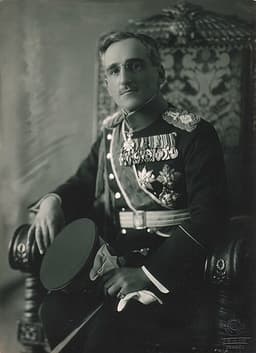
Alexander Karađorđevic
Emperor · Modern
44.7Total

Anaukpetlun
Emperor · Modern
56.1Total
Basic Information
Born
1806
1578
Died
1885
1628
Era
Modern
Modern
Nationality
Serbia
Myanmar
Occupation
Emperor
Emperor
Civilization
Western
Eastern
Score Comparison
Military (10%)
22.6
70.0
Political (20%)
43.7
68.0
Influence (20%)
49.4
55.7
Legacy (20%)
42.5
45.8
Leadership (15%)
62.2
53.2
Strategy (15%)
35.7
55.0
TOTAL
44.7
56.1
Alexander Karađorđevic — Complete Timeline
1842 AD
Elected Prince of SerbiaPolitical Action◆ Major
Alexander Kara
ElectionDynasty ChangeSerbia
Impact: national
1843 AD
Implemented Administrative ReformsReform◆ Major
Prince Alexander introduced administrative reforms aimed at modernizing the Serbian state, including the establishment of a council of ministers and a more structured bureaucracy. These reforms were influenced by Western European models.
Administrative ReformModernizationGovernment
Impact: nationalconstructive
1858 AD
Abdicated the ThronePolitical Action◆ Major
Under pressure from the Ottoman Empire and internal opposition, Prince Alexander abdicated the throne. He was succeeded by Milo
AbdicationDynasty ChangeExile
Impact: national
Anaukpetlun — Complete Timeline
1605 AD
Restoration of Toungoo DynastyPolitical Action◆ Major
Anaukpetlun succeeded his father Nyaungyan Min as king of the Toungoo dynasty. He continued the reunification of Burma, which had fragmented after the fall of Pegu in 1599, restoring central authority and rebuilding the kingdom's power.
Toungoo DynastyReunificationBurma
Impact: nationalconstructive
1613 AD
Capture of SyrianWar◆ Major
Anaukpetlun captured the port city of Syrian (Thanlyin) from Portuguese mercenaries led by Filipe de Brito. De Brito had established an independent rule there. The victory eliminated Portuguese influence in Lower Burma and secured the Irrawaddy delta.
PortugueseBurmaMilitary Campaign
Impact: regional
1614 AD
Conquest of Lan NaWar◆ Major
Anaukpetlun invaded and conquered the Lanna kingdom (centered on Chiang Mai), bringing it under Toungoo suzerainty. This expanded Burmese control into northern Thailand and secured the eastern frontier against Ayutthaya.
LannaExpansionBurma
Impact: regional
1628 AD
Assassination by Crown PrincePolitical Action◆ Major
Anaukpetlun was assassinated by his son, Crown Prince Minyedeippa, who then seized the throne. The patricide plunged the Toungoo court into instability and led to a brief period of turmoil before Thalun eventually restored order.
AssassinationSuccession CrisisToungoo
Impact: nationaldestructive
This comparison has not been analyzed yet.
One-time AI generation (~1 minute). Scores and timeline are already available below.
Rankings
🥇
AnaukpetlunLeader
Mil: 70.0Pol: 68.0Inf: 55.7
56.1
🥈
Alexander Karađorđevic
Mil: 22.6Pol: 43.7Inf: 49.4
44.7
+11.4 behind
How This Comparison Works
Algorithm
Each figure is scored on 6 dimensions (0—100 scale) based on structured historical data: Military (10%), Political (20%), Influence (20%), Legacy (20%), Leadership (15%), Strategy (15%). The weighted total produces the final ranking.
Data Sources
Scores are computed from structured sub-indicators in the database. Scale factors adjust for era (Ancient ×0.85, Modern ×1.0) and civilization size (Eastern ×1.05, Other ×0.80) to account for differences in population and military scale.
Maximum 3 Figures
Comparisons are limited to 2—3 figures to ensure readability and statistical meaningfulness.
Error Margins
±5 points per dimension — Sub-scores are derived from historical records with inherent uncertainty. Two figures within 5 points on a dimension should be considered roughly equivalent in that area.
Total Score Accuracy
±3 points overall — The weighted combination of 6 dimensions produces a total score with approximately ±3 points of uncertainty. Differences of less than 3 points are not statistically significant— the figures are effectively tied.
Known Limitations
- Historical records are incomplete and uneven across civilizations
- Figures from oral-tradition societies may be underrepresented
- Occupation labels can misclassify multi-role figures
- Scores measure capability and impact, not moral character
- Quantitative scoring is a comparison tool, not absolute truth
Capability Radar
Military (10%) — Battles & Warfare
Battles
15
65
Win Rate
10
60
Expansion
10
60
Political (20%) — Governance & Reform
Reform
30
50
Diplomacy
35
55
Economy
25
50
Influence (20%) — Cultural & Global Reach
Cultural
20
40
Global
15
35
Legacy (20%) — Historical Impact
Historical
30
45
Longevity
25
40
Leadership (15%) — Power & Stability
Tenure
40
55
Stability
20
45
Strategy (15%) — Tactics & Innovation
Strategy
15
60
Tactics
10
55
Reform
20
50
Similar Comparisons
Comments & Discussion
No comments yet. Be the first to share your thoughts!