Loading...
Alexander I of Yugoslavia vs Milan I of Serbia
Alexander I of Yugoslavia leads by 3.7 pts · 2 figures compared
…
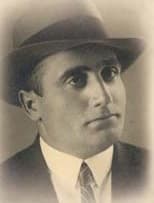
Alexander I of Yugoslavia
Emperor · Modern
51.4Total

Milan I of Serbia
Emperor · Modern
47.7Total
Basic Information
Born
1888
1854
Died
1934
1901
Era
Modern
Modern
Nationality
Yugoslavia
Serbia
Occupation
Emperor
Emperor
Civilization
Western
Western
Score Comparison
Military (10%)
22.6
50.0
Political (20%)
68.0
45.1
Influence (20%)
53.3
48.6
Legacy (20%)
42.5
39.2
Leadership (15%)
74.0
65.7
Strategy (15%)
38.6
41.0
TOTAL
51.4
47.7
Alexander I of Yugoslavia — Complete Timeline
1928 AD
Assassination of Stjepan RadićPolitical Action◆ Major
During a parliamentary session in Belgrade, Montenegrin deputy Puni
AssassinationParliamentary CrisisCroat-Serb Conflict
Impact: nationaltragic
1929 AD
Proclamation of the January 6 DictatorshipPolitical Action◆ Major
Alexander I abolished the Vidovdan Constitution, dissolved parliament, and established a royal dictatorship. He renamed the country the Kingdom of Yugoslavia and sought to centralize power, suppress ethnic nationalism, and impose a unified Yugoslav identity, which intensified ethnic tensions.
DictatorshipCentralizationYugoslavia
Impact: nationaldestructive
Creation of the Kingdom of YugoslaviaPolitical Action◆ Major
Alexander I officially renamed the Kingdom of Serbs, Croats, and Slovenes to the Kingdom of Yugoslavia on October 3, 1929. This was part of his effort to promote national unity and centralize the state, but it failed to resolve deep ethnic divisions.
State FormationNational IdentityYugoslavia
Impact: national
1934 AD
Assassination in MarseillePolitical Action◆ Major
Alexander I was assassinated in Marseille, France, by Vlado Chernozemski, a member of the Internal Macedonian Revolutionary Organization. The assassination, which also killed French Foreign Minister Louis Barthou, destabilized the Balkan region and contributed to rising tensions before World War II.
AssassinationBalkan PoliticsInterwar Period
Impact: regionaltragic
Milan I of Serbia — Complete Timeline
1868 AD
Became Prince of SerbiaPolitical Action◆ Major
Milan Obrenovic became Prince of Serbia in June 1868 at age 14 after the assassination of his cousin Mihailo. A regency ruled until he came of age in 1872.
Serbian MonarchyObrenovic DynastyAccession
Impact: national
1882 AD
Proclaimed King of SerbiaPolitical Action◆ Major
Milan I proclaimed Serbia a kingdom and himself as king in March 1882, elevating the principality to a kingdom. This act was recognized by the great powers and increased Serbia's international status.
Kingdom of SerbiaMonarchyInternational Recognition
Impact: regionalconstructive
1885 AD
Led Serbia in the Serbo-Bulgarian WarWar◆ Major
Milan I declared war on Bulgaria in November 1885, but Serbian forces were defeated at the Battle of Slivnitsa. The war ended with a peace treaty mediated by Austria-Hungary, resulting in no territorial changes.
Serbo-Bulgarian WarMilitary DefeatBalkans
Impact: regionaldestructive
1889 AD
Abdicated the ThronePolitical Action◆ Major
Milan I abdicated the Serbian throne in March 1889 in favor of his son Alexander. He went into exile, partly due to political pressure and personal scandals.
AbdicationExileSerbian Politics
Impact: nationaltragic
Expert Analysis
Origins
Alexander I of Yugoslavia was born on December 16, 1888, in Cetinje, Montenegro, as the second son of King Peter I of Serbia. He was educated in Geneva and at the Imperial Page Corps in Saint Petersburg, Russia, where he developed a strong sense of duty and authoritarian tendencies. His early life was shaped by the Balkan Wars and World War I, during which he served as regent for his father.
Milan I of Serbia was born on August 22, 1854, in Mărășești, Moldavia, into the Obrenović dynasty. Orphaned at a young age, he was raised by his cousin Mihailo Obrenović, who was assassinated in 1868, thrusting Milan onto the throne at age 14. He was educated in Paris, where he acquired a taste for luxury and autocratic rule.
Rise to Power
Alexander I became regent of Serbia in 1914 due to his father's illness, effectively leading the country through World War I. After the war, he presided over the unification of the State of Slovenes, Croats and Serbs with Serbia, becoming the first king of the Kingdom of Serbs, Croats and Slovenes in 1921. His rise was marked by the assassination of Stjepan Radić in 1928, which deepened ethnic tensions.
Milan I became Prince of Serbia in June 1868 at age 14 after the assassination of his cousin Mihailo. A regency ruled until he came of age in 1872. He quickly asserted his authority, steering Serbia away from Russian influence and towards Austria-Hungary. In 1882, he proclaimed Serbia a kingdom and himself as king, a move recognized by the great powers.
Leadership & Governance
Alexander I ruled as a constitutional monarch until 1929, when he abolished the Vidovdan Constitution and established a royal dictatorship (January 6 Dictatorship). He renamed the country the Kingdom of Yugoslavia in 1929, aiming to suppress ethnic identities. His governance score of 68.0 reflects his firm control but also his failure to resolve internal divisions.
Milan I ruled with an autocratic style, frequently dismissing governments and ruling by decree. He aligned Serbia with Austria-Hungary, which alienated many Serbs. His political score of 45.1 indicates his inability to build stable institutions. He abdicated in 1889 under pressure, leaving the throne to his son Alexander.
Triumph & Tragedy
Alexander I's greatest triumph was the creation of the Kingdom of Yugoslavia, unifying South Slavs under one state. However, his greatest tragedy was his assassination in Marseille in 1934 by a Macedonian revolutionary, which destabilized the kingdom and contributed to its collapse in WWII.
Milan I's triumph was leading Serbia to independence from the Ottoman Empire and gaining international recognition as a kingdom. His tragedy was the disastrous Serbo-Bulgarian War of 1885, where Serbia was defeated at the Battle of Slivnitsa, leading to a humiliating peace. His abdication and exile marked a personal and political failure.
Character & Destiny
Alexander I was determined and authoritarian, believing that only a strong central government could hold Yugoslavia together. His character score of 74.0 reflects his leadership but also his rigidity. His destiny was cut short by an assassin's bullet, a victim of the very ethnic tensions he tried to suppress.
Milan I was impulsive and self-indulgent, often prioritizing personal pleasure over statecraft. His strategy score of 41.0 shows his poor decision-making, especially in foreign policy. His abdication was a result of his unpopularity and political isolation.
Legacy
Alexander I is remembered as a unifier who failed to create a stable state. His legacy score of 42.5 reflects his mixed impact: his dictatorship set a precedent for authoritarian rule, but his assassination highlighted the unresolved national question. The Kingdom of Yugoslavia collapsed a decade after his death.
Milan I's legacy is overshadowed by his son's disastrous reign and the Obrenović dynasty's eventual downfall. His legacy score of 39.2 is low, as his policies weakened Serbia and his abdication left a fragile monarchy. He is often seen as a transitional figure.
Conclusion
Alexander I of Yugoslavia had a greater impact than Milan I of Serbia, as evidenced by his total score of 51.4 versus 47.7. Alexander's role in creating Yugoslavia and his attempt to forge a unified identity, however flawed, had lasting consequences for the Balkans. Milan's reign, while significant for Serbian independence, was marred by defeat and abdication, leaving a weaker legacy. Alexander's higher leadership and political scores underscore his more consequential, albeit tragic, rule.
Rankings
🥇
Alexander I of YugoslaviaLeader
Mil: 22.6Pol: 68.0Inf: 53.3
51.4
🥈
Milan I of Serbia
Mil: 50.0Pol: 45.1Inf: 48.6
47.7
+3.7 behind
How This Comparison Works
Algorithm
Each figure is scored on 6 dimensions (0—100 scale) based on structured historical data: Military (10%), Political (20%), Influence (20%), Legacy (20%), Leadership (15%), Strategy (15%). The weighted total produces the final ranking.
Data Sources
Scores are computed from structured sub-indicators in the database. Scale factors adjust for era (Ancient ×0.85, Modern ×1.0) and civilization size (Eastern ×1.05, Other ×0.80) to account for differences in population and military scale.
Maximum 3 Figures
Comparisons are limited to 2—3 figures to ensure readability and statistical meaningfulness.
Error Margins
±5 points per dimension — Sub-scores are derived from historical records with inherent uncertainty. Two figures within 5 points on a dimension should be considered roughly equivalent in that area.
Total Score Accuracy
±3 points overall — The weighted combination of 6 dimensions produces a total score with approximately ±3 points of uncertainty. Differences of less than 3 points are not statistically significant— the figures are effectively tied.
Known Limitations
- Historical records are incomplete and uneven across civilizations
- Figures from oral-tradition societies may be underrepresented
- Occupation labels can misclassify multi-role figures
- Scores measure capability and impact, not moral character
- Quantitative scoring is a comparison tool, not absolute truth
Capability Radar
Military (10%) — Battles & Warfare
Battles
15
20
Win Rate
10
25
Expansion
10
25
Political (20%) — Governance & Reform
Reform
60
45
Diplomacy
50
35
Economy
40
30
Influence (20%) — Cultural & Global Reach
Cultural
30
20
Global
30
10
Legacy (20%) — Historical Impact
Historical
40
30
Longevity
25
15
Leadership (15%) — Power & Stability
Tenure
55
40
Stability
30
25
Strategy (15%) — Tactics & Innovation
Strategy
25
20
Tactics
20
15
Reform
30
30
Similar Comparisons
Comments & Discussion
No comments yet. Be the first to share your thoughts!