Loading...
Alexander I of Yugoslavia vs Napoleon Bonaparte
Napoleon Bonaparte leads by 19.5 pts · 2 figures compared
…
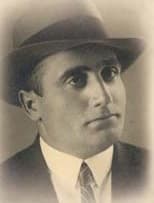
Alexander I of Yugoslavia
Emperor · Modern
51.4Total

Napoleon Bonaparte
General · Modern
70.9Total
Basic Information
Born
1888
1769
Died
1934
1821
Era
Modern
Modern
Nationality
Yugoslavia
France
Occupation
Emperor
General
Civilization
Western
Western
Score Comparison
Military (10%)
22.6
94.0
Political (20%)
68.0
72.0
Influence (20%)
53.3
40.0
Legacy (20%)
42.5
80.0
Leadership (15%)
74.0
78.0
Strategy (15%)
38.6
90.0
TOTAL
51.4
70.9
Alexander I of Yugoslavia — Complete Timeline
1928 AD
Assassination of Stjepan RadićPolitical Action◆ Major
During a parliamentary session in Belgrade, Montenegrin deputy Puni
AssassinationParliamentary CrisisCroat-Serb Conflict
Impact: nationaltragic
1929 AD
Proclamation of the January 6 DictatorshipPolitical Action◆ Major
Alexander I abolished the Vidovdan Constitution, dissolved parliament, and established a royal dictatorship. He renamed the country the Kingdom of Yugoslavia and sought to centralize power, suppress ethnic nationalism, and impose a unified Yugoslav identity, which intensified ethnic tensions.
DictatorshipCentralizationYugoslavia
Impact: nationaldestructive
Creation of the Kingdom of YugoslaviaPolitical Action◆ Major
Alexander I officially renamed the Kingdom of Serbs, Croats, and Slovenes to the Kingdom of Yugoslavia on October 3, 1929. This was part of his effort to promote national unity and centralize the state, but it failed to resolve deep ethnic divisions.
State FormationNational IdentityYugoslavia
Impact: national
1934 AD
Assassination in MarseillePolitical Action◆ Major
Alexander I was assassinated in Marseille, France, by Vlado Chernozemski, a member of the Internal Macedonian Revolutionary Organization. The assassination, which also killed French Foreign Minister Louis Barthou, destabilized the Balkan region and contributed to rising tensions before World War II.
AssassinationBalkan PoliticsInterwar Period
Impact: regionaltragic
Napoleon Bonaparte — Complete Timeline
1799 AD
Coup of 18 BrumaireOther◆ Major
Napoleon Bonaparte, with support from his brother Lucien and key political figures, overthrew the Directory in a bloodless coup. He established the Consulate with himself as First Consul, effectively becoming the ruler of France. This event ended the French Revolution's most unstable period.
French RevolutionCoupRise to Power
Impact: regional
1804 AD
Promulgation of the Napoleonic CodeOther◆ Major
Napoleon enacted the Civil Code of the French, known as the Napoleonic Code, a comprehensive set of laws that replaced the fragmented feudal legal systems. The code established legal equality, protected property rights, and secularized law. It became the basis for legal systems in many European and world countries.
Legal ReformNapoleonic CodeCivil Law
Impact: globalconstructive
1805 AD
Battle of AusterlitzWar◆ Major
Napoleon's Grande Arm
Napoleonic WarsBattleDecisive Victory
Impact: global
1812 AD
Invasion of RussiaWar◆ Major
Napoleon led the Grande Arm
Napoleonic WarsInvasionDisaster
Impact: globaldestructive
1815 AD
Battle of WaterlooWar◆ Major
Napoleon's French army was defeated by the combined forces of the Duke of Wellington's Anglo-Allied army and Gebhard Leberecht von Bl
Napoleonic WarsBattleFinal Defeat
Impact: globaldestructive
Expert Analysis
alexander-i-of-yugoslavia-vs-napoleon-bonaparte
# The Emperor and the King: Two Visions of Unity, Two Tragedies of Power
On a cold December morning in 1805, Napoleon Bonaparte stood on a windswept field near Austerlitz, watching his Grande Armée shatter the combined forces of Austria and Russia. The sun rose over his greatest victory, illuminating a man who had conquered half of Europe through sheer force of will. Exactly 124 years later, on January 6, 1929, King Alexander I of Yugoslavia sat alone in his palace in Belgrade, signing a decree that abolished his nation’s constitution and dissolved its parliament. Where Napoleon had built an empire from the ashes of revolution, Alexander was desperately trying to prevent his own kingdom from collapsing into civil war. Both men sought to impose order on chaos, but their paths—and their fates—could not have been more different.
Origins
Napoleon Bonaparte was born in 1769 on the island of Corsica, a rocky Mediterranean outpost that had only become French the year before. His family was minor nobility, struggling and ambitious. Young Napoleon was mocked at French military school for his thick Corsican accent and small stature—a boy who spoke French poorly but would one day rewrite French law. The French Revolution, which erupted when he was twenty, shattered the old order and created a world where talent, not birth, could propel a man to the highest heights. Napoleon was a child of revolution, and revolution was his inheritance.
Alexander Karadjordjevic was born in 1888 in the royal palace of Cetinje, Montenegro, into a dynasty that had already known both triumph and tragedy. His grandfather had led the First Serbian Uprising against the Ottomans; his father had been assassinated in 1903 in a coup that placed Alexander’s family on the Serbian throne. Where Napoleon’s world was one of upward mobility and constant transformation, Alexander’s was defined by the brutal arithmetic of Balkan nationalism—Serbs, Croats, Slovenes, and Macedonians all claiming the same land, each with their own martyrs and grievances. He was a king born from violence, and violence would follow him.
Rise to Power
Napoleon’s ascent was a masterpiece of opportunity seized. At twenty-four, he drove the British out of Toulon and was promoted to brigadier general. At twenty-six, he crushed a royalist uprising in Paris with a “whiff of grapeshot.” By thirty, he had conquered Italy and Egypt, his name echoing across Europe. Each victory was a stepping stone; each defeat—like the failed Egyptian campaign—was spun into legend. In 1799, he staged a coup d’état and made himself First Consul. Five years later, he crowned himself Emperor in Notre Dame Cathedral, taking the crown from Pope Pius VII’s hands and placing it on his own head. The message was unmistakable: Napoleon owed his throne to no one but himself.
Alexander’s path was far narrower. He became regent of Serbia in 1914, at the outbreak of World War I, leading his army through the epic retreat across Albania. After the war, when the Kingdom of Serbs, Croats, and Slovenes was created in 1918, Alexander became its king in 1921. But this was no empire forged through conquest—it was a patchwork state assembled by diplomats in Paris, where Serbs dominated the army and government, Croats demanded autonomy, and Macedonians simmered with resentment. Alexander did not rise through genius; he inherited a crisis.
Leadership & Governance
Napoleon governed through brilliance and terror. His Napoleonic Code standardized French law, abolished feudal privileges, and established merit-based advancement. He built roads, founded banks, and reformed education. But he also censored the press, reestablished slavery in French colonies, and sent hundreds of thousands of men to die in his wars. His military genius—scored at 94.0, higher than any other quality—was undeniable. He moved armies faster than his enemies, exploited their weaknesses, and won battles through audacity and speed. Yet he could not stop. Victory demanded more victory; peace was a foreign concept.
Alexander governed through desperation. His political score of 70.8 reflects a man who tried to hold a fractious kingdom together with increasingly authoritarian hands. In 1928, during a parliamentary session, a Montenegrin deputy shot and killed Stjepan Radić, the leader of the Croatian Peasant Party. The assassination shattered any hope of compromise. On January 6, 1929, Alexander abolished the constitution, dissolved parliament, and declared a royal dictatorship. He renamed the country the Kingdom of Yugoslavia—a name meant to unify South Slavs—and banned all ethnic-based political parties. Where Napoleon imposed his will through conquest, Alexander imposed his through decree, hoping that force could forge a nation.
Triumph & Tragedy
Napoleon’s greatest moment was Austerlitz, where his strategy score of 93.0 was on full display. He lured the Austrians and Russians into attacking his weakened right flank, then struck their center with overwhelming force. The result was a perfect victory. His tragedy was the invasion of Russia in 1812. He marched 600,000 men into the frozen vastness; fewer than 100,000 returned. The Grand Armée was destroyed, and with it, Napoleon’s aura of invincibility. Exiled to Elba in 1814, he escaped, raised another army, and was finally defeated at Waterloo in 1815. He died six years later on Saint Helena, a prisoner of the British, at age fifty-one.
Alexander’s triumph was surviving World War I and creating Yugoslavia—a state that, however flawed, represented the dream of South Slavic unity. His tragedy was that he could not make that dream real. On October 9, 1934, while on a state visit to Marseille, France, a Bulgarian nationalist named Vlado Chernozemski stepped from the crowd and shot him dead. Alexander died in the backseat of his car, a bullet through his heart. He was forty-six. His assassination destabilized the region and, within seven years, Yugoslavia was invaded and dismembered by the Axis powers.
Character & Destiny
Napoleon was a man of boundless ambition and restless energy. He once said, “Impossible is a word to be found only in the dictionary of fools.” His personality drove him to conquer, but also to overreach. He could not share power, could not accept limits, could not stop. His downfall was not the result of bad luck but of a character that refused moderation.
Alexander was a man of duty and melancholy. He had seen his father assassinated, led his army through defeat, and watched his parliament descend into murder. He believed that only a strong hand could save Yugoslavia. Yet his dictatorship alienated the very Croats and Slovenes he sought to unite. His personality—stern, reserved, authoritarian—made him a symbol of Serbian domination, not Yugoslav unity. He died trying to hold together what could not be held.
Legacy
Napoleon’s legacy is immense. The Napoleonic Code influences legal systems across Europe and the world. His military tactics are still studied. He reshaped the map of Europe, destroyed the Holy Roman Empire, and inspired nationalism from Germany to Italy. His legacy score of 78.0 reflects a man whose impact is both profound and contested—a tyrant to some, a reformer to others.
Alexander’s legacy is far smaller, scored at 58.3. He is remembered in the Balkans as a tragic figure who tried to forge unity through force and failed. His Yugoslavia lasted another fifty-seven years after his death, but the ethnic tensions he suppressed exploded in the 1990s with devastating violence. Today, his name is invoked by those who mourn what might have been—a multi-ethnic state that never learned to live together.
Conclusion
Napoleon and Alexander both dreamed of unity—one through conquest, the other through decree. Napoleon built an empire that collapsed under its own weight; Alexander built a kingdom that collapsed under its own divisions. One died in exile, the other by an assassin’s bullet. Their lives remind us that power, no matter how absolute, cannot overcome the fundamental forces of history and human nature. Napoleon’s tragedy was that he could not stop reaching for more. Alexander’s tragedy was that he could not make enough of what he had. In the end, both were consumed by the very forces they sought to control—and left behind worlds that would never be the same.
Rankings
🥇
Napoleon BonaparteLeader
Mil: 94.0Pol: 72.0Inf: 40.0
70.9
🥈
Alexander I of Yugoslavia
Mil: 22.6Pol: 68.0Inf: 53.3
51.4
+19.5 behind
How This Comparison Works
Algorithm
Each figure is scored on 6 dimensions (0—100 scale) based on structured historical data: Military (10%), Political (20%), Influence (20%), Legacy (20%), Leadership (15%), Strategy (15%). The weighted total produces the final ranking.
Data Sources
Scores are computed from structured sub-indicators in the database. Scale factors adjust for era (Ancient ×0.85, Modern ×1.0) and civilization size (Eastern ×1.05, Other ×0.80) to account for differences in population and military scale.
Maximum 3 Figures
Comparisons are limited to 2—3 figures to ensure readability and statistical meaningfulness.
Error Margins
±5 points per dimension — Sub-scores are derived from historical records with inherent uncertainty. Two figures within 5 points on a dimension should be considered roughly equivalent in that area.
Total Score Accuracy
±3 points overall — The weighted combination of 6 dimensions produces a total score with approximately ±3 points of uncertainty. Differences of less than 3 points are not statistically significant— the figures are effectively tied.
Known Limitations
- Historical records are incomplete and uneven across civilizations
- Figures from oral-tradition societies may be underrepresented
- Occupation labels can misclassify multi-role figures
- Scores measure capability and impact, not moral character
- Quantitative scoring is a comparison tool, not absolute truth
Capability Radar
Military (10%) — Battles & Warfare
Battles
15
95
Win Rate
10
90
Expansion
10
95
Political (20%) — Governance & Reform
Reform
60
95
Diplomacy
50
80
Economy
40
85
Influence (20%) — Cultural & Global Reach
Cultural
30
85
Global
30
90
Legacy (20%) — Historical Impact
Historical
40
95
Longevity
25
90
Leadership (15%) — Power & Stability
Tenure
55
85
Stability
30
70
Strategy (15%) — Tactics & Innovation
Strategy
25
95
Tactics
20
98
Reform
30
92
Similar Comparisons
Comments & Discussion
AusterlitzArchitect6/17/2026
Ranking Alexander I and Napoleon is like comparing a stopgap with a seismic event. Napoleon rewired Europe's legal code, military organization, and geopolitical map; Alexander's reign was a desperate attempt to keep an artificial kingdom glued together. Alexander wasn't an emperor building a system—he was a firefighter. The comparison is interesting, but the scale difference is just too enormous. If you want a counterpart to Napoleon, look at someone like Metternich or Bismarck, who also created
宾格布鲁克之眼6/17/2026
简直是在给麻雀和雄鹰称体重。拿破仑的《民法典》至今影响着全球的法律体系,他的陆军改革确立了现代参谋制度和兵役制;亚历山大一世最响亮的“政治遗产”是取缔了宪法、解散了议会,还因此挨了刺客的子弹。所谓“两种统一论”,本质上混淆了“建设统一”与“防止分裂”。拿破仑是用法典和炮火锻造法兰西民族的灵魂,亚历山大则是靠警察和禁令镇压南斯拉夫民族的分歧。强行并论,不过是史学的“标题党”噱头。
TeutonicTactician6/17/2026
The *real* comparison here is between success and failure. Napoleon won at Austerlitz; Alexander couldn't even win a domestic peace. Napoleon understood that power requires legitimacy beyond the bayonet—hence the Concordat with the Church, hence the Legion of Honor meriting talent. What did Alexander offer? Only a royal dictatorship *after* losing hope in democracy. He forced his countrymen to choose between Serb centralism and Croatian resentment, then wondered why they'd rather shoot him. Napo
冷眼旁观者6/17/2026
数据不会撒谎:拿破仑战争造成约三百五十万至六百万士兵和平民死亡,但他在位的短短十六年里,法国从混乱的革命泥潭走向欧洲绝对霸权;而亚历山大一世从1921年到1934年执政十三年,让南斯拉夫从脆弱议会制滑向国王专制,民族仇恨不减反增。死亡人数不在一个量级,影响力也不在一个维度。非要把这两人并置,不如去比较马其顿的亚历山大和塞尔维亚的亚历山大——至少地名上更有排比句的工整感。
CommitteeOfPublicSafety6/17/2026
Let's be honest: Alexander I is a footnote, Napoleon is a chapter. Napoleon's mortality came from the hubris of invading Russia and the iron coalition of Europe; Alexander's came from an assassin's bullet in Marseille. Napoleon's downfall was a global-scale drama; Alexander's was a regional tragedy. Both met violent ends, yes, but one reshaped the modern world and then fell from the sky, while the other never really got off the ground. Comparing them is like comparing the