Loading...
This comparison has not been analyzed yet.
One-time AI generation (~1 minute). Scores and timeline are already available below.
Albert of Saxony vs Antonio Maceo
Albert of Saxony leads by 1.6 pts · 2 figures compared
…
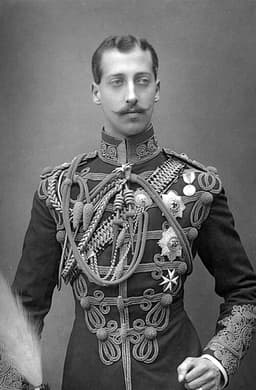
Albert of Saxony
General · Modern
58.7Total

Antonio Maceo
General · Modern
57.1Total
Basic Information
Born
1828
1845
Died
1902
1896
Era
Modern
Modern
Nationality
Saxony
Cuba
Occupation
General
General
Civilization
Western
Western
Score Comparison
Military (10%)
65.0
67.3
Political (20%)
68.0
54.7
Influence (20%)
54.9
65.0
Legacy (20%)
45.8
55.0
Leadership (15%)
72.0
36.9
Strategy (15%)
60.7
66.3
TOTAL
58.7
57.1
Albert of Saxony — Complete Timeline
1870 AD
Command in the Franco-Prussian WarWar◆ Major
As Crown Prince, Albert commanded the Saxon Army in the Franco-Prussian War. He led the XII Corps at the Battle of Sedan on 1 September 1870, contributing to the decisive Prussian victory and the capture of Napoleon III.
Franco-Prussian WarBattle of SedanSaxony
Impact: regional
1871 AD
Appointment as Prussian Field MarshalPolitical Action
After the Franco-Prussian War, Albert was appointed a Generalfeldmarschall of the Prussian Army by Emperor Wilhelm I. This honor reflected his military competence and the integration of Saxon forces into the imperial military structure.
PrussiaMilitaryHonor
Impact: nationalconstructive
1873 AD
Accession as King of SaxonyPolitical Action◆ Major
Albert became King of Saxony on 29 October 1873, succeeding his father John. His reign was characterized by military modernization and loyalty to the German Empire.
SaxonySuccession
Impact: national
1875 AD
Military reforms in SaxonyReform
King Albert implemented military reforms in Saxony, aligning the Saxon army more closely with Prussian standards. He modernized training, equipment, and organization, ensuring Saxony's military effectiveness within the German Empire.
Military reformSaxonyPrussia
Impact: nationalconstructive
Antonio Maceo — Complete Timeline
1878 AD
Protest of Racial DiscriminationPolitical Action◆ Major
Maceo protested the Pact of Zanjon, which ended the Ten Years' War without achieving independence or abolishing slavery. He argued that the pact betrayed the revolution's principles, especially for Afro-Cubans.
Ten Years' WarRacial EqualityProtest
Impact: nationalconstructive
1895 AD
Battle of PeralejoWar◆ Major
Maceo led Cuban forces to a decisive victory over Spanish troops at Peralejo. The battle demonstrated his tactical brilliance and inflicted heavy casualties on the Spanish, boosting the independence cause.
Cuban War of IndependenceBattle
Impact: regional
Invasion of Western CubaWar◆ Major
Maceo co-led the invasion of western Cuba with Maximo Gomez, marching from east to west. The campaign broke Spanish defensive lines and brought the war to the island's most economically important region.
Cuban War of IndependenceMilitary Campaign
Impact: national
1896 AD
Death in Combat at San PedroWar◆ Major
Maceo was killed in a skirmish with Spanish forces at San Pedro, near Havana. His death was a major blow to the Cuban independence movement and made him a martyr for the cause.
Cuban War of IndependenceDeathMartyr
Impact: nationaltragic
This comparison has not been analyzed yet.
One-time AI generation (~1 minute). Scores and timeline are already available below.
Rankings
🥇
Albert of SaxonyLeader
Mil: 65.0Pol: 68.0Inf: 54.9
58.7
🥈
Antonio Maceo
Mil: 67.3Pol: 54.7Inf: 65.0
57.1
+1.6 behind
How This Comparison Works
Algorithm
Each figure is scored on 6 dimensions (0—100 scale) based on structured historical data: Military (10%), Political (20%), Influence (20%), Legacy (20%), Leadership (15%), Strategy (15%). The weighted total produces the final ranking.
Data Sources
Scores are computed from structured sub-indicators in the database. Scale factors adjust for era (Ancient ×0.85, Modern ×1.0) and civilization size (Eastern ×1.05, Other ×0.80) to account for differences in population and military scale.
Maximum 3 Figures
Comparisons are limited to 2—3 figures to ensure readability and statistical meaningfulness.
Error Margins
±5 points per dimension — Sub-scores are derived from historical records with inherent uncertainty. Two figures within 5 points on a dimension should be considered roughly equivalent in that area.
Total Score Accuracy
±3 points overall — The weighted combination of 6 dimensions produces a total score with approximately ±3 points of uncertainty. Differences of less than 3 points are not statistically significant— the figures are effectively tied.
Known Limitations
- Historical records are incomplete and uneven across civilizations
- Figures from oral-tradition societies may be underrepresented
- Occupation labels can misclassify multi-role figures
- Scores measure capability and impact, not moral character
- Quantitative scoring is a comparison tool, not absolute truth
Capability Radar
Military (10%) — Battles & Warfare
Battles
65
72
Win Rate
70
78
Expansion
50
55
Political (20%) — Governance & Reform
Reform
40
45
Diplomacy
60
50
Economy
45
15
Influence (20%) — Cultural & Global Reach
Cultural
30
65
Global
30
55
Legacy (20%) — Historical Impact
Historical
40
70
Longevity
35
60
Leadership (15%) — Power & Stability
Tenure
55
20
Stability
55
10
Strategy (15%) — Tactics & Innovation
Strategy
65
75
Tactics
60
80
Reform
55
60
Similar Comparisons
Comments & Discussion
No comments yet. Be the first to share your thoughts!