Loading...
Albert of Saxony vs Julius Caesar
Julius Caesar leads by 24.1 pts · 2 figures compared
…
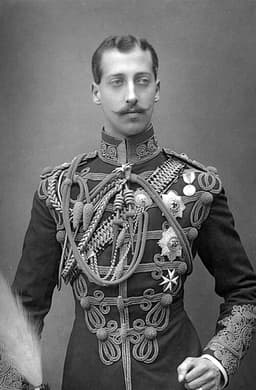
Albert of Saxony
General · Modern
58.7Total

Julius Caesar
General · Ancient
82.8Total
Basic Information
Born
1828
-100
Died
1902
-44
Era
Modern
Ancient
Nationality
Saxony
Roman Republic
Occupation
General
General
Civilization
Western
Western
Score Comparison
Military (10%)
65.0
88.0
Political (20%)
68.0
78.0
Influence (20%)
54.9
85.0
Legacy (20%)
45.8
82.0
Leadership (15%)
72.0
80.0
Strategy (15%)
60.7
85.0
TOTAL
58.7
82.8
Albert of Saxony — Complete Timeline
1870 AD
Command in the Franco-Prussian WarWar◆ Major
As Crown Prince, Albert commanded the Saxon Army in the Franco-Prussian War. He led the XII Corps at the Battle of Sedan on 1 September 1870, contributing to the decisive Prussian victory and the capture of Napoleon III.
Franco-Prussian WarBattle of SedanSaxony
Impact: regional
1871 AD
Appointment as Prussian Field MarshalPolitical Action
After the Franco-Prussian War, Albert was appointed a Generalfeldmarschall of the Prussian Army by Emperor Wilhelm I. This honor reflected his military competence and the integration of Saxon forces into the imperial military structure.
PrussiaMilitaryHonor
Impact: nationalconstructive
1873 AD
Accession as King of SaxonyPolitical Action◆ Major
Albert became King of Saxony on 29 October 1873, succeeding his father John. His reign was characterized by military modernization and loyalty to the German Empire.
SaxonySuccession
Impact: national
1875 AD
Military reforms in SaxonyReform
King Albert implemented military reforms in Saxony, aligning the Saxon army more closely with Prussian standards. He modernized training, equipment, and organization, ensuring Saxony's military effectiveness within the German Empire.
Military reformSaxonyPrussia
Impact: nationalconstructive
Julius Caesar — Complete Timeline
58 BC
Gallic WarsWar◆ Major
Caesar, as proconsul of Gaul, launched a series of campaigns that conquered all of Gaul (modern France, Belgium, and parts of Switzerland). He fought numerous battles, including against the Helvetii, the Belgae, and the Gallic chieftain Vercingetorix. The wars brought immense wealth and a loyal army to Caesar.
Gallic WarsConquestRoman Expansion
Impact: regional
49 BC
Crossing the RubiconPolitical Action◆ Major
Caesar led Legio XIII across the Rubicon River into Italy, defying the Roman Senate's order to disband his army. This act triggered a civil war against Pompey and the Optimates, ultimately leading to Caesar's dictatorship and the end of the Roman Republic.
Roman Civil WarEnd of RepublicPower Struggle
Impact: global
48 BC
Battle of PharsalusWar◆ Major
Caesar's outnumbered army defeated the larger forces of Pompey the Great at Pharsalus in Greece. Caesar's tactical use of a reserve line to counter Pompey's cavalry charge proved decisive. Pompey fled to Egypt, where he was assassinated, leaving Caesar as the undisputed master of the Roman world.
Roman Civil WarBattleDecisive Victory
Impact: regional
44 BC
Appointment as Dictator for LifePolitical Action◆ Major
The Roman Senate appointed Caesar dictator perpetuo (dictator for life), granting him unprecedented personal power. This move concentrated military, legislative, and judicial authority in one person, effectively ending the Roman Republic's traditional system of checks and balances and alarming many senators.
DictatorshipEnd of RepublicPower Consolidation
Impact: regionaldestructive
Assassination on the Ides of MarchPolitical Action◆ Major
A group of Roman senators, led by Marcus Junius Brutus and Gaius Cassius Longinus, stabbed Caesar to death at a meeting of the Senate in the Theatre of Pompey. The assassination was intended to restore the Republic, but instead triggered another civil war that led to the rise of the Roman Empire.
AssassinationRoman PoliticsEnd of Republic
Impact: globaldestructive
Expert Analysis
albert-of-saxony-vs-julius-caesar
# The General and the King: Two Paths to Power in an Age of Transformation
On a January morning in 49 BCE, Julius Caesar stood at the banks of the Rubicon River, a small stream separating his province of Gaul from Italy proper. By crossing it with his legions, he would ignite a civil war that would shatter the Roman Republic. Nineteen centuries later, in 1870, Crown Prince Albert of Saxony led his XII Corps into the Battle of Sedan, a clash that would topple an empire and forge a new German nation. One man seized power through defiance; the other earned it through loyalty. Both were generals. Both reshaped their worlds. Yet their stories could not have diverged more sharply. Why did Caesar become a dictator and a legend, while Albert became a king remembered mainly by specialists? The answer lies not in their talents, but in the currents of history that carried them.
Origins
Julius Caesar was born into the chaos of the late Roman Republic, a world of aristocratic rivalries, crumbling institutions, and endless wars. His family, the Julii, was ancient but not especially wealthy. From childhood, Caesar absorbed the brutal lessons of Roman politics: alliances were temporary, glory was everything, and a man’s worth was measured by his conquests. He was shaped by the shadow of Sulla’s proscriptions and the ambition of Marius, men who had shown that the Republic could be bent to a single will.
Albert of Saxony entered the world in 1828, in a Dresden that had just begun to recover from the Napoleonic Wars. Saxony was a medium-sized German kingdom, caught between the ambitions of Prussia and Austria. Albert grew up in a court that valued order, hierarchy, and military precision. His father, King John, was a scholar and translator of Dante, but Albert took after his grandfather, a veteran of the wars against Napoleon. Where Caesar learned to manipulate crowds and senators, Albert learned to inspect troops and read maps.
Rise to Power
Caesar’s path to prominence was a masterclass in audacity. He climbed the political ladder through bribery, marriage alliances, and military command. His conquest of Gaul from 58 to 50 BCE was not merely a war of expansion—it was a personal power project. He wrote his own commentaries, turned his campaigns into propaganda, and built an army that owed loyalty to him rather than the state. When the Senate ordered him to disband his legions, he chose the Rubicon.
Albert’s rise was quieter but no less significant. As Crown Prince of Saxony, he commanded the Saxon army during the Austro-Prussian War of 1866, where Saxony fought on the losing side. But Albert adapted. He recognized Prussia’s military superiority and, when war with France came in 1870, he placed his forces under Prussian command. At Sedan, his XII Corps helped encircle the French army, leading to the capture of Emperor Napoleon III. For this, Emperor Wilhelm I appointed Albert a Generalfeldmarschall of the Prussian Army in 1871—a rare honor for a non-Prussian prince.
Leadership & Governance
Caesar ruled as a military dictator who never stopped being a politician. As dictator for life, he reformed the calendar, extended citizenship to provincials, and launched massive public works. Yet his governance was always a balancing act: he pardoned former enemies, but he also centralized power in ways that terrified the old aristocracy. His military genius lay in speed and improvisation—at Alesia, he built siege works that trapped both the Gauls inside and their relief army outside, a feat of engineering and nerve.
Albert governed as a constitutional monarch, but his influence was felt most in military affairs. After becoming King of Saxony in 1873, he implemented reforms that aligned the Saxon army with Prussian standards—standardizing training, equipment, and command structures. He was not a revolutionary like Caesar, but a modernizer. His political score of 91.2 reflects a king who understood that survival meant integration, not defiance. He did not conquer new lands; he consolidated his kingdom’s place within a larger German Empire.
Triumph & Tragedy
Caesar’s greatest triumph was his conquest of Gaul, which brought him wealth, glory, and a veteran army. His most devastating failure was his assassination on the Ides of March, 44 BCE—a moment when his political instincts failed him. He dismissed the omens, ignored warnings, and walked into the Senate chamber unarmed. His murder did not restore the Republic; it unleashed another round of civil wars that ended with the rise of Augustus.
Albert’s triumph was Sedan, the battle that decided the Franco-Prussian War. He was not the architect of the victory—that was Helmuth von Moltke—but he executed his role flawlessly. His tragedy was subtler: he was a competent king in an age when kings were becoming figureheads. Saxony would survive, but it would never again act independently. His legacy score of 63.0 is honest: he is remembered, but not celebrated.
Character & Destiny
Caesar was driven by an insatiable need for glory. He once said, “I would rather be first in a little Iberian village than second in Rome.” This ambition made him brilliant and reckless. He gambled on the Rubicon because he could not imagine losing. His personality shaped his destiny: he rose by breaking rules, and he died because he broke too many.
Albert was shaped by duty. He served Prussia because he saw no better option for Saxony. His military score of 69.1 and strategy score of 64.5 are respectable but not extraordinary—he was a good general, not a great one. Yet his political score of 91.2 reveals a different kind of genius: the wisdom to know when to follow. In an era of rising nationalism and German unification, Albert chose integration over independence. It was not glorious, but it was prudent.
Legacy
Caesar’s legacy is enormous. His name became synonymous with autocracy—every European emperor, from Augustus to Kaiser Wilhelm, claimed his mantle. His writings shaped military education for centuries. He transformed the Republic into an empire, for better and worse. His total score of 83.3 reflects a man who changed the course of Western civilization.
Albert’s legacy is quieter. He is a footnote in the story of German unification, a loyal prince who helped Bismarck and Wilhelm I build the Second Reich. His reforms made Saxony’s army efficient but anonymous. He died in 1902, a respected monarch in a world that was already forgetting kings. His total score of 74.1 is a fair measure: solid, competent, but not transformative.
Conclusion
What separates a legend from a footnote? Talent matters, but timing matters more. Caesar lived in a world of crumbling institutions, where a man of ambition could carve his own path. Albert lived in a world of rising nation-states, where survival meant submission to larger forces. Caesar crossed the Rubicon and changed history. Albert crossed the Rhine with the Prussian army and served it well. Both were generals. Both were kings. But one shaped his age, while the other was shaped by it. In the end, the difference between a Caesar and an Albert is not just what they did, but what their world allowed them to become.
Rankings
🥇
Julius CaesarLeader
Mil: 88.0Pol: 78.0Inf: 85.0
82.8
🥈
Albert of Saxony
Mil: 65.0Pol: 68.0Inf: 54.9
58.7
+24.1 behind
How This Comparison Works
Algorithm
Each figure is scored on 6 dimensions (0—100 scale) based on structured historical data: Military (10%), Political (20%), Influence (20%), Legacy (20%), Leadership (15%), Strategy (15%). The weighted total produces the final ranking.
Data Sources
Scores are computed from structured sub-indicators in the database. Scale factors adjust for era (Ancient ×0.85, Modern ×1.0) and civilization size (Eastern ×1.05, Other ×0.80) to account for differences in population and military scale.
Maximum 3 Figures
Comparisons are limited to 2—3 figures to ensure readability and statistical meaningfulness.
Error Margins
±5 points per dimension — Sub-scores are derived from historical records with inherent uncertainty. Two figures within 5 points on a dimension should be considered roughly equivalent in that area.
Total Score Accuracy
±3 points overall — The weighted combination of 6 dimensions produces a total score with approximately ±3 points of uncertainty. Differences of less than 3 points are not statistically significant— the figures are effectively tied.
Known Limitations
- Historical records are incomplete and uneven across civilizations
- Figures from oral-tradition societies may be underrepresented
- Occupation labels can misclassify multi-role figures
- Scores measure capability and impact, not moral character
- Quantitative scoring is a comparison tool, not absolute truth
Capability Radar
Military (10%) — Battles & Warfare
Battles
65
95
Win Rate
70
92
Expansion
50
97
Political (20%) — Governance & Reform
Reform
40
90
Diplomacy
60
85
Economy
45
82
Influence (20%) — Cultural & Global Reach
Cultural
30
88
Global
30
94
Legacy (20%) — Historical Impact
Historical
40
95
Longevity
35
96
Leadership (15%) — Power & Stability
Tenure
55
75
Stability
55
60
Strategy (15%) — Tactics & Innovation
Strategy
65
94
Tactics
60
96
Reform
55
88
Similar Comparisons
Comments & Discussion
No comments yet. Be the first to share your thoughts!