Loading...
Albert of Saxony vs Napoleon Bonaparte
Napoleon Bonaparte leads by 12.2 pts · 2 figures compared
…
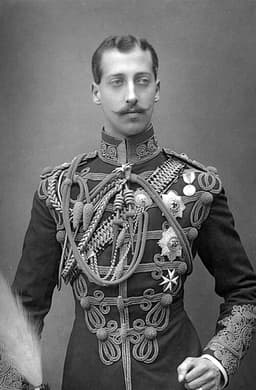
Albert of Saxony
General · Modern
58.7Total

Napoleon Bonaparte
General · Modern
70.9Total
Basic Information
Born
1828
1769
Died
1902
1821
Era
Modern
Modern
Nationality
Saxony
France
Occupation
General
General
Civilization
Western
Western
Score Comparison
Military (10%)
65.0
94.0
Political (20%)
68.0
72.0
Influence (20%)
54.9
40.0
Legacy (20%)
45.8
80.0
Leadership (15%)
72.0
78.0
Strategy (15%)
60.7
90.0
TOTAL
58.7
70.9
Albert of Saxony — Complete Timeline
1870 AD
Command in the Franco-Prussian WarWar◆ Major
As Crown Prince, Albert commanded the Saxon Army in the Franco-Prussian War. He led the XII Corps at the Battle of Sedan on 1 September 1870, contributing to the decisive Prussian victory and the capture of Napoleon III.
Franco-Prussian WarBattle of SedanSaxony
Impact: regional
1871 AD
Appointment as Prussian Field MarshalPolitical Action
After the Franco-Prussian War, Albert was appointed a Generalfeldmarschall of the Prussian Army by Emperor Wilhelm I. This honor reflected his military competence and the integration of Saxon forces into the imperial military structure.
PrussiaMilitaryHonor
Impact: nationalconstructive
1873 AD
Accession as King of SaxonyPolitical Action◆ Major
Albert became King of Saxony on 29 October 1873, succeeding his father John. His reign was characterized by military modernization and loyalty to the German Empire.
SaxonySuccession
Impact: national
1875 AD
Military reforms in SaxonyReform
King Albert implemented military reforms in Saxony, aligning the Saxon army more closely with Prussian standards. He modernized training, equipment, and organization, ensuring Saxony's military effectiveness within the German Empire.
Military reformSaxonyPrussia
Impact: nationalconstructive
Napoleon Bonaparte — Complete Timeline
1799 AD
Coup of 18 BrumaireOther◆ Major
Napoleon Bonaparte, with support from his brother Lucien and key political figures, overthrew the Directory in a bloodless coup. He established the Consulate with himself as First Consul, effectively becoming the ruler of France. This event ended the French Revolution's most unstable period.
French RevolutionCoupRise to Power
Impact: regional
1804 AD
Promulgation of the Napoleonic CodeOther◆ Major
Napoleon enacted the Civil Code of the French, known as the Napoleonic Code, a comprehensive set of laws that replaced the fragmented feudal legal systems. The code established legal equality, protected property rights, and secularized law. It became the basis for legal systems in many European and world countries.
Legal ReformNapoleonic CodeCivil Law
Impact: globalconstructive
1805 AD
Battle of AusterlitzWar◆ Major
Napoleon's Grande Arm
Napoleonic WarsBattleDecisive Victory
Impact: global
1812 AD
Invasion of RussiaWar◆ Major
Napoleon led the Grande Arm
Napoleonic WarsInvasionDisaster
Impact: globaldestructive
1815 AD
Battle of WaterlooWar◆ Major
Napoleon's French army was defeated by the combined forces of the Duke of Wellington's Anglo-Allied army and Gebhard Leberecht von Bl
Napoleonic WarsBattleFinal Defeat
Impact: globaldestructive
Expert Analysis
albert-of-saxony-vs-napoleon-bonaparte
# The Emperor and the King: Two Paths to Power in Modern Europe
On a June morning in 1815, Napoleon Bonaparte watched his dreams of empire dissolve into the mud of Waterloo. Less than sixty years later, another man—Crown Prince Albert of Saxony—stood on the heights above Sedan and watched a French emperor surrender. Both men were generals. Both shaped the destiny of Europe. But one burned across the continent like a comet, while the other built his legacy brick by brick within the machinery of a rising German empire. What explains the chasm between these two fates?
Origins
Napoleon Bonaparte was born in 1769 on Corsica, an island that had only become French the year before. His family was minor nobility, speaking Italian at home, and young Napoleon carried the resentments of a provincial outsider into the heart of French military academies. The France he entered was a powder keg—the Old Regime crumbling, revolution fermenting, opportunity crackling in the air. He was short, intense, and hungry.
Albert of Saxony, born in 1828, came into a very different world. His father was King John of Saxony, and his cradle was a throne room, not a garrison. The Saxony he knew was a medium-sized German kingdom caught between Austria and Prussia, its sovereignty increasingly theoretical. Where Napoleon grew up with nothing to lose, Albert grew up with everything to preserve. The French Revolution had already happened; the Napoleonic Wars had already redrawn the map. Albert’s task was not to make history from scratch, but to navigate the currents his predecessor had unleashed.
Rise to Power
Napoleon’s ascent was a miracle of speed and audacity. At twenty-four, he cleared the streets of Paris with a "whiff of grapeshot" during the Royalist uprising of 1795. At twenty-six, he commanded the Army of Italy and carved victories out of the Alps. By thirty, he was First Consul of France. By thirty-five, Emperor. Each step was a gamble, each victory a leap. He did not inherit power—he seized it with both hands.
Albert’s rise was the opposite: slow, patient, and institutional. He served as Crown Prince for decades, watching his father navigate the treacherous politics of German unification. His great opportunity came in 1870, when the Franco-Prussian War broke out. At forty-two, Albert commanded the Saxon XII Corps. He did not conquer a continent; he did his duty, competently and without flair, at the Battle of Sedan. His reward came not in glory but in appointment as a Prussian field marshal in 1871—a title granted by Emperor Wilhelm I, not won by coup or conquest.
Leadership & Governance
Napoleon governed like he fought: with relentless energy, sweeping reforms, and a personal touch that could inspire devotion or terror. His Napoleonic Code standardized French law and influenced legal systems across Europe. He centralized the state, built schools, and created a meritocracy—at least for men. But he also crushed dissent, censored the press, and placed his brothers on thrones. His military genius was unmatched: a 93 in strategy, 94 in military skill. But his political wisdom, at 75, lagged behind. He could win battles but not peace.
Albert of Saxony governed as a constitutional monarch in a shrinking political space. His military reforms, implemented after 1875, aligned the Saxon army with Prussian standards—not because he wanted to, but because the logic of German unification demanded it. His political score of 91 reflects his skill at managing decline: he preserved Saxony’s identity within the German Empire while yielding real power to Berlin. He was a field marshal who knew his role was to support, not to dominate.
Triumph & Tragedy
Napoleon’s greatest triumph was Austerlitz in 1805, where he destroyed an Austro-Russian army and redrew the map of Europe. His greatest tragedy was the invasion of Russia in 1812—600,000 men marched east; fewer than 100,000 returned. He was exiled to Elba, returned for a hundred days, and then met final defeat at Waterloo. The tragedy was not just military but personal: a man of such talent destroyed by his own ambition.
Albert’s triumph was Sedan in 1870, where his Saxon troops helped encircle and capture Napoleon III—a poetic echo of the earlier Napoleon’s fate. His tragedy was subtler: he became king in 1873 of a Saxony that was no longer truly sovereign. His reforms made his army efficient, but also Prussian. He preserved his dynasty, but at the cost of its independence. There was no exile, no dramatic fall—just the quiet erosion of power.
Character & Destiny
Napoleon’s character was his destiny: restless, brilliant, arrogant. "I am not a man, but a thing," he once said. "I have no heart." He saw the world as a chessboard and other people as pieces. This made him unstoppable on the battlefield but incapable of building lasting peace. His personality drove him to conquer, and that same drive destroyed him.
Albert’s character was the opposite: cautious, loyal, realistic. He understood that the age of independent kingdoms was ending. He chose to adapt rather than resist. His destiny was to be a successful failure—a king who kept his throne but lost his kingdom’s soul. He was remembered not for brilliance but for competence, not for glory but for service.
Legacy
Napoleon left a legacy that reshaped the world: the Napoleonic Code, the modern nation-state, the myth of the self-made leader. His influence score of 82 and legacy of 78 reflect his enduring presence in law, politics, and imagination. Every dictator since has measured himself against Napoleon.
Albert’s legacy is quieter: a 63 in legacy, a 74 in influence. He is remembered mainly by historians of German unification. He proved that a minor king could survive the birth of an empire by being useful. His real legacy was the lesson that in the modern age, power flows to those who build systems, not those who defy them.
Conclusion
Napoleon and Albert of Saxony represent two poles of leadership in modern Europe. One was a force of nature, the other a creature of institutions. One changed the world and was destroyed by it; the other accepted the world and survived within it. Their lives ask a question that still haunts us: Is it better to burn bright and burn out, or to dim one’s light and endure? Napoleon’s answer was glory. Albert’s was duty. History, in its ambivalent way, has remembered both.
Rankings
🥇
Napoleon BonaparteLeader
Mil: 94.0Pol: 72.0Inf: 40.0
70.9
🥈
Albert of Saxony
Mil: 65.0Pol: 68.0Inf: 54.9
58.7
+12.2 behind
How This Comparison Works
Algorithm
Each figure is scored on 6 dimensions (0—100 scale) based on structured historical data: Military (10%), Political (20%), Influence (20%), Legacy (20%), Leadership (15%), Strategy (15%). The weighted total produces the final ranking.
Data Sources
Scores are computed from structured sub-indicators in the database. Scale factors adjust for era (Ancient ×0.85, Modern ×1.0) and civilization size (Eastern ×1.05, Other ×0.80) to account for differences in population and military scale.
Maximum 3 Figures
Comparisons are limited to 2—3 figures to ensure readability and statistical meaningfulness.
Error Margins
±5 points per dimension — Sub-scores are derived from historical records with inherent uncertainty. Two figures within 5 points on a dimension should be considered roughly equivalent in that area.
Total Score Accuracy
±3 points overall — The weighted combination of 6 dimensions produces a total score with approximately ±3 points of uncertainty. Differences of less than 3 points are not statistically significant— the figures are effectively tied.
Known Limitations
- Historical records are incomplete and uneven across civilizations
- Figures from oral-tradition societies may be underrepresented
- Occupation labels can misclassify multi-role figures
- Scores measure capability and impact, not moral character
- Quantitative scoring is a comparison tool, not absolute truth
Capability Radar
Military (10%) — Battles & Warfare
Battles
65
95
Win Rate
70
90
Expansion
50
95
Political (20%) — Governance & Reform
Reform
40
95
Diplomacy
60
80
Economy
45
85
Influence (20%) — Cultural & Global Reach
Cultural
30
85
Global
30
90
Legacy (20%) — Historical Impact
Historical
40
95
Longevity
35
90
Leadership (15%) — Power & Stability
Tenure
55
85
Stability
55
70
Strategy (15%) — Tactics & Innovation
Strategy
65
95
Tactics
60
98
Reform
55
92
Similar Comparisons
Comments & Discussion
No comments yet. Be the first to share your thoughts!