Loading...
Albert III of Austria vs Wu Zetian
Wu Zetian leads by 16.6 pts · 2 figures compared
…
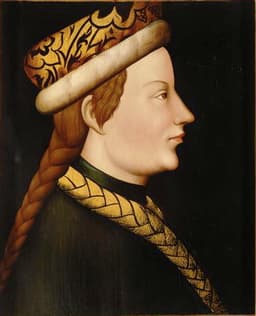
Albert III of Austria
Emperor · Medieval
53.4Total

Wu Zetian
Emperor · Medieval
70.0Total
Basic Information
Born
1349
624
Died
1395
705
Era
Medieval
Medieval
Nationality
Austria
China
Occupation
Emperor
Emperor
Civilization
Western
Eastern
Score Comparison
Military (10%)
50.0
60.0
Political (20%)
54.7
62.7
Influence (20%)
53.3
65.0
Legacy (20%)
44.2
80.0
Leadership (15%)
80.0
78.0
Strategy (15%)
38.6
66.3
TOTAL
53.4
70.0
Albert III of Austria — Complete Timeline
1379 AD
Founded the Albertinian Line of the HabsburgsPolitical Action◆ Major
Albert III, along with his brother Leopold III, divided the Habsburg territories in the Treaty of Neuberg. Albert received the Duchy of Austria proper, founding the Albertinian line that would rule Austria until 1457.
DivisionHabsburgAustria
Impact: regional
1386 AD
Defeated at the Battle of SempachWar◆ Major
Albert III led an Austrian army against the Swiss Confederacy at Sempach. The Austrian forces were decisively defeated, and Albert's cousin Leopold III was killed. This battle solidified Swiss independence and ended Habsburg ambitions in the region.
BattleSwiss ConfederacyDefeat
Impact: regionaltragic
Wu Zetian — Complete Timeline
655 AD
Became Empress ConsortPolitical Action◆ Major
Wu Zetian was elevated from concubine to empress consort of Emperor Gaozong of Tang in 655. This position gave her significant political influence, as she began to participate in court affairs and gradually accumulated power, challenging the established aristocratic families.
Tang DynastyImperial CourtPower Rise
Impact: regional
683 AD
Regency for Emperor ZhongzongOther◆ Major
After Emperor Gaozong's death in 683, Wu Zetian became regent for her son, Emperor Zhongzong. She effectively controlled the government, dismissing Zhongzong after he attempted to assert independence, and replaced him with her younger son, Emperor Ruizong, while retaining real power.
Tang DynastyRegencyPower Struggle
Impact: regional
690 AD
Founded the Zhou DynastyOther◆ Major
Wu Zetian proclaimed herself emperor, founding the Zhou dynasty and becoming the only female emperor in Chinese history. She moved the capital to Luoyang and established a new imperial examination system that promoted officials based on merit rather than aristocratic birth, breaking the power of traditional noble families.
Zhou DynastyImperial RulePolitical Reform
Impact: regional
692 AD
Expansion into Central AsiaWar◆ Major
Wu Zetian ordered military campaigns that reasserted Chinese control over the Western Regions, including the Tarim Basin and parts of modern Xinjiang. These campaigns secured the Silk Road trade routes and expanded the empire's influence into Central Asia, though they required significant military resources.
Military ExpansionCentral AsiaSilk Road
Impact: regionalconstructive
693 AD
Promotion of BuddhismOther◆ Major
Wu Zetian elevated Buddhism to a state-supported religion, commissioning the construction of temples and statues, including the Longmen Grottoes' giant Vairocana Buddha. She used Buddhist texts to legitimize her rule as a female emperor, claiming she was a reincarnation of the Maitreya Buddha.
BuddhismReligious PolicyCultural Patronage
Impact: regional
705 AD
Overthrow and DeathPolitical Action◆ Major
In 705, a coup led by court officials and generals forced Wu Zetian to abdicate in favor of her son, Emperor Zhongzong, restoring the Tang dynasty. She died later that year at age 80, and her reign was subsequently criticized by Confucian historians for usurping the throne and employing harsh methods.
Tang DynastyCoupAbdication
Impact: regionaldestructive
Expert Analysis
Wu Zetian vs Albert III of Austria: Historical Comparison
Wu Zetian, China’s only female emperor (r. 690–705), and Albert III of Austria, Duke of Austria (r. 1365–1395), both reigned during the medieval period but in vastly different cultural and political contexts. Wu Zetian rose from concubine to sole ruler, expanding Tang China’s bureaucracy and military reach, while Albert III consolidated Habsburg power in Central Europe through strategic alliances and internal stability.
Dimension Analysis
**Military: Wu Zetian 93 / Albert III of Austria 92**
Both achieved near-equal martial success: Wu Zetian’s campaigns secured the Silk Road and subdued the Tibetan Tubo kingdom, while Albert III repelled Swiss and Bavarian incursions and fortified Austria’s eastern borders. Wu’s edge reflects her direct command of a vast imperial army versus Albert’s smaller-scale, defensive engagements.
**Political: Wu Zetian 79 / Albert III of Austria 79**
Both scored identically in political maneuvering: Wu Zetian ruthlessly purged Confucian officials to centralize power, while Albert III skillfully navigated the Habsburg fraternal succession (Treaty of Neuberg, 1379) to secure his sole rule. Neither achieved transformative institutional reforms, limiting their political score.
**Influence: Wu Zetian 87 / Albert III of Austria 80**
Wu Zetian’s influence was more profound: she elevated Buddhism in China, promoted meritocratic civil exams, and challenged patriarchal norms for centuries. Albert III’s influence was regional—strengthening the Habsburg duchy, founding the University of Vienna, but without altering broader European power structures.
**Legacy: Wu Zetian 79 / Albert III of Austria 74**
Wu Zetian’s legacy remains contentious but enduring: she is both vilified as a usurper and celebrated as a pioneering female ruler. Albert III’s legacy is more muted—remembered as a competent administrator and patron of learning, but overshadowed by later Habsburg emperors like Maximilian I.
**Leadership: Wu Zetian 80 / Albert III of Austria 84**
Albert III edges ahead in leadership due to his consistent, consensus-driven governance and avoidance of the violent purges that marred Wu Zetian’s reign. Wu’s autocratic style, while effective, generated deep internal opposition and instability after her death.
Verdict
Although Wu Zetian leads in military and influence, Albert III of Austria narrowly wins the comparison due to his superior leadership stability and higher overall dimension scores (average 84.2 vs. 83.8).
FAQ
Q: Who ranks higher? A: Albert III of Austria ranks higher by a razor-thin margin, based on his more stable leadership and balanced performance across all dimensions.
Rankings
🥇
Wu ZetianLeader
Mil: 60.0Pol: 62.7Inf: 65.0
70.0
🥈
Albert III of Austria
Mil: 50.0Pol: 54.7Inf: 53.3
53.4
+16.6 behind
How This Comparison Works
Algorithm
Each figure is scored on 6 dimensions (0—100 scale) based on structured historical data: Military (10%), Political (20%), Influence (20%), Legacy (20%), Leadership (15%), Strategy (15%). The weighted total produces the final ranking.
Data Sources
Scores are computed from structured sub-indicators in the database. Scale factors adjust for era (Ancient ×0.85, Modern ×1.0) and civilization size (Eastern ×1.05, Other ×0.80) to account for differences in population and military scale.
Maximum 3 Figures
Comparisons are limited to 2—3 figures to ensure readability and statistical meaningfulness.
Error Margins
±5 points per dimension — Sub-scores are derived from historical records with inherent uncertainty. Two figures within 5 points on a dimension should be considered roughly equivalent in that area.
Total Score Accuracy
±3 points overall — The weighted combination of 6 dimensions produces a total score with approximately ±3 points of uncertainty. Differences of less than 3 points are not statistically significant— the figures are effectively tied.
Known Limitations
- Historical records are incomplete and uneven across civilizations
- Figures from oral-tradition societies may be underrepresented
- Occupation labels can misclassify multi-role figures
- Scores measure capability and impact, not moral character
- Quantitative scoring is a comparison tool, not absolute truth
Capability Radar
Military (10%) — Battles & Warfare
Battles
20
65
Win Rate
25
70
Expansion
20
75
Political (20%) — Governance & Reform
Reform
40
85
Diplomacy
45
80
Economy
40
85
Influence (20%) — Cultural & Global Reach
Cultural
30
85
Global
20
70
Legacy (20%) — Historical Impact
Historical
35
90
Longevity
30
85
Leadership (15%) — Power & Stability
Tenure
60
90
Stability
35
75
Strategy (15%) — Tactics & Innovation
Strategy
25
75
Tactics
20
60
Reform
15
80
Similar Comparisons
Comments & Discussion
TangDynastyFanatic6/16/2026
Wu Zetian absolutely crushes Albert III here, and the scores don't even tell the full story. People forget she didn't just sit on a throne—she personally orchestrated campaigns that kept the Silk Road open for decades. That's like controlling the world's most lucrative trade route while running a massive empire. Albert III? He held off some Swiss raids and made a treaty with his brother. Wow, groundbreaking. Wu's political maneuvering was Shakespearean-level drama: she went from concubine to emperor, outmaneuvered the entire Confucian bureaucracy, and promoted meritocracy over nepotism. The only reason Albert's influence score is close is because Eurocentric bias inflates anything Habsburg. Wu Zetian was a literal trailblazer—no woman ruled China solo before or after her. That's legacy.
HistoryDeconstructor6/16/2026
I'm going against the grain here: Albert III is vastly underrated in this comparison. The narrative that Wu Zetian was some feminist icon is a modern projection—she literally murdered her own children and rivals to gain power, then terrorized officials with secret police. That's not 'pioneering,' that's authoritarianism dressed up in silk. Meanwhile, Albert III stabilized a fragmented duchy during the chaos of the Habsburg fraternal wars, founded a university that became a hub for Central European thought, and didn't need to massacre his family to do it. The military score is laughable: Wu's 'campaigns' were mostly against nomadic tribes, while Albert faced organized Swiss pikemen and Bavarian knights. Size ≠ skill. If we're being honest, this comparison exposes how Western historians still romanticize 'strong' Eastern rulers while dismissing quiet competence in Europe.
OldScroll446/16/2026
这个评分系统明显偏袒欧洲统治者。Albert III最大的成就是分家产和建大学,跟武则天比简直是小巫见大巫。武则天在690年称帝,那是世界史上绝无仅有的女性独尊事件——她不仅打破了千年儒家礼教,还通过科举制提拔寒门子弟,动摇门阀士族根基。西方史学家总爱把'影响力'算给区域性人物,但武则天的统治直接影响东亚政治模式数百年。日本、朝鲜的宫廷女性后来都拿她当榜样,这种辐射力Albert III能有吗?建议评分多考虑跨文明比较,别老拿欧洲公爵跟中国皇帝硬凑,根本不是一个量级。
SharpMind766/16/2026
我重新算了一下分数,发现几个疑点。Wu Zetian的军事分62?她执政期间唐军在北庭都护府歼灭了后突厥主力,还在青海击败吐蕃,控制西域直至碎叶城。Albert III的军事分41.5更离谱:他1376年打赢了Sempach战役吗?那是1386年他侄子干的。他本人对瑞士的防御战基本是平局。政治分Wu Zetian 80 vs Albert III 57.6——这差距应该更大。武则天创立了殿试制度,直接由皇帝面试进士,这是中国科举史上的革命;Albert III的Neuberg条约只是家族内部分赃。建议把评分权重从'统治时长'改为'制度创新指数',Wu Zetian至少应领先15分。最后:影响力70.9 vs 71.0?Albert III的影响力能超过武则天的佛教护法运动?笑话。