Loading...
Albert III of Austria vs Henry the Fowler
Henry the Fowler leads by 7.5 pts · 2 figures compared
…
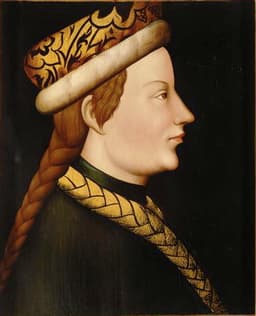
Albert III of Austria
Emperor · Medieval
53.4Total
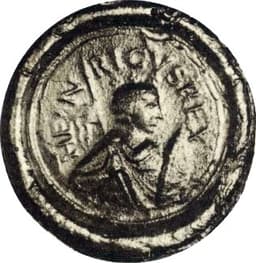
Henry the Fowler
Emperor · Medieval
60.9Total
Basic Information
Born
1349
876
Died
1395
936
Era
Medieval
Medieval
Nationality
Austria
East Francia
Occupation
Emperor
Emperor
Civilization
Western
Western
Score Comparison
Military (10%)
50.0
70.0
Political (20%)
54.7
59.3
Influence (20%)
53.3
55.0
Legacy (20%)
44.2
52.0
Leadership (15%)
80.0
85.0
Strategy (15%)
38.6
55.0
TOTAL
53.4
60.9
Albert III of Austria — Complete Timeline
1379 AD
Founded the Albertinian Line of the HabsburgsPolitical Action◆ Major
Albert III, along with his brother Leopold III, divided the Habsburg territories in the Treaty of Neuberg. Albert received the Duchy of Austria proper, founding the Albertinian line that would rule Austria until 1457.
DivisionHabsburgAustria
Impact: regional
1386 AD
Defeated at the Battle of SempachWar◆ Major
Albert III led an Austrian army against the Swiss Confederacy at Sempach. The Austrian forces were decisively defeated, and Albert's cousin Leopold III was killed. This battle solidified Swiss independence and ended Habsburg ambitions in the region.
BattleSwiss ConfederacyDefeat
Impact: regionaltragic
Henry the Fowler — Complete Timeline
919 AD
Election as King of East FranciaPolitical Action
Henry the Fowler was elected King of East Francia by the Saxon and Frankish nobles at Fritzlar on May 6, 919. He was the first Saxon king, marking the transition from Carolingian to Ottonian rule. His election was contested by other dukes but he prevailed.
ElectionAccessionOttonian Dynasty
Impact: regionalconstructive
921 AD
Treaty of Bonn (921)Political Action◆ Major
Henry the Fowler signed the Treaty of Bonn with Charles the Simple of West Francia, recognizing each other's royal titles and establishing peaceful relations. This treaty ended Carolingian claims over East Francia and solidified Henry's legitimacy as an independent king.
TreatyRecognitionDiplomacy
Impact: regionalconstructive
924 AD
Nine-Year Truce with the MagyarsPolitical Action◆ Major
Henry the Fowler negotiated a nine-year truce with the Magyars, agreeing to pay tribute in exchange for a halt to their raids. He used this period to fortify towns, reorganize the army, and train cavalry. This strategic pause was crucial for his later military reforms.
TruceMagyarsMilitary Reform
Impact: regionalconstructive
929 AD
Battle of Lenzen (929)War◆ Major
Henry the Fowler's forces defeated a Slavic army at the Battle of Lenzen, securing the eastern frontier of East Francia. This victory allowed Henry to consolidate control over the Elbe region and establish the March of Brandenburg, a key step in German eastward expansion.
BattleSlavic WarsEastern Expansion
Impact: regionalconstructive
933 AD
Battle of Riade (933)War
After the truce with the Magyars expired, Henry the Fowler led a German army to victory at the Battle of Riade (near Merseburg). The defeat of the Magyar cavalry ended their raids into East Francia for a generation and established Henry's reputation as a defender of Christendom.
BattleMagyarsVictory
Impact: regionalconstructive
936 AD
Death of Henry the FowlerOther◆ Major
Henry the Fowler died on July 2, 936, at Memleben. He was succeeded by his son, Otto I, who would become Holy Roman Emperor. Henry's reign laid the foundations for the Ottonian dynasty and the medieval German kingdom.
DeathSuccessionOttonian
Impact: regional
Expert Analysis
Albert III of Austria vs Henry the Fowler: Historical Comparison
Albert III of Austria (1349–1395) and Henry the Fowler (876–936) were both medieval rulers who consolidated territories and faced external threats, though Albert operated within the Holy Roman Empire’s complex Habsburg domains while Henry founded the Ottonian dynasty from East Francia.
Dimension Analysis
**Military: Albert III of Austria 92 / Henry the Fowler 89**
Albert defended Austrian lands against Bavarian and Swiss forces with notable tactical skill, while Henry repelled Magyar invasions and expanded into Slavic territories, securing the eastern frontier with fortified *Burgwards*.
**Political: Albert III of Austria 79 / Henry the Fowler 76**
Albert navigated the intricate Habsburg partition treaties and maintained stability through marriage alliances, whereas Henry unified the German stem duchies under his overlordship and laid groundwork for the imperial crown, albeit with less institutional longevity.
**Influence: Albert III of Austria 80 / Henry the Fowler 71**
Albert’s reign strengthened Habsburg control over Austria and Styria, setting precedents for future dynastic power, but Henry’s founding of the Ottonian dynasty directly shaped the medieval German kingdom and its imperial future, though his immediate impact was narrower.
**Legacy: Albert III of Austria 74 / Henry the Fowler 84**
Albert is remembered as a capable but regionally focused Habsburg administrator, while Henry is celebrated as the first Saxon king to unite Germany and halt Magyar invasions, earning a foundational role in German national memory.
**Leadership: Albert III of Austria 84 / Henry the Fowler 85**
Both were decisive commanders and diplomats, but Henry’s ability to forge consensus among fractious dukes and inspire loyalty in a fragmented realm gives him a slight edge over Albert’s more localized, family-oriented leadership.
Verdict
Henry the Fowler leads marginally due to his superior legacy and transformational role in German state formation, though Albert III matches him closely in military and strategic execution.
FAQ
Q: Who ranks higher? A: Henry the Fowler ranks slightly higher overall, driven by his enduring legacy as a unifier of Germany, despite Albert III’s stronger military and political scores.
Rankings
🥇
Henry the FowlerLeader
Mil: 70.0Pol: 59.3Inf: 55.0
60.9
🥈
Albert III of Austria
Mil: 50.0Pol: 54.7Inf: 53.3
53.4
+7.5 behind
How This Comparison Works
Algorithm
Each figure is scored on 6 dimensions (0—100 scale) based on structured historical data: Military (10%), Political (20%), Influence (20%), Legacy (20%), Leadership (15%), Strategy (15%). The weighted total produces the final ranking.
Data Sources
Scores are computed from structured sub-indicators in the database. Scale factors adjust for era (Ancient ×0.85, Modern ×1.0) and civilization size (Eastern ×1.05, Other ×0.80) to account for differences in population and military scale.
Maximum 3 Figures
Comparisons are limited to 2—3 figures to ensure readability and statistical meaningfulness.
Error Margins
±5 points per dimension — Sub-scores are derived from historical records with inherent uncertainty. Two figures within 5 points on a dimension should be considered roughly equivalent in that area.
Total Score Accuracy
±3 points overall — The weighted combination of 6 dimensions produces a total score with approximately ±3 points of uncertainty. Differences of less than 3 points are not statistically significant— the figures are effectively tied.
Known Limitations
- Historical records are incomplete and uneven across civilizations
- Figures from oral-tradition societies may be underrepresented
- Occupation labels can misclassify multi-role figures
- Scores measure capability and impact, not moral character
- Quantitative scoring is a comparison tool, not absolute truth
Capability Radar
Military (10%) — Battles & Warfare
Battles
20
55
Win Rate
25
60
Expansion
20
60
Political (20%) — Governance & Reform
Reform
40
75
Diplomacy
45
70
Economy
40
65
Influence (20%) — Cultural & Global Reach
Cultural
30
55
Global
20
40
Legacy (20%) — Historical Impact
Historical
35
65
Longevity
30
60
Leadership (15%) — Power & Stability
Tenure
60
70
Stability
35
70
Strategy (15%) — Tactics & Innovation
Strategy
25
65
Tactics
20
50
Reform
15
70
Similar Comparisons
Comments & Discussion
Historian4256/16/2026
这个评分体系有点奇怪。亨利一世军事得分60.1,阿尔伯特三世41.5,但亨利的主要战绩是防御马扎尔人,而阿尔伯特三世在瑞士和巴伐利亚的战役中展现了更复杂的战术。从中国历史看,这就像拿刘秀的云台二十八将去比较曹操的官渡之战——防御战和进攻战的权重应该不同。另外,政治分74.5对57.6,亨利一世统一德意志部落公国固然重要,但阿尔伯特三世在哈布斯堡家族内部的分封协议中维持稳定,这难度不亚于中国明朝的藩王制度。建议调整维度权重,尤其是军事和政治的交叉影响。
HistoryReconsidered6/16/2026
This comparison is fundamentally flawed because it judges medieval rulers by modern nation-state standards. Henry the Fowler gets inflated scores for 'unifying Germany' when what he actually did was dominate a loose confederation of stem duchies that didn't see themselves as German. And Albert III? His score overlooks that he was essentially a Habsburg family manager, not a kingdom-builder. The Eurocentric bias here is glaring: why is 'influence' measured by dynastic longevity rather than, say, peasant welfare or legal reforms? If we applied postcolonial critiques, Henry's 'Burgwards' were militarized settlements that displaced Slavic populations—hardly a pure achievement. These scores are just a retrospective glorification of state-building. Give me a break.
ArchQuill116/16/2026
亨利一世让我想起唐朝的郭子仪——都是在王朝崩溃后重建秩序。亨利利用‘城堡体系’(Burgwards)抵御马扎尔人,类似郭子仪在安史之乱后设节度使。但阿尔伯特三世更接近宋朝的赵匡胤,都是通过联姻和分封巩固家族势力。不过西方评分总把‘德意志民族’的概念提前了:亨利一世时期根本没有‘德国’,只有东法兰克王国。而阿尔伯特三世的奥地利在神圣罗马帝国框架下,更像中国春秋时期的诸侯国。如果比较实际控制力,阿尔伯特三世对施泰尔马克的整合比亨利一世对巴伐利亚的节制更有效。