Loading...
This comparison has not been analyzed yet.
One-time AI generation (~1 minute). Scores and timeline are already available below.
Alar Karis vs Necmettin Erbakan
Necmettin Erbakan leads by 11.7 pts · 2 figures compared
…

Alar Karis
Politician · Modern
45.2Total
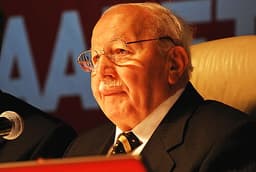
Necmettin Erbakan
Politician · Modern
56.9Total
Basic Information
Born
1958
1926
Died
—
—
Era
Modern
Modern
Nationality
Estonia
Turkey
Occupation
Politician
Politician
Civilization
Western
Middle Eastern
Score Comparison
Military (10%)
48.9
50.0
Political (20%)
33.6
68.0
Influence (20%)
47.9
60.0
Legacy (20%)
36.7
52.0
Leadership (15%)
65.7
64.0
Strategy (15%)
42.9
41.2
TOTAL
45.2
56.9
Alar Karis — Complete Timeline
2000 AD
Appointed Director of the Estonian National MuseumCultural
Karis was appointed Director of the Estonian National Museum, where he oversaw the development of the museum's new building and exhibitions. His leadership helped modernize the museum and promote Estonian cultural heritage.
MuseumCultureHeritage
Impact: nationalconstructive
2013 AD
Appointed Auditor General of EstoniaPolitical Action
Karis was appointed Auditor General, responsible for overseeing the use of public funds. He served in this role until 2018, ensuring transparency and accountability in government spending.
AuditTransparencyPublic Finance
Impact: nationalconstructive
2021 AD
Elected President of EstoniaPolitical Action◆ Major
Karis was elected as the sixth President of Estonia, succeeding Kersti Kaljulaid. His presidency focuses on social cohesion, digitalization, and environmental sustainability, building on Estonia's reputation as a digital leader.
PresidencyLeadershipDigital Estonia
Impact: nationalconstructive
Addressed the COVID-19 Pandemic ResponsePolitical Action
As president, Karis addressed the nation during the COVID-19 pandemic, emphasizing the importance of vaccination and public health measures. He supported the government's response while advocating for balanced policies.
COVID-19Public HealthPresidency
Impact: nationalconstructive
2022 AD
Promoted Environmental Sustainability InitiativesReform
Karis launched initiatives to promote environmental sustainability, including support for renewable energy and biodiversity conservation. He called for greater action on climate change and sustainable development in Estonia.
EnvironmentSustainabilityClimate Change
Impact: nationalprogressive
Necmettin Erbakan — Complete Timeline
1970 AD
Founded the National Order PartyPolitical Action◆ Major
Necmettin Erbakan founded the National Order Party (MNP) in 1970, Turkey's first explicitly Islamist political party. The party was banned by the Constitutional Court in 1971 for violating secularism, but it laid the groundwork for future Islamist movements.
IslamismPolitical PartySecularism
Impact: national
1996 AD
Became Prime Minister of TurkeyPolitical Action◆ Major
Erbakan became Prime Minister on June 28, 1996, leading a coalition government with the True Path Party. He was the first Islamist prime minister in Turkey's secular history. His tenure lasted one year before being forced out by the military.
Prime MinisterCoalitionIslamism
Impact: national
1997 AD
Forced to Resign by Military MemorandumPolitical Action◆ Major
On February 28, 1997, the Turkish military issued a memorandum demanding Erbakan's government curb Islamist activities. Facing pressure, Erbakan resigned on June 18, 1997. This event is known as the 'post-modern coup' and ended his premiership.
Military InterventionCoupIslamism
Impact: nationaldestructive
1998 AD
Banned from PoliticsPolitical Action
In 1998, the Constitutional Court banned Erbakan from politics for five years for violating secularism laws. His Welfare Party was also dissolved. This effectively ended his direct political career, though he remained influential behind the scenes.
BanSecularismCourt
Impact: nationaldestructive
This comparison has not been analyzed yet.
One-time AI generation (~1 minute). Scores and timeline are already available below.
Rankings
🥇
Necmettin ErbakanLeader
Mil: 50.0Pol: 68.0Inf: 60.0
56.9
🥈
Alar Karis
Mil: 48.9Pol: 33.6Inf: 47.9
45.2
+11.7 behind
How This Comparison Works
Algorithm
Each figure is scored on 6 dimensions (0—100 scale) based on structured historical data: Military (10%), Political (20%), Influence (20%), Legacy (20%), Leadership (15%), Strategy (15%). The weighted total produces the final ranking.
Data Sources
Scores are computed from structured sub-indicators in the database. Scale factors adjust for era (Ancient ×0.85, Modern ×1.0) and civilization size (Eastern ×1.05, Other ×0.80) to account for differences in population and military scale.
Maximum 3 Figures
Comparisons are limited to 2—3 figures to ensure readability and statistical meaningfulness.
Error Margins
±5 points per dimension — Sub-scores are derived from historical records with inherent uncertainty. Two figures within 5 points on a dimension should be considered roughly equivalent in that area.
Total Score Accuracy
±3 points overall — The weighted combination of 6 dimensions produces a total score with approximately ±3 points of uncertainty. Differences of less than 3 points are not statistically significant— the figures are effectively tied.
Known Limitations
- Historical records are incomplete and uneven across civilizations
- Figures from oral-tradition societies may be underrepresented
- Occupation labels can misclassify multi-role figures
- Scores measure capability and impact, not moral character
- Quantitative scoring is a comparison tool, not absolute truth
Capability Radar
Military (10%) — Battles & Warfare
Battles
32
21
Win Rate
33
27
Expansion
33
27
Political (20%) — Governance & Reform
Reform
20
55
Diplomacy
30
60
Economy
20
50
Influence (20%) — Cultural & Global Reach
Cultural
15
55
Global
10
45
Legacy (20%) — Historical Impact
Historical
10
60
Longevity
10
50
Leadership (15%) — Power & Stability
Tenure
30
40
Stability
35
35
Strategy (15%) — Tactics & Innovation
Strategy
37
33
Tactics
42
35
Reform
46
34
Similar Comparisons
Comments & Discussion
No comments yet. Be the first to share your thoughts!