Loading...
Hissene Habre vs Necmettin Erbakan
Necmettin Erbakan leads by 10.3 pts · 2 figures compared
…

Hissene Habre
Politician · Modern
46.6Total
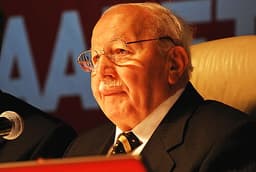
Necmettin Erbakan
Politician · Modern
56.9Total
Basic Information
Born
1942
1926
Died
—
—
Era
Modern
Modern
Nationality
Chad
Turkey
Occupation
Politician
Politician
Civilization
Other
Middle Eastern
Score Comparison
Military (10%)
50.0
50.0
Political (20%)
37.9
68.0
Influence (20%)
47.9
60.0
Legacy (20%)
38.3
52.0
Leadership (15%)
65.7
64.0
Strategy (15%)
45.0
41.2
TOTAL
46.6
56.9
Hissene Habre — Complete Timeline
1982 AD
Seized Power in Chad CoupPolitical Action◆ Major
Hissène Habré led the Armed Forces of the North (FAN) to capture N'Djamena, overthrowing President Goukouni Oueddei. This ended the Transitional Government of National Unity and began Habré's rule over Chad.
ChadCoupCivil War
Impact: nationaldestructive
1983 AD
Established the Documentation and Security DirectoratePolitical Action◆ Major
Habré created the DDS, a secret police force that became the instrument of his repressive regime. The DDS was responsible for systematic torture, political imprisonment, and mass executions of perceived opponents.
ChadRepressionHuman Rights Abuses
Impact: nationaldestructive
1990 AD
Overthrown by Idriss DébyWar◆ Major
Rebel forces led by Idriss D
ChadCoupIdriss Déby
Impact: national
2017 AD
Convicted of Crimes Against HumanityPolitical Action
The Extraordinary African Chambers in Senegal convicted Habr
ChadInternational JusticeHuman Rights
Impact: globalconstructive
Necmettin Erbakan — Complete Timeline
1970 AD
Founded the National Order PartyPolitical Action◆ Major
Necmettin Erbakan founded the National Order Party (MNP) in 1970, Turkey's first explicitly Islamist political party. The party was banned by the Constitutional Court in 1971 for violating secularism, but it laid the groundwork for future Islamist movements.
IslamismPolitical PartySecularism
Impact: national
1996 AD
Became Prime Minister of TurkeyPolitical Action◆ Major
Erbakan became Prime Minister on June 28, 1996, leading a coalition government with the True Path Party. He was the first Islamist prime minister in Turkey's secular history. His tenure lasted one year before being forced out by the military.
Prime MinisterCoalitionIslamism
Impact: national
1997 AD
Forced to Resign by Military MemorandumPolitical Action◆ Major
On February 28, 1997, the Turkish military issued a memorandum demanding Erbakan's government curb Islamist activities. Facing pressure, Erbakan resigned on June 18, 1997. This event is known as the 'post-modern coup' and ended his premiership.
Military InterventionCoupIslamism
Impact: nationaldestructive
1998 AD
Banned from PoliticsPolitical Action
In 1998, the Constitutional Court banned Erbakan from politics for five years for violating secularism laws. His Welfare Party was also dissolved. This effectively ended his direct political career, though he remained influential behind the scenes.
BanSecularismCourt
Impact: nationaldestructive
Expert Analysis
Origins
Hissène Habré was born in 1942 in Faya-Largeau, northern Chad, to a pastoralist family of the Anakaza clan. He studied in France, earning a degree in political science from the Institut des Hautes Études d'Outre-Mer. Habré initially worked as a civil servant before joining the rebel movement against President François Tombalbaye. Necmettin Erbakan was born in 1926 in Sinop, Turkey, to a religious family. He graduated from Istanbul Technical University with a degree in mechanical engineering and earned a PhD from Aachen University in Germany. Erbakan worked as an academic and later entered politics, founding the National Order Party in 1970.
Rise to Power
Habré rose through the ranks of the rebel forces, first under Goukouni Oueddei, then leading his own group, the Armed Forces of the North (FAN). On June 7, 1982, Habré's forces captured N'Djamena, overthrowing Oueddei and establishing himself as President. Erbakan's rise was political: he founded the National Order Party in 1970, but it was banned in 1971. He then formed the National Salvation Party, which entered coalition governments in the 1970s. After another ban, he founded the Welfare Party, winning municipal elections in 1994 and becoming Prime Minister on June 28, 1996, leading a coalition with the True Path Party.
Leadership & Governance
Habré ruled Chad with an iron fist from 1982 to 1990. He created the Documentation and Security Directorate (DDS), a secret police that tortured and killed thousands. His regime was marked by human rights abuses, with an estimated 40,000 deaths. Economically, he focused on consolidating power rather than development. Erbakan, as Prime Minister, pursued an Islamist agenda, including closer ties with Muslim countries and promoting religious education. He faced strong opposition from the secular military. His leadership style was more ideological than pragmatic, leading to conflict with the establishment.
Triumph & Tragedy
Habré's triumph was his initial consolidation of power and survival in a turbulent region. However, his tragedy was his brutal repression; he was convicted in 2016 by the Extraordinary African Chambers for crimes against humanity, war crimes, and torture, and sentenced to life imprisonment. Erbakan's triumph was becoming Turkey's first Islamist PM, a milestone. His tragedy was being forced to resign by the military memorandum on February 28, 1997, and later banned from politics in 1998. His party was dissolved, and his legacy of political Islam was suppressed.
Character & Destiny
Habré was ruthless and paranoid, trusting few and eliminating rivals. His character led to a regime of terror, but also to his downfall when former ally Idriss Déby overthrew him on December 1, 1990. Erbakan was principled but inflexible, often clashing with secular institutions. His stubbornness provoked the military's intervention, ending his political career. Both men's fates were shaped by their inability to compromise.
Legacy
Habré's legacy is overwhelmingly negative: he is remembered as a dictator and human rights abuser. His trial set a precedent for African justice. Erbakan's legacy is more complex: he is a pioneer of political Islam in Turkey, influencing later leaders like Recep Tayyip Erdoğan. However, his tenure was brief and his policies largely reversed. In terms of scores, Erbakan's total is 56.9 vs. Habré's 46.6, reflecting greater political influence and legacy. Erbakan scored 68.0 in political acumen, while Habré scored 37.9; Habré's leadership score of 65.7 is slightly higher than Erbakan's 64.0.
Conclusion
Necmettin Erbakan had greater impact than Hissène Habré. Despite Habré's longer rule and higher leadership score, Erbakan's influence on Turkish politics and the Islamist movement is more enduring. Erbakan's political score of 68.0 and influence score of 60.0 significantly outpace Habré's 37.9 and 47.9. While Habré's regime was brutal and his legacy tainted, Erbakan's ideas continue to shape Turkey's trajectory. Therefore, Erbakan's overall impact is greater.
Rankings
🥇
Necmettin ErbakanLeader
Mil: 50.0Pol: 68.0Inf: 60.0
56.9
🥈
Hissene Habre
Mil: 50.0Pol: 37.9Inf: 47.9
46.6
+10.3 behind
How This Comparison Works
Algorithm
Each figure is scored on 6 dimensions (0—100 scale) based on structured historical data: Military (10%), Political (20%), Influence (20%), Legacy (20%), Leadership (15%), Strategy (15%). The weighted total produces the final ranking.
Data Sources
Scores are computed from structured sub-indicators in the database. Scale factors adjust for era (Ancient ×0.85, Modern ×1.0) and civilization size (Eastern ×1.05, Other ×0.80) to account for differences in population and military scale.
Maximum 3 Figures
Comparisons are limited to 2—3 figures to ensure readability and statistical meaningfulness.
Error Margins
±5 points per dimension — Sub-scores are derived from historical records with inherent uncertainty. Two figures within 5 points on a dimension should be considered roughly equivalent in that area.
Total Score Accuracy
±3 points overall — The weighted combination of 6 dimensions produces a total score with approximately ±3 points of uncertainty. Differences of less than 3 points are not statistically significant— the figures are effectively tied.
Known Limitations
- Historical records are incomplete and uneven across civilizations
- Figures from oral-tradition societies may be underrepresented
- Occupation labels can misclassify multi-role figures
- Scores measure capability and impact, not moral character
- Quantitative scoring is a comparison tool, not absolute truth
Capability Radar
Military (10%) — Battles & Warfare
Battles
30
21
Win Rate
35
27
Expansion
30
27
Political (20%) — Governance & Reform
Reform
40
55
Diplomacy
20
60
Economy
25
50
Influence (20%) — Cultural & Global Reach
Cultural
15
55
Global
20
45
Legacy (20%) — Historical Impact
Historical
30
60
Longevity
10
50
Leadership (15%) — Power & Stability
Tenure
55
40
Stability
10
35
Strategy (15%) — Tactics & Innovation
Strategy
45
33
Tactics
40
35
Reform
50
34
Similar Comparisons
Comments & Discussion
No comments yet. Be the first to share your thoughts!