Loading...
Al-Walid I vs Suleiman the Magnificent
Suleiman the Magnificent leads by 4.6 pts · 2 figures compared
…
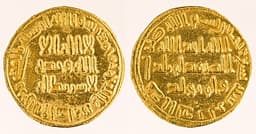
Al-Walid I
Emperor · Medieval
68.6Total
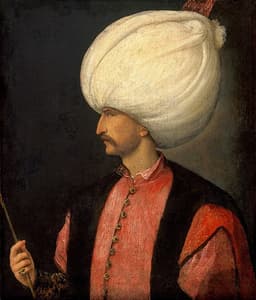
Suleiman the Magnificent
Emperor · Medieval
73.2Total
Basic Information
Born
668
1494
Died
715
1566
Era
Medieval
Medieval
Nationality
Umayyad Caliphate
Ottoman Empire
Occupation
Emperor
Emperor
Civilization
Middle Eastern
Middle Eastern
Score Comparison
Military (10%)
76.0
85.0
Political (20%)
70.0
78.0
Influence (20%)
88.0
72.0
Legacy (20%)
40.0
68.0
Leadership (15%)
80.0
72.0
Strategy (15%)
65.4
72.0
TOTAL
68.6
73.2
Al-Walid I — Complete Timeline
700 AD
Patronage of Arabic language and administrationReform◆ Major
Al-Walid I made Arabic the official language of administration across the caliphate, replacing Greek and Persian. This standardized governance and promoted the spread of Arabic culture and Islam.
LanguageAdministrationArabization
Impact: globalprogressive
705 AD
Expansion of the Umayyad CaliphateWar
Al-Walid I oversaw the expansion of the Umayyad Caliphate to its greatest territorial extent. Conquests included Transoxiana, Sindh, and parts of Spain, making the caliphate one of the largest empires in history.
ConquestExpansionEmpire
Impact: global
706 AD
Construction of the Great Mosque of DamascusCultural◆ Major
Al-Walid I commissioned the construction of the Umayyad Mosque in Damascus, transforming a Christian basilica into a grand mosque. It became a masterpiece of Islamic architecture and a major pilgrimage site.
ArchitectureMosqueDamascus
Impact: globalconstructive
Suleiman the Magnificent — Complete Timeline
1522 AD
Siege of RhodesWar◆ Major
Suleiman personally led a massive Ottoman campaign against the Knights Hospitaller on Rhodes. After a six-month siege, the knights surrendered and were allowed to leave. This victory secured Ottoman control over the eastern Mediterranean.
SiegeMediterraneanKnights Hospitaller
Impact: regional
1526 AD
Battle of MohácsWar
Suleiman's Ottoman army defeated the Hungarian forces of King Louis II at Moh
BattleHungaryOttoman expansion
Impact: regional
1529 AD
Siege of ViennaWar◆ Major
Suleiman besieged Vienna, the Habsburg capital, with a large army. The siege failed due to supply issues, disease, and strong defenses. This defeat halted Ottoman expansion into central Europe and marked the empire's furthest advance westward.
SiegeViennaDefeat
Impact: regional
1530 AD
Codification of Ottoman lawReform◆ Major
Suleiman oversaw the compilation and standardization of Ottoman legal codes, known as Kanun. These laws regulated criminal justice, land tenure, and taxation, creating a unified legal system that balanced sharia with secular law. He earned the title 'Kanuni' (the Lawgiver).
Legal reformKanunOttoman Empire
Impact: nationalconstructive
1536 AD
Execution of Ibrahim PashaPolitical Action◆ Major
Suleiman ordered the execution of his grand vizier and close friend Ibrahim Pasha, who had served for 13 years. The reasons remain debated, but likely involved Ibrahim's growing power and conflicts with Suleiman's wife, Hurrem Sultan. This event demonstrated the absolute power of the sultan.
ExecutionCourt politicsPower
Impact: nationaltragic
Expert Analysis
Origins
Al-Walid I (668–715) was born into the Umayyad dynasty in Medina. His father, Caliph Abd al-Malik, was a strong ruler who consolidated Umayyad power. Al-Walid grew up in the caliphal court, receiving education in Islamic sciences and governance. He became caliph in 705 at age 37, inheriting a stable empire.
Suleiman the Magnificent (1494–1566) was born in Trabzon, the son of Sultan Selim I. His mother, Hafsa Sultan, was a concubine of Crimean Tatar origin. Suleiman received a princely education in Istanbul, studying history, literature, and military tactics. He became sultan in 1520 after his father's death, at age 26.
Rise to Power
Al-Walid I ascended to the caliphate smoothly upon his father's death in 705. His reign continued the Umayyad expansionist policies. Key turning points included the conquest of Transoxiana under Qutayba ibn Muslim (706–715) and the invasion of Sindh under Muhammad bin Qasim (711). These campaigns extended the caliphate to its greatest territorial extent.
Suleiman's rise was more dramatic. He became sultan in 1520 after his father Selim I died suddenly. Suleiman immediately launched campaigns to consolidate power. In 1521 he captured Belgrade, and in 1522 he besieged Rhodes, forcing the Knights Hospitaller to surrender after six months. These victories established his reputation as a military leader.
Leadership & Governance
Al-Walid I was an effective administrator who centralized the caliphate. He made Arabic the official language of administration, replacing Greek and Persian. This standardized governance and promoted cultural unity. He also commissioned the Great Mosque of Damascus (706–715), transforming a Christian basilica into a grand mosque. The mosque became a model for Islamic architecture. His political score of 70.0 reflects his administrative reforms, though his leadership score of 80.0 indicates strong command.
Suleiman the Magnificent was both a military commander and a lawgiver. He codified Ottoman law (Kanun) in the 1520s–1530s, standardizing criminal justice, land tenure, and taxation. His legal reforms earned him the epithet "the Lawgiver" in the East. He also patronized the architect Sinan, who built the Süleymaniye Mosque (1550–1557) in Istanbul. Suleiman's political score of 78.0 and leadership of 72.0 reflect his balanced approach, though his military score of 85.0 is higher than Al-Walid's 76.0.
Triumph & Tragedy
Al-Walid I's greatest triumph was the expansion of the Umayyad Caliphate to its peak. His generals conquered vast territories from Spain to India. The Great Mosque of Damascus remains a masterpiece. However, his legacy is marred by the empire's rapid decline after his death. His successor, Sulayman, reversed many policies. Al-Walid's influence score of 88.0 is high, but his legacy score of only 40.0 reflects the ephemeral nature of his achievements.
Suleiman's triumphs include the victory at Mohács (1526), which destroyed the Hungarian kingdom, and the successful siege of Rhodes (1522). His legal codification created a lasting framework for the Ottoman Empire. Yet his failure at Vienna (1529) marked the limit of Ottoman expansion. The execution of his grand vizier Ibrahim Pasha in 1536, on charges of ambition, was a personal and political tragedy. Suleiman's legacy score of 68.0 indicates a more enduring impact than Al-Walid's.
Character & Destiny
Al-Walid I was decisive and ambitious, but his reliance on capable generals like Qutayba and al-Hajjaj led to success. His character was marked by religious piety; he was known for his devotion to Islam and patronage of mosques. However, his focus on expansion strained the empire's resources. His total score of 68.6 is lower than Suleiman's 73.2, reflecting a less balanced leadership.
Suleiman was methodical and just, earning respect from subjects and enemies. His decision to execute Ibrahim Pasha shows a ruthless streak. He was also a poet and patron of the arts, embodying the Renaissance ideal of a ruler. His strategic score of 72.0 matches Al-Walid's 65.4, indicating superior planning.
Legacy
Al-Walid I's greatest legacy is the Great Mosque of Damascus, a UNESCO World Heritage site that influenced mosque architecture. The Arabization of administration created a unified Islamic culture. However, his conquests were often reversed within decades. His overall impact is limited compared to Suleiman.
Suleiman's legal code influenced Ottoman governance for centuries. The Süleymaniye Mosque remains an iconic symbol of Istanbul. His reign is considered the golden age of the Ottoman Empire. His legacy score of 68.0 is significantly higher than Al-Walid's 40.0, reflecting a more durable impact.
Conclusion
While Al-Walid I expanded the Umayyad Caliphate to its greatest extent and left architectural marvels, his achievements were short-lived. Suleiman the Magnificent, with a total score of 73.2 versus Al-Walid's 68.6, had a more lasting impact through legal reform, architectural patronage, and military conquests that shaped the Ottoman Empire for centuries. Suleiman's legacy endures in modern Turkey and beyond, making him the more influential figure.
Rankings
🥇
Suleiman the MagnificentLeader
Mil: 85.0Pol: 78.0Inf: 72.0
73.2
🥈
Al-Walid I
Mil: 76.0Pol: 70.0Inf: 88.0
68.6
+4.6 behind
How This Comparison Works
Algorithm
Each figure is scored on 6 dimensions (0—100 scale) based on structured historical data: Military (10%), Political (20%), Influence (20%), Legacy (20%), Leadership (15%), Strategy (15%). The weighted total produces the final ranking.
Data Sources
Scores are computed from structured sub-indicators in the database. Scale factors adjust for era (Ancient ×0.85, Modern ×1.0) and civilization size (Eastern ×1.05, Other ×0.80) to account for differences in population and military scale.
Maximum 3 Figures
Comparisons are limited to 2—3 figures to ensure readability and statistical meaningfulness.
Error Margins
±5 points per dimension — Sub-scores are derived from historical records with inherent uncertainty. Two figures within 5 points on a dimension should be considered roughly equivalent in that area.
Total Score Accuracy
±3 points overall — The weighted combination of 6 dimensions produces a total score with approximately ±3 points of uncertainty. Differences of less than 3 points are not statistically significant— the figures are effectively tied.
Known Limitations
- Historical records are incomplete and uneven across civilizations
- Figures from oral-tradition societies may be underrepresented
- Occupation labels can misclassify multi-role figures
- Scores measure capability and impact, not moral character
- Quantitative scoring is a comparison tool, not absolute truth
Capability Radar
Military (10%) — Battles & Warfare
Battles
75
95
Win Rate
80
90
Expansion
85
95
Political (20%) — Governance & Reform
Reform
85
90
Diplomacy
70
88
Economy
80
85
Influence (20%) — Cultural & Global Reach
Cultural
85
90
Global
70
88
Legacy (20%) — Historical Impact
Historical
80
92
Longevity
75
85
Leadership (15%) — Power & Stability
Tenure
80
95
Stability
75
85
Strategy (15%) — Tactics & Innovation
Strategy
75
92
Tactics
70
85
Reform
65
80
Similar Comparisons
Comments & Discussion
No comments yet. Be the first to share your thoughts!