Loading...
Al-Walid I vs Charles of Anjou
Al-Walid I leads by 9.1 pts · 2 figures compared
…
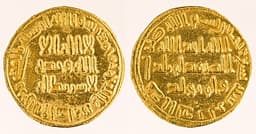
Al-Walid I
Emperor · Medieval
68.6Total
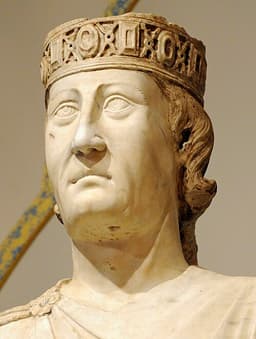
Charles of Anjou
Emperor · Medieval
59.5Total
Basic Information
Born
668
1227
Died
715
1285
Era
Medieval
Medieval
Nationality
Umayyad Caliphate
France
Occupation
Emperor
Emperor
Civilization
Middle Eastern
Western
Score Comparison
Military (10%)
76.0
82.0
Political (20%)
70.0
48.5
Influence (20%)
88.0
56.7
Legacy (20%)
40.0
52.0
Leadership (15%)
80.0
68.0
Strategy (15%)
65.4
66.3
TOTAL
68.6
59.5
Al-Walid I — Complete Timeline
700 AD
Patronage of Arabic language and administrationReform◆ Major
Al-Walid I made Arabic the official language of administration across the caliphate, replacing Greek and Persian. This standardized governance and promoted the spread of Arabic culture and Islam.
LanguageAdministrationArabization
Impact: globalprogressive
705 AD
Expansion of the Umayyad CaliphateWar
Al-Walid I oversaw the expansion of the Umayyad Caliphate to its greatest territorial extent. Conquests included Transoxiana, Sindh, and parts of Spain, making the caliphate one of the largest empires in history.
ConquestExpansionEmpire
Impact: global
706 AD
Construction of the Great Mosque of DamascusCultural◆ Major
Al-Walid I commissioned the construction of the Umayyad Mosque in Damascus, transforming a Christian basilica into a grand mosque. It became a masterpiece of Islamic architecture and a major pilgrimage site.
ArchitectureMosqueDamascus
Impact: globalconstructive
Charles of Anjou — Complete Timeline
1266 AD
Battle of BeneventoWar◆ Major
Charles of Anjou defeated Manfred of Hohenstaufen at Benevento. Manfred was killed in the battle, allowing Charles to take control of the Kingdom of Sicily. This victory established the Angevin dynasty in southern Italy.
Angevin ConquestHohenstaufenItaly
Impact: regional
1268 AD
Battle of TagliacozzoWar◆ Major
Charles of Anjou defeated Conradin, the last Hohenstaufen claimant, at Tagliacozzo. Conradin was captured and later executed in Naples. This victory secured Charles's control over Sicily and ended Hohenstaufen claims.
HohenstaufenExecutionItaly
Impact: regionaldestructive
1282 AD
Sicilian VespersWar
A rebellion broke out in Palermo against Angevin rule, leading to the massacre of French officials and soldiers. The revolt spread across Sicily, resulting in the loss of the island to Peter III of Aragon. This event ended Charles's control of Sicily.
RevoltAragonSicily
Impact: regionaldestructive
1284 AD
Crusade against AragonWar
Pope Martin IV declared a crusade against Peter III of Aragon, and Charles of Anjou led the campaign. The French invasion of Aragon failed, and Charles's fleet was defeated. This crusade drained Angevin resources and weakened his position.
CrusadeAragonFailure
Impact: regionaldestructive
Expert Analysis
Origins
Al-Walid I was born in 668 AD in Medina, a member of the Umayyad clan. His father, Caliph Abd al-Malik, provided a stable foundation. Al-Walid was raised in the imperial court, learning administration and military command. His early exposure to governance shaped his later policies.
Charles of Anjou was born in 1226 in Paris, the youngest son of King Louis VIII of France. He was granted the county of Anjou and Maine by his brother, King Louis IX. Charles grew up in a feudal system, trained in knightly warfare and politics. His marriage to Beatrice of Provence in 1246 brought him territorial ambitions.
Rise to Power
Al-Walid I became caliph in 705 AD after his father's death. He inherited a strong empire and immediately launched campaigns. His generals, like Qutayba ibn Muslim and Muhammad ibn al-Qasim, conquered Transoxiana and Sindh by 711 AD. Al-Walid's support for military expansion was decisive.
Charles of Anjou rose through papal support. Pope Clement IV backed his claim to the Kingdom of Sicily against the Hohenstaufen dynasty. In 1266, Charles defeated Manfred at the Battle of Benevento, taking control of Sicily. In 1268, he defeated Conradin at Tagliacozzo, securing his rule.
Leadership & Governance
Al-Walid I centralized administration by making Arabic the official language, replacing Greek and Persian. He standardized coinage and improved infrastructure, including the construction of roads and irrigation. His patronage of the Umayyad Mosque in Damascus showcased his commitment to Islamic culture.
Charles of Anjou imposed heavy taxes to fund his military campaigns. He appointed French officials to key positions, alienating the local population. His rule was authoritarian, focusing on consolidating power rather than integration. The Sicilians resented his governance, leading to widespread discontent.
Triumph & Tragedy
Al-Walid I's greatest triumph was the expansion of the Umayyad Caliphate to its largest extent, stretching from Spain to India. He also built the Umayyad Mosque, a masterpiece of Islamic architecture. However, his lack of a clear succession plan led to infighting after his death. His son Sulayman reversed some policies.
Charles of Anjou's triumph was defeating the Hohenstaufens and becoming King of Sicily. He also led a crusade against Aragon, but this failed. His tragedy was the Sicilian Vespers in 1282, a rebellion that cost him Sicily. The revolt began on Easter Monday, leading to the massacre of French forces and the loss of the island.
Character & Destiny
Al-Walid I was pious and decisive, but also ambitious. His military scores of 76.0 reflect his effective campaigns, while his political score of 70.0 shows his administrative skills. His leadership score of 80.0 indicates his ability to inspire loyalty.
Charles of Anjou was ruthless and determined. His military score of 82.0 is high, but his political score of 48.5 reveals his failure in governance. His leadership score of 68.0 is lower than Al-Walid's, as his heavy-handed approach caused rebellion.
Legacy
Al-Walid I's legacy is enduring: the Umayyad Mosque remains a symbol of Islamic architecture. His administrative reforms standardized Arabic, influencing governance across the caliphate. His total score of 68.6 surpasses Charles's 59.5, reflecting broader impact.
Charles of Anjou's legacy is mixed. He founded the Angevin dynasty in Naples, but his rule ended in Sicily. The Sicilian Vespers is a historical turning point. His influence score of 56.7 is lower, as his empire did not last.
Conclusion
Al-Walid I had greater impact. His expansion of the caliphate and cultural patronage left a lasting mark on the Islamic world. Charles of Anjou's achievements were significant but transient. With a total score of 68.6 against 59.5, Al-Walid I stands as the more influential figure.
Rankings
🥇
Al-Walid ILeader
Mil: 76.0Pol: 70.0Inf: 88.0
68.6
🥈
Charles of Anjou
Mil: 82.0Pol: 48.5Inf: 56.7
59.5
+9.1 behind
How This Comparison Works
Algorithm
Each figure is scored on 6 dimensions (0—100 scale) based on structured historical data: Military (10%), Political (20%), Influence (20%), Legacy (20%), Leadership (15%), Strategy (15%). The weighted total produces the final ranking.
Data Sources
Scores are computed from structured sub-indicators in the database. Scale factors adjust for era (Ancient ×0.85, Modern ×1.0) and civilization size (Eastern ×1.05, Other ×0.80) to account for differences in population and military scale.
Maximum 3 Figures
Comparisons are limited to 2—3 figures to ensure readability and statistical meaningfulness.
Error Margins
±5 points per dimension — Sub-scores are derived from historical records with inherent uncertainty. Two figures within 5 points on a dimension should be considered roughly equivalent in that area.
Total Score Accuracy
±3 points overall — The weighted combination of 6 dimensions produces a total score with approximately ±3 points of uncertainty. Differences of less than 3 points are not statistically significant— the figures are effectively tied.
Known Limitations
- Historical records are incomplete and uneven across civilizations
- Figures from oral-tradition societies may be underrepresented
- Occupation labels can misclassify multi-role figures
- Scores measure capability and impact, not moral character
- Quantitative scoring is a comparison tool, not absolute truth
Capability Radar
Military (10%) — Battles & Warfare
Battles
75
75
Win Rate
80
70
Expansion
85
80
Political (20%) — Governance & Reform
Reform
85
60
Diplomacy
70
68
Economy
80
65
Influence (20%) — Cultural & Global Reach
Cultural
85
50
Global
70
45
Legacy (20%) — Historical Impact
Historical
80
60
Longevity
75
55
Leadership (15%) — Power & Stability
Tenure
80
70
Stability
75
55
Strategy (15%) — Tactics & Innovation
Strategy
75
78
Tactics
70
72
Reform
65
65
Similar Comparisons
Comments & Discussion
No comments yet. Be the first to share your thoughts!