Loading...
Al-Saffah vs James IV of Scotland
Al-Saffah leads by 1.7 pts · 2 figures compared
…
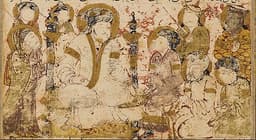
Al-Saffah
Emperor · Medieval
60.0Total

James IV of Scotland
Emperor · Medieval
58.3Total
Basic Information
Born
721
1473
Died
754
1513
Era
Medieval
Medieval
Nationality
Abbasid Caliphate
Scotland
Occupation
Emperor
Emperor
Civilization
Middle Eastern
Western
Score Comparison
Military (10%)
65.0
50.0
Political (20%)
68.0
60.0
Influence (20%)
59.0
59.0
Legacy (20%)
56.0
48.3
Leadership (15%)
58.8
72.0
Strategy (15%)
57.5
66.3
TOTAL
60.0
58.3
Al-Saffah — Complete Timeline
750 AD
Proclamation as CaliphPolitical Action
Al-Saffah was proclaimed the first Abbasid caliph in Kufa after the Abbasid Revolution overthrew the Umayyads. His title 'al-Saffah' means 'the Shedder of Blood', reflecting the violent transition.
CaliphateRevolutionAbbasid
Impact: global
Massacre of the UmayyadsPolitical Action◆ Major
Al-Saffah ordered the systematic elimination of the Umayyad family to prevent any restoration. Most Umayyad princes were killed, though one, Abd al-Rahman I, escaped to Spain and founded the Emirate of Cordoba.
MassacreUmayyadPurge
Impact: globaldestructive
Establishment of the Abbasid CaliphatePolitical Action
Al-Saffah established the Abbasid Caliphate, moving the capital from Damascus to a new city near Kufa. This shift marked the beginning of a new era in Islamic history, with a focus on Persian influence and Baghdad.
CaliphateCapitalIslamic History
Impact: global
James IV of Scotland — Complete Timeline
1495 AD
Foundation of the University of AberdeenCultural
James IV issued a papal bull to found the University of Aberdeen, Scotland's third university. The university was established to promote education and learning in the north of Scotland, reflecting James's interest in Renaissance humanism.
FoundationEducationRenaissance
Impact: nationalconstructive
1496 AD
Support for Perkin WarbeckPolitical Action
James IV supported the pretender Perkin Warbeck, who claimed to be Richard of Shrewsbury, by invading northern England. The invasion failed, and James later abandoned Warbeck, but the episode strained relations with England.
InvasionPretenderAnglo-Scottish Relations
Impact: regionaldestructive
1503 AD
Marriage to Margaret TudorPolitical Action◆ Major
James IV married Margaret Tudor, daughter of Henry VII of England, under the Treaty of Perpetual Peace. The marriage united the Scottish and English royal houses and later gave James VI a claim to the English throne.
MarriageTreatyUnion of Crowns
Impact: nationalconstructive
1511 AD
Construction of the Great MichaelOther
James IV commissioned the construction of the Great Michael, the largest warship in Europe at the time. The ship was built at Newhaven and cost a fortune, but it was sold to France after Flodden and never saw significant action.
ShipbuildingNavyExpense
Impact: national
1513 AD
Battle of FloddenWar
James IV led a Scottish invasion of England but was defeated at the Battle of Flodden Field near Branxton, Northumberland. James IV was killed along with many Scottish nobles, making it one of Scotland's worst military defeats.
BattleDefeatDeath
Impact: nationaltragic
Expert Analysis
Origins
**Al-Saffah** (full name: Abu al-Abbas Abdallah ibn Muhammad al-Saffah) was born around 721 CE into the powerful Hashimite clan of the Quraysh tribe, part of the Abbasid family. His lineage traced back to al-Abbas, an uncle of the Prophet Muhammad. The Abbasids had long harbored ambitions to overthrow the Umayyad Caliphate, which they considered illegitimate and corrupt. Al-Saffah's early life was shaped by the secretive Abbasid propaganda network centered in Kufa and Khurasan, where his half-brother Ibrahim al-Imam led the movement until his death in 749. Al-Saffah was chosen as the public face of the revolution due to his charismatic appeal and political acumen.
**James IV of Scotland** was born on March 17, 1473, at Stirling Castle, the eldest son of King James III and Margaret of Denmark. He was raised in a turbulent court, marked by his father's unpopularity and conflicts with the nobility. James IV received a Renaissance education, fluent in Scots, Latin, French, and some Gaelic, and was deeply interested in culture, science, and chivalry. His upbringing instilled in him a strong sense of royal authority and a passion for learning, which later defined his reign.
Rise to Power
**Al-Saffah** rose to power through the Abbasid Revolution (747-750), a meticulously planned uprising led by the Abbasid family and their supporters in Khurasan. The revolt exploited widespread discontent against Umayyad rule, particularly among non-Arab Muslims (mawali) and Shia factions. After the death of his brother Ibrahim, al-Saffah was proclaimed caliph in Kufa on November 28, 749, taking the title 'al-Saffah' (the Shedder of Blood), a reference to his ruthless elimination of enemies. The decisive Battle of the Zab (January 750) saw the Abbasid army defeat the Umayyad caliph Marwan II, who fled to Egypt and was killed. Al-Saffah then systematically hunted down and massacred the Umayyad family, consolidating his rule.
**James IV** became king at age 15 following the death of his father, James III, after the Battle of Sauchieburn (1488), where the younger James was nominally allied with rebel nobles. Although he did not directly participate, he bore guilt for his father's death and later did penance. His early reign was dominated by powerful magnates, but James gradually asserted control. He pacified the Highlands and Islands, improved royal finances, and established a strong central government. His marriage to Margaret Tudor in 1503 under the Treaty of Perpetual Peace with England secured a temporary peace and bolstered his prestige.
Leadership & Governance
**Al-Saffah** governed as the first Abbasid caliph, establishing a new dynasty that would last over 500 years. He moved the capital from Damascus to a new city near Kufa, later fixed at Baghdad by his successor al-Mansur. His leadership was marked by centralization of power and reliance on Persian administrators, notably the Barmakid family. He purged potential rivals, including former allies like Abu Muslim, a key general of the revolution, whom he executed in 755. Al-Saffah's political score of 68.0 reflects his effective consolidation of power, but his reign was brief (4 years) and focused on securing the dynasty rather than reforms.
**James IV** was a Renaissance monarch who promoted arts, education, and science. He founded the University of Aberdeen in 1495, patronized poets and musicians, and built the Great Michael, the largest warship in Europe (launched 1511). His leadership score of 72.0 is the highest among his metrics, indicating his effective governance and popularity. He strengthened the Scottish navy, improved infrastructure, and maintained relative peace with England through the marriage alliance. However, his support for the pretender Perkin Warbeck (1496-1497) damaged relations and led to a failed invasion.
Triumph & Tragedy
**Al-Saffah's** greatest triumph was the overthrow of the Umayyad Caliphate and the establishment of the Abbasid dynasty, which ushered in a golden age of Islamic culture and science. His massacre of the Umayyads eliminated immediate threats but also fostered a legacy of brutality. His tragedy was his short reign; he died of smallpox in 754 at age 33, leaving the consolidation of the empire to his successors. The ruthless elimination of rivals, including Abu Muslim, created internal strife that later erupted.
**James IV's** triumph was his cultural patronage and effective rule, making Scotland a respected European kingdom. The marriage to Margaret Tudor laid the groundwork for the eventual Union of the Crowns in 1603. His tragedy was the disastrous Battle of Flodden (September 9, 1513), where he led an invasion of England in support of France. James IV was killed, along with thousands of Scots, including many nobles. The defeat shattered Scotland's military strength and plunged the kingdom into a regency crisis. His military score of 50.0 reflects this catastrophic failure.
Character & Destiny
**Al-Saffah** was pragmatic, ruthless, and calculating. His title 'the Shedder of Blood' indicates his willingness to use extreme violence to secure power. He was also politically astute, carefully managing the diverse factions that supported the Abbasid cause. His decisions were driven by a desire to establish a lasting dynasty, which he achieved despite his brief reign. His character shaped a destiny of foundational success but also set a precedent for authoritarian rule.
**James IV** was charismatic, cultured, and chivalric, but also impetuous. His leadership score of 72.0 suggests strong personal qualities, but his decision to invade England in 1513, despite the treaty of perpetual peace, was a strategic error. He was influenced by the Auld Alliance with France and overestimated his military capabilities. His death at Flodden was a direct result of his rashness, contrasting with his otherwise prudent domestic governance.
Legacy
**Al-Saffah** founded the Abbasid Caliphate, which lasted until 1258 (and nominally until 1517). His dynasty oversaw the Islamic Golden Age, including advancements in science, medicine, mathematics, and philosophy. The shift of the capital to Baghdad shifted the center of Islamic civilization eastward. His political score of 68.0 and influence score of 59.0 reflect his foundational role, though his personal legacy is overshadowed by successors like al-Mansur and Harun al-Rashid. He scored 56.0 in legacy, indicating moderate long-term impact.
**James IV** left a legacy of cultural advancement and the union with England through his marriage. The University of Aberdeen survives today, and the Great Michael, though never used effectively, symbolized Scottish naval ambition. However, his legacy score of 48.3 is diminished by the disaster at Flodden, which set back Scotland for generations. He is remembered as a Renaissance king whose potential was cut short.
Conclusion
Al-Saffah had a greater impact on world history than James IV. While both scored similarly overall (60.0 vs 58.3), al-Saffah's founding of the Abbasid Caliphate reshaped the Islamic world and influenced global civilization for centuries. James IV's achievements were significant but largely confined to Scotland and ultimately undone by his military failure. Al-Saffah's political and military actions created a dynasty that presided over a golden age, whereas James IV's reign ended in national tragedy. The score gap of 1.7 points understates the difference in historical weight: al-Saffah's actions set the stage for centuries of cultural and scientific progress, while James IV's legacy is one of lost potential. Therefore, Al-Saffah is the more consequential figure.
Rankings
🥇
Al-SaffahLeader
Mil: 65.0Pol: 68.0Inf: 59.0
60.0
🥈
James IV of Scotland
Mil: 50.0Pol: 60.0Inf: 59.0
58.3
+1.7 behind
How This Comparison Works
Algorithm
Each figure is scored on 6 dimensions (0—100 scale) based on structured historical data: Military (10%), Political (20%), Influence (20%), Legacy (20%), Leadership (15%), Strategy (15%). The weighted total produces the final ranking.
Data Sources
Scores are computed from structured sub-indicators in the database. Scale factors adjust for era (Ancient ×0.85, Modern ×1.0) and civilization size (Eastern ×1.05, Other ×0.80) to account for differences in population and military scale.
Maximum 3 Figures
Comparisons are limited to 2—3 figures to ensure readability and statistical meaningfulness.
Error Margins
±5 points per dimension — Sub-scores are derived from historical records with inherent uncertainty. Two figures within 5 points on a dimension should be considered roughly equivalent in that area.
Total Score Accuracy
±3 points overall — The weighted combination of 6 dimensions produces a total score with approximately ±3 points of uncertainty. Differences of less than 3 points are not statistically significant— the figures are effectively tied.
Known Limitations
- Historical records are incomplete and uneven across civilizations
- Figures from oral-tradition societies may be underrepresented
- Occupation labels can misclassify multi-role figures
- Scores measure capability and impact, not moral character
- Quantitative scoring is a comparison tool, not absolute truth
Capability Radar
Military (10%) — Battles & Warfare
Battles
60
55
Win Rate
65
40
Expansion
70
45
Political (20%) — Governance & Reform
Reform
55
75
Diplomacy
60
65
Economy
45
70
Influence (20%) — Cultural & Global Reach
Cultural
45
55
Global
50
30
Legacy (20%) — Historical Impact
Historical
65
50
Longevity
55
40
Leadership (15%) — Power & Stability
Tenure
40
70
Stability
35
60
Strategy (15%) — Tactics & Innovation
Strategy
55
50
Tactics
50
60
Reform
40
65
Similar Comparisons
Comments & Discussion
No comments yet. Be the first to share your thoughts!