Loading...
Al-Rashid vs Julius Caesar
Julius Caesar leads by 45.1 pts · 2 figures compared
…
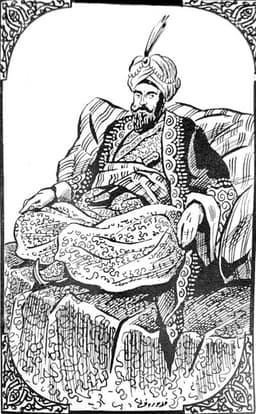
Al-Rashid
Emperor · Medieval
37.7Total

Julius Caesar
General · Ancient
82.8Total
Basic Information
Born
1109
-100
Died
1138
-44
Era
Medieval
Ancient
Nationality
Abbasid Caliphate
Roman Republic
Occupation
Emperor
General
Civilization
Middle Eastern
Western
Score Comparison
Military (10%)
20.0
88.0
Political (20%)
32.1
78.0
Influence (20%)
45.5
85.0
Legacy (20%)
33.3
82.0
Leadership (15%)
44.5
80.0
Strategy (15%)
45.0
85.0
TOTAL
37.7
82.8
Al-Rashid — Complete Timeline
1136 AD
Deposition by SeljuksPolitical Action◆ Major
Caliph Al-Rashid was deposed by the Seljuk Sultan Mas'ud after only one year of rule. The sultan accused him of incompetence and replaced him with his uncle, Al-Muqtafi. Al-Rashid fled to Isfahan.
DepositionSeljuk InterventionCaliphal Crisis
Impact: regionaldestructive
1138 AD
Death in ExileOther
Al-Rashid died in Isfahan under mysterious circumstances, possibly assassinated by Seljuk agents. His brief reign and violent end illustrated the complete subordination of the caliphate to Seljuk power.
ExileDeathSeljuk Era
tragic
Julius Caesar — Complete Timeline
58 BC
Gallic WarsWar◆ Major
Caesar, as proconsul of Gaul, launched a series of campaigns that conquered all of Gaul (modern France, Belgium, and parts of Switzerland). He fought numerous battles, including against the Helvetii, the Belgae, and the Gallic chieftain Vercingetorix. The wars brought immense wealth and a loyal army to Caesar.
Gallic WarsConquestRoman Expansion
Impact: regional
49 BC
Crossing the RubiconPolitical Action◆ Major
Caesar led Legio XIII across the Rubicon River into Italy, defying the Roman Senate's order to disband his army. This act triggered a civil war against Pompey and the Optimates, ultimately leading to Caesar's dictatorship and the end of the Roman Republic.
Roman Civil WarEnd of RepublicPower Struggle
Impact: global
48 BC
Battle of PharsalusWar◆ Major
Caesar's outnumbered army defeated the larger forces of Pompey the Great at Pharsalus in Greece. Caesar's tactical use of a reserve line to counter Pompey's cavalry charge proved decisive. Pompey fled to Egypt, where he was assassinated, leaving Caesar as the undisputed master of the Roman world.
Roman Civil WarBattleDecisive Victory
Impact: regional
44 BC
Appointment as Dictator for LifePolitical Action◆ Major
The Roman Senate appointed Caesar dictator perpetuo (dictator for life), granting him unprecedented personal power. This move concentrated military, legislative, and judicial authority in one person, effectively ending the Roman Republic's traditional system of checks and balances and alarming many senators.
DictatorshipEnd of RepublicPower Consolidation
Impact: regionaldestructive
Assassination on the Ides of MarchPolitical Action◆ Major
A group of Roman senators, led by Marcus Junius Brutus and Gaius Cassius Longinus, stabbed Caesar to death at a meeting of the Senate in the Theatre of Pompey. The assassination was intended to restore the Republic, but instead triggered another civil war that led to the rise of the Roman Empire.
AssassinationRoman PoliticsEnd of Republic
Impact: globaldestructive
Expert Analysis
al-rashid-vs-julius-caesar
# The Shortest Candle and the Eternal Flame
On a winter morning in 44 BCE, a dictator for life walked into the Senate chamber, his toga already stained with the blood of history. Across the centuries, in 1138, a deposed caliph died in exile in Isfahan, his brief flame extinguished by unseen hands. Two rulers, both born to power, both destined for radically different fates. One shaped the Western world for two millennia; the other vanished so completely that his name survives only in scholarly footnotes. What separates a legend from a ghost?
Origins
Julius Caesar was born into the patrician Julian clan during the twilight of the Roman Republic, a world of civil wars, senatorial intrigue, and crumbling traditions. His family claimed descent from the goddess Venus, but their political influence had waned. Caesar’s childhood was marked by the Social War and the dictatorship of Sulla, events that taught him the brutal arithmetic of power: loyalty is temporary, ambition is permanent.
Al-Rashid, by contrast, inherited a dying empire. Born in 1109, he ascended to the Abbasid caliphate in 1135, a title that once commanded the allegiance of the Islamic world from Spain to Persia. By his time, the caliphs were puppets, their spiritual authority hollowed out by Seljuk sultans who held the real swords. His father, al-Mustarshid, had been murdered by Seljuk agents. Al-Rashid inherited not a throne but a trap.
Rise to Power
Caesar’s path was forged through debt, exile, and audacity. He fled Rome to avoid Sulla’s proscriptions, served as a military tribune in Asia, and returned to climb the political ladder—quaestor, aedile, pontifex maximus. His alliance with Pompey and Crassus in the First Triumvirate was a masterpiece of political engineering. But it was his conquest of Gaul from 58 to 50 BCE that transformed him from a clever politician into a military legend. He crossed the Rubicon in 49 BCE, a river that became the boundary between republic and empire, and defeated Pompey at Pharsalus. By 44 BCE, he was dictator perpetuo—dictator for life.
Al-Rashid’s rise was a formality. He became caliph at age twenty-six, inheriting a title that the Seljuk sultan Mas'ud had already decided to control. There was no crossing of rivers, no triumphant campaigns. His brief reign lasted only one year, from 1135 to 1136. The Seljuk sultan accused him of incompetence—a charge that may have been true, but also convenient. Al-Rashid was deposed without a battle, his authority evaporating like morning mist.
Leadership & Governance
Caesar governed as a revolutionary reformer. He restructured the Roman calendar, introduced land reforms for veterans, extended citizenship to provincials, and centralized the bureaucracy. His military genius lay in speed and decisiveness: the siege of Alesia, the rapid campaigns in Spain and Egypt, the ruthless efficiency of his legions. He understood that power in Rome required spectacle—triumphs, games, statues—but also substance. His political score of 78 reflects a man who could manipulate the Senate but could not entirely erase its resentment.
Al-Rashid, with a political score of 35 and a military score of 37, governed in name only. The Seljuks controlled the army, the treasury, and the bureaucracy. He had no legions to command, no reforms to implement. His strategy score of 60 suggests some tactical awareness, but he lacked the platform to deploy it. In one year, he could not even secure his own safety.
Triumph & Tragedy
Caesar’s greatest triumph was the conquest of Gaul, which added a vast province to Rome and made him the most powerful man in the Republic. His tragedy came on the Ides of March, 44 BCE, when sixty senators, including his protégé Brutus, stabbed him to death. His last words—"Et tu, Brute?"—echo through history as the ultimate betrayal.
Al-Rashid’s only notable event was his deposition. After being ousted by Sultan Mas'ud, he fled to Isfahan, where he died in 1138 under mysterious circumstances, likely assassinated by Seljuk agents. His tragedy was not a dramatic fall but a quiet extinguishing. He had no loyal legions, no devoted followers, no legend to outlive him.
Character & Destiny
Caesar was audacious, calculating, and supremely confident. He pardoned his enemies, which made him seem magnanimous but also allowed them to plot his murder. His personality—the gambler who always doubled down—drove him to cross the Rubicon, to accept the dictatorship, to ignore the warnings of soothsayers. He believed his luck was infinite.
Al-Rashid appears as a cipher. His brief rule suggests either incompetence or helplessness; his death in exile suggests a man who could not adapt to a world where the caliphate was a shadow. He was born into a role that no longer held power, and he lacked the ruthlessness or the opportunity to reclaim it.
Legacy
Caesar’s legacy is immeasurable. His name became synonymous with autocracy—Kaiser and Tsar derive from it. His reforms laid the groundwork for the Roman Empire, which shaped Western law, language, and governance. His writings, especially the *Commentarii de Bello Gallico*, remain studied for their military insights and Latin prose. With an influence score of 85 and a legacy score of 82, he is one of the most studied figures in history.
Al-Rashid’s legacy is a footnote. With a legacy score of 41.7, he is remembered only by specialists of the Abbasid decline. He represents the fragility of inherited power, the moment when a dynasty becomes a decoration. His caliphate was a title without teeth, a crown without a kingdom.
Conclusion
Two rulers, two destinies. Caesar died at the height of his power, his blood soaking the Senate floor, and became immortal. Al-Rashid died in obscurity, a forgotten prince in a foreign city, and became nothing. The difference lies not in birth but in the ability to seize history by the throat. Caesar understood that power must be taken, not inherited. Al-Rashid learned that a throne without an army is just a chair.
In the end, the Ides of March were more merciful than the silence of Isfahan.
Rankings
🥇
Julius CaesarLeader
Mil: 88.0Pol: 78.0Inf: 85.0
82.8
🥈
Al-Rashid
Mil: 20.0Pol: 32.1Inf: 45.5
37.7
+45.1 behind
How This Comparison Works
Algorithm
Each figure is scored on 6 dimensions (0—100 scale) based on structured historical data: Military (10%), Political (20%), Influence (20%), Legacy (20%), Leadership (15%), Strategy (15%). The weighted total produces the final ranking.
Data Sources
Scores are computed from structured sub-indicators in the database. Scale factors adjust for era (Ancient ×0.85, Modern ×1.0) and civilization size (Eastern ×1.05, Other ×0.80) to account for differences in population and military scale.
Maximum 3 Figures
Comparisons are limited to 2—3 figures to ensure readability and statistical meaningfulness.
Error Margins
±5 points per dimension — Sub-scores are derived from historical records with inherent uncertainty. Two figures within 5 points on a dimension should be considered roughly equivalent in that area.
Total Score Accuracy
±3 points overall — The weighted combination of 6 dimensions produces a total score with approximately ±3 points of uncertainty. Differences of less than 3 points are not statistically significant— the figures are effectively tied.
Known Limitations
- Historical records are incomplete and uneven across civilizations
- Figures from oral-tradition societies may be underrepresented
- Occupation labels can misclassify multi-role figures
- Scores measure capability and impact, not moral character
- Quantitative scoring is a comparison tool, not absolute truth
Capability Radar
Military (10%) — Battles & Warfare
Battles
5
95
Win Rate
5
92
Expansion
5
97
Political (20%) — Governance & Reform
Reform
10
90
Diplomacy
10
85
Economy
10
82
Influence (20%) — Cultural & Global Reach
Cultural
5
88
Global
5
94
Legacy (20%) — Historical Impact
Historical
5
95
Longevity
5
96
Leadership (15%) — Power & Stability
Tenure
10
75
Stability
10
60
Strategy (15%) — Tactics & Innovation
Strategy
5
94
Tactics
5
96
Reform
5
88
Similar Comparisons
Comments & Discussion
月下刀笔吏6/17/2026
拿恺撒跟拉希德比,简直是用罗马的火把去照阿拔斯的残烛。拉希德在位不到两年就被塞尔柱人废黜流放,连个像样的战役都没打过;恺撒在十年内征服高卢、击败庞培、改革日历,哪怕被刺杀后还掀起了罗马内战。一个是被历史遗忘的傀儡,一个是重塑世界的引擎。别跟我扯什么“尊严”——拉希德连反抗的机会都没有,而恺撒的每一个决策都在教科书里留下烙印。
Numismatic Nomad6/17/2026
Let’s ground this in coinage: Caesar’s portrait on denarii in 44 BCE made him the first living Roman to appear on currency—a seismic shift in propaganda. Al-Rashid’s coins are so rare they’re barely catalogued, with only a handful of Abbasid dinars from his reign surviving. That’s not just obscurity; it’s a physical testament to irrelevance. Caesar minted his immortality; al-Rashid couldn’t even mint a legacy. One man controlled the metals, the other was melted down by history.
风蚀的羊皮纸6/17/2026
你们都在吹恺撒的“永恒”,可别忘了,他的名声建立在罗马帝国的崩溃和拜占庭的歪曲上。拉希德的早逝恰恰是阿拔斯王朝垂死挣扎的缩影——他被塞尔柱人像提线木偶一样操纵,死后连正统史书都懒得记载。相比之下,恺撒至少留下《高卢战记》和《内战记》自己吹嘘。但历史是胜利者的合唱,拉希德输在没活到写自传。别把他的沉默当作平庸。
The Closet Revisionist6/17/2026
Here’s the uncomfortable truth: Caesar’s "greatness" is a Victorian invention, pumped up by colonialists who needed a classical model for empire. Compare him to al-Rashid, who faced an imploding caliphate with Seljuk knives at his throat, and you see two responses to decay—Caesar bulldozed his way up, al-Rashid got crushed. But is bulldozing really superior? Al-Rashid’s obscurity
Historian4386/17/2026
Caesar wasn’t some god of war; he was a hyper-competent gambler who exploited a crumbling system. His Gallic Wars weren’t noble conquests but genocidal cash grabs—one million Gauls dead, another million enslaved. That’s not strategy, that’s industrial-scale murder. Calling him "eternal" ignores the blood-soaked ledger. Al-Rashid at least died with dignity, a footnote because he refused to bow to Seljuk butchers. Caesar’s legacy is a tyrant’s PR campaign, polished by centuries of Western bias.