Loading...
Al-Mustamsik of Cairo vs Al-Rashid
Al-Mustamsik of Cairo leads by 6.1 pts · 2 figures compared
…

Al-Mustamsik of Cairo
Emperor · Medieval
43.8Total
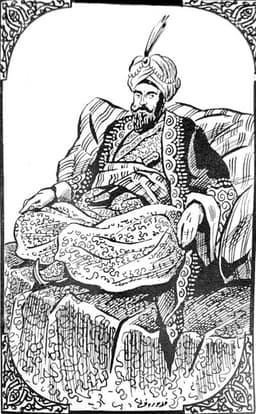
Al-Rashid
Emperor · Medieval
37.7Total
Basic Information
Born
1460
1109
Died
1521
1138
Era
Medieval
Medieval
Nationality
Abbasid Caliphate
Abbasid Caliphate
Occupation
Emperor
Emperor
Civilization
Middle Eastern
Middle Eastern
Score Comparison
Military (10%)
32.3
20.0
Political (20%)
39.4
32.1
Influence (20%)
45.5
45.5
Legacy (20%)
35.8
33.3
Leadership (15%)
55.3
44.5
Strategy (15%)
60.0
45.0
TOTAL
43.8
37.7
Al-Mustamsik of Cairo — Complete Timeline
1497 AD
Accession as CaliphPolitical Action
Al-Mustamsik became caliph after the death of Al-Mutawakkil II. His reign occurred during the final decades of the Mamluk Sultanate, a period of decline and external threats.
Caliphal SuccessionMamluk Decline
1516 AD
Abdication in Favor of SonPolitical Action◆ Major
Al-Mustamsik abdicated the caliphate in favor of his son Al-Mutawakkil III. This was likely done to ensure a smooth succession, but it occurred on the eve of the Ottoman conquest of Egypt.
AbdicationSuccession
Al-Rashid — Complete Timeline
1136 AD
Deposition by SeljuksPolitical Action◆ Major
Caliph Al-Rashid was deposed by the Seljuk Sultan Mas'ud after only one year of rule. The sultan accused him of incompetence and replaced him with his uncle, Al-Muqtafi. Al-Rashid fled to Isfahan.
DepositionSeljuk InterventionCaliphal Crisis
Impact: regionaldestructive
1138 AD
Death in ExileOther
Al-Rashid died in Isfahan under mysterious circumstances, possibly assassinated by Seljuk agents. His brief reign and violent end illustrated the complete subordination of the caliphate to Seljuk power.
ExileDeathSeljuk Era
tragic
Expert Analysis
Origins
Al-Mustamsik (full name: Al-Mustamsik Billah Abu al-Saadat al-Mutawakkil) was born around 1450 in Cairo, Egypt, into the Abbasid caliphate that had been reestablished under Mamluk protection since 1261. His father was Caliph Al-Mutawakkil II, and his family had held the caliphal title for several generations, though real power lay with the Mamluk sultans. Al-Mustamsik received a traditional Islamic education in Cairo, focusing on jurisprudence and theology, but had no military training. His upbringing was within the confines of the citadel, isolated from political decision-making.
Al-Rashid (full name: Al-Rashid Billah Abu Ja'far al-Mansur) was born in 1109 in Baghdad, the Abbasid capital, into a caliphal family that still exercised some temporal authority under Seljuk suzerainty. His father was Caliph Al-Mustarshid, who had been killed in 1135 during a revolt against the Seljuks. Al-Rashid's early life was marked by the violent power struggles between the Abbasid caliphs and the Seljuk sultans. He was educated in the palace, learning administration and religious sciences, but also witnessed the fragility of caliphal power.
Rise to Power
Al-Mustamsik ascended to the caliphate in 1497 upon the death of his father, Al-Mutawakkil II. At that time, the Mamluk Sultanate was in decline, facing threats from the Ottoman Empire and internal strife. Al-Mustamsik's accession was a routine ceremony performed by the Mamluk sultan, who continued to hold all real authority. Al-Mustamsik's role was largely ceremonial, presiding over religious functions and legitimizing Mamluk rule. His most notable act was abdicating in favor of his son, Al-Mutawakkil III, in 1508, likely to ensure a smooth succession amid Mamluk instability.
Al-Rashid became caliph in 1135 after the death of his father Al-Mustarshid, who was killed by the Seljuks. Al-Rashid was only 26 years old and immediately faced the dominance of the Seljuk Sultan Mas'ud. He attempted to assert caliphal independence by refusing to grant Mas'ud the title of sultan, leading to conflict. His reign lasted only one year before Mas'ud deposed him in 1136, accusing him of incompetence. Al-Rashid fled to Isfahan, where he died under mysterious circumstances, possibly assassinated, in 1138.
Leadership & Governance
Al-Mustamsik's leadership was passive and ceremonial. He scored 55.3 in leadership and 60.0 in strategy, reflecting his ability to navigate the Mamluk court without provoking conflict. He made no major reforms or military campaigns. His governance was limited to signing decrees prepared by the Mamluk sultan and leading Friday prayers. He maintained the caliphate's religious prestige but had no political influence.
Al-Rashid attempted to actively challenge Seljuk authority. He scored 44.5 in leadership and 45.0 in strategy, lower than Al-Mustamsik due to his failed confrontations. He tried to rally support from local governors and the populace, but lacked military resources. His governance was marked by defiance, but he was unable to build a coalition strong enough to counter the Seljuks. His deposition demonstrated the limits of caliphal power when confronted by a determined sultan.
Triumph & Tragedy
Al-Mustamsik's greatest success was his peaceful abdication, which allowed his son to succeed without bloodshed. He maintained the caliphate's symbolic continuity during a period of Mamluk decline. His tragedy was his irrelevance: he ruled during the final decades of the Mamluk Sultanate, which fell to the Ottomans in 1517. His son Al-Mutawakkil III was captured by the Ottomans, ending the Abbasid line in Cairo.
Al-Rashid's triumph was his short-lived defiance against the Seljuks, inspiring later caliphs to resist Turkish dominance. He attempted to restore caliphal authority, even if unsuccessfully. His tragedy was his violent deposition and death in exile, exemplifying the vulnerability of caliphs who challenged their overlords. His reign highlighted the complete subjugation of the caliphate to military power.
Character & Destiny
Al-Mustamsik was cautious and compliant, prioritizing survival over action. His character was shaped by the Mamluk system that reduced caliphs to figureheads. He accepted his limited role and avoided confrontation. Historical assessments view him as a placid placeholder, scoring 45.5 in influence but with little lasting impact.
Al-Rashid was ambitious and confrontational, unwilling to accept subordination. His character led him to challenge the Seljuks, but his lack of political acumen and military support sealed his fate. Historians describe him as brave but foolhardy. His destiny was shaped by the harsh realities of medieval power politics, where the caliphate had become a pawn.
Legacy
Al-Mustamsik's legacy is minimal. He is remembered as the penultimate Abbasid caliph in Cairo, a transitional figure. His abdication set the stage for his son's capture by the Ottomans. The Abbasid caliphate under the Mamluks continued to provide religious legitimacy, but Al-Mustamsik contributed nothing to its evolution.
Al-Rashid's legacy is also limited, but his brief resistance became a symbol of caliphal defiance. His deposition demonstrated the Seljuk policy of controlling the caliphate, which continued until the Abbasid revival under Al-Muqtafi. He is often mentioned in histories of the Abbasid decline, scoring 33.3 in legacy.
Conclusion
Al-Mustamsik scored higher overall (43.8 vs 37.7) due to his longer reign and peaceful transition, but neither caliph had significant impact. Al-Mustamsik's passive leadership preserved the caliphate's symbolic role, while Al-Rashid's active resistance failed. In terms of historical influence, Al-Mustamsik's longer tenure and strategic abdication give him a slight edge. However, both were minor figures in the Abbasid decline, overshadowed by the Mamluks and Seljuks. The greater impact belongs to Al-Mustamsik, as he maintained the caliphal line for another decade, but the difference is marginal.
Rankings
🥇
Al-Mustamsik of CairoLeader
Mil: 32.3Pol: 39.4Inf: 45.5
43.8
🥈
Al-Rashid
Mil: 20.0Pol: 32.1Inf: 45.5
37.7
+6.1 behind
How This Comparison Works
Algorithm
Each figure is scored on 6 dimensions (0—100 scale) based on structured historical data: Military (10%), Political (20%), Influence (20%), Legacy (20%), Leadership (15%), Strategy (15%). The weighted total produces the final ranking.
Data Sources
Scores are computed from structured sub-indicators in the database. Scale factors adjust for era (Ancient ×0.85, Modern ×1.0) and civilization size (Eastern ×1.05, Other ×0.80) to account for differences in population and military scale.
Maximum 3 Figures
Comparisons are limited to 2—3 figures to ensure readability and statistical meaningfulness.
Error Margins
±5 points per dimension — Sub-scores are derived from historical records with inherent uncertainty. Two figures within 5 points on a dimension should be considered roughly equivalent in that area.
Total Score Accuracy
±3 points overall — The weighted combination of 6 dimensions produces a total score with approximately ±3 points of uncertainty. Differences of less than 3 points are not statistically significant— the figures are effectively tied.
Known Limitations
- Historical records are incomplete and uneven across civilizations
- Figures from oral-tradition societies may be underrepresented
- Occupation labels can misclassify multi-role figures
- Scores measure capability and impact, not moral character
- Quantitative scoring is a comparison tool, not absolute truth
Capability Radar
Military (10%) — Battles & Warfare
Battles
30
5
Win Rate
37
5
Expansion
37
5
Political (20%) — Governance & Reform
Reform
0
10
Diplomacy
5
10
Economy
0
10
Influence (20%) — Cultural & Global Reach
Cultural
5
5
Global
5
5
Legacy (20%) — Historical Impact
Historical
10
5
Longevity
5
5
Leadership (15%) — Power & Stability
Tenure
5
10
Stability
5
10
Strategy (15%) — Tactics & Innovation
Strategy
39
5
Tactics
41
5
Reform
45
5
Similar Comparisons
Comments & Discussion
No comments yet. Be the first to share your thoughts!