Loading...
Al-Qaim vs Fruzhin
Fruzhin leads by 4.2 pts · 2 figures compared
…

Al-Qaim
Emperor · Medieval
37.6Total
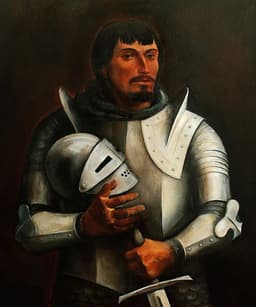
Fruzhin
Emperor · Medieval
41.8Total
Basic Information
Born
1001
1380
Died
1075
1460
Era
Medieval
Medieval
Nationality
Abbasid Caliphate
Bulgaria
Occupation
Emperor
Emperor
Civilization
Middle Eastern
Western
Score Comparison
Military (10%)
10.2
50.0
Political (20%)
32.1
29.3
Influence (20%)
47.1
49.4
Legacy (20%)
37.5
39.2
Leadership (15%)
44.5
39.0
Strategy (15%)
39.6
43.7
TOTAL
37.6
41.8
Al-Qaim — Complete Timeline
1055 AD
Seljuk Entry into BaghdadPolitical Action
Seljuk Sultan Tughril entered Baghdad and was received by Caliph Al-Qaim. Tughril expelled the Buyid emirs and was granted the title 'Sultan', marking the beginning of Seljuk dominance over the Abbasid caliphate.
Seljuk TakeoverBuyid FallPower Shift
Impact: regional
1058 AD
Conflict with Al-BasasiriWar◆ Major
The Fatimid-backed general Al-Basasiri captured Baghdad and forced Caliph Al-Qaim to flee. Al-Basasiri had the khutba read in the name of the Fatimid caliph. The Seljuks recaptured Baghdad in 1059 and restored Al-Qaim.
Civil WarFatimid InterventionBaghdad
Impact: regionaldestructive
1063 AD
Marriage of Al-Qaim's Daughter to TughrilPolitical Action◆ Major
Caliph Al-Qaim gave his daughter in marriage to Sultan Tughril, formalizing the alliance between the Abbasid caliphate and the Seljuk Empire. This marriage symbolized the caliph's acceptance of Seljuk suzerainty.
Diplomatic MarriageSeljuk-Abbasid Alliance
Impact: regional
Fruzhin — Complete Timeline
1404 AD
Leadership of the Uprising of Konstantin and FruzhinWar◆ Major
Fruzhin, son of Tsar Ivan Shishman, led an anti-Ottoman uprising in Bulgaria along with his cousin Konstantin. The rebellion aimed to restore the Bulgarian Empire but was ultimately suppressed by the Ottomans.
UprisingOttoman WarsBulgarian Resistance
Impact: regionaltragic
1408 AD
Exile and service in the Kingdom of HungaryPolitical Action
After the failure of the uprising, Fruzhin fled to the Kingdom of Hungary, where he served as a military commander. He participated in campaigns against the Ottoman Empire, seeking to liberate Bulgaria.
ExileHungaryAnti-Ottoman Resistance
Impact: regional
1444 AD
Participation in the Crusade of Varna (1444)War◆ Major
Fruzhin joined the Crusade of Varna, a combined Christian effort to drive the Ottomans from the Balkans. The crusade ended in defeat at the Battle of Varna, where Fruzhin's hopes for Bulgarian liberation were dashed.
CrusadeOttoman WarsBulgarian Resistance
Impact: regionaltragic
Expert Analysis
Origins
Al-Qaim (born 1001 CE) was the 26th Abbasid caliph, ascending to the throne in 1031 CE. He inherited a caliphate already in decline, with real power held by the Buyid dynasty. His early life was shaped by the political machinations of the Buyid emirs, who controlled Baghdad and reduced the caliph to a figurehead. Al-Qaim was educated in the traditional Islamic sciences but had little military or administrative experience. His reign would see the end of Buyid dominance and the rise of a new power: the Seljuk Turks.
Fruzhin (born c. 1380s CE) was a prince of the Bulgarian Shishman dynasty, son of Tsar Ivan Shishman. His early life was marked by the Ottoman conquest of Bulgaria. After the fall of Tarnovo in 1393 and the death of his father in 1395, Fruzhin fled to the Kingdom of Hungary. He grew up in exile, imbued with a desire to restore Bulgarian independence. Unlike Al-Qaim, who inherited a throne, Fruzhin's path was forged in resistance and alliance-building with Christian powers.
Rise to Power
Al-Qaim became caliph at age 30 after the death of his father, Caliph al-Qadir. His early reign was dominated by the Buyid emir Jalal al-Dawla, who kept him under tight control. The turning point came in 1055 when the Seljuk sultan Tughril entered Baghdad at the invitation of Al-Qaim, who sought to free himself from Buyid influence. Tughril expelled the Buyids and was granted the title 'Sultan' by Al-Qaim, marking the first time a secular ruler was officially recognized as such by a caliph. This event scored 32.1 in political for Al-Qaim, as he managed to retain his religious authority while ceding temporal power.
Fruzhin's rise was not to a throne but to leadership of a rebellion. In 1404, along with his cousin Konstantin, he launched the Uprising of Konstantin and Fruzhin, aiming to restore the Bulgarian Empire. The rebellion initially gained ground in northwestern Bulgaria and parts of Serbia. Fruzhin's military score of 50.0 reflects his ability to organize and lead forces, though the uprising was eventually crushed by the Ottomans by 1413. Afterward, Fruzhin continued to fight against the Ottomans, joining the Crusade of Varna in 1444 as a commander. His political score of 29.3 indicates limited success in building lasting alliances.
Leadership & Governance
Al-Qaim's leadership was characterized by survival through accommodation. He accepted the loss of political power to the Seljuks, focusing on maintaining the Abbasid caliphate's religious prestige. He formalized the Seljuk takeover by marrying his daughter to Tughril in 1063, a move that scored 44.5 in leadership for its diplomatic pragmatism. However, this also meant that the caliphate became a puppet of the Seljuks. In 1058, the Fatimid-backed general Al-Basasiri captured Baghdad and forced Al-Qaim to flee, humiliating him. Al-Qaim's governance was reactive, not proactive.
Fruzhin's leadership was that of a rebel prince. He had no territory to govern but instead led armies and sought support from Hungary and Serbia. His strategy score of 43.7 reflects his ability to plan campaigns, but his political score of 29.3 shows he failed to secure lasting international backing. After the failed uprising, he served as a military commander in Hungary, participating in campaigns against the Ottomans. His leadership was more about military action than governance.
Triumph & Tragedy
Al-Qaim's greatest triumph was surviving 44 years as caliph despite the chaos around him. He successfully navigated the transition from Buyid to Seljuk dominance, preserving the Abbasid caliphate's religious role. His legacy score of 37.5 reflects this endurance. His greatest tragedy was the loss of temporal power: after his reign, caliphs became mere figureheads in Baghdad until the Mongol destruction in 1258. The marriage alliance with Tughril failed to prevent future conflicts, and Al-Qaim's flight from Baghdad in 1058 was a low point.
Fruzhin's triumph was leading the first major Bulgarian anti-Ottoman uprising after the conquest. His military score of 50.0 is the highest among his scores, indicating his effectiveness as a commander. The rebellion, though ultimately unsuccessful, inspired later resistance. His tragedy was the failure of the uprising and the subsequent exile. He died in obscurity in Hungary around 1460, never seeing Bulgaria free. His influence score of 49.4 shows that his efforts had symbolic impact, but his legacy score of 39.2 suggests limited tangible achievements.
Character & Destiny
Al-Qaim was a cautious, diplomatic figure. He accepted the reality of his diminished power and worked within constraints. His character allowed him to survive, but it also sealed the caliphate's political irrelevance. Historians often view him as a passive figure who failed to assert authority. His destiny was to be a placeholder between empires.
Fruzhin was a determined, militant prince. He chose resistance over submission, even when odds were against him. His character led him to a life of exile and continued struggle. His destiny was to be a symbol of Bulgarian resistance, but his lack of political acumen and sufficient support doomed his military efforts.
Legacy
Al-Qaim's legacy is the formalization of the sultanate as a secular institution alongside the caliphate. This arrangement influenced Islamic governance for centuries. His total score of 37.6 reflects a modest but important role in Islamic history. Fruzhin's legacy is as a national hero in Bulgarian folklore, representing the fight against Ottoman rule. His total score of 41.8, higher than Al-Qaim's, reflects his greater direct impact on resistance movements, though his ultimate failure limits his legacy.
Conclusion
Fruzhin, with a total score of 41.8 compared to Al-Qaim's 37.6, had a greater impact in terms of military and influence, but Al-Qaim's political maneuvering preserved the caliphate. However, Fruzhin's failure to restore Bulgaria and his exile mean his impact was more symbolic than practical. Al-Qaim's actions shaped the structure of Islamic politics for centuries, while Fruzhin's rebellion did not achieve its goal. Therefore, Al-Qaim had a greater historical impact, as his decisions influenced the relationship between religious and temporal power in the Islamic world, a legacy that outlasted Fruzhin's resistance.
Rankings
🥇
FruzhinLeader
Mil: 50.0Pol: 29.3Inf: 49.4
41.8
🥈
Al-Qaim
Mil: 10.2Pol: 32.1Inf: 47.1
37.6
+4.2 behind
How This Comparison Works
Algorithm
Each figure is scored on 6 dimensions (0—100 scale) based on structured historical data: Military (10%), Political (20%), Influence (20%), Legacy (20%), Leadership (15%), Strategy (15%). The weighted total produces the final ranking.
Data Sources
Scores are computed from structured sub-indicators in the database. Scale factors adjust for era (Ancient ×0.85, Modern ×1.0) and civilization size (Eastern ×1.05, Other ×0.80) to account for differences in population and military scale.
Maximum 3 Figures
Comparisons are limited to 2—3 figures to ensure readability and statistical meaningfulness.
Error Margins
±5 points per dimension — Sub-scores are derived from historical records with inherent uncertainty. Two figures within 5 points on a dimension should be considered roughly equivalent in that area.
Total Score Accuracy
±3 points overall — The weighted combination of 6 dimensions produces a total score with approximately ±3 points of uncertainty. Differences of less than 3 points are not statistically significant— the figures are effectively tied.
Known Limitations
- Historical records are incomplete and uneven across civilizations
- Figures from oral-tradition societies may be underrepresented
- Occupation labels can misclassify multi-role figures
- Scores measure capability and impact, not moral character
- Quantitative scoring is a comparison tool, not absolute truth
Capability Radar
Military (10%) — Battles & Warfare
Battles
10
20
Win Rate
10
15
Expansion
5
10
Political (20%) — Governance & Reform
Reform
10
10
Diplomacy
10
20
Economy
10
10
Influence (20%) — Cultural & Global Reach
Cultural
10
15
Global
10
10
Legacy (20%) — Historical Impact
Historical
15
20
Longevity
10
15
Leadership (15%) — Power & Stability
Tenure
15
15
Stability
5
10
Strategy (15%) — Tactics & Innovation
Strategy
10
20
Tactics
10
25
Reform
5
10
Similar Comparisons
Comments & Discussion
No comments yet. Be the first to share your thoughts!