Loading...
Al-Mutawakkil I of Cairo vs Henry IV of Castile
Henry IV of Castile leads by 0.8 pts · 2 figures compared
…

Al-Mutawakkil I of Cairo
Emperor · Medieval
37.3Total
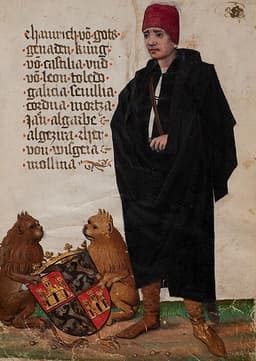
Henry IV of Castile
Emperor · Medieval
38.1Total
Basic Information
Born
1340
1425
Died
1406
1474
Era
Medieval
Medieval
Nationality
Abbasid Caliphate
Castile
Occupation
Emperor
Emperor
Civilization
Middle Eastern
Western
Score Comparison
Military (10%)
20.0
21.2
Political (20%)
30.7
25.0
Influence (20%)
47.1
48.6
Legacy (20%)
37.5
41.7
Leadership (15%)
33.6
38.1
Strategy (15%)
45.0
39.6
TOTAL
37.3
38.1
Al-Mutawakkil I of Cairo — Complete Timeline
1363 AD
First Installation as CaliphPolitical Action◆ Major
Al-Mutawakkil I was installed as caliph by Sultan Al-Ashraf Sha'ban after the deposition of Al-Mutadid I. This began a tumultuous reign marked by multiple depositions and restorations.
Caliphal Installation
1377 AD
First DepositionPolitical Action◆ Major
Al-Mutawakkil I was deposed by Sultan Al-Ashraf Sha'ban, likely due to political intrigue. He was replaced by another Abbasid, but later restored, demonstrating the caliph's precarious position.
DepositionPolitical Instability
destructive
1389 AD
Second Deposition and RestorationPolitical Action◆ Major
Al-Mutawakkil I was deposed again during the rebellion of Mintash against Sultan Barquq. After Barquq's victory, Al-Mutawakkil I was restored to the caliphate, but his authority remained purely ceremonial.
DepositionRestorationMamluk Politics
1406 AD
Final DepositionPolitical Action◆ Major
Al-Mutawakkil I was deposed for a third time by Sultan Faraj. He died in captivity shortly after. His multiple depositions highlight the caliph's role as a pawn in Mamluk power struggles.
DepositionDeathMamluk Control
tragic
Henry IV of Castile — Complete Timeline
1468 AD
Treaty of the Bulls of GuisandoPolitical Action◆ Major
Henry IV of Castile signed the Treaty of the Bulls of Guisando, recognizing his half-sister Isabella as his legitimate heir instead of his daughter Joanna. This agreement was intended to resolve the succession dispute, but Henry later repudiated it, leading to renewed conflict.
Succession crisisIsabella I
Impact: national
1474 AD
War of the Castilian SuccessionWar
After Henry IV's death, a civil war erupted between supporters of his daughter Joanna la Beltraneja and those of his half-sister Isabella. The war involved Portuguese and Aragonese intervention and ended with Isabella's victory, securing her throne and leading to the union of Castile and Aragon.
Civil warSuccession
Impact: nationaldestructive
Loss of the Canary IslandsWar
During the War of the Castilian Succession, Henry IV's forces lost control of the Canary Islands to Portuguese-backed rebels. The islands were later recovered by Isabella I, but the conflict highlighted the weakness of Henry's reign and the erosion of royal authority.
Territorial lossCanary Islands
Impact: regionaldestructive
Expert Analysis
Origins
Al-Mutawakkil I was born in Cairo around 1362 into the Abbasid caliphate's shadow court under Mamluk suzerainty. His father, Al-Mutadid I, had been caliph before him. The Abbasid caliphs in Cairo held no temporal power, serving as religious figureheads legitimizing Mamluk sultans. Al-Mutawakkil likely received education in Islamic jurisprudence and court protocol, preparing him for a ceremonial role.
Henry IV of Castile was born in 1425 in Valladolid, the son of King John II of Castile and Maria of Aragon. He was raised in a court riven by factionalism, with powerful nobles like Álvaro de Luna dominating his father's reign. Henry's childhood was marked by political instability; he was married at age 15 to Blanche of Navarre, but the marriage was annulled due to non-consummation. This early failure contributed to his later epithet "the Impotent."
Rise to Power
Al-Mutawakkil I was first installed as caliph in 1362 by Sultan Al-Ashraf Sha'ban after the deposition of his predecessor, Al-Mutadid I. The caliphate was a pawn in Mamluk politics; sultans used depositions to assert control. Al-Mutawakkil's first deposition came in 1363 when Sha'ban replaced him with another Abbasid, but he was restored later that year. His second deposition occurred in 1377 during the rebellion of Mintash against Sultan Barquq. After Barquq's victory, Al-Mutawakkil was restored to the caliphate in 1378. His third and final deposition came in 1383 under Sultan Faraj, after which he died in captivity. Each deposition reflected the caliph's powerlessness; his score of 30.7 in political acumen underscores his inability to navigate these intrigues.
Henry IV became king of Castile in 1454 upon his father's death. His early reign focused on consolidating power against rebellious nobles. He achieved some success through diplomacy, but his inability to produce an heir—despite two marriages—led to a succession crisis. In 1468, he signed the Treaty of the Bulls of Guisando, recognizing his half-sister Isabella as his legitimate heir over his daughter Joanna la Beltraneja, whose paternity was questioned. This decision, driven by noble pressure, set the stage for war after his death. Henry's political score of 25.0 reflects his weakness in maintaining control.
Leadership & Governance
Al-Mutawakkil's leadership was entirely reactive. As caliph, he performed ceremonial duties—leading prayers, legitimizing sultans—but held no military or administrative power. His score of 33.6 in leadership indicates a figurehead status. During his brief restorations, he likely had no opportunity to implement reforms. The Mamluk sultans dictated all governance, leaving the caliph as a rubber stamp. For instance, when Barquq restored him after Mintash's rebellion, Al-Mutawakkil simply endorsed Barquq's rule.
Henry IV attempted to govern but faced constant noble opposition. He relied on a council of favorites, alienating traditional aristocracy. His military efforts were weak; he scored 21.2 in military, reflecting his failure to suppress rebellions. In 1465, nobles staged a farcical deposition of Henry in effigy, replacing him with his brother Alfonso. Henry defeated Alfonso at the Battle of Olmedo in 1467, but the conflict continued. His governance was marked by indecision and reliance on treaties, like the Guisando agreement, which he later repudiated, further eroding trust.
Triumph & Tragedy
Al-Mutawakkil's greatest triumph was surviving multiple depositions and being restored twice, a testament to his utility as a symbol. His tragedy was his complete lack of agency; he died in captivity, a footnote in Mamluk politics. His influence score of 47.1 reflects the caliphate's symbolic importance, but his personal legacy is minimal.
Henry IV's triumph was his victory at Olmedo and his ability to maintain the throne despite constant rebellion. His tragedy was the succession crisis that erupted after his death, leading to the War of the Castilian Succession (1475-1479). The war involved Portugal and Aragon, ultimately resulting in Isabella's victory and the unification of Spain. Henry's daughter Joanna was marginalized, and his reputation as "the Impotent" endured. His legacy score of 41.7 highlights how his failures shaped Spain's future.
Character & Destiny
Al-Mutawakkil appears as a passive figure, content to be a ceremonial pawn. His multiple restorations suggest he was unthreatening to sultans, who found him useful. His character—pliant and unambitious—led to a life of repeated deposition. He scored 45.0 in strategy, perhaps indicating some skill in survival, but he had no long-term vision.
Henry IV was indecisive and trusting of unreliable advisors. His inability to consummate marriages and produce an heir was a personal and political failure. He alternated between confrontation and appeasement, alienating both nobles and commoners. His character—wavering and weak—directly caused the civil war after his death. He scored 38.1 in leadership, slightly above Al-Mutawakkil, but still low.
Legacy
Al-Mutawakkil's legacy is as a placeholder in the Abbasid caliphate's decline. The caliphate itself ended in 1517 when the Ottomans conquered Cairo, but his individual impact is negligible. He is remembered only by specialists.
Henry IV's legacy is more substantial. His reign's chaos paved the way for Isabella and Ferdinand's consolidation of power, leading to the unification of Spain, the Reconquista's completion, and Columbus's voyages. The War of the Castilian Succession weakened Portugal and strengthened Castile. Henry's failure to control the nobility accelerated the rise of a centralized monarchy under his successors. His overall score of 38.1 slightly exceeds Al-Mutawakkil's 37.3.
Conclusion
While both figures were weak rulers, Henry IV's impact on history is far greater. His succession crisis directly shaped the formation of Spain, a world power for centuries. Al-Mutawakkil's caliphate was a symbolic office with no real power; his depositions were internal Mamluk affairs with no lasting consequences. Henry's score of 38.1 versus Al-Mutawakkil's 37.3 reflects this. Therefore, Henry IV had a greater historical impact, despite his personal failings.
Rankings
🥇
Henry IV of CastileLeader
Mil: 21.2Pol: 25.0Inf: 48.6
38.1
🥈
Al-Mutawakkil I of Cairo
Mil: 20.0Pol: 30.7Inf: 47.1
37.3
+0.8 behind
How This Comparison Works
Algorithm
Each figure is scored on 6 dimensions (0—100 scale) based on structured historical data: Military (10%), Political (20%), Influence (20%), Legacy (20%), Leadership (15%), Strategy (15%). The weighted total produces the final ranking.
Data Sources
Scores are computed from structured sub-indicators in the database. Scale factors adjust for era (Ancient ×0.85, Modern ×1.0) and civilization size (Eastern ×1.05, Other ×0.80) to account for differences in population and military scale.
Maximum 3 Figures
Comparisons are limited to 2—3 figures to ensure readability and statistical meaningfulness.
Error Margins
±5 points per dimension — Sub-scores are derived from historical records with inherent uncertainty. Two figures within 5 points on a dimension should be considered roughly equivalent in that area.
Total Score Accuracy
±3 points overall — The weighted combination of 6 dimensions produces a total score with approximately ±3 points of uncertainty. Differences of less than 3 points are not statistically significant— the figures are effectively tied.
Known Limitations
- Historical records are incomplete and uneven across civilizations
- Figures from oral-tradition societies may be underrepresented
- Occupation labels can misclassify multi-role figures
- Scores measure capability and impact, not moral character
- Quantitative scoring is a comparison tool, not absolute truth
Capability Radar
Military (10%) — Battles & Warfare
Battles
5
15
Win Rate
5
10
Expansion
5
5
Political (20%) — Governance & Reform
Reform
10
20
Diplomacy
15
20
Economy
10
15
Influence (20%) — Cultural & Global Reach
Cultural
10
20
Global
10
10
Legacy (20%) — Historical Impact
Historical
15
30
Longevity
10
20
Leadership (15%) — Power & Stability
Tenure
20
40
Stability
10
5
Strategy (15%) — Tactics & Innovation
Strategy
5
10
Tactics
5
10
Reform
5
5
Similar Comparisons
Comments & Discussion
No comments yet. Be the first to share your thoughts!