Loading...
Al-Mutawakkil I of Cairo vs William of Holland
William of Holland leads by 2.6 pts · 2 figures compared
…

Al-Mutawakkil I of Cairo
Emperor · Medieval
37.3Total
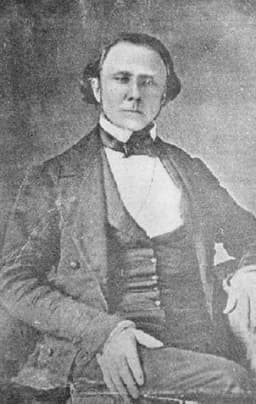
William of Holland
Emperor · Medieval
39.9Total
Basic Information
Born
1340
1227
Died
1406
1256
Era
Medieval
Medieval
Nationality
Abbasid Caliphate
Holy Roman Empire
Occupation
Emperor
Emperor
Civilization
Middle Eastern
Western
Score Comparison
Military (10%)
20.0
50.0
Political (20%)
30.7
30.7
Influence (20%)
47.1
46.3
Legacy (20%)
37.5
36.7
Leadership (15%)
33.6
39.0
Strategy (15%)
45.0
36.8
TOTAL
37.3
39.9
Al-Mutawakkil I of Cairo — Complete Timeline
1363 AD
First Installation as CaliphPolitical Action◆ Major
Al-Mutawakkil I was installed as caliph by Sultan Al-Ashraf Sha'ban after the deposition of Al-Mutadid I. This began a tumultuous reign marked by multiple depositions and restorations.
Caliphal Installation
1377 AD
First DepositionPolitical Action◆ Major
Al-Mutawakkil I was deposed by Sultan Al-Ashraf Sha'ban, likely due to political intrigue. He was replaced by another Abbasid, but later restored, demonstrating the caliph's precarious position.
DepositionPolitical Instability
destructive
1389 AD
Second Deposition and RestorationPolitical Action◆ Major
Al-Mutawakkil I was deposed again during the rebellion of Mintash against Sultan Barquq. After Barquq's victory, Al-Mutawakkil I was restored to the caliphate, but his authority remained purely ceremonial.
DepositionRestorationMamluk Politics
1406 AD
Final DepositionPolitical Action◆ Major
Al-Mutawakkil I was deposed for a third time by Sultan Faraj. He died in captivity shortly after. His multiple depositions highlight the caliph's role as a pawn in Mamluk power struggles.
DepositionDeathMamluk Control
tragic
William of Holland — Complete Timeline
1247 AD
Elected Anti-King of GermanyPolitical Action◆ Major
William of Holland was elected anti-king of Germany by the papal faction opposing Conrad IV. This election was part of the conflict between the Hohenstaufen dynasty and the Papacy, with William serving as a rival claimant to the German throne.
ElectionAnti-kingPapal Conflict
Impact: regional
1248 AD
Crowned King of GermanyPolitical Action◆ Major
William of Holland was crowned King of Germany in Aachen by the Archbishop of Cologne. This coronation solidified his position as the papal-backed rival to Conrad IV, though his authority was limited to parts of western Germany.
CoronationAnti-kingGermany
Impact: regional
1256 AD
Drowned in a Frozen LakeOther◆ Major
William of Holland drowned after falling through ice on a frozen lake near Hoogwoud in the Netherlands. His death ended his reign as anti-king and contributed to the ongoing instability of the Great Interregnum.
DeathAccidentGreat Interregnum
Impact: regionaltragic
Expert Analysis
Origins
Al-Mutawakkil I was born in 1340 into the Abbasid caliphate in Cairo, though the family had lost political power centuries earlier. His father was Caliph Al-Wathiq I, and he grew up in the shadow of Mamluk sultans who used the caliphs as legitimizing figureheads. His formative experiences were shaped by court intrigue and the caliphate's ceremonial role.
William of Holland, born around 1227, was the son of Count Floris IV of Holland and Matilda of Brabant. He grew up in the County of Holland, part of the Holy Roman Empire. His early life was marked by the struggle between the Hohenstaufen and papal factions, setting the stage for his election as anti-king.
Rise to Power
Al-Mutawakkil I's rise came in 1362 when Sultan Al-Ashraf Sha'ban installed him as caliph after deposing Al-Mutadid I. This appointment was purely political, as the sultan sought a compliant religious figure. Al-Mutawakkil I held no military power but provided religious legitimacy.
William of Holland was elected anti-king of Germany in 1247 by the papal faction opposing Conrad IV of Hohenstaufen. He was crowned in Aachen in 1248 by the Archbishop of Cologne. His rise was due to papal backing and his family's territorial influence, not popular support.
Leadership & Governance
Al-Mutawakkil I's governance was minimal; he performed ceremonial duties under Mamluk control. He had no army or treasury. His leadership score of 33.6 reflects his passivity. He was deposed three times (1362, 1377, 1389) and restored twice, showing his powerlessness.
William of Holland's leadership was more active but limited. He had a military score of 50.0, higher than Al-Mutawakkil I's 20.0, but his political score of 30.7 matched the caliph's. He governed parts of Germany with papal support but failed to unify the realm. His governance was marked by constant conflict with Hohenstaufen loyalists.
Triumph & Tragedy
Al-Mutawakkil I's greatest triumph was surviving multiple depositions and being restored twice, a testament to his political adaptability. His tragedy was his complete subservience to the Mamluks; he died in captivity in 1406 after his final deposition by Sultan Faraj.
William of Holland's triumph was being crowned king in Aachen, a symbol of legitimacy. His tragedy occurred in 1256 when he fell through ice on a frozen lake near Hoogwoud and drowned. This anticlimactic death ended his reign and left the anti-king movement leaderless.
Character & Destiny
Al-Mutawakkil I was patient and submissive, traits that allowed him to endure but also condemned him to irrelevance. His strategy score of 45.0 suggests some cunning in navigating court politics, but his total score of 37.3 reflects his limited impact.
William of Holland was ambitious but reckless. His decision to cross a frozen lake in winter proved fatal. His leadership score of 39.0 and strategy score of 36.8 indicate he was not a master planner. His character was shaped by the papal-Hohenstaufen conflict, but he failed to secure lasting power.
Legacy
Al-Mutawakkil I's legacy is as a placeholder caliph, contributing to the decline of the Abbasid institution. His influence score of 47.1 is higher than his military or political scores because the caliphate itself held symbolic weight. His multiple depositions highlight the caliph's powerlessness under Mamluk rule.
William of Holland's legacy is as a failed anti-king. His influence score of 46.3 is similar, but his military actions were more tangible. His death in a frozen lake became a cautionary tale. The anti-king movement he led ended with his death, and the Hohenstaufen line continued until Conradin's execution in 1268.
Conclusion
William of Holland had greater impact than Al-Mutawakkil I, reflected in his total score of 39.9 versus 37.3. While both were largely ineffective, William at least attempted to govern and fought militarily, scoring 50.0 in military versus Al-Mutawakkil I's 20.0. Al-Mutawakkil I's legacy is purely symbolic, whereas William's brief reign contributed to the power struggles that shaped the Holy Roman Empire. The margin is small, but William's active role, however unsuccessful, edges out the caliph's passive existence.
Rankings
🥇
William of HollandLeader
Mil: 50.0Pol: 30.7Inf: 46.3
39.9
🥈
Al-Mutawakkil I of Cairo
Mil: 20.0Pol: 30.7Inf: 47.1
37.3
+2.6 behind
How This Comparison Works
Algorithm
Each figure is scored on 6 dimensions (0—100 scale) based on structured historical data: Military (10%), Political (20%), Influence (20%), Legacy (20%), Leadership (15%), Strategy (15%). The weighted total produces the final ranking.
Data Sources
Scores are computed from structured sub-indicators in the database. Scale factors adjust for era (Ancient ×0.85, Modern ×1.0) and civilization size (Eastern ×1.05, Other ×0.80) to account for differences in population and military scale.
Maximum 3 Figures
Comparisons are limited to 2—3 figures to ensure readability and statistical meaningfulness.
Error Margins
±5 points per dimension — Sub-scores are derived from historical records with inherent uncertainty. Two figures within 5 points on a dimension should be considered roughly equivalent in that area.
Total Score Accuracy
±3 points overall — The weighted combination of 6 dimensions produces a total score with approximately ±3 points of uncertainty. Differences of less than 3 points are not statistically significant— the figures are effectively tied.
Known Limitations
- Historical records are incomplete and uneven across civilizations
- Figures from oral-tradition societies may be underrepresented
- Occupation labels can misclassify multi-role figures
- Scores measure capability and impact, not moral character
- Quantitative scoring is a comparison tool, not absolute truth
Capability Radar
Military (10%) — Battles & Warfare
Battles
5
15
Win Rate
5
20
Expansion
5
10
Political (20%) — Governance & Reform
Reform
10
10
Diplomacy
15
15
Economy
10
10
Influence (20%) — Cultural & Global Reach
Cultural
10
10
Global
10
5
Legacy (20%) — Historical Impact
Historical
15
15
Longevity
10
5
Leadership (15%) — Power & Stability
Tenure
20
20
Stability
10
5
Strategy (15%) — Tactics & Innovation
Strategy
5
15
Tactics
5
10
Reform
5
5
Similar Comparisons
Comments & Discussion
No comments yet. Be the first to share your thoughts!