Loading...
Al-Mustansir vs Wu Zetian
Wu Zetian leads by 14.4 pts · 2 figures compared
…
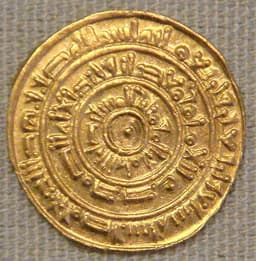
Al-Mustansir
Emperor · Medieval
55.6Total

Wu Zetian
Emperor · Medieval
70.0Total
Basic Information
Born
1192
624
Died
1242
705
Era
Medieval
Medieval
Nationality
Abbasid Caliphate
China
Occupation
Emperor
Emperor
Civilization
Middle Eastern
Eastern
Score Comparison
Military (10%)
20.0
60.0
Political (20%)
68.0
62.7
Influence (20%)
55.0
65.0
Legacy (20%)
58.0
80.0
Leadership (15%)
71.0
78.0
Strategy (15%)
45.0
66.3
TOTAL
55.6
70.0
Al-Mustansir — Complete Timeline
1227 AD
Foundation of the Mustansiriya MadrasaCultural◆ Major
Al-Mustansir established the Mustansiriya Madrasa in Baghdad, a major educational institution that taught Islamic law, medicine, mathematics, and literature. It became one of the most prominent centers of learning in the medieval Islamic world, operating for centuries.
Impact: regionalconstructive
Wu Zetian — Complete Timeline
655 AD
Became Empress ConsortPolitical Action◆ Major
Wu Zetian was elevated from concubine to empress consort of Emperor Gaozong of Tang in 655. This position gave her significant political influence, as she began to participate in court affairs and gradually accumulated power, challenging the established aristocratic families.
Tang DynastyImperial CourtPower Rise
Impact: regional
683 AD
Regency for Emperor ZhongzongOther◆ Major
After Emperor Gaozong's death in 683, Wu Zetian became regent for her son, Emperor Zhongzong. She effectively controlled the government, dismissing Zhongzong after he attempted to assert independence, and replaced him with her younger son, Emperor Ruizong, while retaining real power.
Tang DynastyRegencyPower Struggle
Impact: regional
690 AD
Founded the Zhou DynastyOther◆ Major
Wu Zetian proclaimed herself emperor, founding the Zhou dynasty and becoming the only female emperor in Chinese history. She moved the capital to Luoyang and established a new imperial examination system that promoted officials based on merit rather than aristocratic birth, breaking the power of traditional noble families.
Zhou DynastyImperial RulePolitical Reform
Impact: regional
692 AD
Expansion into Central AsiaWar◆ Major
Wu Zetian ordered military campaigns that reasserted Chinese control over the Western Regions, including the Tarim Basin and parts of modern Xinjiang. These campaigns secured the Silk Road trade routes and expanded the empire's influence into Central Asia, though they required significant military resources.
Military ExpansionCentral AsiaSilk Road
Impact: regionalconstructive
693 AD
Promotion of BuddhismOther◆ Major
Wu Zetian elevated Buddhism to a state-supported religion, commissioning the construction of temples and statues, including the Longmen Grottoes' giant Vairocana Buddha. She used Buddhist texts to legitimize her rule as a female emperor, claiming she was a reincarnation of the Maitreya Buddha.
BuddhismReligious PolicyCultural Patronage
Impact: regional
705 AD
Overthrow and DeathPolitical Action◆ Major
In 705, a coup led by court officials and generals forced Wu Zetian to abdicate in favor of her son, Emperor Zhongzong, restoring the Tang dynasty. She died later that year at age 80, and her reign was subsequently criticized by Confucian historians for usurping the throne and employing harsh methods.
Tang DynastyCoupAbdication
Impact: regionaldestructive
Expert Analysis
Al-Mustansir vs Wu Zetian
The Weight of a Crown
In the year 690, a woman in her late sixties ascended a golden throne in Luoyang, declaring herself emperor of a new dynasty. Half a world away, in Baghdad, a young caliph named Al-Mustansir took power in 1226, inheriting a caliphate that was a shadow of its former glory. Both ruled in the medieval era, both wore the title of sovereign, yet their paths could not have diverged more sharply. Wu Zetian broke every rule of Confucian patriarchy to become China’s only female emperor, while Al-Mustansir, born into the sacred lineage of the Prophet, spent his reign building a school. What drove these two rulers to such different destinies? The answer lies not in their ambitions, but in the worlds that shaped them.
Origins
Wu Zetian was born in 624 into a family of modest official rank. Her father was a timber merchant turned bureaucrat, her mother a devout Buddhist. China under the Tang dynasty was a golden age of openness and cultural exchange, but for women, the ceiling was iron. Wu entered the imperial harem at fourteen as a concubine of Emperor Taizong. She was intelligent, literate, and ruthless—qualities that would either kill her or crown her. When Taizong died, she was sent to a Buddhist convent, as custom demanded. But she had already caught the eye of his son, Gaozong, and within years she was back in the palace, this time as his consort. Her rise was a masterclass in survival: she eliminated rivals, including her own infant daughter, according to historical accounts, and manipulated court factions until she became empress in 655.
Al-Mustansir was born in 1192 in Baghdad, the heart of the Abbasid Caliphate. His lineage was impeccable—a direct descendant of the Prophet Muhammad’s uncle, al-Abbas. But the caliphate he inherited was a hollow vessel. For centuries, the Abbasids had been figureheads, their real power stripped by Turkish military slaves (Mamluks) and, more recently, by the Seljuk Turks. By the time Al-Mustansir became caliph in 1226, Baghdad was a city of scholars and poets, but its armies were weak, its treasury drained, and its borders threatened by the Mongols gathering in the east. Unlike Wu, who fought her way from the bottom, Al-Mustansir was born into a throne that was already crumbling.
Rise to Power
Wu Zetian’s path to supreme power was a decade-long coup. After Emperor Gaozong suffered a stroke in 660, she ruled from behind the throne, issuing edicts and appointing officials. She purged the aristocracy, replacing them with men of talent from humble backgrounds—a radical move that broke the monopoly of the great clans. When Gaozong died in 683, she ruled as regent for her sons, then deposed them. In 690, she formally declared herself emperor, founding the Zhou dynasty. Her rise was not a gift; it was a conquest.
Al-Mustansir’s rise was a formality. He became caliph at thirty-four, following the death of his father, al-Zahir. There was no struggle, no intrigue—just a peaceful succession. But the peace was deceptive. The caliph’s authority was spiritual, not temporal. Real power in Baghdad lay with the viziers and military commanders, many of them Sunni Turks who viewed the caliph as a ceremonial relic. Al-Mustansir could issue fatwas and bless armies, but he could not command them. His rise was a prison of tradition.
Leadership & Governance
Wu Zetian governed with an iron fist and a sharp mind. She expanded China’s borders into Central Korea and the Tarim Basin, though her military score of 62.0 reflects mixed results: some campaigns succeeded, others faltered. Her true genius was political—she scored 80.0 in that category. She established a secret police network to root out dissent, but also reformed the civil service exams to admit commoners, creating a meritocracy that outlasted her dynasty. She promoted scholars like Di Renjie, who became legendary for wisdom. Her leadership was autocratic, but effective: the empire grew wealthier, the bureaucracy more efficient.
Al-Mustansir governed differently. With a political score of 66.6 and a military score of just 37.0, he was no warrior. Instead, he turned to culture. In 1227, he founded the Mustansiriya Madrasa in Baghdad, a sprawling institution that taught Islamic law, medicine, mathematics, and literature. It was one of the first universities in the world, with a library of 80,000 volumes and free tuition for students. This was his legacy—a school, not an empire. While Wu expanded territory, Al-Mustansir expanded minds. But his governance was reactive, not proactive. He could not reform the military or curb the power of the viziers. His caliphate was a candle in a storm.
Triumph & Tragedy
Wu Zetian’s greatest triumph was her mere survival and success. She ruled for fifteen years as emperor, defying every norm of her era. She patronized Buddhism, commissioning the Longmen Grottoes’ giant Buddha statue, and she fostered a golden age of poetry and art. Her tragedy came in her final years. In 705, at age eighty-one, she fell ill. Her own ministers, led by Zhang Jianzhi, staged a coup, restoring the Tang dynasty and forcing her to abdicate. She died months later, a lonely figure in a palace that had once been hers. Her dynasty, the Zhou, vanished with her.
Al-Mustansir’s triumph was the Mustansiriya, which became a beacon of learning in the Islamic world. His tragedy was the future he could not prevent. In 1258, sixteen years after his death, the Mongols under Hulagu Khan sacked Baghdad. The Mustansiriya was burned, its books thrown into the Tigris River, which ran black with ink. The caliphate was destroyed. Al-Mustansir had built a school, but he could not build an army to defend it.
Character & Destiny
Wu Zetian was ambitious, paranoid, and brilliant. She trusted no one, which is why she survived. Her character was forged in the crucible of a harem, where one misstep meant death. She made decisions based on cold calculation, not sentiment. This pragmatism allowed her to break the glass ceiling, but it also isolated her. She had no allies, only subjects. Her destiny was to be a singularity—a woman who ruled as emperor, but whose legacy was so threatening that later historians vilified her as a usurper.
Al-Mustansir was pious, scholarly, and cautious. He seems to have understood the limits of his power. A political score of 66.6 suggests he was competent, not revolutionary. He chose to build a madrasa because it was within his reach—a lasting monument to faith and knowledge. His character was that of a caretaker, not a conqueror. His destiny was to be a footnote, a caliph who built a school while the world burned around him.
Legacy
Wu Zetian’s legacy is paradoxical. She is remembered as both a ruthless tyrant and a visionary ruler. Her political reforms—merit-based exams, promotion of commoners—shaped Chinese governance for centuries. Her influence score of 70.9 and legacy score of 85.0 reflect her enduring impact. Yet she remains controversial: a woman who dared to rule, and was punished for it by history.
Al-Mustansir’s legacy is the Mustansiriya. It became a model for later madrasas across the Islamic world, from Cairo to Isfahan. His legacy score of 68.5 and influence of 72.3 show that his school mattered more than his reign. But he is also a symbol of fragility—a reminder that culture cannot survive without power. The Mongols proved that.
Conclusion
Two rulers, two worlds. Wu Zetian rose from nothing to become everything, a woman who reshaped an empire through sheer will. Al-Mustansir was born to a throne that was already hollow, and he filled it with books. One built a dynasty; the other built a school. Their differences are not just personal—they are structural. Wu ruled a rising power; Al-Mustansir ruled a declining one. She could afford to break rules; he could only preserve traditions. In the end, both were defeated by forces they could not control: Wu by the patriarchy she challenged, Al-Mustansir by the Mongols he could not stop. Their stories remind us that history is not just about what leaders do, but about what their times allow them to become.
Rankings
🥇
Wu ZetianLeader
Mil: 60.0Pol: 62.7Inf: 65.0
70.0
🥈
Al-Mustansir
Mil: 20.0Pol: 68.0Inf: 55.0
55.6
+14.4 behind
How This Comparison Works
Algorithm
Each figure is scored on 6 dimensions (0—100 scale) based on structured historical data: Military (10%), Political (20%), Influence (20%), Legacy (20%), Leadership (15%), Strategy (15%). The weighted total produces the final ranking.
Data Sources
Scores are computed from structured sub-indicators in the database. Scale factors adjust for era (Ancient ×0.85, Modern ×1.0) and civilization size (Eastern ×1.05, Other ×0.80) to account for differences in population and military scale.
Maximum 3 Figures
Comparisons are limited to 2—3 figures to ensure readability and statistical meaningfulness.
Error Margins
±5 points per dimension — Sub-scores are derived from historical records with inherent uncertainty. Two figures within 5 points on a dimension should be considered roughly equivalent in that area.
Total Score Accuracy
±3 points overall — The weighted combination of 6 dimensions produces a total score with approximately ±3 points of uncertainty. Differences of less than 3 points are not statistically significant— the figures are effectively tied.
Known Limitations
- Historical records are incomplete and uneven across civilizations
- Figures from oral-tradition societies may be underrepresented
- Occupation labels can misclassify multi-role figures
- Scores measure capability and impact, not moral character
- Quantitative scoring is a comparison tool, not absolute truth
Capability Radar
Military (10%) — Battles & Warfare
Battles
5
65
Win Rate
5
70
Expansion
5
75
Political (20%) — Governance & Reform
Reform
70
85
Diplomacy
40
80
Economy
50
85
Influence (20%) — Cultural & Global Reach
Cultural
70
85
Global
50
70
Legacy (20%) — Historical Impact
Historical
65
90
Longevity
60
85
Leadership (15%) — Power & Stability
Tenure
60
90
Stability
30
75
Strategy (15%) — Tactics & Innovation
Strategy
5
75
Tactics
5
60
Reform
5
80
Similar Comparisons
Comments & Discussion
CaliphSkeptic6/16/2026
Comparing a real ruler to Wu Zetian is like comparing a flashlight to the sun. Al-Mustansir was basically a holy mascot who built a library while Mongols sharpened their swords. He didn’t rule anything—the Abbasid caliphate was a hollow title propped up by Turkish mercenaries. Wu Zetian commanded a unified empire and purged entire clans. One actually wielded power; the other was a figurehead with good taste in architecture. Empirical data: she fought wars, he gave diplomas.|zh|军事逻辑侠|en|From a mi