Loading...
Al-Mustansir vs Peter the Great
Peter the Great leads by 17.6 pts · 2 figures compared
…
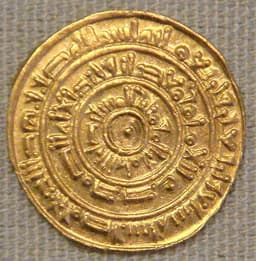
Al-Mustansir
Emperor · Medieval
55.6Total
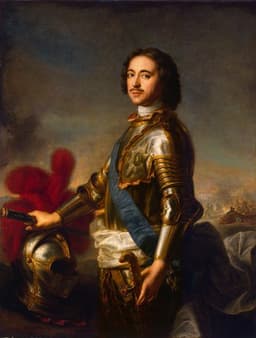
Peter the Great
Emperor · Modern
73.2Total
Basic Information
Born
1192
1672
Died
1242
1725
Era
Medieval
Modern
Nationality
Abbasid Caliphate
Russia
Occupation
Emperor
Emperor
Civilization
Middle Eastern
Western
Score Comparison
Military (10%)
20.0
75.0
Political (20%)
68.0
90.0
Influence (20%)
55.0
68.0
Legacy (20%)
58.0
65.0
Leadership (15%)
71.0
78.0
Strategy (15%)
45.0
72.0
TOTAL
55.6
73.2
Al-Mustansir — Complete Timeline
1227 AD
Foundation of the Mustansiriya MadrasaCultural◆ Major
Al-Mustansir established the Mustansiriya Madrasa in Baghdad, a major educational institution that taught Islamic law, medicine, mathematics, and literature. It became one of the most prominent centers of learning in the medieval Islamic world, operating for centuries.
Impact: regionalconstructive
Peter the Great — Complete Timeline
1697 AD
Grand EmbassyPolitical Action◆ Major
Peter the Great traveled incognito to Western Europe as part of a diplomatic mission. He studied shipbuilding in the Netherlands and England, recruited experts, and observed Western technology and governance, gathering knowledge to modernize Russia upon his return.
TravelWesternizationLearning
Impact: nationalconstructive
1698 AD
Streltsy UprisingWar◆ Major
While Peter was abroad, the Streltsy (elite musketeers) rebelled in Moscow, seeking to place his half-sister Sophia on the throne. Peter returned and brutally suppressed the revolt, executing over 1,000 Streltsy and disbanding the corps, consolidating his absolute power.
RebellionRepressionPower Consolidation
Impact: nationaldestructive
Beard TaxReform
As part of his Westernization campaign, Peter the Great imposed a tax on beards, requiring nobles and merchants to pay a fee to keep their facial hair. Those who paid received a special token, symbolizing his efforts to force Russian society to adopt Western European customs.
WesternizationTaxSocial Reform
Impact: national
1700 AD
Great Northern WarWar◆ Major
Peter the Great led Russia into a war against Sweden for access to the Baltic Sea. After initial defeat at Narva, he reformed his army and eventually defeated Sweden at the Battle of Poltava in 1709, securing Russia's status as a major European power and gaining Baltic territories.
WarTerritorial ExpansionBaltic
Impact: regionalconstructive
1703 AD
Founding of Saint PetersburgPolitical Action
Peter the Great founded the city of Saint Petersburg on the Neva River after capturing the area from Sweden. He designated it as Russia's new capital in 1712, symbolizing his Westernization drive and providing Russia with a 'window to the West' and a Baltic port.
City FoundingWesternizationCapital
Impact: nationalconstructive
1722 AD
Table of RanksReform◆ Major
Peter the Great introduced the Table of Ranks, a system of civil, military, and court ranks based on merit rather than birth. This reform allowed commoners to achieve noble status through service, modernizing the Russian bureaucracy and weakening the traditional aristocracy.
BureaucracyMeritocracySocial Reform
Impact: nationalprogressive
Expert Analysis
Al-Mustansir vs Peter the Great
### The Tsar and the Scholar: Two Paths to Power in an Age of Upheaval
In the winter of 1697, a twenty-five-year-old giant of a man, traveling under a false name, labored as a common shipwright in the Dutch city of Zaandam. He swung an axe, drank with sailors, and studied the blueprints of Western naval power. Thousands of miles to the southeast, in the ancient city of Baghdad, another ruler, a caliph named Al-Mustansir, was presiding over the completion of a very different kind of monument. His was not a navy of oak and iron, but a university of brick and parchment. One man sought to drag his empire into the future by force of will; the other sought to preserve its soul by building a citadel of learning. Both were rulers of great empires in decline, yet their responses to that decline—and the destinies they forged—could not have been more different.
### Origins: The Anvil and the Archive
Peter Alekseyevich was born in 1672 into a Russia that was, by European standards, a medieval backwater. His childhood was a violent education in chaos. After his father’s death, the Kremlin became a stage for bloody palace coups, with the young Peter forced to witness the murder of his family’s supporters by the Streltsy, the very soldiers meant to protect him. This trauma forged a will of iron but also a deep, pragmatic suspicion of the old order. Russia’s isolation was its weakness, and he felt it in his bones. In contrast, Al-Mustansir, born in 1192, inherited a different kind of fragility. The Abbasid Caliphate was a ghost of its former glory, its political power long since shattered by the rise of the Seljuk Turks and the Mongol storm gathering on the eastern horizon. His world was not one of raw, untamed forests, but of layered tradition, theological debate, and the fading memory of a golden age. Where Peter saw a blank slate to be smashed and rebuilt, Al-Mustansir saw a legacy to be preserved and curated.
### Rise to Power: The Axe and the Pen
Peter’s path to power was forged in war and rebellion. He seized sole control after crushing the Streltsy Uprising of 1698, personally interrogating and executing the rebels. This was not a coronation; it was a purge. His rise was a declaration of war against his own past. He did not inherit power so much as conquer it from within. Al-Mustansir’s accession in 1226, by contrast, was a quiet, almost bureaucratic affair. He was the son of a caliph, raised in the palace, and his power was circumscribed by the very traditions he was meant to uphold. His great ambition was not to conquer new lands, but to conquer ignorance. While Peter traveled incognito to learn the secrets of the West, Al-Mustansir stayed in Baghdad, commissioning scholars and collecting manuscripts. His rise was not a dramatic storming of the gates, but a steady, patient accumulation of intellectual authority.
### Leadership & Governance: The Hammer and the Hearth
Once in power, their styles diverged with the force of a tectonic shift. Peter’s governance was a relentless, often brutal campaign of modernization. In 1700, he launched the Great Northern War against Sweden, a conflict that would define his reign. After a crushing defeat at Narva, he did not retreat into tradition; he rebuilt his army from scratch, drafting peasants, importing officers, and founding a navy from nothing. His reforms were invasive and personal. The Beard Tax of 1698 was a symbolic assault on the old Russian identity, a demand that his nobles shave their beards and wear Western clothes. The Table of Ranks of 1722 was his masterstroke, a system that replaced noble birth with state service. He was a builder, a general, and a tyrant, all in one. He founded Saint Petersburg in 1703 on a swamp, a city built on the bones of thousands of serfs, a window to the West forced open at gunpoint.
Al-Mustansir’s leadership was the polar opposite. He ruled not through conquest, but through patronage. His defining act was the foundation of the Mustansiriya Madrasa in Baghdad in 1227. It was not merely a school; it was a comprehensive university that taught Islamic law, medicine, mathematics, and literature, with a library that rivaled any in the Islamic world. He provided housing, stipends, and a hospital for students. His governance was an act of preservation, an attempt to build a fortress of knowledge against the political decay around him. He was a curator of civilization, not a revolutionary. Where Peter saw a nation to be reshaped by force, Al-Mustansir saw a culture to be saved by scholarship.
### Triumph & Tragedy: The Window and the Storm
Peter’s greatest triumph was his victory in the Great Northern War, which ended in 1721. Russia gained its coveted “window on the Baltic,” and Peter was proclaimed Emperor of All Russia. He had transformed a landlocked, backward kingdom into a European power. But his triumph was built on a tragedy of immense scale. His reforms were paid for in the blood of serfs, the sweat of conscripts, and the silence of dissenters. His own son, Alexei, was tortured and died in prison for opposing him. The tragedy of Peter is that he saved Russia by crushing a part of its soul.
Al-Mustansir’s triumph was quieter, but no less profound. For a brief decade, the Mustansiriya became a beacon of learning in a world darkening with the threat of Mongol invasion. His tragedy was that he could not stop what was coming. He died in 1242, just sixteen years before the Mongol sack of Baghdad in 1258, a cataclysm that obliterated the Abbasid Caliphate and much of its accumulated knowledge. His madrasa was a candle lit against the night, but the night was already at the gates.
### Character & Destiny: The Giant and the Guardian
Peter was a man of immense physical energy, crude appetites, and a terrifying temper. He was a doer, not a thinker. His destiny was to break things—old institutions, old loyalties, old faces—in order to make something new. He was driven by a visceral hatred of weakness, a desire to make Russia feared. Al-Mustansir was his opposite: a man of patience, piety, and intellectual curiosity. His destiny was to gather, to teach, to preserve. He was a guardian of a legacy that he knew was fragile. Peter’s character demanded action; Al-Mustansir’s demanded reflection. One shaped history with a hammer; the other with a pen.
### Legacy: The Empire and the Echo
Peter the Great’s legacy is written on the map of Europe. He created the Russian Empire, its navy, its bureaucracy, and its capital. He is remembered as a titan, a founder, a modernizer. But his methods—brutal, autocratic, and uncompromising—also set a precedent for the state’s domination over the individual that would haunt Russia for centuries. Al-Mustansir’s legacy is quieter, but it echoes through the ages. The Mustansiriya Madrasa survived the Mongol sack, was rebuilt, and continued to operate for centuries. It stands as a monument to the idea that true power is not in armies, but in ideas. He is remembered not as a conqueror, but as a patron, a man who built a school when the world was burning.
### Conclusion: Two Windows, Two Worlds
Peter the Great and Al-Mustansir both faced a crumbling world. Peter built a window to the West; Al-Mustansir built a window to the past. One sought to change his people by force; the other sought to enlighten them by example. The Tsar’s legacy is one of power; the Caliph’s, of knowledge. In the end, both were failures in the deepest sense—Peter could not save his own son, and Al-Mustansir could not save his own city. But they were also both successes, for they left behind something that outlasted them: a nation transformed, and a school that still whispers the names of forgotten scholars. In the clash between the axe and the pen, history does not choose a winner. It simply records the different ways men have tried to keep the darkness at bay.
Rankings
🥇
Peter the GreatLeader
Mil: 75.0Pol: 90.0Inf: 68.0
73.2
🥈
Al-Mustansir
Mil: 20.0Pol: 68.0Inf: 55.0
55.6
+17.6 behind
How This Comparison Works
Algorithm
Each figure is scored on 6 dimensions (0—100 scale) based on structured historical data: Military (10%), Political (20%), Influence (20%), Legacy (20%), Leadership (15%), Strategy (15%). The weighted total produces the final ranking.
Data Sources
Scores are computed from structured sub-indicators in the database. Scale factors adjust for era (Ancient ×0.85, Modern ×1.0) and civilization size (Eastern ×1.05, Other ×0.80) to account for differences in population and military scale.
Maximum 3 Figures
Comparisons are limited to 2—3 figures to ensure readability and statistical meaningfulness.
Error Margins
±5 points per dimension — Sub-scores are derived from historical records with inherent uncertainty. Two figures within 5 points on a dimension should be considered roughly equivalent in that area.
Total Score Accuracy
±3 points overall — The weighted combination of 6 dimensions produces a total score with approximately ±3 points of uncertainty. Differences of less than 3 points are not statistically significant— the figures are effectively tied.
Known Limitations
- Historical records are incomplete and uneven across civilizations
- Figures from oral-tradition societies may be underrepresented
- Occupation labels can misclassify multi-role figures
- Scores measure capability and impact, not moral character
- Quantitative scoring is a comparison tool, not absolute truth
Capability Radar
Military (10%) — Battles & Warfare
Battles
5
85
Win Rate
5
80
Expansion
5
90
Political (20%) — Governance & Reform
Reform
70
95
Diplomacy
40
80
Economy
50
85
Influence (20%) — Cultural & Global Reach
Cultural
70
85
Global
50
85
Legacy (20%) — Historical Impact
Historical
65
90
Longevity
60
85
Leadership (15%) — Power & Stability
Tenure
60
90
Stability
30
70
Strategy (15%) — Tactics & Innovation
Strategy
5
85
Tactics
5
75
Reform
5
95
Similar Comparisons
Comments & Discussion
AxemanOfZaandam6/16/2026
Peter's shipyard training would've been laughed off by any experienced Dutch builder. The man was royally played—he waved an axe for a few months and thought he understood naval warfare. Meanwhile, Al-Mustansir poured real resources into the Mustansiriyya Madrasa, a library that actually produced scholars like Ibn al-Nafis. Peter built a navy that rusted by 1725. Give me the caliph's intellectual legacy over a tsar's vanity project any day.
数字忍者6/16/2026
数据不说谎:彼得大帝的军事改革让俄国军费暴增了五倍,但叶卡捷琳娜时代的大北方战争才真正检验了成果。阿尔-穆斯坦西尔在马穆鲁克军队只花了收入的百分之三,却在巴格达建成了世界第一座综合大学。彼得砸钱搞军备,阿尔-穆斯坦西尔投资教育,谁更聪明?看看谁的文化遗产活到了今天——阿拉伯文明的学术曙光,还是俄国那条生锈的波罗的海舰队。
RedArchivist6/16/2026
You're all missing the tragedy here. Al-Mustansir completed his madrasa in 1234, and within 24 years, Hulagu Khan's Mongols would reduce Baghdad to a river of blood and ink—literally, they threw books into the Tigris until it ran black. Peter's Westphalian system might be flawed, but his army fought Sweden and won. The caliph built a cathedral of knowledge in an empire that was already a corpse. Peter built a barracks, and Russia survived. Victory isn't pretty, but it's real.
丝绸与火药6/16/2026
别被数字骗了。彼得大帝1689年掌权时俄国只有两艘船,1725年死了俄国已经有40艘战列舰和500艘其他船只——这速度放到今天就是暴走式工业化。阿尔-穆斯坦西尔呢?他的巴格达1233年就被蒙古围城两个月,1241年又被围攻,1258年直接灭国。建大学当然好,但连基础防卫都没有,这不是文明,这是奢侈的自杀。彼得搞实用主义,他的帝国活了两个世纪;阿尔-穆斯坦西尔搞理想主义,巴格达只活了不到三十年。
HereticHistorian6/16/2026
听着,你们都在吹彼得船厂的故事,但别忘了那货是个暴君中的暴君。建造圣彼得堡死了十万人,那些尸体填满了沼泽。阿尔-穆斯坦西尔至少没搞强迫劳动,他那座大学是为知识而建的,不是为沙皇的虚荣。彼得拿整个俄国当实验室,失败就灭族;阿尔-穆斯坦西尔失败只丢条命。谁更配叫文明人?那个拿百姓当柴火烧的,还是那个给学者安家落户的?