Loading...
Al-Mustansir vs Henry the Fowler
Henry the Fowler leads by 5.3 pts · 2 figures compared
…
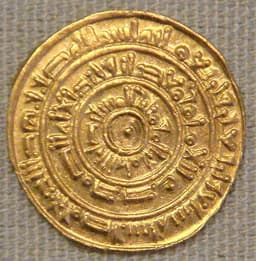
Al-Mustansir
Emperor · Medieval
55.6Total
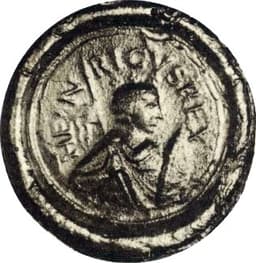
Henry the Fowler
Emperor · Medieval
60.9Total
Basic Information
Born
1192
876
Died
1242
936
Era
Medieval
Medieval
Nationality
Abbasid Caliphate
East Francia
Occupation
Emperor
Emperor
Civilization
Middle Eastern
Western
Score Comparison
Military (10%)
20.0
70.0
Political (20%)
68.0
59.3
Influence (20%)
55.0
55.0
Legacy (20%)
58.0
52.0
Leadership (15%)
71.0
85.0
Strategy (15%)
45.0
55.0
TOTAL
55.6
60.9
Al-Mustansir — Complete Timeline
1227 AD
Foundation of the Mustansiriya MadrasaCultural◆ Major
Al-Mustansir established the Mustansiriya Madrasa in Baghdad, a major educational institution that taught Islamic law, medicine, mathematics, and literature. It became one of the most prominent centers of learning in the medieval Islamic world, operating for centuries.
Impact: regionalconstructive
Henry the Fowler — Complete Timeline
919 AD
Election as King of East FranciaPolitical Action
Henry the Fowler was elected King of East Francia by the Saxon and Frankish nobles at Fritzlar on May 6, 919. He was the first Saxon king, marking the transition from Carolingian to Ottonian rule. His election was contested by other dukes but he prevailed.
ElectionAccessionOttonian Dynasty
Impact: regionalconstructive
921 AD
Treaty of Bonn (921)Political Action◆ Major
Henry the Fowler signed the Treaty of Bonn with Charles the Simple of West Francia, recognizing each other's royal titles and establishing peaceful relations. This treaty ended Carolingian claims over East Francia and solidified Henry's legitimacy as an independent king.
TreatyRecognitionDiplomacy
Impact: regionalconstructive
924 AD
Nine-Year Truce with the MagyarsPolitical Action◆ Major
Henry the Fowler negotiated a nine-year truce with the Magyars, agreeing to pay tribute in exchange for a halt to their raids. He used this period to fortify towns, reorganize the army, and train cavalry. This strategic pause was crucial for his later military reforms.
TruceMagyarsMilitary Reform
Impact: regionalconstructive
929 AD
Battle of Lenzen (929)War◆ Major
Henry the Fowler's forces defeated a Slavic army at the Battle of Lenzen, securing the eastern frontier of East Francia. This victory allowed Henry to consolidate control over the Elbe region and establish the March of Brandenburg, a key step in German eastward expansion.
BattleSlavic WarsEastern Expansion
Impact: regionalconstructive
933 AD
Battle of Riade (933)War
After the truce with the Magyars expired, Henry the Fowler led a German army to victory at the Battle of Riade (near Merseburg). The defeat of the Magyar cavalry ended their raids into East Francia for a generation and established Henry's reputation as a defender of Christendom.
BattleMagyarsVictory
Impact: regionalconstructive
936 AD
Death of Henry the FowlerOther◆ Major
Henry the Fowler died on July 2, 936, at Memleben. He was succeeded by his son, Otto I, who would become Holy Roman Emperor. Henry's reign laid the foundations for the Ottonian dynasty and the medieval German kingdom.
DeathSuccessionOttonian
Impact: regional
Expert Analysis
Al-Mustansir vs Henry the Fowler
# The Crossroads of Power: Henry the Fowler and Al-Mustansir
In the year 933, on a field near Riade in what is now central Germany, a Saxon king watched his cavalry shatter the horsemen who had terrorized Central Europe for a generation. The Magyars, those fearsome steppe archers who had raided as far as Bremen and Basel, fled before the armored knights of East Francia. Across the continent, in the ancient city of Baghdad, another ruler was building something far more enduring than any battlefield victory: the Mustansiriya Madrasa, a sprawling complex of lecture halls and libraries that would draw scholars from across the Islamic world. One man forged a kingdom through steel and tribute; the other sought immortality through ink and parchment. Why did these two medieval rulers, both crowned in the early tenth and thirteenth centuries respectively, pursue such radically different paths to power?
Origins
Henry the Fowler was born in 876 into the chaos of Carolingian decline. The grandson of the legendary Saxon leader Liudolf, he grew up in a world where the old Frankish empire was fragmenting into warring duchies, while Vikings raided the coasts and Magyars swept across the plains from the east. His epithet “the Fowler” supposedly came from his love of bird hunting, but the nickname belied a ruthless pragmatism. The Saxon nobility that elected him king at Fritzlar on May 6, 919, chose him not for his piety or learning, but for his ability to fight and negotiate.
Al-Mustansir, born in 1192, inherited a very different world. The Abbasid Caliphate had long since lost its territorial empire, reduced to a shadow of its former glory in Baghdad. Yet the caliphate still commanded immense spiritual authority as the symbolic head of Sunni Islam. Al-Mustansir came to power in 1226, during a period when the Islamic world was fragmented between rival sultans and the looming threat of the Mongol Empire was barely a whisper on the eastern horizon. His father had been a scholar; his uncle had built libraries. The caliph’s power lay not in armies, but in patronage.
Rise to Power
Henry’s path to kingship was forged in the crucible of invasion. When the Carolingian king Conrad I died in 918, he reportedly urged the German nobles to elect Henry as his successor—a remarkable act of political wisdom from a dying rival. But Henry’s election was no coronation; it was a transaction. The dukes of Swabia and Bavaria initially refused to recognize him. Henry spent his first years as king not in glory, but in grinding negotiation, forcing each duke to submit through a mixture of siege warfare and marriage alliances.
Al-Mustansir’s rise was quieter, more ceremonial. When his uncle al-Nasir died in 1225, the caliphate passed to al-Mustansir’s father, and then to him within a year. There were no battlefield elections, no rebellions to crush. The Abbasid court had become a world of protocol and patronage, where a caliph’s power was measured not in territory but in the scholars he supported and the buildings he erected. Al-Mustansir’s defining moment came in 1227, when he laid the foundation for the Mustansiriya Madrasa—an institution that would teach law, medicine, mathematics, and literature, and would outlast the caliphate itself.
Leadership & Governance
Henry the Fowler governed through the sword and the treaty table. His nine-year truce with the Magyars in 924 was a masterstroke of strategic patience. While other rulers burned their treasury on futile campaigns, Henry paid tribute and bought time. He used those years to build fortified towns across Saxony, training a new class of armored cavalry who could meet the Magyars on equal terms. When the truce expired in 933, he struck at Riade with devastating precision. The Battle of Riade was not just a victory; it was a transformation. Henry had turned tribute into training, fear into fortification.
Al-Mustansir governed through scholarship and symbolism. The Mustansiriya Madrasa was not merely a school; it was a statement. In a world where rival sultans claimed authority through military might, the caliph asserted his relevance through intellectual patronage. The madrasa taught all four Sunni schools of law, alongside medicine and astronomy. It was a university centuries before the word existed in Europe. Al-Mustansir also maintained the caliphate’s diplomatic networks, corresponding with rulers from Egypt to India. His power was soft, but it was real.
Triumph & Tragedy
Henry’s greatest triumph was the Battle of Lenzen in 929, where his forces crushed the Slavic tribes threatening the eastern frontier. This victory opened the way for German colonization of the lands beyond the Elbe, a process that would reshape Central Europe for centuries. Yet his tragedy was one of time. He died on July 2, 936, at Memleben, just as his son Otto was poised to inherit a kingdom that was still fragile, still contested. Henry had built the foundation, but he would not see the cathedral.
Al-Mustansir’s triumph was the Mustansiriya Madrasa itself, which became a beacon of learning that attracted students from as far as Spain and Central Asia. His tragedy was that he could not see the storm gathering. In 1242, the year of his death, the Mongol armies were already on the move. Within sixteen years, Baghdad would fall, the Abbasid Caliphate would be extinguished in blood, and the Mustansiriya Madrasa—though it would survive—would become a monument to a world that had been destroyed.
Character & Destiny
Henry the Fowler was a man of the frontier, practical and patient. He understood that power was built not through grand gestures but through incremental gains—a fort here, a marriage there, a truce that bought time. His personality reflected his world: a world of constant threat, where a king had to be both warrior and diplomat, builder and destroyer. He was not a visionary; he was a survivor.
Al-Mustansir was a man of the court, cultured and learned. He understood that in a world where military power had slipped from his hands, intellectual authority was the only currency he could mint. His personality reflected a caliphate that had learned to live with diminished glory, finding meaning in the preservation of knowledge rather than the conquest of territory. He was not a warrior; he was a patron.
Legacy
Henry the Fowler’s legacy is the Ottonian dynasty. His son Otto I would be crowned Holy Roman Emperor in 962, creating an institution that would shape European politics for a millennium. Henry’s military reforms, his fortification strategy, and his patient diplomacy laid the groundwork for the medieval German kingdom. He is remembered as the founder of a dynasty, the father of a nation.
Al-Mustansir’s legacy is the Mustansiriya Madrasa. Though the Abbasid Caliphate fell, the madrasa continued to function for centuries, surviving Mongol destruction and Ottoman conquest. It stands today as one of the oldest universities in the world, a testament to a ruler who believed that the pen was mightier than the sword. Al-Mustansir is remembered not as a conqueror, but as a builder of minds.
Conclusion
Two rulers, two worlds. Henry the Fowler fought for land and life; Al-Mustansir built for learning and legacy. One faced the Magyars; the other faced the Mongols. One died knowing his son would carry his work forward; the other died knowing the storm was coming. Yet both understood something fundamental about power: that it must be earned, not inherited; that it must be built, not merely claimed. Henry built with stone and steel; Al-Mustansir built with brick and books. In the end, both their creations outlasted them—the German kingdom and the Baghdad madrasa. And perhaps that is the only victory that matters.
Rankings
🥇
Henry the FowlerLeader
Mil: 70.0Pol: 59.3Inf: 55.0
60.9
🥈
Al-Mustansir
Mil: 20.0Pol: 68.0Inf: 55.0
55.6
+5.3 behind
How This Comparison Works
Algorithm
Each figure is scored on 6 dimensions (0—100 scale) based on structured historical data: Military (10%), Political (20%), Influence (20%), Legacy (20%), Leadership (15%), Strategy (15%). The weighted total produces the final ranking.
Data Sources
Scores are computed from structured sub-indicators in the database. Scale factors adjust for era (Ancient ×0.85, Modern ×1.0) and civilization size (Eastern ×1.05, Other ×0.80) to account for differences in population and military scale.
Maximum 3 Figures
Comparisons are limited to 2—3 figures to ensure readability and statistical meaningfulness.
Error Margins
±5 points per dimension — Sub-scores are derived from historical records with inherent uncertainty. Two figures within 5 points on a dimension should be considered roughly equivalent in that area.
Total Score Accuracy
±3 points overall — The weighted combination of 6 dimensions produces a total score with approximately ±3 points of uncertainty. Differences of less than 3 points are not statistically significant— the figures are effectively tied.
Known Limitations
- Historical records are incomplete and uneven across civilizations
- Figures from oral-tradition societies may be underrepresented
- Occupation labels can misclassify multi-role figures
- Scores measure capability and impact, not moral character
- Quantitative scoring is a comparison tool, not absolute truth
Capability Radar
Military (10%) — Battles & Warfare
Battles
5
55
Win Rate
5
60
Expansion
5
60
Political (20%) — Governance & Reform
Reform
70
75
Diplomacy
40
70
Economy
50
65
Influence (20%) — Cultural & Global Reach
Cultural
70
55
Global
50
40
Legacy (20%) — Historical Impact
Historical
65
65
Longevity
60
60
Leadership (15%) — Power & Stability
Tenure
60
70
Stability
30
70
Strategy (15%) — Tactics & Innovation
Strategy
5
65
Tactics
5
50
Reform
5
70
Similar Comparisons
Comments & Discussion
THE SAXON'S SPUR6/16/2026
Let's get real: Henry the Fowler built a kingdom on blood and iron, not books. In 933, he didn't just beat the Magyars at Riade—he forced them into a 9-year truce by fortifying towns and forging armored cavalry from Saxon nobles. That's hard power. Al-Mustansir's madrasa is nice for scholars, but Henry's legacy is a nation that survived. I'll take a king who stops invasions over one who collects manuscripts any day.
BAGHDAD'S BOOKMAN6/16/2026
穆斯坦绥尔才真正理解了权力。1227年他创办穆斯坦绥里耶书院时,雇了75名法学家和图书馆员,不是为打仗,是为了培养一代代法官和祭司。亨利用铁和血铸就了德意志,但穆斯坦绥尔的书院运转了近700年,直到蒙古人烧了巴格达。哪个更持久?一支军队倒下就完了,但思想能活几百年。
TRIBUTE TRUTH-TELLER6/16/2026
Look closer: Henry did exactly what Al-Mustansir couldn't—he made vassals pay. The Magyars weren't just defeated; they were tied to a 9-year truce that forced tribute payments. That's realpolitik. Baghdad's caliphs were sitting on a tax base from trade routes and irrigation, but Henry had to squeeze every pfennig from Saxon farms to hire cavalry. One built from wealth, the other from grit. I know which leader I'd trust with my treasury.
锷下箴言6/16/2026
你们都在谈胜利,却忘了亨利是个屠夫。933年Riade之战后,他下令把俘虏的匈牙利弓箭手全部钉死在路边树上,以儆效尤。穆斯坦绥尔至少尊重学者,建了伊斯兰世界最大的医院之一。亨利那种"以血换和平"的玩法,不过是中世纪版的毒丸外交。我选一个能让不同信仰的人坐在一起讨论的统治者,而不是一个用恐惧治国的军阀。
CAROLINGIAN'S GHOST6/16/2026
Nice try, but Henry wasn't building a kingdom—he was patching a corpse. East Francia in 919 was a mess of squabbling dukes, and his "victory" at Riade only secured a temporary truce. Contrast that with Al-Mustansir, whose madrasa hosted Sunni, Shia, and even legal debates across Islamic schools in a city that had seen sectarian riots. Henry unified Germans against a threat; Al-Mustansir unified minds across a divide. True power isn't in cavalry—it's in curriculum.