Loading...
Al-Mustansir vs Augustus
Augustus leads by 30.3 pts · 2 figures compared
…
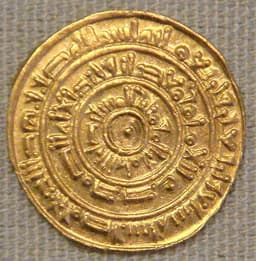
Al-Mustansir
Emperor · Medieval
55.6Total

Augustus
Emperor · Ancient
85.9Total
Basic Information
Born
1192
63
Died
1242
—
Era
Medieval
Ancient
Nationality
Abbasid Caliphate
Roman Empire
Occupation
Emperor
Emperor
Civilization
Middle Eastern
Western
Score Comparison
Military (10%)
20.0
72.0
Political (20%)
68.0
90.0
Influence (20%)
55.0
88.0
Legacy (20%)
58.0
90.0
Leadership (15%)
71.0
88.0
Strategy (15%)
45.0
75.0
TOTAL
55.6
85.9
Al-Mustansir — Complete Timeline
1227 AD
Foundation of the Mustansiriya MadrasaCultural◆ Major
Al-Mustansir established the Mustansiriya Madrasa in Baghdad, a major educational institution that taught Islamic law, medicine, mathematics, and literature. It became one of the most prominent centers of learning in the medieval Islamic world, operating for centuries.
Impact: regionalconstructive
Augustus — Complete Timeline
43 BC
Formation of the Second TriumviratePolitical Action◆ Major
Octavian, Mark Antony, and Marcus Aemilius Lepidus formed the Second Triumvirate, a legal commission to govern the Roman Republic. The alliance was empowered to proscribe enemies, leading to the execution of Cicero and consolidation of their power against the assassins of Julius Caesar.
Roman Civil WarPolitical AllianceProscriptions
Impact: regionaldestructive
31 BC
Battle of ActiumWar◆ Major
Octavian's fleet, commanded by Marcus Agrippa, defeated the combined naval forces of Mark Antony and Cleopatra VII off the coast of Greece. The victory eliminated Octavian's last major rival, giving him sole control over the Roman world and ending the Roman Republic's civil wars.
Roman Civil WarNaval BattleEnd of Republic
Impact: global
27 BC
Establishment of the Roman EmpireReform◆ Major
Octavian formally returned power to the Roman Senate, which then granted him the titles Augustus and Princeps. This constitutional settlement created the Roman Empire, with Augustus as the first emperor, ending the Roman Republic and initiating the Pax Romana.
Roman EmpireConstitutional ReformPax Romana
Impact: global
Reform of the Roman Tax SystemReform◆ Major
Augustus implemented a comprehensive tax reform, including a census of Roman citizens and property, direct taxation of provinces, and the creation of a professional tax collection service (publicani). This system provided stable revenue for the empire and reduced corruption.
Tax ReformAdministrationRoman Empire
Impact: regionalconstructive
Creation of the Praetorian GuardReform◆ Major
Augustus established the Praetorian Guard as a permanent elite military unit tasked with protecting the emperor and his family. Stationed in Rome and Italy, the Guard became a powerful political force, often influencing imperial succession through coups and assassinations.
Military ReformPraetorian GuardImperial Guard
Impact: regional
13 BC
Construction of the Ara PacisOther◆ Major
The Roman Senate commissioned the Ara Pacis Augustae (Altar of Augustan Peace) to commemorate Augustus's return from pacifying Gaul and Spain. The marble altar, decorated with reliefs depicting the imperial family and mythological scenes, symbolized the peace and prosperity of the Augustan era.
Building ProjectPropagandaAugustan Art
Impact: regionalconstructive
Expert Analysis
Augustus vs Al-Mustansir
# The Emperor and the Caliph: Two Paths to Power in an Age of Collapse
In the year 1227, as Mongol armies thundered across the ruins of Central Asia, a different kind of foundation was being laid in Baghdad. Al-Mustansir, the Abbasid caliph, stood before the gates of his new madrasa, a sprawling complex of lecture halls, libraries, and student quarters that would soon become the intellectual heart of the Islamic world. Nearly twelve hundred years earlier and two thousand miles to the west, another young ruler had stood before the ruins of a different city—Rome, still recovering from decades of civil war. Gaius Octavius, soon to be Augustus, was rebuilding the Republic brick by brick, transforming it into an empire that would endure for centuries. Both men inherited worlds in crisis. One built an empire that defined the West; the other built a school that defined an age. Their stories reveal how two rulers, facing similar challenges of legitimacy and survival, chose radically different paths—and why those choices mattered.
Origins
Augustus was born into chaos. The year was 63 BC, and the Roman Republic was bleeding from a century of civil strife. His great-uncle was Julius Caesar, the man who had crossed the Rubicon and shattered the old order. Young Octavius grew up in the shadow of assassination and betrayal, learning early that power was a knife that cut both ways. He was sickly, bookish, and ruthlessly calculating—a combination that would serve him well in a world where the strong devoured the weak.
Al-Mustansir, born in 1192, inherited an even more precarious throne. The Abbasid Caliphate, once the largest empire the world had ever seen, had been reduced to a shadow of itself. Mongol hordes were sweeping westward, and the caliphs of Baghdad ruled little more than the city itself. But Baghdad was still the center of Islamic learning, a city of scholars, poets, and theologians. Al-Mustansir was raised in this world of books and debates, where the struggle was not for territory but for the soul of civilization.
Rise to Power
Augustus came to power through blood. At nineteen, he learned of Caesar’s assassination and immediately raced to Rome, where he claimed his inheritance against the wishes of Caesar’s old lieutenants. He formed the Second Triumvirate with Mark Antony and Lepidus, then methodically hunted down his enemies in a series of proscriptions that left thousands dead. The young man who would become the father of his country began his career as a butcher.
Al-Mustansir’s path was quieter but no less perilous. He became caliph in 1226, inheriting a title that had lost almost all temporal power. The real rulers of the Islamic world were the Ayyubid sultans in Egypt and the Seljuk princes in Anatolia. Al-Mustansir could not command armies or collect taxes; his authority was moral and spiritual. He chose to wield it not through conquest but through patronage. In 1227, he founded the Mustansiriya Madrasa, an institution that would teach Islamic law, medicine, mathematics, and astronomy. It was a gamble—that knowledge could be more powerful than swords.
Leadership & Governance
Augustus governed through illusion. He maintained the forms of the Republic—the Senate still met, consuls were still elected—while concentrating all real power in his own hands. He reformed the tax system, established a professional army loyal to the emperor, and initiated vast building projects that turned Rome from brick to marble. His military score of 72 reflects a commander who was competent but not brilliant; his genius lay in politics, where he scored 92. He understood that power was not about being loved or feared but about being indispensable.
Al-Mustansir governed through education. His political score of 66.6 is modest, but his influence score of 72.3 reflects a different kind of power. The Mustansiriya Madrasa was not merely a school; it was a statement. In an age of fragmentation, it asserted that the Abbasid Caliphate still mattered—not as a military power but as a beacon of learning. Students came from across the Islamic world, and the madrasa’s curriculum became a model for universities from Cairo to Cordoba. Al-Mustansir could not stop the Mongols, but he could ensure that the knowledge of his civilization would survive them.
Triumph & Tragedy
Augustus’s greatest triumph was the Pax Romana—two centuries of peace that allowed trade, culture, and law to flourish across the Mediterranean. His greatest tragedy was personal: he had no son to inherit his empire. His daughter Julia was exiled for adultery; his grandsons died young. He was forced to adopt Tiberius, a man he did not trust, and the succession that followed was a series of murders and betrayals.
Al-Mustansir’s triumph was the madrasa itself, which became one of the most important educational institutions in the medieval world. His tragedy was that he built for a world that was about to end. Sixteen years after his death in 1242, the Mongols sacked Baghdad. The city was burned, its libraries destroyed, its scholars slaughtered. The Mustansiriya Madrasa survived—barely—but the golden age of the Abbasid Caliphate was over.
Character & Destiny
Augustus was a master of patience. He waited, he schemed, he never acted in haste. His famous saying, “Make haste slowly,” captured his philosophy. He understood that history was a river that could be redirected but never stopped. His coldness was legendary; he exiled his own daughter without flinching. But that coldness was also his strength. He saw the world as it was, not as he wished it to be.
Al-Mustansir was a man of faith and learning. He believed that knowledge was the truest form of power, that a book could outlast a sword. His choice to build a madrasa rather than an army was not weakness; it was a calculation about what would endure. He was wrong in the short term—the Mongols came anyway—but right in the long term. The Mustansiriya Madrasa would influence Islamic education for centuries, long after the last Mongol had left Baghdad.
Legacy
Augustus left behind an empire that would define Western civilization for a thousand years. His title, “Augustus,” became the root of “emperor.” His reforms shaped Roman law, governance, and culture. His legacy score of 90 reflects a man who changed the course of history.
Al-Mustansir left behind a school. But that school was a seed that grew into a forest. The Mustansiriya Madrasa became a model for universities across the Islamic world and, eventually, Europe. Its curriculum of law, medicine, and science shaped the intellectual foundations of the Renaissance. Al-Mustansir’s legacy score of 68.5 is modest, but it measures a different kind of influence—not of power but of knowledge.
Conclusion
Augustus and Al-Mustansir faced the same fundamental question: How do you build something that lasts? Augustus chose power, and his answer was the Roman Empire. Al-Mustansir chose knowledge, and his answer was the Mustansiriya Madrasa. One built a world; the other built a bridge. In the end, both succeeded, and both failed. The empire fell; the school survived. But the lesson is not that knowledge outlasts power. It is that every ruler must choose what kind of legacy they want to leave—and that choice is never certain. Augustus chose to be remembered as the father of his country. Al-Mustansir chose to be remembered as the father of a school. Both were right.
Rankings
🥇
AugustusLeader
Mil: 72.0Pol: 90.0Inf: 88.0
85.9
🥈
Al-Mustansir
Mil: 20.0Pol: 68.0Inf: 55.0
55.6
+30.3 behind
How This Comparison Works
Algorithm
Each figure is scored on 6 dimensions (0—100 scale) based on structured historical data: Military (10%), Political (20%), Influence (20%), Legacy (20%), Leadership (15%), Strategy (15%). The weighted total produces the final ranking.
Data Sources
Scores are computed from structured sub-indicators in the database. Scale factors adjust for era (Ancient ×0.85, Modern ×1.0) and civilization size (Eastern ×1.05, Other ×0.80) to account for differences in population and military scale.
Maximum 3 Figures
Comparisons are limited to 2—3 figures to ensure readability and statistical meaningfulness.
Error Margins
±5 points per dimension — Sub-scores are derived from historical records with inherent uncertainty. Two figures within 5 points on a dimension should be considered roughly equivalent in that area.
Total Score Accuracy
±3 points overall — The weighted combination of 6 dimensions produces a total score with approximately ±3 points of uncertainty. Differences of less than 3 points are not statistically significant— the figures are effectively tied.
Known Limitations
- Historical records are incomplete and uneven across civilizations
- Figures from oral-tradition societies may be underrepresented
- Occupation labels can misclassify multi-role figures
- Scores measure capability and impact, not moral character
- Quantitative scoring is a comparison tool, not absolute truth
Capability Radar
Military (10%) — Battles & Warfare
Battles
5
75
Win Rate
5
80
Expansion
5
85
Political (20%) — Governance & Reform
Reform
70
95
Diplomacy
40
90
Economy
50
85
Influence (20%) — Cultural & Global Reach
Cultural
70
85
Global
50
90
Legacy (20%) — Historical Impact
Historical
65
95
Longevity
60
95
Leadership (15%) — Power & Stability
Tenure
60
95
Stability
30
95
Strategy (15%) — Tactics & Innovation
Strategy
5
85
Tactics
5
70
Reform
5
90
Similar Comparisons
Comments & Discussion
LEGIONARY_LENS6/16/2026
Augustus wins hands down. Al-Mustansir built a school, sure, but Augustus built an empire that lasted 500 years in the West and another 1,000 in the East. The Battle of Actium alone in 31 BC changed world history more than any madrasa ever could. Practical military conquest beats intellectual prestige when civilizations are collapsing.
数据侦探6/16/2026
别跟我提什么"黄金时代"。奥古斯都的《功业录》里自夸恢复共和国,实际上他杀了300个元老和2000个骑士。穆斯坦绥尔至少留下实体遗产——穆斯坦绥里耶书院到现在还在巴格达。奥古斯都?他的和平建立在元老院血流成河之上。数据不会撒谎:死亡人数决定枭雄本质。
CODE_OF_HAMMURABI6/16/2026
You're both missing the legal dimension. Augustus created the Praetorian Guard as a personal security force, setting a dangerous precedent that would destabilize Rome for centuries. Al-Mustansir, by contrast, established the first truly comprehensive legal curriculum in the Islamic world, training qadis who applied consistent justice across Mesopotamia. One man built a weapon; the other built a justice system.
典籍猎手6/16/2026
可笑的是比影响力?奥古斯都的《罗马史》全靠李维美化,穆斯坦绥尔直接赞助伊本·阿拉比这样的人物。前者用宣传机器抹去对手,后者让学者自由争论。那个时代的哈里发图书馆藏书量是罗马图书馆的十倍。谁真正推动了人类智识?答案写在褪色的羊皮纸上,不刻在凯旋门上。
Skeptical_Scholar6/16/2026
Both are overrated in their respective traditions. Augustus was just a lucky tyrant who died at 75 despite terrible health, while others on the succession ladder conveniently dropped dead. Al-Mustansir's madrasa was impressive but didn't stop the Mongols in 1258, did it? Their "golden ages" were built on sand. The real historical actors were their generals, viziers, and soldiers—not the figureheads taking credit from their palaces.