Loading...
Al-Mustadi vs Mohammed ibn Gao
Al-Mustadi leads by 3.2 pts · 2 figures compared
…
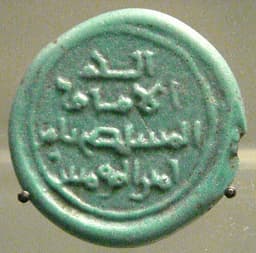
Al-Mustadi
Emperor · Medieval
41.9Total

Mohammed ibn Gao
Emperor · Medieval
38.7Total
Basic Information
Born
1142
1290
Died
1180
1312
Era
Medieval
Medieval
Nationality
Abbasid Caliphate
Mali Empire
Occupation
Emperor
Emperor
Civilization
Middle Eastern
Other
Score Comparison
Military (10%)
21.2
14.9
Political (20%)
35.1
26.4
Influence (20%)
50.2
48.6
Legacy (20%)
40.0
39.2
Leadership (15%)
55.3
45.0
Strategy (15%)
36.8
45.0
TOTAL
41.9
38.7
Al-Mustadi — Complete Timeline
1170 AD
Continued Assertion of Caliphal AuthorityPolitical Action◆ Major
Al-Mustadi continued his predecessor's policy of asserting caliphal authority over Baghdad and Iraq. He maintained the caliphal army and resisted Seljuk interference, preserving the gains made by Al-Muqtafi.
Caliphal PowerSeljuk RelationsContinuity
Impact: regionalconstructive
1175 AD
Diplomatic Relations with SaladinPolitical Action◆ Major
Al-Mustadi established diplomatic relations with Saladin, who had become sultan of Egypt. The caliph recognized Saladin's authority and received gifts, strengthening the caliphate's influence in the region.
DiplomacySaladinEgypt
Impact: regionalconstructive
1178 AD
Patronage of Sunni ScholarshipCultural
Al-Mustadi patronized Sunni scholars and built madrasas in Baghdad. This support strengthened Sunni orthodoxy and enhanced the caliphate's religious prestige.
PatronageSunni ScholarshipMadrasas
constructive
Mohammed ibn Gao — Complete Timeline
1310 AD
Atlantic ExpeditionOther◆ Major
Mansa Mohammed ibn Gao dispatched a fleet of ships from the West African coast to explore the Atlantic Ocean. The expedition aimed to find the limits of the ocean and possibly discover new lands. The fleet did not return, and its fate remains unknown.
ExplorationAtlanticMali Empire
Impact: global
Expert Analysis
Origins
Al-Mustadi (born 1142 CE) was the 33rd Abbasid caliph, ruling from 1170 to 1180. He was the son of Caliph al-Mustanjid, and his reign marked a period of relative stability in Baghdad. His early life was shaped by the declining power of the Abbasid caliphate, which had lost effective control over much of the Islamic world to the Seljuk Turks. Al-Mustadi was educated in Sunni Islamic scholarship and trained in the administration of the caliphal court.
Mohammed ibn Gao (also known as Mansa Muhammad ibn Gao) was a 14th-century ruler of the Mali Empire, one of the largest and wealthiest empires in West Africa. His exact birth date is unknown, but he is believed to have reigned in the late 13th or early 14th century. He was a member of the Keita dynasty, which had founded the Mali Empire. His background is steeped in the traditions of the Mande people, and his early life likely involved training in governance and military leadership.
Rise to Power
Al-Mustadi ascended to the caliphate in 1170 after the death of his father, al-Mustanjid. His rise was smooth, as he was the designated heir. However, the real power in the region lay with the Seljuk sultans, and the Abbasid caliphs had become largely symbolic. Al-Mustadi sought to change this by asserting caliphal authority over Baghdad and Iraq. He maintained a caliphal army and resisted Seljuk influence, a policy that his predecessors had begun.
Mohammed ibn Gao came to power as the mansa (emperor) of Mali, likely after the death of his predecessor, Mansa Abubakari II. According to oral traditions, Abubakari II had embarked on an Atlantic expedition and never returned, leaving the throne to Mohammed ibn Gao. This narrative is supported by accounts from the 14th-century historian al-Umari, who recorded that the Mali Empire had sent expeditions into the Atlantic. Mohammed ibn Gao's rise was thus tied to the mysterious disappearance of his predecessor.
Leadership & Governance
Al-Mustadi's leadership centered on restoring the prestige of the Abbasid caliphate. He continued the policy of asserting caliphal authority, building a strong military presence in Baghdad. He also engaged in diplomatic relations with Saladin, the sultan of Egypt, recognizing Saladin's authority and receiving gifts. This helped to strengthen the caliphate's position as a religious and political entity. Al-Mustadi also patronized Sunni scholars and built madrasas, reinforcing Sunni orthodoxy. His governance score of 55.3 reflects his effective, if limited, leadership within the context of his era.
Mohammed ibn Gao's leadership is less documented, but his political score of 26.4 suggests he had limited impact on governance. His most notable act was the Atlantic expedition, which demonstrates his strategic vision (score 45.0). However, the expedition's outcome is unknown, and it did not lead to lasting territorial or economic gains for Mali. His influence score of 48.6 indicates that his actions had some impact on the perception of Mali's power, but his legacy rests largely on this single event.
Triumph & Tragedy
Al-Mustadi's greatest success was in maintaining the caliphate's independence from Seljuk control and establishing diplomatic ties with Saladin. This enhanced the caliphate's religious authority. His patronage of Sunni scholarship also contributed to the intellectual life of Baghdad. However, his reign was marked by limited territorial control. The caliphate continued to decline in political power, and his efforts did not reverse this trend. His military score of 21.2 reflects the weakness of his forces compared to regional powers.
Mohammed ibn Gao's triumph was the Atlantic expedition, which showed the maritime ambition of the Mali Empire. This event is unique in West African history and suggests a sophisticated understanding of exploration. However, the expedition's failure to return or establish contact with other civilizations is a tragedy. It likely drained resources and may have led to a period of decline. His military score of 14.9 indicates that his military achievements were minimal.
Character & Destiny
Al-Mustadi was a cautious and determined ruler, focused on restoring the caliphate's authority. His character was shaped by the need to navigate between Seljuk power and the rising Ayyubid dynasty under Saladin. He was a patron of learning and religion, which helped to solidify his legacy as a defender of Sunni Islam. His destiny was to be a transitional figure, unable to reverse the caliphate's decline but preserving its symbolic importance.
Mohammed ibn Gao is portrayed as an ambitious and visionary leader, willing to take risks. His decision to send a fleet into the unknown Atlantic reflects a bold character. However, the lack of concrete results from the expedition suggests that his vision may have outpaced his resources. His destiny is intertwined with the mystery of the expedition, which has made him a figure of legend but not of lasting historical impact.
Legacy
Al-Mustadi's legacy is mixed. He is remembered as a caliph who defended Sunni orthodoxy and maintained the caliphate's prestige in Baghdad. His diplomatic recognition of Saladin helped legitimize the Ayyubid dynasty. However, his reign did not halt the caliphate's political decline. His legacy score of 40.0 reflects his moderate impact.
Mohammed ibn Gao's legacy is tied to the Atlantic expedition, which has become a symbol of pre-Columbian African exploration. Some historians argue that the expedition may have reached the Americas, though there is no evidence. His legacy score of 39.2 is slightly lower than Al-Mustadi's, as the expedition's outcome remains unknown and did not produce lasting change.
Conclusion
While both rulers left intriguing legacies, Al-Mustadi had a greater impact on history. His political maneuvering helped preserve the Abbasid caliphate's religious authority during a critical period, and his patronage of scholarship contributed to Islamic intellectual history. In contrast, Mohammed ibn Gao's Atlantic expedition, while audacious, had no verifiable consequences and did not alter the course of West African or world history. Al-Mustadi's total score of 41.9 versus 38.7 reflects his slightly higher historical significance. The caliph's actions had tangible effects on the Islamic world, whereas the mansa's legacy remains speculative.
Rankings
🥇
Al-MustadiLeader
Mil: 21.2Pol: 35.1Inf: 50.2
41.9
🥈
Mohammed ibn Gao
Mil: 14.9Pol: 26.4Inf: 48.6
38.7
+3.2 behind
How This Comparison Works
Algorithm
Each figure is scored on 6 dimensions (0—100 scale) based on structured historical data: Military (10%), Political (20%), Influence (20%), Legacy (20%), Leadership (15%), Strategy (15%). The weighted total produces the final ranking.
Data Sources
Scores are computed from structured sub-indicators in the database. Scale factors adjust for era (Ancient ×0.85, Modern ×1.0) and civilization size (Eastern ×1.05, Other ×0.80) to account for differences in population and military scale.
Maximum 3 Figures
Comparisons are limited to 2—3 figures to ensure readability and statistical meaningfulness.
Error Margins
±5 points per dimension — Sub-scores are derived from historical records with inherent uncertainty. Two figures within 5 points on a dimension should be considered roughly equivalent in that area.
Total Score Accuracy
±3 points overall — The weighted combination of 6 dimensions produces a total score with approximately ±3 points of uncertainty. Differences of less than 3 points are not statistically significant— the figures are effectively tied.
Known Limitations
- Historical records are incomplete and uneven across civilizations
- Figures from oral-tradition societies may be underrepresented
- Occupation labels can misclassify multi-role figures
- Scores measure capability and impact, not moral character
- Quantitative scoring is a comparison tool, not absolute truth
Capability Radar
Military (10%) — Battles & Warfare
Battles
10
5
Win Rate
10
5
Expansion
10
10
Political (20%) — Governance & Reform
Reform
30
20
Diplomacy
30
20
Economy
30
20
Influence (20%) — Cultural & Global Reach
Cultural
20
15
Global
10
15
Legacy (20%) — Historical Impact
Historical
20
20
Longevity
20
15
Leadership (15%) — Power & Stability
Tenure
40
30
Stability
30
25
Strategy (15%) — Tactics & Innovation
Strategy
10
5
Tactics
10
5
Reform
10
5
Similar Comparisons
Comments & Discussion
No comments yet. Be the first to share your thoughts!