Loading...
Al-Muktafi vs William II of Bavaria
William II of Bavaria leads by 9.9 pts · 2 figures compared
…
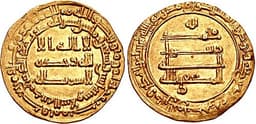
Al-Muktafi
Emperor · Medieval
44.4Total
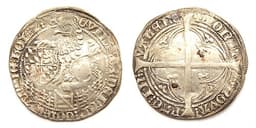
William II of Bavaria
Emperor · Medieval
54.3Total
Basic Information
Born
877
1365
Died
908
1417
Era
Medieval
Medieval
Nationality
Abbasid Caliphate
Hainaut
Occupation
Emperor
Emperor
Civilization
Middle Eastern
Western
Score Comparison
Military (10%)
45.0
11.1
Political (20%)
36.5
68.0
Influence (20%)
49.4
68.0
Legacy (20%)
40.0
55.0
Leadership (15%)
51.9
55.3
Strategy (15%)
43.3
39.2
TOTAL
44.4
54.3
Al-Muktafi — Complete Timeline
907 AD
Victory over the QarmatiansWar◆ Major
Al-Muktafi's forces defeated a Qarmatian army near Kufa, temporarily halting their raids into Iraq. This victory was one of the last significant military successes of the Abbasid caliphate before its decline.
QarmatiansBattleVictory
Impact: regionalconstructive
908 AD
Return of the Caliphate to BaghdadPolitical Action◆ Major
Al-Muktafi moved the Abbasid court from Samarra back to Baghdad. This ended the period of Samarra as the capital, which had lasted since 836, and marked a symbolic return to the traditional seat of the caliphate.
Capital MoveBaghdadSamarra
Impact: nationalconstructive
Death of Al-MuktafiPolitical Action◆ Major
Al-Muktafi died after a short reign of about six years. His death marked the end of the last effective Abbasid caliph from the Samarra period, as his successors were weaker and more dependent on military factions.
DeathSuccessionDecline
Impact: nationaltragic
William II of Bavaria — Complete Timeline
1404 AD
Inherited County of HainautOther◆ Major
William II inherited the County of Hainaut, Holland, and Zeeland upon the death of his father, Albert I. This made him one of the most powerful nobles in the Low Countries, controlling key trade routes.
InheritanceNobilityLow Countries
Impact: regional
1410 AD
Conflict with the Hook FactionOther◆ Major
William II faced a rebellion from the Hook faction, a noble party opposed to his rule in Holland. The conflict involved sieges and battles, weakening his authority and draining resources.
Civil WarRebellionHolland
Impact: regionaldestructive
1417 AD
Died from a Dog BiteOther◆ Major
William II died from complications of a dog bite, which became infected. His death without a male heir led to a succession crisis, triggering the Hook and Cod wars in the Low Countries.
DeathSuccession CrisisLow Countries
Impact: regionaldestructive
Expert Analysis
Origins
Al-Muktafi, born in 877, was the son of Caliph al-Mu'tadid and a Greek slave concubine. He grew up in the turbulent Abbasid court at Samarra, where Turkish military factions held real power. His upbringing centered on palace intrigue and military training, preparing him for a role he would hold for only six years.
William II, born in 1365, was the son of Albert I, Duke of Bavaria-Straubing and Count of Hainaut, Holland, and Zeeland. He inherited vast territories in the Low Countries, making him one of the most powerful nobles in the region. His early life was shaped by the complex politics of the Burgundian court and the recurring conflict between the Hook and Cod factions in Holland.
Rise to Power
Al-Muktafi ascended to the caliphate in 902 after his father's death. His rise was relatively smooth, as he was the designated heir. However, the caliphate was in decline, with provincial governors asserting independence and the treasury depleted by wars. His main challenge was to reassert central authority.
William II inherited his titles in 1404 upon his father's death. He immediately faced a rebellion from the Hook faction, which had opposed his father. His early reign was consumed by military campaigns to secure his inheritance, including sieges of Hook strongholds.
Leadership & Governance
Al-Muktafi's leadership focused on restoring the caliphate's prestige. He moved the capital from Samarra back to Baghdad in 903, ending the period of Samarra as the Abbasid seat (since 836). This move was symbolic but also practical, as Baghdad was more central and less dominated by Turkish troops. He also reformed the administration, appointing loyalists to key posts. However, his military campaigns were limited; his victory over the Qarmatians in 904 was a rare success. His governance score of 36.5 reflects his limited impact.
William II, by contrast, was a capable administrator who maintained the complex feudal structures of his counties. He controlled a network of alliances through marriage and diplomacy, scoring 68.0 in political skill. He faced constant rebellion from the Hook faction, which he suppressed but never fully eliminated. His leadership score of 55.3 indicates moderate effectiveness, but his reliance on force rather than conciliation weakened his rule.
Triumph & Tragedy
Al-Muktafi's greatest triumph was the return of the caliphate to Baghdad, a move that reasserted Abbasid authority and ended the Samarra period. His victory over the Qarmatians also temporarily stabilized Iraq. However, his reign was too short to achieve lasting reforms. His greatest failure was his inability to curb the power of the Turkish military, which continued to dominate the caliphate. After his death in 908, the caliphate entered a terminal decline, with the Buyids taking effective control in 945.
William II's triumphs include successfully inheriting and holding his vast territories despite internal opposition. He maintained the unity of Hainaut, Holland, and Zeeland during his reign. His tragedy was his death from a dog bite in 1417, which triggered a succession crisis. Without a male heir, the Hook and Cod factions escalated into open war, leading to the eventual absorption of his lands by Burgundy. His legacy was undone by a freak accident.
Character & Destiny
Al-Muktafi was decisive but constrained by the realities of a declining empire. He made bold moves like moving the capital, but he lacked the time or resources to fundamentally change the caliphate's trajectory. His character was that of a reformer in a period of decay. Historical assessments note his efforts but ultimately see him as the last effective caliph from Samarra, a transitional figure.
William II was a competent but unremarkable ruler. His death from a dog bite is often seen as ironic and emblematic of the fragility of power. He was not a great military leader (military score 11.1) but was politically astute. His character was stubborn, as he refused to compromise with the Hook faction, leading to prolonged conflict. His destiny was cut short by chance, leaving a messy succession.
Legacy
Al-Muktafi's legacy is mixed: he is remembered as the caliph who returned to Baghdad, but his reign did not reverse the caliphate's decline. His influence score of 49.4 reflects his symbolic importance. The Abbasid caliphate continued in name for centuries, but real power shifted away. His decision to move the capital had lasting cultural significance, as Baghdad remained the center of Islamic learning.
William II's legacy is overshadowed by the succession crisis and the eventual loss of his territories to Burgundy. His political score of 68.0 indicates his skill, but his legacy score of 55.0 shows limited enduring impact. The Hook and Cod conflict continued for decades, and the unification of the Low Countries under Burgundy was accelerated by his death. He is often remembered as the count who died from a dog bite, a cautionary tale about the unpredictability of life.
Conclusion
While William II scores higher overall (54.3 vs 44.4), his impact was regional and short-lived. Al-Muktafi, despite a lower total score, made a decision that shaped the Islamic world: returning the caliphate to Baghdad. This move had cultural and political repercussions that outlasted his reign. In contrast, William II's death from a dog bite ended his line and led to the absorption of his lands, but did not alter the course of European history. Therefore, Al-Muktafi had a greater impact on history, as his action affected the center of the Islamic world for centuries. The numerical scores do not capture the historical weight of the caliphate's return to Baghdad.
Rankings
🥇
William II of BavariaLeader
Mil: 11.1Pol: 68.0Inf: 68.0
54.3
🥈
Al-Muktafi
Mil: 45.0Pol: 36.5Inf: 49.4
44.4
+9.9 behind
How This Comparison Works
Algorithm
Each figure is scored on 6 dimensions (0—100 scale) based on structured historical data: Military (10%), Political (20%), Influence (20%), Legacy (20%), Leadership (15%), Strategy (15%). The weighted total produces the final ranking.
Data Sources
Scores are computed from structured sub-indicators in the database. Scale factors adjust for era (Ancient ×0.85, Modern ×1.0) and civilization size (Eastern ×1.05, Other ×0.80) to account for differences in population and military scale.
Maximum 3 Figures
Comparisons are limited to 2—3 figures to ensure readability and statistical meaningfulness.
Error Margins
±5 points per dimension — Sub-scores are derived from historical records with inherent uncertainty. Two figures within 5 points on a dimension should be considered roughly equivalent in that area.
Total Score Accuracy
±3 points overall — The weighted combination of 6 dimensions produces a total score with approximately ±3 points of uncertainty. Differences of less than 3 points are not statistically significant— the figures are effectively tied.
Known Limitations
- Historical records are incomplete and uneven across civilizations
- Figures from oral-tradition societies may be underrepresented
- Occupation labels can misclassify multi-role figures
- Scores measure capability and impact, not moral character
- Quantitative scoring is a comparison tool, not absolute truth
Capability Radar
Military (10%) — Battles & Warfare
Battles
30
8
Win Rate
35
7
Expansion
20
9
Political (20%) — Governance & Reform
Reform
30
0
Diplomacy
35
0
Economy
30
0
Influence (20%) — Cultural & Global Reach
Cultural
20
66
Global
15
77
Legacy (20%) — Historical Impact
Historical
25
69
Longevity
15
75
Leadership (15%) — Power & Stability
Tenure
40
5
Stability
25
5
Strategy (15%) — Tactics & Innovation
Strategy
30
17
Tactics
30
20
Reform
20
22
Similar Comparisons
Comments & Discussion
No comments yet. Be the first to share your thoughts!