Loading...
Al-Muktafi vs Napoleon Bonaparte
Napoleon Bonaparte leads by 26.5 pts · 2 figures compared
…
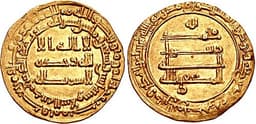
Al-Muktafi
Emperor · Medieval
44.4Total

Napoleon Bonaparte
General · Modern
70.9Total
Basic Information
Born
877
1769
Died
908
1821
Era
Medieval
Modern
Nationality
Abbasid Caliphate
France
Occupation
Emperor
General
Civilization
Middle Eastern
Western
Score Comparison
Military (10%)
45.0
94.0
Political (20%)
36.5
72.0
Influence (20%)
49.4
40.0
Legacy (20%)
40.0
80.0
Leadership (15%)
51.9
78.0
Strategy (15%)
43.3
90.0
TOTAL
44.4
70.9
Al-Muktafi — Complete Timeline
907 AD
Victory over the QarmatiansWar◆ Major
Al-Muktafi's forces defeated a Qarmatian army near Kufa, temporarily halting their raids into Iraq. This victory was one of the last significant military successes of the Abbasid caliphate before its decline.
QarmatiansBattleVictory
Impact: regionalconstructive
908 AD
Return of the Caliphate to BaghdadPolitical Action◆ Major
Al-Muktafi moved the Abbasid court from Samarra back to Baghdad. This ended the period of Samarra as the capital, which had lasted since 836, and marked a symbolic return to the traditional seat of the caliphate.
Capital MoveBaghdadSamarra
Impact: nationalconstructive
Death of Al-MuktafiPolitical Action◆ Major
Al-Muktafi died after a short reign of about six years. His death marked the end of the last effective Abbasid caliph from the Samarra period, as his successors were weaker and more dependent on military factions.
DeathSuccessionDecline
Impact: nationaltragic
Napoleon Bonaparte — Complete Timeline
1799 AD
Coup of 18 BrumaireOther◆ Major
Napoleon Bonaparte, with support from his brother Lucien and key political figures, overthrew the Directory in a bloodless coup. He established the Consulate with himself as First Consul, effectively becoming the ruler of France. This event ended the French Revolution's most unstable period.
French RevolutionCoupRise to Power
Impact: regional
1804 AD
Promulgation of the Napoleonic CodeOther◆ Major
Napoleon enacted the Civil Code of the French, known as the Napoleonic Code, a comprehensive set of laws that replaced the fragmented feudal legal systems. The code established legal equality, protected property rights, and secularized law. It became the basis for legal systems in many European and world countries.
Legal ReformNapoleonic CodeCivil Law
Impact: globalconstructive
1805 AD
Battle of AusterlitzWar◆ Major
Napoleon's Grande Arm
Napoleonic WarsBattleDecisive Victory
Impact: global
1812 AD
Invasion of RussiaWar◆ Major
Napoleon led the Grande Arm
Napoleonic WarsInvasionDisaster
Impact: globaldestructive
1815 AD
Battle of WaterlooWar◆ Major
Napoleon's French army was defeated by the combined forces of the Duke of Wellington's Anglo-Allied army and Gebhard Leberecht von Bl
Napoleonic WarsBattleFinal Defeat
Impact: globaldestructive
Expert Analysis
al-muktafi-vs-napoleon-bonaparte
# The Conqueror and the Caretaker: Napoleon and al-Muktafi
In the spring of 908, while a young Corsican artillery officer named Napoleon Bonaparte was still three years from being born, the Abbasid Caliph al-Muktafi lay dying in Baghdad. He had just accomplished something his predecessors had failed to do for nearly half a century: he had moved the caliph’s court back to the ancient capital of the Islamic world. It was a quiet triumph, a restoration of order, but it came too late. Within months, he was dead, and with him died the last hope of a once-mighty empire. On the other side of history, Napoleon Bonaparte would one day shake the foundations of Europe, conquer from Madrid to Moscow, and die in exile on a remote Atlantic island. Why did one man’s story end in a palace in Baghdad, and the other’s on a rock in the South Atlantic? The answer lies not in their greatness, but in the worlds they inherited.
Origins
Napoleon was born in 1769 on Corsica, an island recently annexed by France, into a minor noble family of Italian origin. His childhood was marked by poverty, pride, and a burning desire to prove himself. The French Revolution, which erupted when he was twenty, shattered the old order and opened doors that would have been closed to a provincial outsider in peacetime. He was a child of chaos, and chaos became his raw material.
Al-Muktafi was born in 877 in Samarra, the sprawling palace-city that his grandfather al-Mutawakkil had built north of Baghdad. He was a prince of the Abbasid dynasty, raised in the shadow of Turkish slave-soldiers who had turned caliphs into puppets. By the time he came of age, the caliphate had lost Egypt to the Tulunids, faced rebellion in Arabia, and watched its treasury drain into the pockets of mercenary commanders. Al-Muktafi inherited not a revolution but a slow collapse.
Rise to Power
Napoleon’s rise was meteoric. In 1793, at age twenty-four, he drove the British out of Toulon, earning promotion to brigadier general. In 1796, at twenty-six, he took command of the ragged French army in Italy and turned it into an instrument of lightning conquest. He understood that in revolutionary France, talent mattered more than birth. His victory at the Battle of Austerlitz in 1805, where he crushed the combined armies of Russia and Austria, cemented his reputation as a military genius. He did not wait for power; he seized it.
Al-Muktafi’s path was quieter. His father, Caliph al-Mu’tadid, had spent years reasserting caliphal authority in Iraq, fighting rebels and restoring order. When al-Mu’tadid died in 902, al-Muktafi inherited a throne that was still fragile. His most significant military action came in 907, when his generals defeated a Qarmatian army near Kufa. The Qarmatians were a radical Ismaili sect that had terrorized southern Iraq for years. The victory was real but limited—it temporarily halted their raids, nothing more. Al-Muktafi was not a conqueror; he was a manager of decline.
Leadership & Governance
Napoleon governed with the same energy he brought to war. He reformed French law through the Napoleonic Code, centralizing administration, standardizing education, and establishing the modern French state. He was a master of propaganda, presenting himself as the savior of the Revolution while simultaneously crushing dissent. His political wisdom was pragmatic: he knew when to reward loyalty and when to eliminate threats. But his greatest flaw was his ambition. He could not stop. Each victory demanded another, until the entire continent stood against him.
Al-Muktafi governed from a position of weakness. His most enduring act was the return of the caliphate to Baghdad in 908, ending the Samarra period that had lasted from 836. This was not a military conquest but a political gesture—a signal that the caliph intended to rule from the heart of Islamic civilization, not from a garrison city. He also attempted to curb the power of the Turkish military elite, but his reign was too short to achieve lasting reform. His strategy score of 65.6 reflects a cautious, defensive approach. He was not building an empire; he was trying to keep one from dissolving.
Triumph & Tragedy
Napoleon’s greatest moment was Austerlitz, where he outmaneuvered and destroyed a larger enemy force in a single day. His worst was the invasion of Russia in 1812, where he lost half a million men to winter, disease, and guerrilla warfare. The disaster broke his aura of invincibility. By 1814, Paris was occupied, and he was forced to abdicate. He returned in 1815 for the Hundred Days, only to be defeated at Waterloo by the Duke of Wellington and Prussian forces. His final exile on Saint Helena was a slow, bitter end.
Al-Muktafi’s triumph was modest but real: the defeat of the Qarmatians in 907 and the restoration of Baghdad as the caliphal capital in 908. His tragedy was that he died just as these successes might have borne fruit. His leadership score of 38.0 suggests a ruler who was competent but not exceptional. He left no legend, no epic defeat, no dramatic exile—only the quiet sense of what might have been.
Character & Destiny
Napoleon was driven by an insatiable hunger for glory. “I live only for posterity,” he once said. His personality was a furnace of ambition, intelligence, and arrogance. He believed that he could shape history through sheer will. In many ways, he was right—but will alone cannot conquer geography, logistics, or the united hatred of Europe’s monarchies. His destiny was to rise higher than any man of his age and to fall harder.
Al-Muktafi was a different kind of figure: cautious, dutiful, and aware of limits. He did not dream of conquering Constantinople or Rome. He wanted to restore the dignity of the caliphate, to bring order to a fractured realm. His destiny was to be a caretaker, not a creator. He died at age thirty-one, leaving a throne that would soon be seized by stronger hands. The Abbasid caliphate limped on for another century, but it never recovered its former power.
Legacy
Napoleon’s legacy is vast and contradictory. He is remembered as a military genius, a reformer, and a tyrant. The Napoleonic Code influenced legal systems across Europe and the world. His campaigns reshaped borders and inspired nationalist movements. His total score of 82.4 reflects a figure of immense historical weight, for better and for worse.
Al-Muktafi’s legacy is faint. His influence score of 62.5 and legacy score of 50.3 place him among the minor figures of history. He is known mainly to specialists—the last caliph to rule from Samarra, the one who brought the court back to Baghdad. But that act, however modest, matters. It closed a chapter of Abbasid history and reopened another. He did not save the caliphate, but he gave it a few more years of life.
Conclusion
Napoleon and al-Muktafi lived in different worlds, separated by a millennium and a continent. Napoleon was a storm; al-Muktafi was a steady hand on a sinking ship. The Frenchman’s ambition carried him to the heights of power and the depths of exile. The caliph’s caution preserved what little he had. One remade the world; the other tried to hold it together. In the end, both were defeated—one by his own hubris, the other by the slow tide of history. Their stories remind us that greatness is not always a choice. Sometimes, it is a trap.
Rankings
🥇
Napoleon BonaparteLeader
Mil: 94.0Pol: 72.0Inf: 40.0
70.9
🥈
Al-Muktafi
Mil: 45.0Pol: 36.5Inf: 49.4
44.4
+26.5 behind
How This Comparison Works
Algorithm
Each figure is scored on 6 dimensions (0—100 scale) based on structured historical data: Military (10%), Political (20%), Influence (20%), Legacy (20%), Leadership (15%), Strategy (15%). The weighted total produces the final ranking.
Data Sources
Scores are computed from structured sub-indicators in the database. Scale factors adjust for era (Ancient ×0.85, Modern ×1.0) and civilization size (Eastern ×1.05, Other ×0.80) to account for differences in population and military scale.
Maximum 3 Figures
Comparisons are limited to 2—3 figures to ensure readability and statistical meaningfulness.
Error Margins
±5 points per dimension — Sub-scores are derived from historical records with inherent uncertainty. Two figures within 5 points on a dimension should be considered roughly equivalent in that area.
Total Score Accuracy
±3 points overall — The weighted combination of 6 dimensions produces a total score with approximately ±3 points of uncertainty. Differences of less than 3 points are not statistically significant— the figures are effectively tied.
Known Limitations
- Historical records are incomplete and uneven across civilizations
- Figures from oral-tradition societies may be underrepresented
- Occupation labels can misclassify multi-role figures
- Scores measure capability and impact, not moral character
- Quantitative scoring is a comparison tool, not absolute truth
Capability Radar
Military (10%) — Battles & Warfare
Battles
30
95
Win Rate
35
90
Expansion
20
95
Political (20%) — Governance & Reform
Reform
30
95
Diplomacy
35
80
Economy
30
85
Influence (20%) — Cultural & Global Reach
Cultural
20
85
Global
15
90
Legacy (20%) — Historical Impact
Historical
25
95
Longevity
15
90
Leadership (15%) — Power & Stability
Tenure
40
85
Stability
25
70
Strategy (15%) — Tactics & Innovation
Strategy
30
95
Tactics
30
98
Reform
20
92
Similar Comparisons
Comments & Discussion
CorsicanRatBastard6/17/2026
Napoleon was just a brilliant opportunist riding the wave of revolutionary chaos, executing the occasional 300-pound royalist cannonade on the Parisian streets. When faced with a real strategic hellscape like Russia, he lost his nerve and marched 600,000 men to nowhere. Al-Muktafi at least knew the Abbasid empire needed its capital (Baghdad, 908 CE) as a power center. Napoleon ended up on Elba because he got too attached to Corsica’s malcontent energy and forgot logistics matter. One tried to re
沙尘编年史家6/17/2026
拿战专业户总爱吹拿破仑的天才,但al-Muktafi在908年把皇宫从萨迈拉迁回巴格达,这招才是真高——老帝国首都的行政惯性堪比最强战略资产。拿破仑呢?1812年莫斯科郊外连冬衣都没备够,冻死三十万,跟战略恢复完全不沾边。一个在沙漠里重整河山,一个在雪地里脑淤血,高下立判。
PigeonholeEmpiricist6/17/2026
Comparing a 9th-century Abbasid caliph (whose biggest feat was moving a palace 80 miles) to the man who invented the modern nation-state’s military machine? That’s like saying my grandma’s potato salad beats a Michelin-star chef because both use potatoes. Napoleon restructured Europe’s legal code (Code Napoleon, 1804), crushed the Holy Roman Empire (1806), and created mass conscription’s playbook. Al-Muktafi couldn’t even fend off the Qarmatians raiding Basra. The Persian vizier class barely let
塔尖观史人6/17/2026
别被历史课本骗了——拿破仑最牛的不是打仗,是《民法典》把法国从封建残余里拔出来;而al-Muktafi搞的宫廷搬迁本质上是个政治抒情仪式,巴格达在908年早不是经济重心了。东方帝国的权力全在哈里发手里的粮仓和近卫军,一死就崩。拿破仑的霸权靠制度惯性撑了二十年,他死后欧洲还得对付维也纳体系。一个是制度建筑师,一个是皇帝牌位的搬运工。
RevisionistRogue6/17/2026
You all miss the real story. Napoleon wasn’t some god of war; he lost more battles than Jena (1806) suggests—look at Aspern-Essling (1809) where he got his ass kicked by Archduke Charles, or the 1814 Six Days’ Campaign that was just a desperate retreat. Al-Muktafi actually died in bed after consolidating power without losing big—his Qarmatian campaigns were successful enough. Napoleon’s