Loading...
Al-Muktafi vs Ethelred the Unready
Al-Muktafi leads by 4.5 pts · 2 figures compared
…
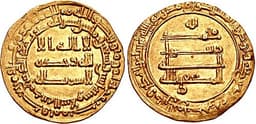
Al-Muktafi
Emperor · Medieval
44.4Total

Ethelred the Unready
Emperor · Medieval
39.9Total
Basic Information
Born
877
968
Died
908
1016
Era
Medieval
Medieval
Nationality
Abbasid Caliphate
England
Occupation
Emperor
Emperor
Civilization
Middle Eastern
Western
Score Comparison
Military (10%)
45.0
21.2
Political (20%)
36.5
29.3
Influence (20%)
49.4
50.2
Legacy (20%)
40.0
42.5
Leadership (15%)
51.9
41.5
Strategy (15%)
43.3
39.6
TOTAL
44.4
39.9
Al-Muktafi — Complete Timeline
907 AD
Victory over the QarmatiansWar◆ Major
Al-Muktafi's forces defeated a Qarmatian army near Kufa, temporarily halting their raids into Iraq. This victory was one of the last significant military successes of the Abbasid caliphate before its decline.
QarmatiansBattleVictory
Impact: regionalconstructive
908 AD
Return of the Caliphate to BaghdadPolitical Action◆ Major
Al-Muktafi moved the Abbasid court from Samarra back to Baghdad. This ended the period of Samarra as the capital, which had lasted since 836, and marked a symbolic return to the traditional seat of the caliphate.
Capital MoveBaghdadSamarra
Impact: nationalconstructive
Death of Al-MuktafiPolitical Action◆ Major
Al-Muktafi died after a short reign of about six years. His death marked the end of the last effective Abbasid caliph from the Samarra period, as his successors were weaker and more dependent on military factions.
DeathSuccessionDecline
Impact: nationaltragic
Ethelred the Unready — Complete Timeline
991 AD
Battle of MaldonWar◆ Major
Ethelred's forces were defeated by a Viking army at Maldon in Essex. The defeat led to Ethelred paying the first Danegeld, a tribute of 10,000 pounds of silver, to the Vikings to secure peace.
Viking InvasionDanegeldDefeat
Impact: nationaldestructive
1002 AD
St. Brice's Day MassacrePolitical Action◆ Major
Ethelred ordered the massacre of all Danish settlers in England on November 13. This act provoked King Sweyn Forkbeard of Denmark to launch a full-scale invasion of England, escalating the Viking conflict.
MassacreViking InvasionRetaliation
Impact: nationaldestructive
1013 AD
Sweyn Forkbeard's InvasionWar◆ Major
King Sweyn Forkbeard of Denmark invaded England and conquered the country. Ethelred fled to Normandy in exile, leaving Sweyn as king of England until his death in 1014.
InvasionExileViking Conquest
Impact: nationaldestructive
1014 AD
Return from ExilePolitical Action◆ Major
After Sweyn Forkbeard's death, Ethelred returned from Normandy and was restored as king of England. He agreed to rule under a new compact with his subjects, promising better governance.
RestorationPolitical CompactReturn
Impact: nationalconstructive
1016 AD
Siege of LondonWar◆ Major
Cnut the Great besieged London while Ethelred was in the city. Ethelred died during the siege on April 23, 1016, leaving his son Edmund Ironside to continue the fight against Cnut.
SiegeDeathViking Invasion
Impact: nationaltragic
Expert Analysis
Origins
Al-Muktafi (born 875/76) was the son of Caliph al-Mu'tamid, but his early life was shaped by the turmoil of the Abbasid Caliphate's decline. He was raised in Samarra, the capital established by his predecessors, amidst factional struggles between Turkish military commanders and the bureaucracy. His father's reign was marked by the Zanj Rebellion and increasing fragmentation. Al-Muktafi's mother was a Greek slave, and he received a typical princely education in courtly and administrative arts. He became caliph in 902 after the death of his cousin al-Mu'tadid.
Ethelred the Unready (born c. 966) was the son of King Edgar the Peaceful and Queen Ælfthryth. His nickname 'Unready' derives from the Old English 'unræd,' meaning 'poor counsel.' He was raised in Winchester, the capital of Wessex, and was educated in Latin and governance. Ethelred ascended the throne at age 12 after his half-brother Edward the Martyr was murdered, likely by agents of his mother. The murder cast a shadow over his reign, as many believed the kingdom was cursed.
Rise to Power
Al-Muktafi became caliph in 902 after the death of al-Mu'tadid. His predecessor had restored some stability through military campaigns, but the caliphate was still threatened by the Qarmatians, a radical Ismaili sect that had established a state in eastern Arabia. Al-Muktafi's rise was smooth by Abbasid standards, as he was the designated heir. His first major test came in 903 when a Qarmatian army invaded Iraq. Al-Muktafi's forces, led by general Badr al-Mu'tadidi, defeated the Qarmatians near Kufa in 903, temporarily halting their raids. This victory boosted his prestige and allowed him to move the capital from Samarra back to Baghdad in 903, ending a 67-year period of Samarra as the caliphal seat.
Ethelred's rise was marred by the murder of his half-brother Edward in 978. As a child king, he was controlled by his mother and a regency council. The first major crisis of his reign came in 991 when a Viking fleet raided Essex. At the Battle of Maldon, Ethelred's ealdorman Byrhtnoth was killed, and the English were defeated. Ethelred's response was to pay the first Danegeld, a tribute of 10,000 pounds of silver, to buy off the Vikings. This set a precedent for future payments that drained the treasury and encouraged more raids.
Leadership & Governance
Al-Muktafi's leadership was focused on centralization and restoring the caliphate's authority. He moved the court to Baghdad to reassert control over the bureaucracy and reduce the influence of Turkish troops. He appointed competent viziers and maintained the administrative system of his predecessors. His governance scored 36.5 in political acumen, reflecting his ability to navigate court intrigues but limited by the caliphate's declining power. He also attempted to curb the power of the military by promoting the role of the vizierate.
Ethelred's leadership was marked by inconsistency and poor counsel. His political score of 29.3 reflects his reliance on advisors like Æthelric and later Eadric Streona, who were often self-serving. Ethelred's governance was characterized by heavy taxation to pay Danegeld, which alienated his subjects. He also alienated the church by appointing secular clergy to bishoprics for financial gain. His decision to order the St. Brice's Day Massacre in 1002, killing Danish settlers in England, was a catastrophic miscalculation that provoked King Sweyn Forkbeard's invasion.
Triumph & Tragedy
Al-Muktafi's greatest success was the return of the caliphate to Baghdad, which restored a sense of continuity and prestige. His victory over the Qarmatians in 903 was also significant, as it temporarily secured Iraq from their raids. However, his reign was too short to consolidate these gains. His greatest failure was his inability to reverse the caliphate's long-term decline; after his death, the Abbasids continued to lose power to regional dynasties. He died in 908 after a reign of only six years, leaving his son al-Muqtadir, who was only 13, leading to further instability.
Ethelred's greatest success was his return from exile in 1014 after Sweyn's death. He agreed to a compact with his subjects, promising to rule justly, which briefly restored his authority. However, his greatest failures far outweigh this: the St. Brice's Day Massacre provoked full-scale invasion, and his policy of paying Danegeld only encouraged more attacks. By his death in 1016, England was in chaos, with Cnut the Great besieging London. Ethelred's reign saw the loss of English independence, as his son Edmund Ironside had to share power with Cnut under the Treaty of Olney.
Character & Destiny
Al-Muktafi was described as a capable and moderate ruler, but his early death cut short his potential. He scored 51.9 in leadership, reflecting his ability to make decisive moves like the return to Baghdad. However, his character was not strong enough to withstand the structural weaknesses of the caliphate. His destiny was to be the last caliph of the Samarra period, a transitional figure whose efforts were undone by his successors.
Ethelred's character was shaped by his upbringing and the murder of his half-brother. He was indecisive and prone to bad advice, earning him the nickname 'Unready.' His leadership score of 41.5 indicates a ruler who could not inspire loyalty or effective action. His destiny was to be remembered as a failure, the king who lost England to the Danes. His reliance on Danegeld and the massacre of Danes define his legacy.
Legacy
Al-Muktafi's legacy is primarily the return of the caliphate to Baghdad, which remained the capital until the Mongol sack in 1258. He is remembered as the last effective caliph from the Samarra era, but his influence score of 49.4 reflects his limited long-term impact. The Qarmatian threat resumed after his death, and the caliphate continued its decline.
Ethelred's legacy is overwhelmingly negative. He is remembered as a weak king whose policies led to Danish conquest. The St. Brice's Day Massacre is a lasting stain, and the Danegeld set a precedent for paying off enemies. However, his reign also saw the beginning of the Godwin family's rise, which would shape English history. His influence score of 50.2 is slightly higher than Al-Muktafi's, but his legacy is one of failure.
Conclusion
Al-Muktafi had a greater impact on the Abbasid Caliphate by restoring the capital to Baghdad and achieving a military victory against the Qarmatians. His total score of 44.4 is higher than Ethelred's 39.9, and his leadership and strategy scores are also higher. Ethelred's reign was a disaster for England, leading to foreign domination. While both faced structural challenges, Al-Muktafi made positive moves that had lasting symbolic importance. Therefore, Al-Muktafi had a greater impact, even if his reign was short.
Rankings
🥇
Al-MuktafiLeader
Mil: 45.0Pol: 36.5Inf: 49.4
44.4
🥈
Ethelred the Unready
Mil: 21.2Pol: 29.3Inf: 50.2
39.9
+4.5 behind
How This Comparison Works
Algorithm
Each figure is scored on 6 dimensions (0—100 scale) based on structured historical data: Military (10%), Political (20%), Influence (20%), Legacy (20%), Leadership (15%), Strategy (15%). The weighted total produces the final ranking.
Data Sources
Scores are computed from structured sub-indicators in the database. Scale factors adjust for era (Ancient ×0.85, Modern ×1.0) and civilization size (Eastern ×1.05, Other ×0.80) to account for differences in population and military scale.
Maximum 3 Figures
Comparisons are limited to 2—3 figures to ensure readability and statistical meaningfulness.
Error Margins
±5 points per dimension — Sub-scores are derived from historical records with inherent uncertainty. Two figures within 5 points on a dimension should be considered roughly equivalent in that area.
Total Score Accuracy
±3 points overall — The weighted combination of 6 dimensions produces a total score with approximately ±3 points of uncertainty. Differences of less than 3 points are not statistically significant— the figures are effectively tied.
Known Limitations
- Historical records are incomplete and uneven across civilizations
- Figures from oral-tradition societies may be underrepresented
- Occupation labels can misclassify multi-role figures
- Scores measure capability and impact, not moral character
- Quantitative scoring is a comparison tool, not absolute truth
Capability Radar
Military (10%) — Battles & Warfare
Battles
30
15
Win Rate
35
10
Expansion
20
5
Political (20%) — Governance & Reform
Reform
30
10
Diplomacy
35
15
Economy
30
15
Influence (20%) — Cultural & Global Reach
Cultural
20
20
Global
15
10
Legacy (20%) — Historical Impact
Historical
25
25
Longevity
15
20
Leadership (15%) — Power & Stability
Tenure
40
40
Stability
25
10
Strategy (15%) — Tactics & Innovation
Strategy
30
10
Tactics
30
10
Reform
20
5
Similar Comparisons
Comments & Discussion
No comments yet. Be the first to share your thoughts!