Loading...
Al-Mahdi vs Daniel of Galicia
Daniel of Galicia leads by 0.1 pts · 2 figures compared
…
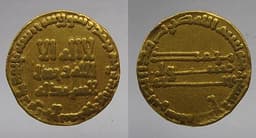
Al-Mahdi
Emperor · Medieval
54.5Total
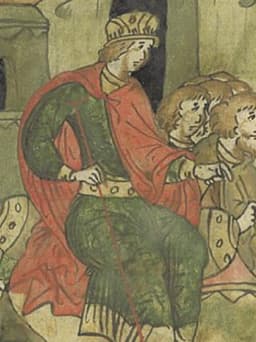
Daniel of Galicia
Emperor · Medieval
54.6Total
Basic Information
Born
744
1201
Died
785
1264
Era
Medieval
Medieval
Nationality
Abbasid Caliphate
Galicia-Volhynia
Occupation
Emperor
Emperor
Civilization
Middle Eastern
Western
Score Comparison
Military (10%)
52.5
40.0
Political (20%)
68.0
61.3
Influence (20%)
59.0
54.9
Legacy (20%)
50.0
46.7
Leadership (15%)
40.0
67.0
Strategy (15%)
57.5
60.0
TOTAL
54.5
54.6
Al-Mahdi — Complete Timeline
762 AD
Construction of Baghdad's Round CityCultural◆ Major
Al-Mahdi oversaw the completion of the Round City of Baghdad, the new Abbasid capital founded by his father al-Mansur. This city became a center of trade, learning, and culture, symbolizing Abbasid power.
Urban DevelopmentCapital City
Impact: globalconstructive
775 AD
Campaign against the ByzantinesWar◆ Major
Al-Mahdi led military campaigns against the Byzantine Empire, including a major expedition in 775 that reached as far as the outskirts of Constantinople. These campaigns were part of the ongoing Arab-Byzantine wars and resulted in territorial gains for the Abbasids.
Arab-Byzantine WarsMilitary Campaign
Impact: regional
779 AD
Suppression of the Kharijite RevoltWar
Al-Mahdi dispatched forces to suppress a Kharijite rebellion in the Jazira region. The revolt was crushed, and its leaders were executed, reinforcing Abbasid control over the region.
Kharijite RevoltInternal Conflict
Impact: regionaldestructive
780 AD
Patronage of the Translation MovementCultural◆ Major
Al-Mahdi supported the translation of Greek, Persian, and Indian scientific and philosophical texts into Arabic. This patronage contributed to the Abbasid Golden Age and the preservation of classical knowledge.
Translation MovementGolden Age
Impact: globalprogressive
Daniel of Galicia — Complete Timeline
1240 AD
Prince of Galicia-Volhynia during Mongol invasionWar◆ Major
Daniel of Galicia ruled the Principality of Galicia-Volhynia when the Mongols invaded. He initially resisted but was forced to submit to Mongol suzerainty after the destruction of Kyiv in 1240. Daniel's submission preserved his realm from total destruction, but he became a vassal of the Golden Horde, paying tribute and providing troops.
Mongol invasionVassalageTribute
Impact: regionaltragic
1253 AD
Coronation as King of Galicia-Volhynia by the PopePolitical Action◆ Major
Daniel accepted a royal crown from Pope Innocent IV in exchange for promising to promote church union with Rome and organize a crusade against the Mongols. He was crowned King of Galicia-Volhynia in Dorohychyn. This coronation elevated his status and sought Western support against the Mongols, but the promised crusade never materialized.
Royal coronationPapal allianceAnti-Mongol strategy
Impact: regionalconstructive
1254 AD
Military campaign against the Mongols (1254-1255)War
Daniel launched a military campaign against the Mongol forces in Podolia and Volhynia, achieving some initial successes. He recaptured several towns from Mongol control. However, the campaign ultimately failed due to lack of Western support and Mongol reinforcements. Daniel was forced to reaffirm his vassalage to the Golden Horde.
Anti-Mongol campaignMilitary failureVassalage reaffirmed
Impact: regional
1256 AD
Foundation of the city of Lviv (Lwów)Cultural◆ Major
Daniel founded the city of Lviv (Lw
City foundationLvivTrade hub
Impact: regionalconstructive
Expert Analysis
Origins
Al-Mahdi, born in 744/745 near Baghdad, was the son of Caliph al-Mansur, founder of Baghdad. His mother was a Berber slave. He grew up in the Abbasid court, receiving education in Islamic sciences and military training. His early life was marked by the consolidation of Abbasid power after the overthrow of the Umayyads.
Daniel of Galicia, born in 1201, was the son of Roman the Great, Prince of Galicia-Volhynia. His father died in 1205, leaving Daniel and his brother Vasylko as minors. They faced exile and internal strife, spending years in the court of King Andrew II of Hungary. Daniel's early life was shaped by constant warfare and political maneuvering.
Rise to Power
Al-Mahdi's rise was smooth: he was designated heir by his father and became caliph in 775 upon al-Mansur's death. His legitimacy was unchallenged, and he focused on internal consolidation and expansion of trade.
Daniel's path was fraught with conflict. After his father's death, he struggled to reclaim his patrimony. By 1221, he had regained control of Galicia, but faced threats from Poland, Hungary, and the Mongols. His coronation as king in 1253 by Pope Innocent IV was a diplomatic move to gain Western support against the Mongols.
Leadership & Governance
Al-Mahdi's governance emphasized cultural patronage. He completed Baghdad's Round City, making it a hub for the Translation Movement, which preserved Greek and Persian knowledge. His administration was efficient, but he faced Kharijite rebellions, which he suppressed ruthlessly. His military score of 52.5 reflects moderate success against Byzantines, but his political score of 68.0 shows skilled governance.
Daniel was a pragmatic leader. He submitted to Mongol suzerainty in 1245 to protect his realm, while secretly preparing resistance. He founded Lviv as a fortified commercial center, boosting trade. His leadership score of 67.0 indicates strong ability to navigate crises, but his military score of 40.0 reflects limited success against the Mongols.
Triumph & Tragedy
Al-Mahdi's greatest triumph was sponsoring the Translation Movement, which sparked an intellectual golden age. His tragedy was the failure of his Byzantine campaign to capture Constantinople, and internal rebellions that drained resources.
Daniel's triumph was founding Lviv, which became a major city. His tragedy was his ultimate failure to throw off Mongol rule. His 1254-1255 campaign recaptured some towns but ended in stalemate, and he remained a vassal until his death.
Character & Destiny
Al-Mahdi was a patron of learning but also a ruthless suppressor of dissent. His character combined intellectual curiosity with autocratic control, shaping a caliphate that valued knowledge but maintained strict order.
Daniel was a resilient survivor, constantly adapting to threats. His willingness to accept a papal crown showed diplomatic flexibility, but his destiny was tied to the Mongol yoke, which he could not escape.
Legacy
Al-Mahdi's legacy is tied to Baghdad's golden age and the preservation of classical knowledge. His scores: Influence 59.0, Legacy 50.0. He is remembered as a builder and patron.
Daniel's legacy is the founding of Lviv and his role as a symbol of Ruthenian resistance. His scores: Influence 54.9, Legacy 46.7. He is a national hero in Ukraine.
Conclusion
Al-Mahdi had greater impact. Despite lower total score (54.5 vs 54.6), his patronage of the Translation Movement shaped Islamic science and later European Renaissance. Daniel's influence was more localized. Al-Mahdi's contributions to knowledge endure globally.
Rankings
🥇
Daniel of GaliciaLeader
Mil: 40.0Pol: 61.3Inf: 54.9
54.6
🥈
Al-Mahdi
Mil: 52.5Pol: 68.0Inf: 59.0
54.5
+0.1 behind
How This Comparison Works
Algorithm
Each figure is scored on 6 dimensions (0—100 scale) based on structured historical data: Military (10%), Political (20%), Influence (20%), Legacy (20%), Leadership (15%), Strategy (15%). The weighted total produces the final ranking.
Data Sources
Scores are computed from structured sub-indicators in the database. Scale factors adjust for era (Ancient ×0.85, Modern ×1.0) and civilization size (Eastern ×1.05, Other ×0.80) to account for differences in population and military scale.
Maximum 3 Figures
Comparisons are limited to 2—3 figures to ensure readability and statistical meaningfulness.
Error Margins
±5 points per dimension — Sub-scores are derived from historical records with inherent uncertainty. Two figures within 5 points on a dimension should be considered roughly equivalent in that area.
Total Score Accuracy
±3 points overall — The weighted combination of 6 dimensions produces a total score with approximately ±3 points of uncertainty. Differences of less than 3 points are not statistically significant— the figures are effectively tied.
Known Limitations
- Historical records are incomplete and uneven across civilizations
- Figures from oral-tradition societies may be underrepresented
- Occupation labels can misclassify multi-role figures
- Scores measure capability and impact, not moral character
- Quantitative scoring is a comparison tool, not absolute truth
Capability Radar
Military (10%) — Battles & Warfare
Battles
55
45
Win Rate
60
40
Expansion
50
50
Political (20%) — Governance & Reform
Reform
55
40
Diplomacy
60
60
Economy
65
45
Influence (20%) — Cultural & Global Reach
Cultural
50
40
Global
45
30
Legacy (20%) — Historical Impact
Historical
55
45
Longevity
50
35
Leadership (15%) — Power & Stability
Tenure
60
55
Stability
55
35
Strategy (15%) — Tactics & Innovation
Strategy
55
55
Tactics
50
50
Reform
40
35
Similar Comparisons
Comments & Discussion
No comments yet. Be the first to share your thoughts!