Loading...
This comparison has not been analyzed yet.
One-time AI generation (~1 minute). Scores and timeline are already available below.
Al-Hajjaj ibn Yusuf vs Fabius Maximus
Al-Hajjaj ibn Yusuf leads by 9.6 pts · 2 figures compared
…
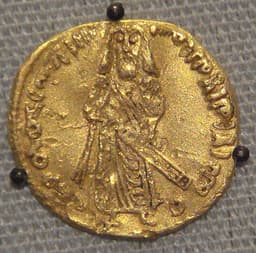
Al-Hajjaj ibn Yusuf
General · Ancient
64.2Total

Fabius Maximus
General · Ancient
54.6Total
Basic Information
Born
-661
-280
Died
—
-203
Era
Ancient
Ancient
Nationality
Umayyad Caliphate
Roman Republic
Occupation
General
General
Civilization
Middle Eastern
Western
Score Comparison
Military (10%)
90.0
47.5
Political (20%)
68.0
48.0
Influence (20%)
57.2
56.7
Legacy (20%)
50.0
52.0
Leadership (15%)
71.0
48.8
Strategy (15%)
76.0
81.2
TOTAL
64.2
54.6
Al-Hajjaj ibn Yusuf — Complete Timeline
694 AD
Appointed Governor of IraqPolitical Action◆ Major
Caliph Abd al-Malik appointed Al-Hajjaj ibn Yusuf as governor of Iraq. He was tasked with restoring order after years of rebellion and instability. His appointment marked the beginning of a harsh and effective administration.
GovernorshipIraqUmayyad
Impact: regional
700 AD
Reform of the Arabic ScriptCultural◆ Major
Al-Hajjaj ibn Yusuf commissioned the introduction of diacritical marks (dots) to the Arabic script to standardize the reading of the Quran and prevent mispronunciation. This reform had a lasting impact on Arabic writing and Islamic scholarship.
Language ReformArabic ScriptQuran
Impact: globalconstructive
701 AD
Battle of Dayr al-JamajimWar◆ Major
Al-Hajjaj ibn Yusuf led Umayyad forces to a decisive victory over the rebel army of Abd al-Rahman ibn al-Ash'ath at Dayr al-Jamajim in Iraq. The victory crushed a major rebellion and solidified Umayyad control over Iraq and the eastern provinces.
BattleRebellionUmayyad
Impact: regionaldestructive
Fabius Maximus — Complete Timeline
230 BC
Censorship and ReformsReform
Fabius served as censor, conducting a census and revising the list of senators. He also introduced sumptuary laws to curb luxury and promote traditional Roman values, reinforcing conservative social norms.
CensorshipSocial reform
Impact: nationalconstructive
217 BC
Appointment as Dictator and Fabian StrategyWar
Fabius Maximus was appointed dictator after Roman defeats at Trebia and Lake Trasimene. He implemented a strategy of avoiding direct battle with Hannibal, instead harassing his supply lines and avoiding pitched engagements.
Second Punic WarMilitary strategy
Impact: global
216 BC
Battle of CannaeWar◆ Major
Fabius's delaying strategy was abandoned after his term ended, leading to the disastrous Battle of Cannae where Hannibal destroyed a Roman army. This defeat vindicated Fabius's cautious approach and led to its renewed adoption.
Second Punic WarBattle
Impact: globaltragic
209 BC
Recapture of TarentumWar◆ Major
Fabius, as consul, recaptured the city of Tarentum from Hannibal's forces through a combination of siege and betrayal. This victory restored Roman control over southern Italy and weakened Hannibal's position.
Second Punic WarMilitary campaign
Impact: regional
205 BC
Opposition to Scipio AfricanusPolitical Action
Fabius opposed Scipio Africanus's plan to invade Africa, arguing it was too risky. His opposition delayed the campaign but was ultimately overruled. Scipio's victory at Zama later proved Fabius's caution was excessive.
Political conflictStrategy debate
Impact: national
This comparison has not been analyzed yet.
One-time AI generation (~1 minute). Scores and timeline are already available below.
Rankings
🥇
Al-Hajjaj ibn YusufLeader
Mil: 90.0Pol: 68.0Inf: 57.2
64.2
🥈
Fabius Maximus
Mil: 47.5Pol: 48.0Inf: 56.7
54.6
+9.6 behind
How This Comparison Works
Algorithm
Each figure is scored on 6 dimensions (0—100 scale) based on structured historical data: Military (10%), Political (20%), Influence (20%), Legacy (20%), Leadership (15%), Strategy (15%). The weighted total produces the final ranking.
Data Sources
Scores are computed from structured sub-indicators in the database. Scale factors adjust for era (Ancient ×0.85, Modern ×1.0) and civilization size (Eastern ×1.05, Other ×0.80) to account for differences in population and military scale.
Maximum 3 Figures
Comparisons are limited to 2—3 figures to ensure readability and statistical meaningfulness.
Error Margins
±5 points per dimension — Sub-scores are derived from historical records with inherent uncertainty. Two figures within 5 points on a dimension should be considered roughly equivalent in that area.
Total Score Accuracy
±3 points overall — The weighted combination of 6 dimensions produces a total score with approximately ±3 points of uncertainty. Differences of less than 3 points are not statistically significant— the figures are effectively tied.
Known Limitations
- Historical records are incomplete and uneven across civilizations
- Figures from oral-tradition societies may be underrepresented
- Occupation labels can misclassify multi-role figures
- Scores measure capability and impact, not moral character
- Quantitative scoring is a comparison tool, not absolute truth
Capability Radar
Military (10%) — Battles & Warfare
Battles
85
45
Win Rate
90
40
Expansion
75
20
Political (20%) — Governance & Reform
Reform
85
55
Diplomacy
60
75
Economy
75
50
Influence (20%) — Cultural & Global Reach
Cultural
40
60
Global
55
65
Legacy (20%) — Historical Impact
Historical
65
75
Longevity
50
70
Leadership (15%) — Power & Stability
Tenure
80
65
Stability
50
80
Strategy (15%) — Tactics & Innovation
Strategy
85
90
Tactics
80
85
Reform
70
70
Similar Comparisons
Comments & Discussion
No comments yet. Be the first to share your thoughts!