Loading...
Al-Amin vs Henry the Fowler
Henry the Fowler leads by 21.0 pts · 2 figures compared
…

Al-Amin
Emperor · Medieval
39.9Total
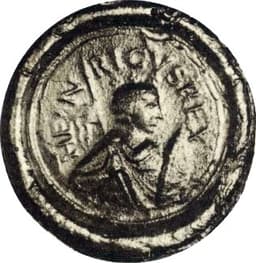
Henry the Fowler
Emperor · Medieval
60.9Total
Basic Information
Born
787
876
Died
813
936
Era
Medieval
Medieval
Nationality
Abbasid Caliphate
East Francia
Occupation
Emperor
Emperor
Civilization
Middle Eastern
Western
Score Comparison
Military (10%)
50.0
70.0
Political (20%)
30.7
59.3
Influence (20%)
47.9
55.0
Legacy (20%)
38.3
52.0
Leadership (15%)
33.6
85.0
Strategy (15%)
36.8
55.0
TOTAL
39.9
60.9
Al-Amin — Complete Timeline
811 AD
Fourth Fitna (Civil War)War
Al-Amin's reign was dominated by the Fourth Fitna, a civil war against his brother al-Mamun. The conflict began when al-Amin tried to remove al-Mamun from succession, leading to a devastating war that weakened the Abbasid Caliphate.
Impact: regionaldestructive
812 AD
Siege of BaghdadWar◆ Major
Al-Mamun's forces, led by Tahir ibn Husayn, besieged Baghdad in 812-813. The siege lasted over a year, causing widespread destruction and famine. Al-Amin was captured and executed in 813, ending his caliphate.
Impact: regionaltragic
813 AD
Execution of Al-AminPolitical Action◆ Major
After the fall of Baghdad, al-Amin was captured by Tahir's forces. He was executed on al-Mamun's orders, marking the end of the civil war and the beginning of al-Mamun's sole rule.
Impact: nationaltragic
Henry the Fowler — Complete Timeline
919 AD
Election as King of East FranciaPolitical Action
Henry the Fowler was elected King of East Francia by the Saxon and Frankish nobles at Fritzlar on May 6, 919. He was the first Saxon king, marking the transition from Carolingian to Ottonian rule. His election was contested by other dukes but he prevailed.
ElectionAccessionOttonian Dynasty
Impact: regionalconstructive
921 AD
Treaty of Bonn (921)Political Action◆ Major
Henry the Fowler signed the Treaty of Bonn with Charles the Simple of West Francia, recognizing each other's royal titles and establishing peaceful relations. This treaty ended Carolingian claims over East Francia and solidified Henry's legitimacy as an independent king.
TreatyRecognitionDiplomacy
Impact: regionalconstructive
924 AD
Nine-Year Truce with the MagyarsPolitical Action◆ Major
Henry the Fowler negotiated a nine-year truce with the Magyars, agreeing to pay tribute in exchange for a halt to their raids. He used this period to fortify towns, reorganize the army, and train cavalry. This strategic pause was crucial for his later military reforms.
TruceMagyarsMilitary Reform
Impact: regionalconstructive
929 AD
Battle of Lenzen (929)War◆ Major
Henry the Fowler's forces defeated a Slavic army at the Battle of Lenzen, securing the eastern frontier of East Francia. This victory allowed Henry to consolidate control over the Elbe region and establish the March of Brandenburg, a key step in German eastward expansion.
BattleSlavic WarsEastern Expansion
Impact: regionalconstructive
933 AD
Battle of Riade (933)War
After the truce with the Magyars expired, Henry the Fowler led a German army to victory at the Battle of Riade (near Merseburg). The defeat of the Magyar cavalry ended their raids into East Francia for a generation and established Henry's reputation as a defender of Christendom.
BattleMagyarsVictory
Impact: regionalconstructive
936 AD
Death of Henry the FowlerOther◆ Major
Henry the Fowler died on July 2, 936, at Memleben. He was succeeded by his son, Otto I, who would become Holy Roman Emperor. Henry's reign laid the foundations for the Ottonian dynasty and the medieval German kingdom.
DeathSuccessionOttonian
Impact: regional
Expert Analysis
Henry the Fowler vs Al-Amin
# The King Who Built and the Caliph Who Fell
History rarely offers a cleaner contrast than the fates of Henry the Fowler and al-Amin. One died in his bed at sixty, having founded a dynasty that would shape Europe for centuries. The other was executed at twenty-six, his body thrown into a ditch, his name a footnote in a civil war he started and lost. Both inherited thrones in the same decade of the early tenth century. Both faced existential threats. One built a kingdom; the other burned one.
Origins
Henry the Fowler was born in 876 into a world of fragmentation. The Carolingian Empire had collapsed, and the eastern portion of Francia was a patchwork of duchies—Saxony, Bavaria, Swabia, Franconia—each ruled by proud, independent dukes. Henry’s father, Otto the Illustrious, was Duke of Saxony, but Saxony itself was a frontier region, constantly raided by Slavic tribes from the east and Magyar horsemen from the steppes. Henry grew up in a world where power meant keeping your people alive through winter raids and summer campaigns. He learned to read men, not books.
Al-Amin was born in 787 into the Abbasid Caliphate at its peak. Baghdad was the richest city on earth, its palaces filled with scholars, poets, and eunuchs. His father, Harun al-Rashid, was the caliph immortalized in *One Thousand and One Nights*, a ruler who corresponded with Charlemagne and dispensed justice from a throne of silk. Al-Amin was raised in the harem, surrounded by luxury and intrigue, his every whim satisfied before it could be spoken. He never saw a battlefield until he was forced to command one.
The difference was not merely personal—it was environmental. Henry’s world demanded resilience; al-Amin’s world rewarded indulgence.
Rise to Power
Henry’s path to kingship was a masterclass in patience. When the last Carolingian king of East Francia died in 911, the dukes elected Conrad I, a Franconian, not Henry. Conrad spent his reign fighting the Magyars and the dukes alike, and on his deathbed in 918, he reportedly told his brother, “Henry is the most capable man for the kingdom. Let him be king.” On May 6, 919, at Fritzlar, the Saxon and Frankish nobles elected Henry the Fowler as King of East Francia. He accepted, but only after a show of reluctance—a gesture that signaled he would not be a puppet.
Al-Amin’s rise was a matter of birth, not choice. His father Harun al-Rashid divided the empire between his sons: al-Amin would be caliph in Baghdad, al-Mamun would govern the eastern provinces from Merv. Harun hoped they would rule together. Al-Amin, however, saw his brother as a rival, not a partner. Within months of his accession in 809, he began stripping al-Mamun of his titles and demanding he swear exclusive allegiance. When al-Mamun refused, al-Amin declared him a rebel and marched east.
Henry inherited a kingdom under siege. Al-Amin inherited an empire and turned it into a battlefield.
Leadership & Governance
Henry’s genius lay in knowing what not to do. He did not try to conquer West Francia or Italy. He did not centralize power by force. Instead, he spent his first five years negotiating truces and building alliances. In 921, he signed the Treaty of Bonn with Charles the Simple of West Francia, recognizing each other’s royal titles—a diplomatic gesture that secured his western border. Then came the Magyars. In 924, they raided deep into Saxony, and Henry knew his army could not defeat them in open battle. So he negotiated a nine-year truce, agreeing to pay tribute. His nobles called it cowardice. Henry called it time.
He used that time ruthlessly. He fortified towns, trained heavy cavalry, and built a network of fortified settlements called *burgwards* where peasants could shelter during raids. He reformed the army, creating a mobile strike force of armored horsemen. When the truce expired in 933, the Magyars returned—and Henry met them at Riade. The Battle of Riade was decisive: the Magyar light cavalry, for the first time, could not break the German heavy cavalry. They fled. Henry did not pursue. He had won, and that was enough.
Al-Amin’s governance was the opposite. He surrounded himself with sycophants who told him what he wanted to hear. He spent the treasury on palaces and poets while his armies went unpaid. When al-Mamun’s general Tahir ibn Husayn marched on Baghdad in 812, al-Amin refused to negotiate, convinced that his brother’s rebellion would collapse. Instead, Tahir besieged the city for over a year. Baghdad starved. The canals dried up. The people ate dogs and rats. Al-Amin sat in his palace, issuing decrees no one obeyed.
Triumph & Tragedy
Henry’s greatest moment was the Battle of Riade in 933, but his most telling victory came earlier, at the Battle of Lenzen in 929. There, his forces crushed a Slavic army on the eastern frontier, securing the Elbe River as a natural border. It was a brutal, grinding fight—the kind Henry understood. He did not celebrate with poetry. He built a fortress.
Al-Amin’s tragedy was the Siege of Baghdad. In 813, after the city fell, Tahir’s men found the caliph hiding in a boat on the Tigris. He was captured, dragged before Tahir, and executed on al-Mamun’s orders. His head was displayed on a spear. The Fourth Fitna had cost tens of thousands of lives, destroyed the unity of the Abbasid Caliphate, and ended the life of a man who had never learned that power requires more than a title.
Character & Destiny
Henry was a builder. He constructed walls, alliances, and a dynasty. His nickname “the Fowler” comes from a legend that when the nobles came to tell him he had been elected king, they found him tending his bird traps—a story that may be apocryphal but captures his essence: a man of the soil, not the court.
Al-Amin was a consumer. He consumed wealth, loyalty, and time. He never asked what he owed to his position, only what his position owed to him. The historian al-Tabari records that when al-Mamun’s forces approached Baghdad, al-Amin’s advisors begged him to flee and raise a new army. He refused. “I am the Commander of the Faithful,” he said. “I will not run.” It was courage, perhaps, but courage without wisdom is just another form of suicide.
Legacy
Henry died on July 2, 936, at Memleben, in his bed, surrounded by his sons. He left a kingdom that was stronger, richer, and safer than the one he had inherited. His son Otto I would be crowned Holy Roman Emperor in 962, fulfilling a dream Henry never claimed to have. The Ottonian dynasty he founded ruled Germany for over a century.
Al-Amin left a shattered caliphate. His brother al-Mamun would rebuild, but the damage was permanent. The Abbasid Caliphate never fully recovered its authority. Provincial governors became independent warlords. The unity of the Islamic world fractured, and it would never be restored.
Conclusion
History judges by results, not intentions. Henry the Fowler understood that leadership is not about glory but about survival—of your people, your kingdom, your legacy. Al-Amin understood only the glory. One man built walls; the other burned bridges. One died in his bed; the other died on a riverbank, his head on a spear.
The difference between them is not intelligence or courage. It is the willingness to learn from the world rather than demand the world learn from you. Henry listened to the Magyars and learned to fight them. Al-Amin listened to his flatterers and learned nothing. In the end, that is the only lesson that matters.
Rankings
🥇
Henry the FowlerLeader
Mil: 70.0Pol: 59.3Inf: 55.0
60.9
🥈
Al-Amin
Mil: 50.0Pol: 30.7Inf: 47.9
39.9
+21.0 behind
How This Comparison Works
Algorithm
Each figure is scored on 6 dimensions (0—100 scale) based on structured historical data: Military (10%), Political (20%), Influence (20%), Legacy (20%), Leadership (15%), Strategy (15%). The weighted total produces the final ranking.
Data Sources
Scores are computed from structured sub-indicators in the database. Scale factors adjust for era (Ancient ×0.85, Modern ×1.0) and civilization size (Eastern ×1.05, Other ×0.80) to account for differences in population and military scale.
Maximum 3 Figures
Comparisons are limited to 2—3 figures to ensure readability and statistical meaningfulness.
Error Margins
±5 points per dimension — Sub-scores are derived from historical records with inherent uncertainty. Two figures within 5 points on a dimension should be considered roughly equivalent in that area.
Total Score Accuracy
±3 points overall — The weighted combination of 6 dimensions produces a total score with approximately ±3 points of uncertainty. Differences of less than 3 points are not statistically significant— the figures are effectively tied.
Known Limitations
- Historical records are incomplete and uneven across civilizations
- Figures from oral-tradition societies may be underrepresented
- Occupation labels can misclassify multi-role figures
- Scores measure capability and impact, not moral character
- Quantitative scoring is a comparison tool, not absolute truth
Capability Radar
Military (10%) — Battles & Warfare
Battles
20
55
Win Rate
15
60
Expansion
5
60
Political (20%) — Governance & Reform
Reform
10
75
Diplomacy
10
70
Economy
15
65
Influence (20%) — Cultural & Global Reach
Cultural
15
55
Global
10
40
Legacy (20%) — Historical Impact
Historical
20
65
Longevity
10
60
Leadership (15%) — Power & Stability
Tenure
20
70
Stability
10
70
Strategy (15%) — Tactics & Innovation
Strategy
10
65
Tactics
15
50
Reform
5
70
Similar Comparisons
Comments & Discussion
数据掘墓人6/16/2026
说亨利不如阿敏有文化的纯属扯淡。阿敏统治四年就把国库从800万第纳尔亏空到连军饷都发不出,亨利却用九年时间建立了东法兰克首个常备军体系。你说谁更懂治国?数字不会骗人:阿敏的遗产只有无底洞般的赤字和一具泡在幼发拉底河里的尸体。亨利死后留下的是一套能挡住马扎尔人三十年的防御体系。历史从来只奖励会算账的统治者。
江湖史官6/16/2026
你们都被西方史书骗了。亨利一世算什么雄主?他根本就是靠背叛东法兰克王位换来的权力,先假装支持康拉德一世,转头就抢了人家位置。阿敏至少光明正大地继承了哈里发之位,而且敢于对抗权贵集团。巴拉克马战役后他被弟弟处决的方式——砍头、暴尸——本身就印证了阿拔斯王朝权力斗争的残酷性。亨利那套"平和建国"的故事,不过是胜利者给血腥夺权涂的脂粉罢了。
Historian4776/16/2026
The real tragedy of al-Amin isn't his death—it's how predictable it was. His father Harun literally divided the empire between al-Amin and al-Ma'mun like a child splitting a cookie, then died without enforcing the deal. Henry the Fowler faced a similar crisis with his succession but handled it masterfully: he made sure his son Otto was crowned king while he still lived. No civil war, no bloodbath. Al-Amin had the resources, the prestige, the army—everything except the judgment to know when to co
Historian5366/16/2026
Henry the Fowler understood something al-Amin never did: a kingdom is built on loyalty, not gold. While al-Amin was burning through Baghdad's treasury financing his pet poets, Henry was out in the mud forging alliances with Saxon warlords. The Magyars didn't care about your poetry recitations—they cared about your fortifications and your cavalry. Henry fortified towns and trained peasants to fight. That's why he died in bed and al-Amin ended up with his head on a platter. Leadership isn't inheri
Historian6376/16/2026
Let's talk about what actually matters: survival. Henry inherited a kingdom being eaten alive by Magyars. His solution? Build fortresses everywhere and train a heavy cavalry that could actually fight on horseback. Result: the Magyars never sacked a single major town under his reign. Al-Amin inherited the richest empire in the world, managed to piss off his own brother, his mother, his generals, and his people within four years, and then got his head chopped off by a former slave. The comparison