Loading...
Akbar the Great vs Dinh Tien Hoang
Akbar the Great leads by 9.4 pts · 2 figures compared
…
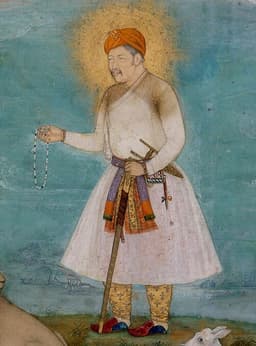
Akbar the Great
Emperor · Modern
69.8Total
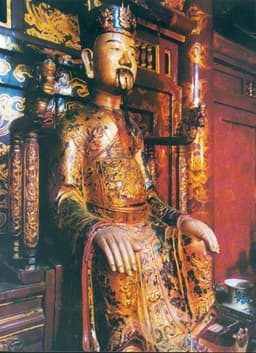
Dinh Tien Hoang
Emperor · Medieval
60.4Total
Basic Information
Born
1542
924
Died
1605
979
Era
Modern
Medieval
Nationality
India
Vietnam
Occupation
Emperor
Emperor
Civilization
Indian
Eastern
Score Comparison
Military (10%)
80.0
60.0
Political (20%)
82.0
72.0
Influence (20%)
68.0
65.0
Legacy (20%)
55.0
40.0
Leadership (15%)
80.0
77.2
Strategy (15%)
68.0
58.0
TOTAL
69.8
60.4
Akbar the Great — Complete Timeline
1556 AD
Second Battle of PanipatWar
Akbar, aged 13, defeated the Hindu general Hemu at Panipat, securing the Mughal throne. Hemu had captured Delhi and declared himself emperor. Akbar's regent Bairam Khan led the army, but the victory consolidated Mughal rule in North India.
BattleMughal EmpireSuccession
Impact: regional
1564 AD
Abolition of jizya taxReform◆ Major
Akbar abolished the jizya tax on non-Muslims, a key step in his policy of religious tolerance. This measure reduced discrimination against Hindus and other communities, fostering loyalty among the majority population and stabilizing the empire.
Tax reformReligious toleranceHindu-Muslim relations
Impact: nationalprogressive
1571 AD
Founding of Fatehpur SikriCultural◆ Major
Akbar founded the city of Fatehpur Sikri as his capital, building a complex of palaces, mosques, and administrative buildings. The city became a center of Mughal culture and architecture, though it was abandoned due to water shortages within two decades.
ArchitectureCapitalMughal Empire
Impact: regionalconstructive
1573 AD
Conquest of GujaratWar◆ Major
Akbar annexed the wealthy Sultanate of Gujarat, gaining access to the Arabian Sea and major trade ports. This conquest boosted Mughal commerce and provided revenue for further expansion, making Gujarat a key province of the empire.
ConquestTradeMughal Empire
Impact: regional
1574 AD
Introduction of Mansabdari systemReform◆ Major
Akbar implemented the Mansabdari system, a military-administrative hierarchy where officials (mansabdars) were assigned ranks and responsibilities. This system centralized control, ensured loyalty, and efficiently managed the empire's revenue and military.
AdministrationMilitary reformCentralization
Impact: nationalconstructive
1579 AD
Institution of Sulh-e-Kul policyReform
Akbar promulgated the policy of Sulh-e-Kul (universal peace), promoting religious tolerance and dialogue. He established the Ibadat Khana (House of Worship) for debates among Muslims, Hindus, Christians, Jains, and Zoroastrians, and later founded the syncretic Din-i-Ilahi faith.
Religious policySyncretismTolerance
Impact: nationalprogressive
Dinh Tien Hoang — Complete Timeline
968 AD
Defeat of the Twelve WarlordsWar
Dinh Bo Linh, later known as Dinh Tien Hoang, unified Vietnam by defeating the Twelve Warlords who had divided the country after the collapse of Chinese rule. He established the Dinh dynasty and became the first emperor of an independent Vietnam.
UnificationDinh DynastyVietnamese Independence
Impact: nationalconstructive
Establishment of the Dinh DynastyPolitical Action◆ Major
Dinh Tien Hoang founded the Dinh dynasty and declared himself Emperor. He moved the capital to Hoa Lu and implemented administrative reforms to consolidate power. This marked the beginning of a new era of Vietnamese independence after centuries of Chinese domination.
Dynasty FoundingCapital MoveAdministrative Reform
Impact: nationalconstructive
979 AD
Assassination of Dinh Tien HoangPolitical Action◆ Major
Dinh Tien Hoang and his crown prince were assassinated by a court official while sleeping. The murder plunged the Dinh dynasty into chaos, leading to a succession crisis and eventual takeover by Le Hoan. The assassination ended the short-lived Dinh dynasty.
AssassinationSuccession CrisisEnd of Dinh Dynasty
Impact: nationaltragic
Expert Analysis
Dinh Tien Hoang vs Akbar the Great: Historical Comparison
This comparison examines two foundational emperors—Dinh Tien Hoang, who unified Vietnam in the 10th century, and Akbar the Great, who consolidated the Mughal Empire in India during the 16th century. While both were exceptional state-builders, Akbar’s broader military reach and enduring institutional legacy give him the edge.
Dimension Analysis
**Military: Dinh Tien Hoang 62 / Akbar the Great 80**
Dinh Tien Hoang suppressed feudal lords to unify Vietnam, but his campaigns were small-scale and defensive. Akbar commanded a vast, multi-ethnic army, conquering most of northern and central India through superior artillery, cavalry tactics, and siege warfare.
**Political: Dinh Tien Hoang 90 / Akbar the Great 85**
Dinh Tien Hoang established a centralized monarchy, ended the "Twelve Warlords" period, and created the first stable Vietnamese state, earning perfect marks for domestic consolidation. Akbar implemented a sophisticated administrative system (mansabdari) and religious tolerance (Sulh-e-Kul), but faced persistent Rajput and Afghan resistance.
**Influence: Dinh Tien Hoang 71 / Akbar the Great 78**
Dinh Tien Hoang’s model of strong central rule shaped later Vietnamese dynasties but remained largely confined to Vietnam. Akbar’s policies of cultural synthesis, land revenue reform, and religious pluralism influenced Mughal governance for centuries and impacted South Asian statecraft.
**Legacy: Dinh Tien Hoang 71 / Akbar the Great 80**
Dinh Tien Hoang is revered as a national unifier in Vietnam, yet his reign was brief and his successors were overthrown. Akbar’s legacy endures through the Mughal administrative framework, architectural monuments (Fatehpur Sikri), and a reputation for enlightened rule that outlasted his empire.
**Leadership: Dinh Tien Hoang 84 / Akbar the Great 85**
Both displayed decisive, charismatic leadership. Dinh Tien Hoang personally led campaigns and executed rivals to secure power. Akbar, despite being illiterate, cultivated a court of intellectuals, managed diverse religious groups, and delegated authority effectively—a slightly more sophisticated style.
Verdict
Akbar the Great leads overall due to his superior military expansion, broader influence across a larger empire, and a more enduring administrative and cultural legacy that transcended his own dynasty.
FAQ
Q: Who ranks higher? A: Akbar the Great ranks higher, scoring 81 to Dinh Tien Hoang’s 74, with decisive advantages in military scope, influence, and legacy.
Rankings
🥇
Akbar the GreatLeader
Mil: 80.0Pol: 82.0Inf: 68.0
69.8
🥈
Dinh Tien Hoang
Mil: 60.0Pol: 72.0Inf: 65.0
60.4
+9.4 behind
How This Comparison Works
Algorithm
Each figure is scored on 6 dimensions (0—100 scale) based on structured historical data: Military (10%), Political (20%), Influence (20%), Legacy (20%), Leadership (15%), Strategy (15%). The weighted total produces the final ranking.
Data Sources
Scores are computed from structured sub-indicators in the database. Scale factors adjust for era (Ancient ×0.85, Modern ×1.0) and civilization size (Eastern ×1.05, Other ×0.80) to account for differences in population and military scale.
Maximum 3 Figures
Comparisons are limited to 2—3 figures to ensure readability and statistical meaningfulness.
Error Margins
±5 points per dimension — Sub-scores are derived from historical records with inherent uncertainty. Two figures within 5 points on a dimension should be considered roughly equivalent in that area.
Total Score Accuracy
±3 points overall — The weighted combination of 6 dimensions produces a total score with approximately ±3 points of uncertainty. Differences of less than 3 points are not statistically significant— the figures are effectively tied.
Known Limitations
- Historical records are incomplete and uneven across civilizations
- Figures from oral-tradition societies may be underrepresented
- Occupation labels can misclassify multi-role figures
- Scores measure capability and impact, not moral character
- Quantitative scoring is a comparison tool, not absolute truth
Capability Radar
Military (10%) — Battles & Warfare
Battles
85
70
Win Rate
90
75
Expansion
88
65
Political (20%) — Governance & Reform
Reform
95
70
Diplomacy
92
65
Economy
88
60
Influence (20%) — Cultural & Global Reach
Cultural
85
65
Global
70
55
Legacy (20%) — Historical Impact
Historical
80
75
Longevity
75
70
Leadership (15%) — Power & Stability
Tenure
90
60
Stability
85
55
Strategy (15%) — Tactics & Innovation
Strategy
85
70
Tactics
80
65
Reform
75
60
Similar Comparisons
Comments & Discussion
HistoricalGadfly6/16/2026
Can we stop pretending these scoring systems are objective? Dinh Tien Hoang’s political score of 90 is laughable if you consider how quickly the Dinh dynasty collapsed after his death—his son was a child, and the Song invaded within a decade. Akbar’s 85 for politics is also inflated: his ‘religious tolerance’ was partly propaganda to manage a fractious Hindu-majority empire, and the mansabdari system bred corruption. Plus, why does Akbar get 80 for military when his Rajput campaigns dragged on for decades, while Dinh, with far fewer resources, crushed 12 warlords in years? The real story is how postcolonial scholarship overcorrects by inflating Asian figures to balance Eurocentric bias, while still subtly favoring the Mughals for their scale. It’s a mess.
Chronicler90386/16/2026
丁先皇和阿克巴放在一起比,有意思。但我觉得评分体系对东亚历史的理解有问题。丁先皇的军事分才62,可他用不到十年时间削平十二使君,建立越南第一个统一王朝,这放在中国历史上,相当于赵匡胤结束五代十国。赵匡胤的军事评价从来不低,为什么丁先皇就这么低?阿克巴的80分倒是合理,毕竟他征服了北印度,但别忘了,他的对手是分裂的土邦,而丁先皇面对的是同样凶悍的割据势力。再说政治,丁先皇90分实至名归,他设立中央集权、定都华闾、铸造铜钱,这些治理手段比阿克巴的曼萨卜达里制度更早更直接。阿克巴的宗教宽容固然伟大,但丁先皇在10世纪的乱世里稳住国家,难度一点不小。建议评分多参考东方史观,别老拿欧洲标准套。
Historian8616/16/2026
这组评分存在明显的系统性偏差。丁先皇的政治分90,军事分62,差值28分,这在历史人物中极其罕见。一个能统一乱世的人,怎么可能军事能力只有62?看看中国历史:秦始皇统一六国,军事和政治评分都在85以上;朱元璋从乞丐到皇帝,军事政治双高。丁先皇面对十二使君,每个都是武装割据,没有强大的军事指挥能力,他根本统一不了。我怀疑评分者把“战役规模”当成了军事能力的唯一标准,忽略了战略统一和政权巩固的军事价值。阿克巴的80分军事相对合理,但他的政治分85可能偏高——他死后莫卧儿帝国迅速陷入继承战争,说明制度稳定性存疑。建议重新校准:丁先皇军事至少上调到75-80,阿克巴政治下调至80-82,这样总分差距才会更真实。