Loading...
Ajaka vs John II of Aragon
John II of Aragon leads by 13.9 pts · 2 figures compared
…
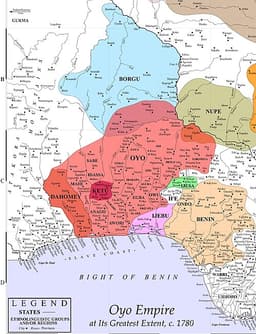
Ajaka
Emperor · Medieval
44.8Total
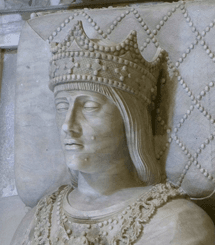
John II of Aragon
Emperor · Medieval
58.7Total
Basic Information
Born
1220
1398
Died
1270
1479
Era
Medieval
Medieval
Nationality
Oyo Empire
Aragon
Occupation
Emperor
Emperor
Civilization
Other
Western
Score Comparison
Military (10%)
20.0
40.0
Political (20%)
40.8
68.0
Influence (20%)
49.4
58.3
Legacy (20%)
39.2
58.0
Leadership (15%)
67.0
74.0
Strategy (15%)
45.0
43.3
TOTAL
44.8
58.7
Ajaka — Complete Timeline
1230 AD
First reign and exilePolitical Action
Ajaka's first reign as Alaafin was marked by his peaceful nature, which was seen as weakness by his military commanders. He was deposed and exiled by his brother, Sango, who then took the throne. This event highlights the tension between peaceful and militaristic leadership in Oyo.
DepositionExileBrotherly Conflict
Impact: national
1245 AD
Restoration to the throne of OyoPolitical Action◆ Major
After the death of Sango, the Oyo chiefs recalled Ajaka from exile and restored him as Alaafin. His peaceful and diplomatic rule was seen as a contrast to Sango's violent reign. He was able to reunite the kingdom and re-establish stability.
RestorationPeaceful RuleOyo
Impact: nationalconstructive
John II of Aragon — Complete Timeline
1447 AD
Marriage to Juana EnríquezPolitical Action◆ Major
John II of Aragon married Juana Enr
Dynastic marriageSpanish unification
Impact: nationalconstructive
1462 AD
Catalan Civil WarWar
John II faced a rebellion from the Catalan nobility and the city of Barcelona, who opposed his centralizing policies and his appointment of a Castilian viceroy. The civil war lasted a decade, devastating Catalonia and weakening the Crown of Aragon, though John II ultimately retained control.
Catalan rebellionCivil war
Impact: regionaldestructive
1469 AD
Marriage of Ferdinand and IsabellaPolitical Action
John II arranged the marriage of his son Ferdinand to Isabella I of Castile, a union that would eventually unite the crowns of Aragon and Castile. The marriage was conducted in secret due to opposition from Henry IV of Castile, but it laid the foundation for the creation of a unified Spanish kingdom.
Spanish unificationDynastic union
Impact: globalconstructive
Expert Analysis
Origins
Ajaka, born around the early 14th century in the Oyo Empire (present-day Nigeria), was the younger brother of Sango, the legendary Alaafin. His early life was shaped by the military traditions of Oyo, but he personally favored diplomacy over warfare. Ajaka's first reign began after Sango's death, but his peaceful nature led to his deposition and exile by military commanders who saw him as weak. His restoration came after his brother's successors failed, with chiefs recalling him to bring stability.
John II of Aragon, born on June 29, 1398, in Medina del Campo, was the second son of King Ferdinand I of Aragon and Eleanor of Alburquerque. He grew up in the complex politics of the Crown of Aragon, a confederation of kingdoms including Aragon, Catalonia, Valencia, and others. His education emphasized governance and diplomacy, preparing him for a life of political maneuvering. John inherited the throne after his brother Alfonso V's death in 1458, but his reign was marked by internal conflicts.
Rise to Power
Ajaka's rise was indirect: after Sango's death, the Oyo chiefs initially chose him as Alaafin. However, his first reign (c. 1330s) quickly ended when military leaders, dissatisfied with his pacifism, deposed him and exiled him to the town of Kusu. His restoration occurred only after the chaos following Sango's successors failed to maintain order. The chiefs recalled Ajaka, and he ruled again, focusing on rebuilding through diplomacy rather than conquest. His political score of 40.8 reflects his limited ability to consolidate power.
John II of Aragon's path to power was more calculated. He became king in 1458 after his brother Alfonso V's death, but his authority was challenged by the powerful Catalan nobility. John's centralizing policies sparked the Catalan Civil War (1462-1472), a turning point. Despite initial setbacks, John secured victory by 1472, though the war left Catalonia weakened. His most strategic move was arranging the marriage of his son Ferdinand to Isabella of Castile in 1469, a union that would eventually unite Spain and elevate his dynasty. His political score of 68.0 reflects this shrewd diplomacy.
Leadership & Governance
Ajaka led through consensus and peace. He avoided military campaigns, instead focusing on internal stability and trade. His governance emphasized the role of the Oyo Mesi (kingmakers) and the council of chiefs, allowing them significant autonomy. This approach restored order after Sango's tumultuous reign, but it also limited his authority. His leadership score of 67.0 reflects his ability to maintain peace, but his military score of 20.0 shows his reluctance to use force.
John II governed with a centralizing vision, seeking to reduce the power of the Catalan nobility and strengthen royal authority. He appointed Castilian officials, which provoked the Catalan Civil War. His leadership score of 74.0 indicates decisive action, but his strategy score of 43.3 suggests his methods were often reactive. For example, his marriage to Juana Enríquez strengthened ties with Castile, but his appointment of a Castilian as lieutenant of Catalonia fueled rebellion. John's governance was pragmatic but divisive.
Triumph & Tragedy
Ajaka's greatest triumph was restoring peace to Oyo after Sango's death. His diplomatic rule allowed the empire to recover economically and socially. However, his tragedy was his inability to project military strength, which left Oyo vulnerable to external threats like the Nupe. His legacy score of 39.2 reflects his limited long-term impact, as later Alaafins would adopt more militaristic policies.
John II's triumph was arranging the marriage of Ferdinand and Isabella, which set the stage for the unification of Spain under their grandson Charles V. His victory in the Catalan Civil War preserved Aragon's unity. However, his tragedy was the devastation of Catalonia during the war, with Barcelona losing its economic dominance. His legacy score of 58.0 acknowledges his role in Spanish unification, but his methods were costly.
Character & Destiny
Ajaka was characterized by his pacifism and humility. He believed in governance through dialogue, a trait rare among medieval rulers. However, this made him appear weak to his peers, leading to his deposition. His destiny was to be a transitional figure, remembered as a peacemaker but overshadowed by more aggressive successors.
John II was ambitious and politically astute, but also stubborn. He pursued centralization despite opposition, leading to civil war. His character was shaped by the Aragonese tradition of pactism, yet he often violated it. His destiny was to be a king who sacrificed short-term stability for long-term dynastic gain. His total score of 58.7 reflects a mixed legacy.
Legacy
Ajaka's legacy is as a symbol of peaceful rule in Oyo history. He is remembered in oral traditions as the "gentle king" who brought calm. However, his impact on Oyo's political structures was minimal; the empire later expanded through conquest. His influence score of 49.4 indicates a moderate cultural memory.
John II's legacy is monumental: his marriage alliance created the basis for modern Spain. The union of Aragon and Castile under Ferdinand and Isabella led to the Reconquista's completion, the patronage of Columbus, and the rise of a global empire. John's political score of 68.0 and influence score of 58.3 reflect this, though his role is often overshadowed by his son and daughter-in-law.
Conclusion
John II of Aragon had a greater impact than Ajaka, as evidenced by his total score of 58.7 against Ajaka's 44.8. While Ajaka restored peace temporarily, his influence remained confined to Oyo's internal dynamics. John II's actions reshaped European history, uniting kingdoms and enabling Spain's global expansion. His political maneuvering, despite causing civil war, created a legacy that endured for centuries. Ajaka's peaceful approach was admirable but ultimately less transformative. The score gap of 13.9 points reflects this difference in historical weight.
Rankings
🥇
John II of AragonLeader
Mil: 40.0Pol: 68.0Inf: 58.3
58.7
🥈
Ajaka
Mil: 20.0Pol: 40.8Inf: 49.4
44.8
+13.9 behind
How This Comparison Works
Algorithm
Each figure is scored on 6 dimensions (0—100 scale) based on structured historical data: Military (10%), Political (20%), Influence (20%), Legacy (20%), Leadership (15%), Strategy (15%). The weighted total produces the final ranking.
Data Sources
Scores are computed from structured sub-indicators in the database. Scale factors adjust for era (Ancient ×0.85, Modern ×1.0) and civilization size (Eastern ×1.05, Other ×0.80) to account for differences in population and military scale.
Maximum 3 Figures
Comparisons are limited to 2—3 figures to ensure readability and statistical meaningfulness.
Error Margins
±5 points per dimension — Sub-scores are derived from historical records with inherent uncertainty. Two figures within 5 points on a dimension should be considered roughly equivalent in that area.
Total Score Accuracy
±3 points overall — The weighted combination of 6 dimensions produces a total score with approximately ±3 points of uncertainty. Differences of less than 3 points are not statistically significant— the figures are effectively tied.
Known Limitations
- Historical records are incomplete and uneven across civilizations
- Figures from oral-tradition societies may be underrepresented
- Occupation labels can misclassify multi-role figures
- Scores measure capability and impact, not moral character
- Quantitative scoring is a comparison tool, not absolute truth
Capability Radar
Military (10%) — Battles & Warfare
Battles
5
45
Win Rate
5
40
Expansion
5
50
Political (20%) — Governance & Reform
Reform
35
55
Diplomacy
45
70
Economy
30
50
Influence (20%) — Cultural & Global Reach
Cultural
25
55
Global
10
55
Legacy (20%) — Historical Impact
Historical
20
65
Longevity
15
60
Leadership (15%) — Power & Stability
Tenure
40
60
Stability
50
45
Strategy (15%) — Tactics & Innovation
Strategy
5
40
Tactics
5
35
Reform
5
30
Similar Comparisons
Comments & Discussion
No comments yet. Be the first to share your thoughts!