Loading...
This comparison has not been analyzed yet.
One-time AI generation (~1 minute). Scores and timeline are already available below.
Ahmed Shah Massoud vs Frank Bainimarama
Ahmed Shah Massoud leads by 14.6 pts · 2 figures compared
…
Ahmed Shah Massoud
General · Modern
61.1Total

Frank Bainimarama
General · Modern
46.5Total
Basic Information
Born
1953
1954
Died
—
—
Era
Modern
Modern
Nationality
Afghanistan
Fiji
Occupation
General
General
Civilization
Middle Eastern
Other
Score Comparison
Military (10%)
67.3
21.2
Political (20%)
68.0
48.0
Influence (20%)
55.0
49.4
Legacy (20%)
52.0
40.8
Leadership (15%)
71.0
74.0
Strategy (15%)
68.1
35.7
TOTAL
61.1
46.5
Ahmed Shah Massoud — Complete Timeline
1979 AD
Resistance Against Soviet InvasionWar
Massoud led mujahideen forces in the Panjshir Valley against the Soviet invasion of Afghanistan. He used guerrilla tactics to resist Soviet offensives, earning the nickname 'Lion of Panjshir'. His resistance became a symbol of Afghan defiance.
Soviet WarAfghanistanGuerrilla
Impact: regionalconstructive
1996 AD
Formation of Northern AlliancePolitical Action◆ Major
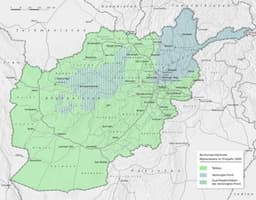
Massoud formed the Northern Alliance to resist the Taliban after they captured Kabul. He led a coalition of anti-Taliban forces from his base in the Panjshir Valley. The alliance controlled about 10% of Afghanistan.
Northern AllianceTalibanAfghanistan
Impact: regionalconstructive
2001 AD
Assassination by Al-QaedaPolitical Action
Massoud was assassinated by two suicide bombers posing as journalists. The attack was carried out by Al-Qaeda operatives two days before the 9/11 attacks. His death weakened the Northern Alliance but galvanized international support.
AssassinationAl-Qaeda9/11
Impact: globaltragic
Frank Bainimarama — Complete Timeline
2006 AD
Led the 2006 Fijian coup d'étatPolitical Action
Commodore Frank Bainimarama led a military coup overthrowing the elected government of Prime Minister Laisenia Qarase. He cited corruption and ethnic tensions as reasons.
CoupMilitary Rule
Impact: nationaldestructive
2007 AD
Appointed Prime Minister of FijiPolitical Action◆ Major
Bainimarama was appointed Prime Minister by the President, consolidating his power. He remained in office for 16 years, ruling under a military-backed government.
AppointmentLeadership
Impact: national
2013 AD
Implemented the 2013 ConstitutionReform◆ Major
Bainimarama's government enacted a new constitution that removed race-based voting and established a secular state. The constitution was criticized for concentrating power.
ConstitutionReform
Impact: nationalconstructive
2022 AD
Lost the 2022 general electionPolitical Action◆ Major
Bainimarama's FijiFirst party lost the general election, ending his 16-year rule. He was succeeded by Sitiveni Rabuka, marking a return to democratic governance.
ElectionDefeat
Impact: national
This comparison has not been analyzed yet.
One-time AI generation (~1 minute). Scores and timeline are already available below.
Rankings
🥇
Ahmed Shah MassoudLeader
Mil: 67.3Pol: 68.0Inf: 55.0
61.1
🥈
Frank Bainimarama
Mil: 21.2Pol: 48.0Inf: 49.4
46.5
+14.6 behind
How This Comparison Works
Algorithm
Each figure is scored on 6 dimensions (0—100 scale) based on structured historical data: Military (10%), Political (20%), Influence (20%), Legacy (20%), Leadership (15%), Strategy (15%). The weighted total produces the final ranking.
Data Sources
Scores are computed from structured sub-indicators in the database. Scale factors adjust for era (Ancient ×0.85, Modern ×1.0) and civilization size (Eastern ×1.05, Other ×0.80) to account for differences in population and military scale.
Maximum 3 Figures
Comparisons are limited to 2—3 figures to ensure readability and statistical meaningfulness.
Error Margins
±5 points per dimension — Sub-scores are derived from historical records with inherent uncertainty. Two figures within 5 points on a dimension should be considered roughly equivalent in that area.
Total Score Accuracy
±3 points overall — The weighted combination of 6 dimensions produces a total score with approximately ±3 points of uncertainty. Differences of less than 3 points are not statistically significant— the figures are effectively tied.
Known Limitations
- Historical records are incomplete and uneven across civilizations
- Figures from oral-tradition societies may be underrepresented
- Occupation labels can misclassify multi-role figures
- Scores measure capability and impact, not moral character
- Quantitative scoring is a comparison tool, not absolute truth
Capability Radar
Military (10%) — Battles & Warfare
Battles
75
5
Win Rate
80
10
Expansion
50
5
Political (20%) — Governance & Reform
Reform
40
40
Diplomacy
65
35
Economy
30
30
Influence (20%) — Cultural & Global Reach
Cultural
60
15
Global
60
10
Legacy (20%) — Historical Impact
Historical
65
20
Longevity
55
15
Leadership (15%) — Power & Stability
Tenure
55
70
Stability
35
20
Strategy (15%) — Tactics & Innovation
Strategy
80
15
Tactics
85
10
Reform
60
20
Similar Comparisons
Comments & Discussion
No comments yet. Be the first to share your thoughts!