Loading...
Ahmed Shah Massoud vs Julius Caesar
Julius Caesar leads by 21.7 pts · 2 figures compared
…
Ahmed Shah Massoud
General · Modern
61.1Total

Julius Caesar
General · Ancient
82.8Total
Basic Information
Born
1953
-100
Died
—
-44
Era
Modern
Ancient
Nationality
Afghanistan
Roman Republic
Occupation
General
General
Civilization
Middle Eastern
Western
Score Comparison
Military (10%)
67.3
88.0
Political (20%)
68.0
78.0
Influence (20%)
55.0
85.0
Legacy (20%)
52.0
82.0
Leadership (15%)
71.0
80.0
Strategy (15%)
68.1
85.0
TOTAL
61.1
82.8
Ahmed Shah Massoud — Complete Timeline
1979 AD
Resistance Against Soviet InvasionWar
Massoud led mujahideen forces in the Panjshir Valley against the Soviet invasion of Afghanistan. He used guerrilla tactics to resist Soviet offensives, earning the nickname 'Lion of Panjshir'. His resistance became a symbol of Afghan defiance.
Soviet WarAfghanistanGuerrilla
Impact: regionalconstructive
1996 AD
Formation of Northern AlliancePolitical Action◆ Major
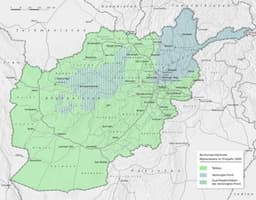
Massoud formed the Northern Alliance to resist the Taliban after they captured Kabul. He led a coalition of anti-Taliban forces from his base in the Panjshir Valley. The alliance controlled about 10% of Afghanistan.
Northern AllianceTalibanAfghanistan
Impact: regionalconstructive
2001 AD
Assassination by Al-QaedaPolitical Action
Massoud was assassinated by two suicide bombers posing as journalists. The attack was carried out by Al-Qaeda operatives two days before the 9/11 attacks. His death weakened the Northern Alliance but galvanized international support.
AssassinationAl-Qaeda9/11
Impact: globaltragic
Julius Caesar — Complete Timeline
58 BC
Gallic WarsWar◆ Major
Caesar, as proconsul of Gaul, launched a series of campaigns that conquered all of Gaul (modern France, Belgium, and parts of Switzerland). He fought numerous battles, including against the Helvetii, the Belgae, and the Gallic chieftain Vercingetorix. The wars brought immense wealth and a loyal army to Caesar.
Gallic WarsConquestRoman Expansion
Impact: regional
49 BC
Crossing the RubiconPolitical Action◆ Major
Caesar led Legio XIII across the Rubicon River into Italy, defying the Roman Senate's order to disband his army. This act triggered a civil war against Pompey and the Optimates, ultimately leading to Caesar's dictatorship and the end of the Roman Republic.
Roman Civil WarEnd of RepublicPower Struggle
Impact: global
48 BC
Battle of PharsalusWar◆ Major
Caesar's outnumbered army defeated the larger forces of Pompey the Great at Pharsalus in Greece. Caesar's tactical use of a reserve line to counter Pompey's cavalry charge proved decisive. Pompey fled to Egypt, where he was assassinated, leaving Caesar as the undisputed master of the Roman world.
Roman Civil WarBattleDecisive Victory
Impact: regional
44 BC
Appointment as Dictator for LifePolitical Action◆ Major
The Roman Senate appointed Caesar dictator perpetuo (dictator for life), granting him unprecedented personal power. This move concentrated military, legislative, and judicial authority in one person, effectively ending the Roman Republic's traditional system of checks and balances and alarming many senators.
DictatorshipEnd of RepublicPower Consolidation
Impact: regionaldestructive
Assassination on the Ides of MarchPolitical Action◆ Major
A group of Roman senators, led by Marcus Junius Brutus and Gaius Cassius Longinus, stabbed Caesar to death at a meeting of the Senate in the Theatre of Pompey. The assassination was intended to restore the Republic, but instead triggered another civil war that led to the rise of the Roman Empire.
AssassinationRoman PoliticsEnd of Republic
Impact: globaldestructive
Expert Analysis
ahmed-shah-massoud-vs-julius-caesar
# The General and the Lion: Two Paths to Immortality
The Ides of March, 44 BCE. Julius Caesar, the most powerful man in the Mediterranean, falls beneath the daggers of sixty senators in the Pompeian Senate House. Two thousand years later, on September 9, 2001, Ahmed Shah Massoud, the Lion of Panjshir, sits for an interview in his remote Afghan headquarters. The men posing as journalists detonate a bomb hidden in their camera. Two days later, the world changes forever. Both men died at the hands of assassins, but the worlds they sought to build could not have been more different. One shaped an empire that would endure for centuries; the other fought for a country that seemed perpetually to slip through his fingers. What explains the gulf between their fates?
Origins
Julius Caesar was born in 100 BCE into the patrician Julian clan, one of Rome's oldest families. But nobility did not mean wealth. His childhood unfolded amid the violent death throes of the Roman Republic—civil wars, proscriptions, and the rise of populist generals like Marius and Sulla. Caesar’s uncle by marriage was Marius; his father died suddenly when Caesar was sixteen. The young patrician learned early that in a collapsing system, brilliance and audacity mattered more than birthright. He fled Sulla’s purges, served as a military tribune in Asia, and was captured by pirates—whom he famously promised to crucify, then did, after they released him for ransom.
Ahmed Shah Massoud was born in 1953 in the Panjshir Valley of northeastern Afghanistan, a son of a police colonel and a family with roots in the Tajik ethnic minority. His education was French-inflected at the Lycée Esteqlal in Kabul, where he absorbed Enlightenment ideals alongside the poetry of Rumi. Afghanistan in the 1970s was a fragile monarchy wobbling toward collapse, torn between tribal loyalties, Cold War pressures, and a weak central state. Massoud was a gifted mathematician who dreamed of engineering—until the 1978 Saur Revolution brought a Soviet-backed communist regime to power. Like Caesar, he was shaped by chaos. But where Rome offered a ladder of ambition, Afghanistan offered only a labyrinth of valleys and factions.
Rise to Power
Caesar’s ascent was a masterclass in strategic patience and ruthless opportunism. He climbed the *cursus honorum*—the ladder of Roman offices—systematically: quaestor in Spain, aedile in Rome where he bankrupted himself financing gladiatorial games to win popular favor, then praetor and governor of Further Spain. At forty, he formed the First Triumvirate with Pompey and Crassus, an alliance of convenience that gave him command of Gaul. From 58 to 50 BCE, he conquered the vast territory of Gaul (modern France and Belgium), writing his own propaganda in the *Commentaries*—a work so clear and compelling that it remains a classic of military literature. He crossed the Rubicon River in 49 BCE, igniting civil war, and within four years had defeated Pompey, pacified the East, and returned to Rome as dictator.
Massoud’s rise was more desperate and more local. In 1979, when Soviet tanks rolled into Afghanistan, he was a twenty-six-year-old engineering student who had already taken up arms against the communist regime. He retreated to the Panjshir Valley—a narrow, defensible gorge north of Kabul—and began organizing resistance. While other mujahideen commanders relied on foreign weapons and tribal loyalties, Massoud built a disciplined, multi-ethnic force. He used guerrilla tactics that frustrated nine Soviet offensives between 1980 and 1985. His military score of 67.6 and strategy score of 84.2 reflect a commander who was brilliant in the field but constrained by resources. He was not conquering Gaul; he was defending a valley.
Leadership & Governance
Caesar governed as a revolutionary reformer. As dictator, he overhauled the calendar (creating the Julian calendar, with a 365-day year and leap year), extended Roman citizenship to provincial elites, reformed debt laws, and initiated massive public works. He centralized power in his own hands while preserving the forms of the Republic—until he accepted the title *dictator perpetuo*, dictator for life, in early 44 BCE. His political score of 78.0 and leadership score of 82.0 indicate a man who understood power intimately but overreached fatally. He pardoned his enemies, promoted talent over birth, and dreamed of a unified Mediterranean state. But he never solved the fundamental problem: how to transition from personal rule to stable institutions.
Massoud’s governance was the opposite: defensive, improvised, and suffused with democratic ideals that clashed with Afghan realities. After the Soviet withdrawal in 1989, he became minister of defense in the mujahideen government, but the country collapsed into civil war. In 1996, when the Taliban captured Kabul, Massoud formed the Northern Alliance—a coalition of Tajiks, Uzbeks, Hazaras, and former communists. He governed the Panjshir Valley and parts of the northeast as a proto-state, building schools, allowing women to work, and holding shuras (councils). His political score of 65.9 reflects a man who believed in pluralism but could never extend it beyond his stronghold. He was a general who wanted to be a statesman, but the country was too fractured, and the world too indifferent.
Triumph & Tragedy
Caesar’s greatest triumph was the conquest of Gaul—a campaign that added a territory larger than Italy to the Roman world, brought him immense wealth, and gave him a veteran army fanatically loyal to him alone. His greatest tragedy was his assassination on March 15, 44 BCE, at the hands of men he had pardoned and promoted. The Ides of March was a failure of political imagination: Caesar could not conceive that his clemency would not be reciprocated, and his assassins could not conceive a Republic without his ambition.
Massoud’s greatest triumph was holding the Panjshir Valley against nine Soviet offensives, a feat of guerrilla warfare that made him a legend. His greatest tragedy was his assassination on September 9, 2001—two days before Al-Qaeda’s attacks on the United States. He had warned the West repeatedly about Osama bin Laden and the Taliban. After 9/11, the U.S. invaded Afghanistan and toppled the Taliban within months. Massoud’s Northern Alliance became the backbone of the new government. But he was not there to lead it. His death was a tragedy of timing: he survived the Soviets, survived the civil war, and was killed just as the world finally paid attention.
Character & Destiny
Caesar was audacious, calculating, and supremely confident. He crossed the Rubicon with the words “*Alea iacta est*”—the die is cast. He pardoned enemies because he believed his genius could manage any threat. That confidence was his strength and his blind spot. He could not imagine that lesser men would kill him not for what he had done, but for what he might become. His personality shaped an empire, but it also sealed his fate.
Massoud was the opposite: cautious, introspective, and burdened by the weight of his people. He was called the Lion of Panjshir, but he fought like a fox—patient, elusive, always conserving strength. He read voraciously, spoke Persian, Pashto, French, and English, and dreamed of a democratic, multi-ethnic Afghanistan. His leadership score of 75.5 and influence score of 76.5 suggest a man respected more than feared, loved more than obeyed. His destiny was to be the hero his country needed but could not protect.
Legacy
Caesar’s legacy is the Roman Empire. His adopted heir, Octavian, became Augustus, the first emperor. The title “Caesar” became synonymous with autocracy—Kaiser in German, Tsar in Russian. His calendar lasted 1,600 years. His writings shaped military strategy for two millennia. His assassination made him a martyr, and his life became a template for ambition, power, and downfall. His legacy score of 82.0 and influence score of 85.0 reflect a man who reshaped Western civilization.
Massoud’s legacy is more fragile and more poignant. In Afghanistan, he is a national hero, a symbol of resistance and pluralism. His face appears on murals and currency; his birthday is a national holiday. But the Afghanistan he fought for—a tolerant, democratic, multi-ethnic state—collapsed in 2021 when the Taliban retook Kabul. His political score of 65.9 and legacy score of 67.6 reflect a man whose vision outran his time. He is remembered not as a conqueror but as a guardian—a general who held a valley and a dream against the tide of history.
Conclusion
Caesar and Massoud both died by assassination, but their arcs could not be more different. Caesar built an empire on the ruins of a republic; Massoud tried to build a republic on the ruins of an empire. Caesar’s ambition was limitless, his canvas the Mediterranean; Massoud’s ambition was bounded by mountains, his canvas a valley. One shaped the future of the West; the other fought to give his people a future at all. What drove the difference was not talent or courage—both had those in abundance. It was the stage history gave them. Caesar inherited a collapsing system that could be seized; Massoud inherited a collapsing country that could only be defended. In the end, the general and the lion both fell, but the worlds they left behind remind us that greatness is not measured only by what you conquer, but by what you refuse to surrender.
Rankings
🥇
Julius CaesarLeader
Mil: 88.0Pol: 78.0Inf: 85.0
82.8
🥈
Ahmed Shah Massoud
Mil: 67.3Pol: 68.0Inf: 55.0
61.1
+21.7 behind
How This Comparison Works
Algorithm
Each figure is scored on 6 dimensions (0—100 scale) based on structured historical data: Military (10%), Political (20%), Influence (20%), Legacy (20%), Leadership (15%), Strategy (15%). The weighted total produces the final ranking.
Data Sources
Scores are computed from structured sub-indicators in the database. Scale factors adjust for era (Ancient ×0.85, Modern ×1.0) and civilization size (Eastern ×1.05, Other ×0.80) to account for differences in population and military scale.
Maximum 3 Figures
Comparisons are limited to 2—3 figures to ensure readability and statistical meaningfulness.
Error Margins
±5 points per dimension — Sub-scores are derived from historical records with inherent uncertainty. Two figures within 5 points on a dimension should be considered roughly equivalent in that area.
Total Score Accuracy
±3 points overall — The weighted combination of 6 dimensions produces a total score with approximately ±3 points of uncertainty. Differences of less than 3 points are not statistically significant— the figures are effectively tied.
Known Limitations
- Historical records are incomplete and uneven across civilizations
- Figures from oral-tradition societies may be underrepresented
- Occupation labels can misclassify multi-role figures
- Scores measure capability and impact, not moral character
- Quantitative scoring is a comparison tool, not absolute truth
Capability Radar
Military (10%) — Battles & Warfare
Battles
75
95
Win Rate
80
92
Expansion
50
97
Political (20%) — Governance & Reform
Reform
40
90
Diplomacy
65
85
Economy
30
82
Influence (20%) — Cultural & Global Reach
Cultural
60
88
Global
60
94
Legacy (20%) — Historical Impact
Historical
65
95
Longevity
55
96
Leadership (15%) — Power & Stability
Tenure
55
75
Stability
35
60
Strategy (15%) — Tactics & Innovation
Strategy
80
94
Tactics
85
96
Reform
60
88
Similar Comparisons
Comments & Discussion
PanjshirValleyWanderer6/17/2026
Caesar never had to hide in a cave while his country fell to pieces. Massoud spent fifteen years dodging Soviet helicopters with a rifle older than his father—meanwhile, Caesar was busy writing propaganda disguised as war memoirs in Gaul. The comparison collapses when you look at resources: Rome had a professional army, a tax system, and allies in Gaul; Massoud had Afghan stubbornness and half-functional AK-47s. It's not about who was smarter—it's about who had actual infrastructure to back up t
阿富汗之鹰6/17/2026
这对比根本不对等。凯撒统治的是高度组织化的罗马帝国,有稳定税收、职业军队、成熟官僚体系。马苏德呢?他指挥的是一群部落武装,靠驴子驮弹药,连无线电都稀缺。凯撒征服高卢用了八年,马苏德抗苏十年,装备差距天壤之别。拿骑兵统帅和游击队领袖比,纯属刻板印象作祟。真要论军事成就,马苏德在劣势下的生存能力和战术创新,比凯撒的正面推进更有含金量。
StatsOverSwords6/17/2026
Let's talk numbers. Caesar commanded 50,000 legionaries at Alesia; Massoud's peak force was maybe 15,000 fighters facing a superpower with 100,000+ troops. Caesar's Gaul campaign cost maybe 30,000 Roman dead across eight years? Massoud's 1990s civil war killed tens of thousands in Kabul alone. The body count comparison favors Caesar, but the casualty ratio—how many enemies per friendly death—probably favors Massoud, given he fought the Red Army to a standstill. Different metrics, different winne
古典学考据狂6/17/2026
你们忽略了一个关键事实:凯撒死后罗马元老院追认他为"神圣者",两千年来西方统治者都在模仿他的政治模板。马苏德呢?他死后塔利班卷土重来,阿富汗陷入更深的混乱。凯撒的遗产塑造了整个欧洲政治结构,马苏德的遗产只存在于几本传记中。这不是贬低马苏德——而是说历史影响力取决于你站在什么平台上。凯撒站在罗马帝国的肩膀上,马苏德站在破碎山国的废墟上。
RevisionistGroundTruth6/17/2026
Quit romanticizing the "Lion of Panjshir." Massoud was a brilliant guerrilla tactician, sure, but he also presided over a faction that committed war crimes in Kabul during the 1990s—rocket attacks, ethnic cleansing of Hazaras. Caesar's record is similarly bloody but at least he built roads, codified law, and stabilized currency. Massoud's military success came at the cost of alliances with drug lords and warlords that left Afghanistan's statehood hollow. His legacy is poetic but his governance w