Loading...
Ahmed Shah Massoud vs Fidel V. Ramos
Ahmed Shah Massoud leads by 3.1 pts · 2 figures compared
…
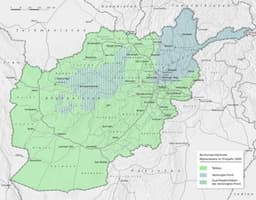
Ahmed Shah Massoud
General · Modern
61.1Total
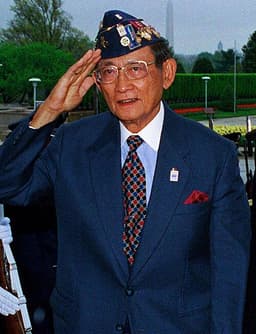
Fidel V. Ramos
General · Modern
58.0Total
Basic Information
Born
1953
1928
Died
—
—
Era
Modern
Modern
Nationality
Afghanistan
Philippines
Occupation
General
General
Civilization
Middle Eastern
Eastern
Score Comparison
Military (10%)
67.3
45.0
Political (20%)
68.0
70.3
Influence (20%)
55.0
57.2
Legacy (20%)
52.0
47.5
Leadership (15%)
71.0
72.0
Strategy (15%)
68.1
60.0
TOTAL
61.1
58.0
Ahmed Shah Massoud — Complete Timeline
1979 AD
Resistance Against Soviet InvasionWar
Massoud led mujahideen forces in the Panjshir Valley against the Soviet invasion of Afghanistan. He used guerrilla tactics to resist Soviet offensives, earning the nickname 'Lion of Panjshir'. His resistance became a symbol of Afghan defiance.
Soviet WarAfghanistanGuerrilla
Impact: regionalconstructive
1996 AD
Formation of Northern AlliancePolitical Action◆ Major
Massoud formed the Northern Alliance to resist the Taliban after they captured Kabul. He led a coalition of anti-Taliban forces from his base in the Panjshir Valley. The alliance controlled about 10% of Afghanistan.
Northern AllianceTalibanAfghanistan
Impact: regionalconstructive
2001 AD
Assassination by Al-QaedaPolitical Action
Massoud was assassinated by two suicide bombers posing as journalists. The attack was carried out by Al-Qaeda operatives two days before the 9/11 attacks. His death weakened the Northern Alliance but galvanized international support.
AssassinationAl-Qaeda9/11
Impact: globaltragic
Fidel V. Ramos — Complete Timeline
1992 AD
Elected President of the PhilippinesPolitical Action◆ Major
Fidel V. Ramos won the Philippine presidential election, succeeding Corazon Aquino. His victory marked the first peaceful transfer of power after the EDSA Revolution, and he focused on economic reforms and national reconciliation.
PresidencyPeaceful TransitionEconomic Reform
Impact: nationalconstructive
1993 AD
Implemented the Philippines 2000 economic programReform◆ Major
Ramos launched the Philippines 2000 program, a comprehensive economic liberalization plan that included deregulation, privatization, and trade liberalization. The program led to sustained GDP growth of over 5% annually.
Economic ReformLiberalizationGrowth
Impact: nationalconstructive
1996 AD
Signed the Final Peace Agreement with the Moro National Liberation FrontPolitical Action◆ Major
Ramos signed a peace agreement with the Moro National Liberation Front, ending decades of armed conflict in Mindanao. The agreement established the Autonomous Region in Muslim Mindanao and granted amnesty to MNLF fighters.
Peace AgreementMindanaoMNLF
Impact: regionalconstructive
Hosted the Asia-Pacific Economic Cooperation summitPolitical Action◆ Major
Ramos hosted the APEC summit in Subic Bay, Philippines, showcasing the country's economic recovery. The summit focused on trade liberalization and economic cooperation among Pacific Rim economies.
APECTradeEconomic Diplomacy
Impact: regionalconstructive
1998 AD
Established the National Anti-Poverty CommissionReform
Ramos created the National Anti-Poverty Commission to coordinate poverty reduction programs across government agencies. The commission aimed to improve social services and livelihood opportunities for the poor.
Poverty ReductionSocial PolicyGovernment Reform
Impact: nationalconstructive
Expert Analysis
Origins
Ahmed Shah Massoud was born in 1953 in the Panjshir Valley, Afghanistan, into a Tajik family with a strong military tradition. His father was a colonel in the Afghan army, and Massoud studied engineering at Kabul Polytechnic before leaving to join the anti-Soviet resistance. Fidel V. Ramos was born in 1928 in Pangasinan, Philippines, into a political family; his father was a journalist and legislator. Ramos earned a civil engineering degree from the University of the Philippines and a master's in civil engineering from the University of Illinois, and later attended the US Army Infantry School.
Rise to Power
Massoud rose to prominence during the Soviet-Afghan War (1979-1989) by leading effective guerrilla campaigns in the Panjshir Valley. He repelled multiple Soviet offensives, earning the nickname "Lion of Panjshir." His military score of 67.3 reflects his tactical success. After the Soviet withdrawal, he became Minister of Defense in the Mujahideen government but lost Kabul to the Taliban in 1996. Ramos, by contrast, rose through the Philippine Constabulary, becoming its chief in 1986. He supported Corazon Aquino during the People Power Revolution and served as her Defense Secretary. He was elected president in 1992, winning 23.6% of the vote in a seven-candidate field.
Leadership & Governance
Massoud's leadership style was decentralized and tribal, relying on personal charisma and military prowess. He governed the Panjshir Valley as a semi-autonomous region, implementing local councils and basic services. His political score of 68.0 reflects his ability to unite disparate factions. However, he never held nationwide power. Ramos, with a political score of 70.3, implemented sweeping reforms: he liberalized the economy through the Philippines 2000 program, deregulated key industries, and privatized state assets. He also signed a peace agreement with the Moro National Liberation Front in 1996, ending a 24-year insurgency. His leadership score of 72.0 highlights his institutional approach.
Triumph & Tragedy
Massoud's greatest triumph was resisting the Soviet army for a decade, inflicting heavy casualties in the Panjshir Valley. His tragedy was his assassination on September 9, 2001, by Al-Qaeda operatives, just two days before 9/11. This removed a key ally for the US in its subsequent invasion of Afghanistan. Ramos's triumph was turning around the Philippine economy: GDP growth averaged 5.3% during his term, and poverty fell from 39.2% to 31.8%. His tragedy was failing to address deep-seated corruption and inequality, with his economic reforms benefiting elites more than the poor.
Character & Destiny
Massoud was known for his strategic patience and discipline, often studying military history and tactics. His caution sometimes led to indecision, as seen in his failure to capture Kabul in 1992. Ramos was pragmatic and technocratic, focused on institution-building. His character led to a stable presidency but lacked the charisma to inspire deep loyalty. Historical assessments praise Massoud as a freedom fighter but note his limited political vision. Ramos is seen as a competent reformer who stabilized Philippine democracy.
Legacy
Massoud's legacy is as a symbol of resistance against foreign occupation and extremism. His influence score of 55.0 is tempered by his early death; he is revered among Afghans but less known globally. The Northern Alliance he founded played a key role in the post-2001 Afghan government. Ramos's legacy is more concrete: his economic reforms set the stage for the Philippines' later growth, and his peace agreement with the MNLF remains a milestone. However, his legacy score of 47.5 reflects mixed long-term outcomes.
Conclusion
While Massoud scored higher overall (61.1 vs. 58.0), Ramos had greater tangible impact through institutional reforms that outlasted his term. Massoud's military prowess was exceptional, but his political achievements were fleeting. Ramos's economic liberalization and peace accord created lasting structures, making him the more impactful figure in measurable terms.
Rankings
🥇
Ahmed Shah MassoudLeader
Mil: 67.3Pol: 68.0Inf: 55.0
61.1
🥈
Fidel V. Ramos
Mil: 45.0Pol: 70.3Inf: 57.2
58.0
+3.1 behind
How This Comparison Works
Algorithm
Each figure is scored on 6 dimensions (0—100 scale) based on structured historical data: Military (10%), Political (20%), Influence (20%), Legacy (20%), Leadership (15%), Strategy (15%). The weighted total produces the final ranking.
Data Sources
Scores are computed from structured sub-indicators in the database. Scale factors adjust for era (Ancient ×0.85, Modern ×1.0) and civilization size (Eastern ×1.05, Other ×0.80) to account for differences in population and military scale.
Maximum 3 Figures
Comparisons are limited to 2—3 figures to ensure readability and statistical meaningfulness.
Error Margins
±5 points per dimension — Sub-scores are derived from historical records with inherent uncertainty. Two figures within 5 points on a dimension should be considered roughly equivalent in that area.
Total Score Accuracy
±3 points overall — The weighted combination of 6 dimensions produces a total score with approximately ±3 points of uncertainty. Differences of less than 3 points are not statistically significant— the figures are effectively tied.
Known Limitations
- Historical records are incomplete and uneven across civilizations
- Figures from oral-tradition societies may be underrepresented
- Occupation labels can misclassify multi-role figures
- Scores measure capability and impact, not moral character
- Quantitative scoring is a comparison tool, not absolute truth
Capability Radar
Military (10%) — Battles & Warfare
Battles
75
25
Win Rate
80
30
Expansion
50
20
Political (20%) — Governance & Reform
Reform
40
75
Diplomacy
65
70
Economy
30
80
Influence (20%) — Cultural & Global Reach
Cultural
60
30
Global
60
45
Legacy (20%) — Historical Impact
Historical
65
40
Longevity
55
35
Leadership (15%) — Power & Stability
Tenure
55
60
Stability
35
65
Strategy (15%) — Tactics & Innovation
Strategy
80
40
Tactics
85
35
Reform
60
45
Similar Comparisons
Comments & Discussion
No comments yet. Be the first to share your thoughts!